Heat & Fire
Frying Eggs Over-Easy
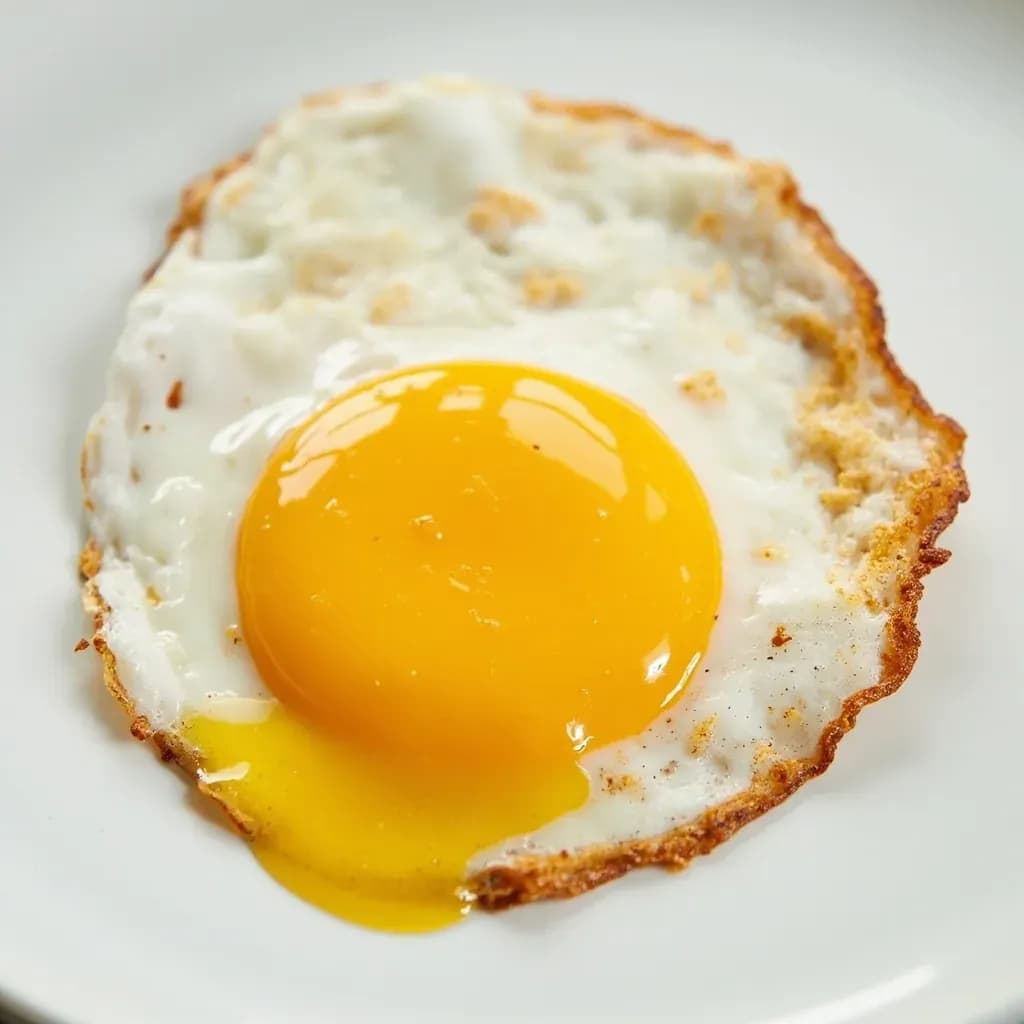
Frying an egg, flipping it briefly so the white sets but the yolk stays runny.
Over-easy frying cooks an egg on one side until the white sets, then flips it for just a few seconds so the top film cooks while the yolk stays liquid. It sits between sunny-side-up (no flip) and over-medium (firmer yolk). The gentle flip needs a non-stick or well-seasoned pan and a careful spatula motion to avoid breaking the yolk.
Over-easy is the fried egg that has been flipped once and cooked just long enough on the second side to set a whisper-thin film of white over the yolk, leaving the yolk completely liquid inside. It sits in the middle of a small family of one-pan eggs — between sunny-side up, which is never flipped, and over-medium and over-hard, which are cooked longer on the second side until the yolk firms. The defining move is the flip itself; the defining error is leaving the egg on the second side a few seconds too long, which slides a runny yolk into a jammy one without any visible warning.
What makes the technique worth learning is the sauce. A properly cooked over-easy yolk pours across the plate the moment a fork breaks it, enriching toast, rice, broth, steak, or refried beans in a way no hard-cooked egg can. The challenge is that the window between "barely set white" and "yolk starting to thicken" is narrow — twenty to forty seconds, depending on pan temperature and yolk size. Heat level, fat, egg freshness, and pan material all conspire to shrink that window further, which is why most home cooks end up with either a runny-edged, half-raw white or a yolk that has quietly gone solid.
The "over" naming is an American diner convention documented in U.S. cookbooks from the early twentieth century. Whether cooked on a restaurant flat top or in a home skillet, the technique is the same: one flip, a brief second-side cook, and a yolk that still moves freely when the pan is nudged.
- Difficulty
- Easy
Types & varieties
Flipped once and cooked 20–40 seconds on the second side; yolk fully runny, top barely filmed.
Flipped and cooked roughly 1 minute on the second side; yolk jammy — set at the edges, still soft in the center.
Flipped, then cooked 2 minutes or more on the second side, sometimes with a broken or pressed yolk, until the yolk is fully set and opaque.
Not flipped at all; cooked on one side only. Both sunny-side up and over-easy keep the yolk runny, but the top of the yolk is exposed and glossy rather than filmed over.
Hot butter or oil spooned repeatedly over the white during the first side to set the top without flipping; yields a similar runny yolk with a glossier, more evenly set surface.
How to do it
- 1
Heat the pan and fat
Place an 8-inch skillet over medium heat for about a minute. Add 1–2 teaspoons of butter, oil, or a combination and swirl to coat. The fat should shimmer and just begin to foam (if butter) or ripple (if oil) — not smoke. Too cool and the white spreads and feathers; too hot and the edges burn before the white sets.
- 2
Add the egg
Crack each egg into a small ramekin or cup first — this lets you fish out any shell fragment and prevents a broken yolk from contaminating the pan. When the fat is hot, slide the egg in from close to the surface, keeping the yolk centered. Cook no more than two eggs at a time in an 8-inch pan; crowding drops the temperature and leaves you with rubbery whites.
- 3
Cook the first side
Let the egg cook undisturbed for 2–3 minutes, until the whites are mostly opaque from the outside in and the edges are fully set, but the surface of the yolk still looks domed and liquid. If the white is spreading unevenly, gently tilt the pan to let hot fat run under the thin areas, or lift the edge with the spatula so fat flows underneath.
- 4
Flip
Slide a thin, flexible spatula fully under the egg, supporting the yolk with the blade. In one low, confident, sideways motion — not a toss — flip the egg so it lands flat about an inch from where it started. A short, low arc keeps the yolk from breaking on impact.
- 5
Cook the second side briefly
Cook just 20–40 seconds on the second side — long enough for a thin film of white to set over what is now the top of the yolk. The yolk should still jiggle freely when the pan is nudged. Do not press down on the egg with the spatula; pressure will break the yolk and squeeze out the liquid you are trying to preserve.
- 6
Plate and season
Slide the egg onto a warm plate, season with flaky salt and freshly cracked pepper, and serve at once so the yolk stays liquid. Wipe the pan clean with a paper towel between batches; burnt butter solids will brown the next egg unevenly and add a bitter note.
Reading the cook
Doneness in a fried egg is judged almost entirely by eye, and over-easy is the most unforgiving of the family because the second-side cook is so short. These are the cues that tell you where you are.
- White set from the outside in, with the innermost ring around the yolk still translucent: too early to flip — the unset white will run and feather on the pan.
- White fully opaque, edges crisp, yolk dome tall and shiny: ideal moment to flip.
- After 20–40 seconds on the second side, the top should look matte and even, with the yolk still jiggling when the pan is nudged.
- If the yolk no longer moves when you shake the pan gently, you have crossed into over-medium territory and should serve it as such.
Common uses
Tips & pitfalls
- Use medium heat, not high. High heat scorches the edges of the white and can overcook the bottom of the yolk before the top sets.
- Crack each egg into a small bowl first, then slide it into the pan. This catches shell fragments and prevents a broken yolk from spoiling the whole cook.
- Use enough fat: about 1–2 teaspoons per egg. A barely greased pan tears the white on the flip and leaves ragged, lacy edges.
- A thin, flexible fish or offset spatula is the right tool. It slides fully under the egg and supports the yolk in a way a stiff turner cannot.
- Wait until the whites are almost fully opaque before flipping. Flipping too early is the most common mistake — the unset white runs into the fat and feathers into ragged edges.
- Cook the second side only 20–40 seconds. The moment the yolk stops moving when you shake the pan, you have crossed into over-medium; another 30 seconds takes you to over-hard.
- Wipe the pan between batches. Burnt butter bits and browned oil will spot the next egg and give it a scorched taste.
- Use the freshest eggs you can find. Older eggs have thinner whites that spread and feather in the pan, which makes a clean flip harder and produces a less tidy final shape.
Good to know
- Category
- Pan-frying / breakfast cookery
- Difficulty
- Easy to moderate — the flip is the only real skill
- Total time
- 2–4 minutes per egg
- Heat level
- Medium (medium-low for very fresh eggs with thin whites)
- Defining trait
- Yolk completely liquid; top of yolk covered by a thin, just-set film of white
- Key equipment
- 8-inch skillet; thin, flexible spatula
- Standard fat
- Butter, neutral oil, olive oil, or bacon drippings — about 1–2 tsp per egg
- Yolk status when served
- Runny; pools on the plate when cut
Also called
Over-Easy · over easy eggs
Dishes that rely on it
Related

Sear
Blast the surface hot for a deep-browned, savory crust

Sauté
Cook quickly in a little fat over lively heat, tossing as you go

Stir-Fry
Toss bite-sized pieces over roaring heat for fast, smoky cooking

Pan-Fry
Crisp food in a shallow layer of hot fat, turning once or twice

Deep-Fry
Submerge in hot oil for an all-over crackling crust

Roast
Cook uncovered in dry oven heat for browned edges and tender centers

Bake
Cook with steady, surrounding oven heat — the soul of bread and pastry

Broil
Hit food from directly above with fierce overhead heat