Heat & Fire
Gratin / Gratinéeing
Topping a dish with cheese, crumbs, or butter and baking under high top heat until a browned, crisp crust forms over a soft interior.
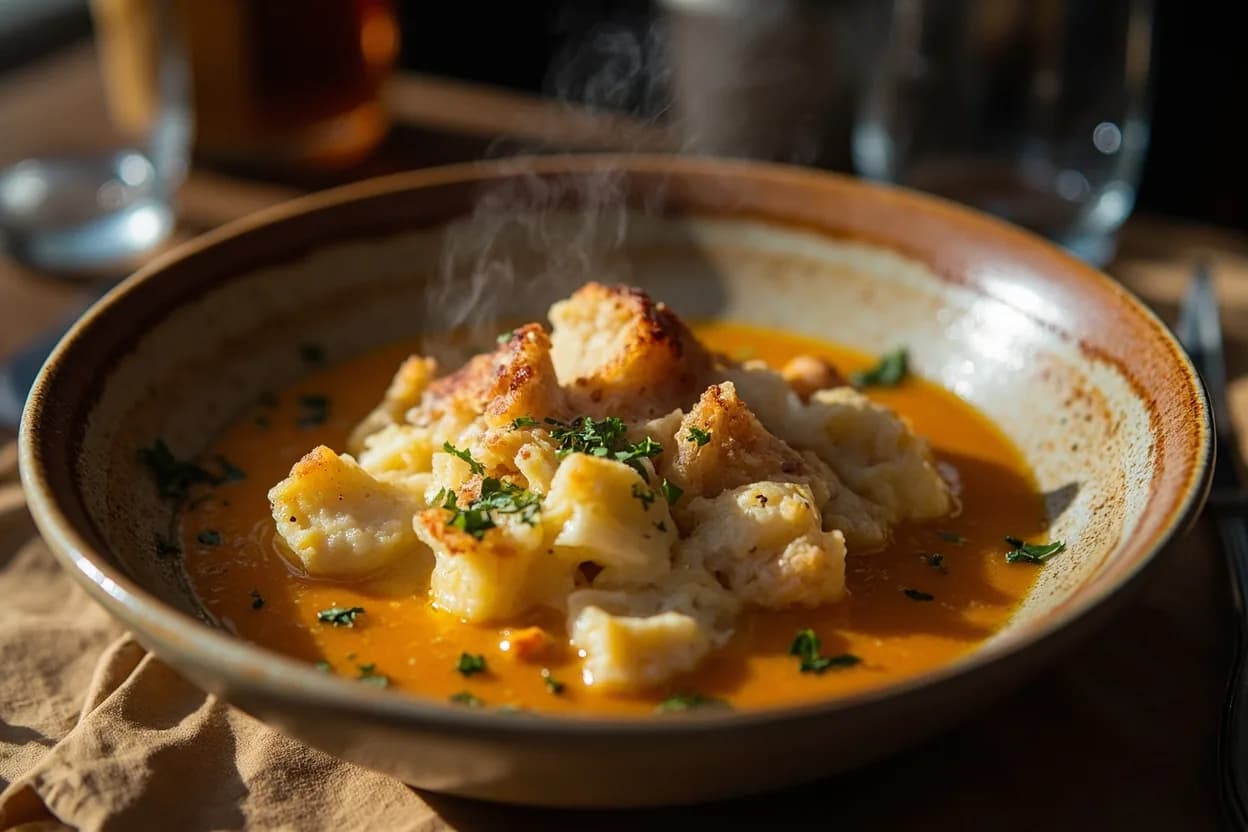
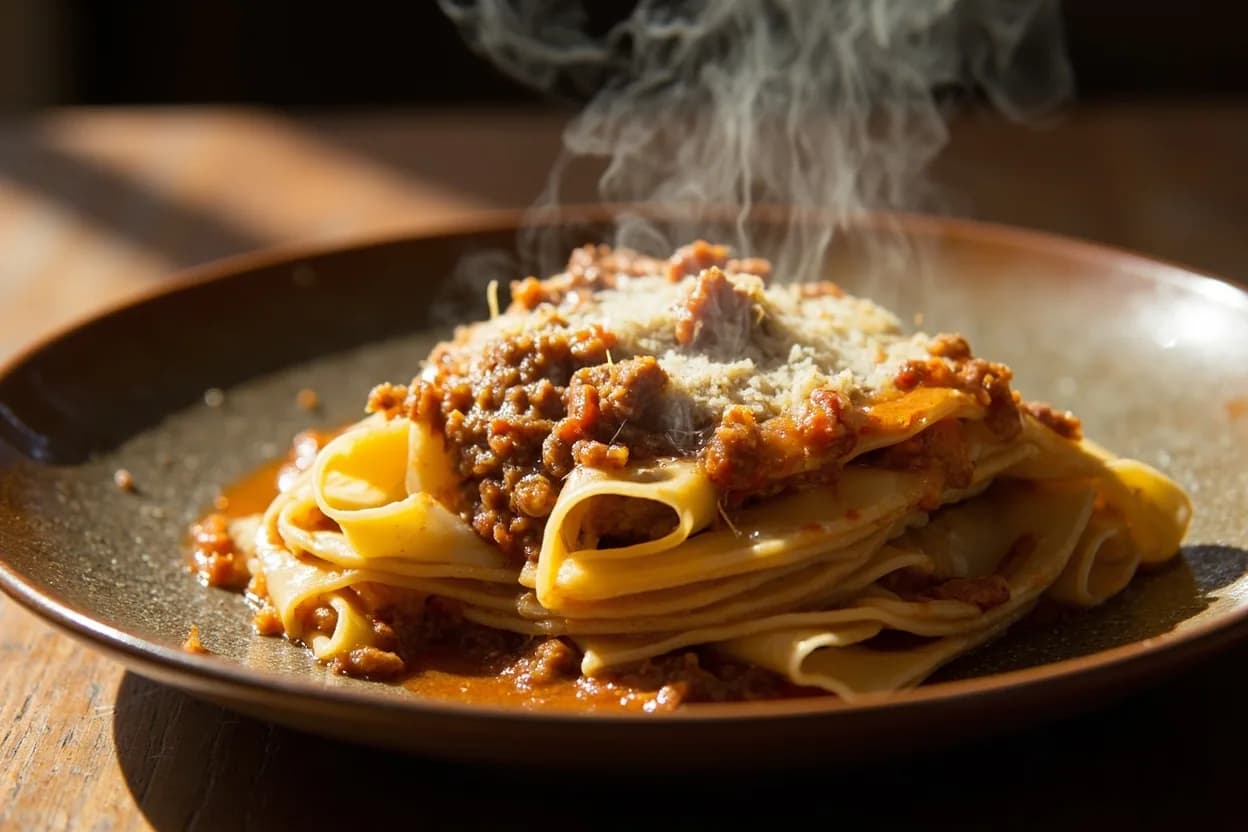
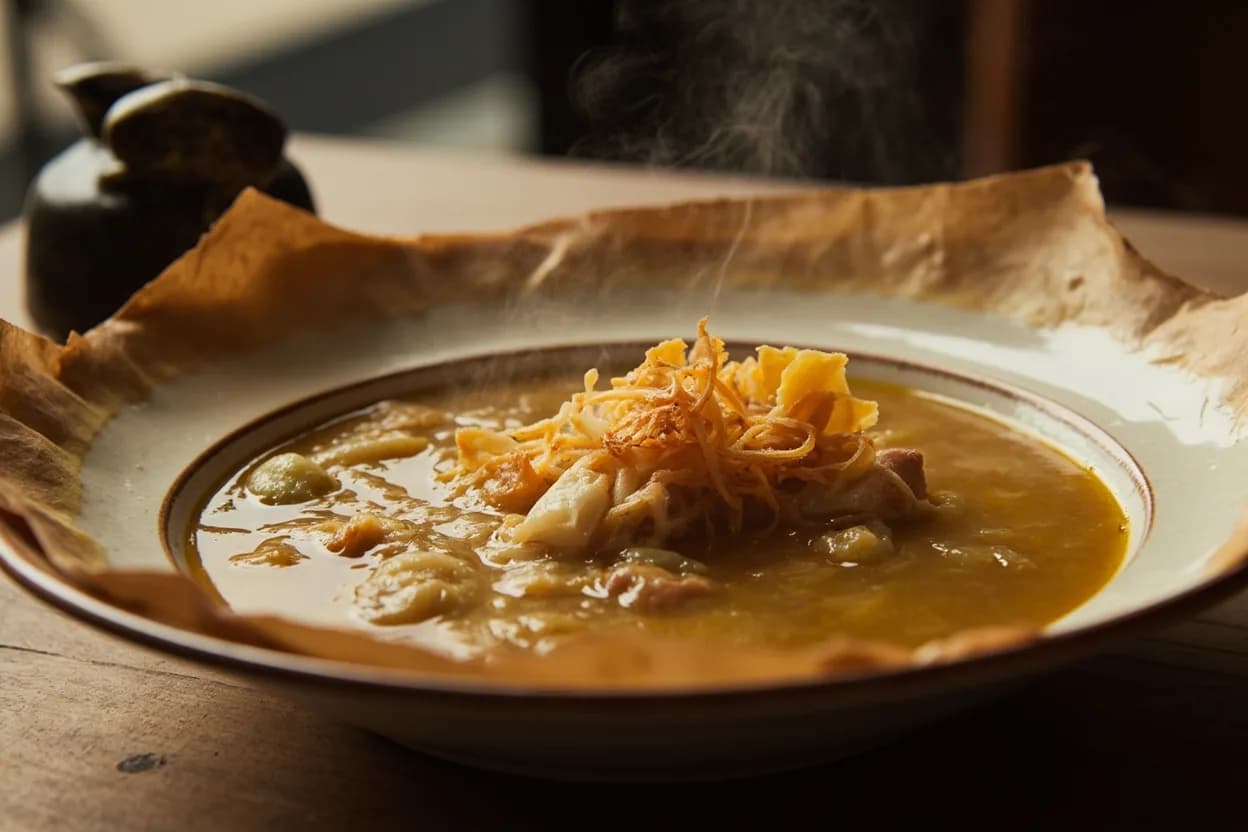
Gratinéeing is a finishing technique, not a recipe: a soft, often saucy base is capped with cheese, buttered breadcrumbs, or both, and put under dry, top-down radiant heat until the surface dehydrates into a deeply browned, crisp crust. The name comes from the French verb gratter — to scrape — a nod to the prized caramelized crust and the browned bits scraped from the bottom and sides of the dish. In a working kitchen it is one of the highest-leverage moves on the menu, because it converts a plain base (potatoes in cream, leftover pasta, a humble onion soup) into something with contrasting texture, toasted-dairy aroma, and visual drama.
The physics are simple but exact. Heat from above drives water out of the topping while proteins and milk sugars undergo the Maillard reaction and caramelization, producing the savory, complex crust that defines the dish. Heat does not come from below; the base stays soft, and the gratin dish is shallow and wide so the topping-to-interior ratio is generous. A salamander (a top-down radiant heater running around 600 °C at the surface) is the classical tool, with the oven broiler or a very hot oven as the home equivalent. Too cool and the cheese simply melts into a tough skin; too fierce and the topping carbonizes before the center has even warmed.
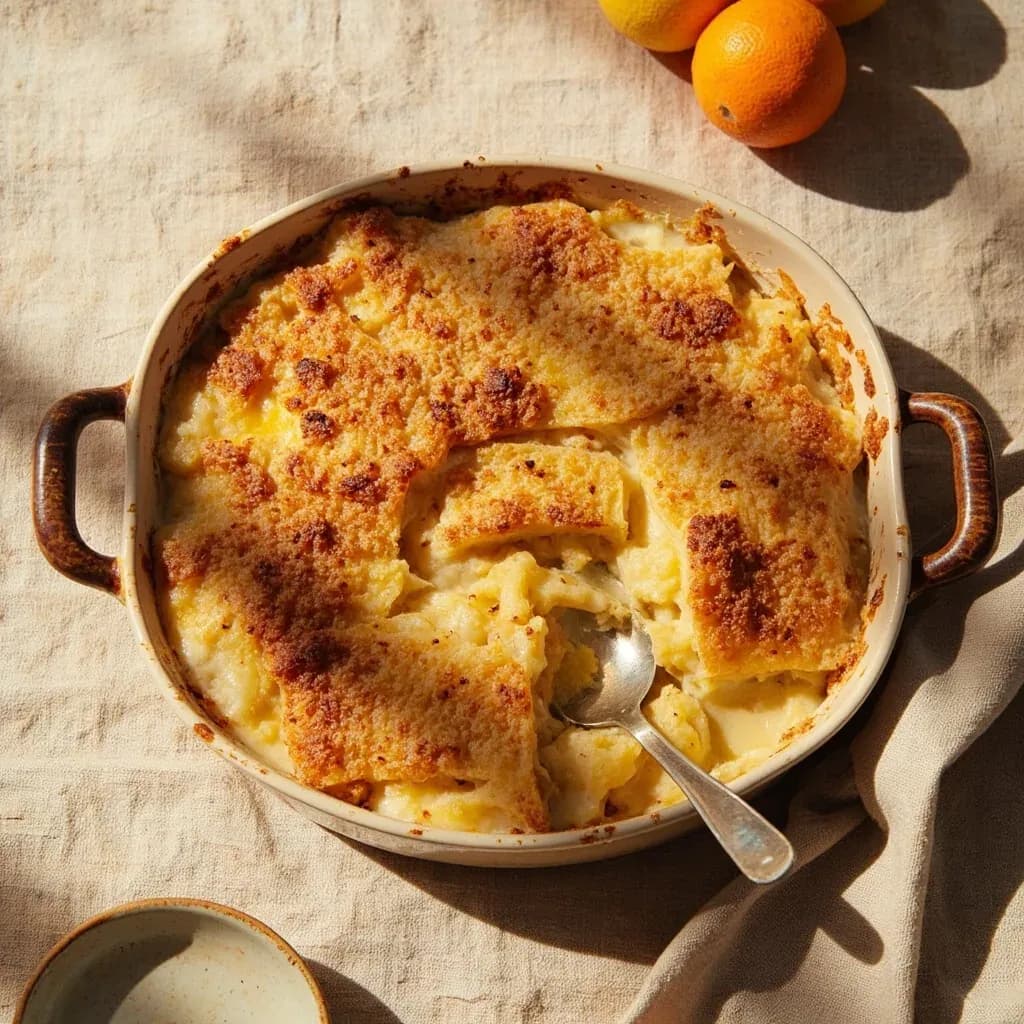
The heavy lifting in any gratin is in the base — seasoning, sauce consistency, doneness of the main ingredient. The gratin finish itself is a fast, high-attention step, usually two to ten minutes under a broiler and watched the whole way. Done well, the crust should be a deep nut-brown, bubbling at the edges, with a soft, almost liquid interior underneath.
- Difficulty
- Easy
Types & varieties
Sliced potatoes baked with cream and garlic; traditionally no cheese, just a slow-browned cream surface.
Same spirit as Dauphinois but with added Gruyère and a clear stock or broth base instead of all cream.
French onion soup finished with toasted baguette and a thick blanket of Gruyère, browned under the broiler.
Macaroni bound with béchamel or Mornay and finished with cheese; the ancestor of American macaroni and cheese.
Sweet variant: fruit (apple, rhubarb, pear, plum, berries) under a sablé, crumble, or simple sugar-and-butter crust, then brûléed.
Salt-cod purée topped with breadcrumbs and cheese and browned — a Niçoise classic.
Leftover lamb or beef under mashed potato, finished with cheese and browned.
Used as a term of art meaning simply 'finished in this style'; not tied to any one ingredient.
How to do it
- 1
Prepare the base
Cook the main ingredient to nearly done — par-boil sliced potatoes in cream, simmer pasta to al dente, sweat onions for soup, fold a Mornay through cooked macaroni — and season it assertively. The base should be hot, not cold, before finishing; a cold gratin scorches on top before the center has even warmed.
- 2
Choose and butter the dish
Select a shallow gratin dish so the topping covers a wide, even surface and the crust-to-interior ratio is generous. Rub the inside thinly with softened butter, paying extra attention to the rim, which is where the cheese most wants to climb and burn.
- 3
Add the sauce
Spoon over a béchamel, Mornay, reduced cream, or clear stock so the base is moist enough to steam gently under the crust. The sauce should coat the ingredients, not pool at the bottom; too much liquid and the dish will weep, too little and the crust cracks as it sets.
- 4
Apply the topping
Cover the surface with a single, even layer 3–5 mm thick: freshly grated cheese, buttered fresh breadcrumbs, or a 50/50 mix. For French onion soup and similar, lay toasted baguette slices over the surface first, then blanket with cheese that overhangs the rim to form a sealed, crusted lid.
- 5
Heat from above
Slide the dish under a preheated broiler, 5–10 cm / 2–4 in from the element. If the gratin is built cold (as with gratin Dauphinois), start in a 200 °C / 400 °F oven to heat through, then switch to the broiler for the final 2–4 minutes.
- 6
Brown to the right color
Cook until the surface is a deep nut-brown, bubbling vigorously at the edges, and smells toasted — usually 2–10 minutes under a broiler, under two minutes under a salamander. Rotate the dish once for even color. Do not walk away: cheese and crumbs go from mahogany to acrid in seconds.
- 7
Rest and serve
Pull the dish and let it rest 2–3 minutes. The molten cheese and cream thicken slightly and the crust firms just enough to be cracked cleanly with a spoon. Serve in the same dish, with a spoon that can break through the crust into the soft layer beneath.
The vessel and the heat source
A gratin is defined as much by its dish as by its topping. The plat à gratin is shallow and wide for a reason: it maximizes the surface area that can be browned relative to the soft interior underneath. Deep casseroles produce a thick, uniform layer of melted cheese rather than a crisp crust. The traditional materials — copper, enameled cast iron, porcelain, earthenware — all work because they hold heat well and can go from broiler to table. Copper browns fastest; porcelain gives the most even color.
The classical heat source is the salamander, a top-down radiant heater that runs around 600 °C at the surface and finishes a gratin in under two minutes. Few home kitchens have one; the oven broiler is the standard substitute, run on high with the rack 5–10 cm (2–4 in) below the element. A blowtorch is a useful third option for a small dish or a missed spot. What you do not want is bottom heat alone — that is baking, not gratinéeing, and the result is melted, not browned.
- Use a shallow, wide dish with a wide rim — depth of 4–6 cm is ideal for most gratins.
- Position the rack close to the broiler element; rotate the dish once for even color.
- A salamander (or blowtorch) gives the most even, classic finish; reserve the broiler for fuller browning across a larger surface.
Gratin, scalloped, and au gratin
These three terms are used loosely, even in cookbooks, but they are not the same. A gratin is defined by the finish: a browned, crisp crust over a soft interior, produced by dry top-down heat. Scalloped dishes are baked in a covered or lower-heat casserole and have no brown top — the surface stays pale and the texture is uniformly soft. Au gratin is the French phrase meaning 'in the gratin style' and technically should refer only to dishes finished with the browned crust; in American usage, 'au gratin potatoes' usually means a cheese-and-breadcrumb casserole that may or may not actually be browned on top. When in doubt, look for the color: if the surface is not deep nut-brown, it has not been gratinéed.
- Gratin = browned crust over a soft interior, finished under top heat.
- Scalloped = covered or low-heat bake, no brown top, uniformly soft texture.
- Au gratin = French for 'in the gratin style'; often used loosely in American recipes to mean cheese-and-crumb casserole.
Common uses
Tips & pitfalls
- Get the base piping hot before it goes under the broiler — a cold gratin scorches on top before the center is bubbling.
- Grate the cheese yourself; pre-shredded cheese is coated with starch or cellulose and browns unevenly and grainy.
- Toss fresh breadcrumbs in melted butter with a pinch of salt so they crisp and brown rather than burn dry.
- Use a shallow, wide gratin dish — the ratio of browned top to soft interior is what defines the technique.
- Position the rack 5–10 cm (2–4 in) below the broiler element and rotate the dish once for even color.
- Watch it constantly during the final minute; cheese and crumbs go from mahogany to acrid in seconds.
- Rest 2–3 minutes after removing from heat — molten cheese and cream set slightly and won't run when spooned.
- For gratin Dauphinois-style, dry the potato slices well; surface moisture is the enemy of a crisp top.
- Don't pile the topping too thick: 3–5 mm of cheese or crumbs browns far better than a heavy blanket.
Good to know
- Origin
- French — from gratter, 'to scrape,' referring to the crisp browned crust and the bits scraped from the bottom of the pan.
- Etymology
- Gratin = the crust; gratinéeing/gratinating = the act of producing it; au gratin = prepared in this style.
- Heat method
- Dry radiant heat from above only — broiler/grill element, salamander, or the top of a very hot oven.
- Core chemistry
- Maillard browning of proteins and caramelization of milk and bread sugars as the topping dehydrates; the interior is steamed, not browned.
- Classic topping
- Freshly grated cheese (Gruyère, Comté, Emmental, Parmesan, Cheddar), fresh breadcrumbs tossed in melted butter, or a 50/50 mix of both.
- Vessel
- Shallow, wide oven-to-tableware — a plat à gratin — traditionally oval, in copper, enameled cast iron, porcelain, or earthenware.
- Temperature & time
- Broiler on high or 220–250 °C / 425–480 °F for 2–10 minutes once the base is hot; longer if baking from cold.
- Equipment
- Gratin dish, oven with a broiler/grill element or salamander, box grater or Microplane, pastry brush.
Also called
gratineeing · au gratin · gratine