Prep & Assembly
Honey Extraction (Centrifuging)
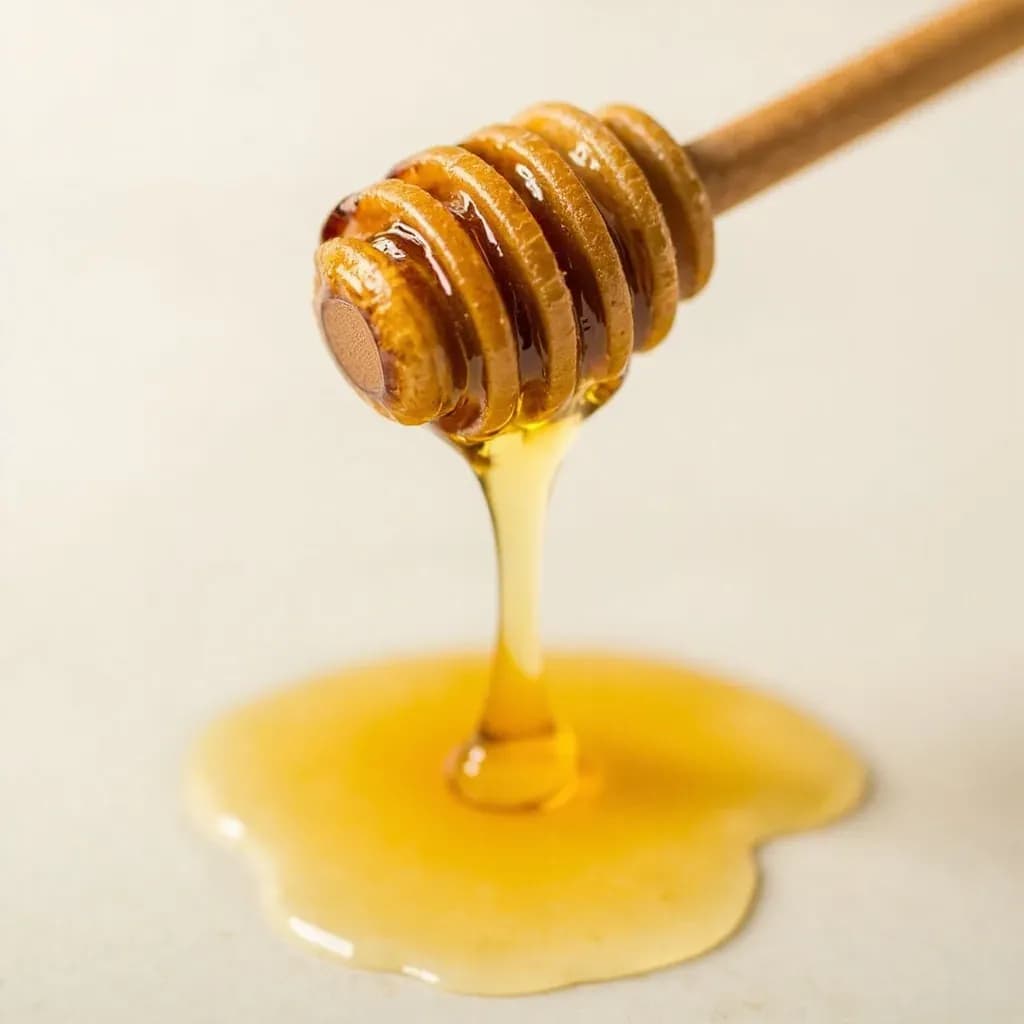
Spinning uncapped honeycomb frames in a centrifuge to fling out honey without destroying the comb.
Honey extraction removes honey from the comb by first uncapping the wax seals, then spinning the frames in a centrifugal extractor so honey flings out against the drum walls. The intact comb can be returned to the hive for reuse, saving bees the energy of rebuilding it. The drained honey is then strained and settled to remove wax bits before bottling.
Centrifugal honey extraction is the standard method of harvesting liquid honey from a beehive without destroying the wax comb. Uncapped frames are loaded into a spinning drum, and centrifugal force flings the honey out of the cells onto the drum walls, where it pools and drains from a gate at the bottom. The comb itself, still intact inside the wooden frame, is returned to the hive for the bees to refill. This is the defining innovation of the method: a single set of drawn comb can be harvested from year after year, instead of being crushed for honey and rebuilt from scratch.
The technique was patented in 1865 by Major August von Hruschka, an Austrian beekeeper working in Venice, and it replaced the older crush-and-strain approach that destroyed comb at every harvest. That economy matters to the colony: secreting wax costs bees roughly eight pounds of honey consumed per pound of wax built, so a reusable frame represents a substantial head start on the next nectar flow. In practice, a deep Langstroth frame of fully capped honey yields five to eight pounds; running it through an extractor at 200–350 rpm, with the honey warmed to 80–95°F so it flows freely, recovers almost all of it while the foundation emerges clean and ready to refill.
- Difficulty
- Medium
Types & varieties
Frames sit flat against the basket wall; one face is extracted, then the frame is flipped for the other side. Slower but cheaper, common in 2–4 frame hobbyist units.
Frames are loaded like spokes with the top bar toward the hub; both sides extract simultaneously. Faster, larger capacity, and the standard in commercial operations.
Small tangential units (2–4 frames) geared so a few turns of the handle become a fast spin. Low cost and no power required.
Electric-drive units with variable speed; ranges from 4-frame hobby models up to 60–120 frame commercial radials.
Plastic-bodied tangential extractor holding 2 deep or 4 medium frames; the typical entry point for backyard beekeepers.
How to do it
- 1
Prepare the honey house
Set up an uncapping station, extractor, double sieve, and settling tank in a clean, bee-tight room. Warm frames to 80–95°F (27–35°C) if they have been stored cold — a sunny room or a small space heater does the job in an hour.
- 2
Uncap the frames
Slice or scrape the wax cappings off both sides of each frame using a heated uncapping knife, a cold uncapping knife, an uncapping fork, or a roller. Let cappings fall into an uncapping tank or tray fitted with a coarse screen so the honey they carry can drain off for separate collection.
- 3
Load the extractor
Place uncapped frames into the basket in a balanced arrangement, with equal weight directly opposite each other, so the drum spins smoothly. Radial baskets take all frames top-bar-in; tangential baskets load flat against the wall.
- 4
Spin the first side (tangential only)
Close the lid, start slowly to break the surface tension on the uncapped face, then ramp to full speed over 30–60 seconds. Honey pools at the bottom of the drum. Radial extractors skip the two-sided routine and clear both faces at once.
- 5
Flip and spin the second side (tangential only)
Reverse the frames so the unextracted face points outward and repeat the spin. The comb has been stressed by the first pass, so a gentler ramp on the second side is usual — pushing the second side too hard can blow weakened comb out of the frame.
- 6
Drain and strain
Open the honey gate at the base of the extractor and let honey flow through a coarse nylon sieve (catches wax chunks and bee parts) into a settling tank fitted with a finer 200-micron filter.
- 7
Settle
Hold the honey in a covered settling tank for 24–48 hours at room temperature so air bubbles and the finest wax particles rise to form a thin surface skim.
- 8
Bottle
Skim the surface foam, then draw honey from the bottom gate into jars or pails. Bottle at 70–80°F for clean filling; cold honey runs thick and traps air pockets, and overheated honey wicks into cap threads and degrades.
- 9
Return wet comb to the bees
Place extracted frames back on the hive at dusk, when the field force is home and robber bees from other colonies are less active. The colony will clean and refill the drawn comb within a day or two.
Moisture, Capping, and Fermentation Risk
Honey's safety in the jar comes down to water activity. Bees cap a cell when the honey inside has been ripened to roughly 17–18.5% moisture, at which point the yeasts naturally present in honey cannot ferment it. Uncapped cells almost always contain honey above that threshold, sometimes well above, and once it leaves the controlled environment of the hive, fermentation is a question of when, not if. This is why centrifugal extraction begins with the cappings knife and not with the spinner: every cell must be opened and emptied, and the rule for the spinner itself is to load only frames that are at least three-quarters capped. A refractometer reading is the only reliable way to confirm; anything above 18.6% should be kept separate and either fed back to the bees or used promptly, not blended into jars for shelf storage.
- Capped honey sits at 17–18.5% moisture; the 18.6% line is the practical fermentation threshold.
- Frames less than three-quarters capped should not go through the extractor with the main crop.
- Honey from uncapped cells can be fed back to the bees, used for mead, or refrigerated and consumed quickly.
- A refractometer calibrated with distilled water is the standard check before bottling.
Common uses
Tips & pitfalls
- Extract only fully capped frames. Uncapped cells almost always contain honey above 18.6% moisture, which ferments in the jar within weeks; if a frame is mostly capped with a few open cells, give it a sharp shake — if honey flicks out, it is not ready.
- Warm the frames to 80–95°F (27–35°C) before spinning. Cold honey is viscous and resists flow, which forces longer spin times and stresses the comb; a sunny room or a small space heater in the honey house does the job in an hour.
- Uncap over a screened uncapping tank, not a bare counter or open bucket. Wet cappings hold a surprising amount of honey, and a tank with a coarse screen lets that honey drain off for separate collection while the wax stays behind.
- Balance the load. Place frames of equal weight directly opposite each other in the basket; an unbalanced drum throws itself out of true, shakes the extractor across the floor, and can damage the gear or the frame.
- Start slow, then ramp up. A gentle initial spin breaks the surface tension on the uncapped face; once honey begins to flow, build to full speed over 30–60 seconds. Throwing the throttle to full RPM from a standstill blows chunks of comb out of the frame and into the bottom of the drum.
- Let the comb drain a few minutes after spinning. Honey clings to cell walls and the inside of the drum; another minute at low speed, or simply leaving the frames in place, recovers a measurable extra amount before they come out.
- Double-strain through a coarse sieve followed by a 200-micron filter, then settle 24–48 hours in a covered tank. Air bubbles and the finest wax particles rise to form a thin skim; removing that skim (rather than stirring it back in) is what gives commercial honey its brilliant clarity.
- Return wet, extracted frames to the hive at dusk, and never wash extractor parts with soap. The bees will clean sticky residue in a day or two, and soap residues are nearly impossible to fully rinse out of food equipment.
Good to know
- Inventor
- Major August von Hruschka, an Austrian/Italian beekeeper, patented the centrifugal extractor in 1865 in Venice
- Working principle
- Centrifugal force flings honey out of uncapped comb cells while leaving the wax comb intact for reuse
- Required precondition
- Cells must first be uncapped (wax seal sliced or scraped off) before frames can be loaded
- Optimal honey temperature
- 80–95°F (27–35°C); cold honey resists flowing and slows extraction dramatically
- Target moisture
- Capped honey is typically 17–18.5% water; above ~18.6% it risks fermentation in the jar
- Typical extractor speed
- Radial extractors spin around 200–350 rpm; tangential extractors run slower and require flipping frames
- Yield per deep frame
- A capped deep Langstroth frame typically yields 5–8 lb (2.3–3.6 kg) of honey
- Comb reuse benefit
- Returning drawn comb saves the colony roughly 8 lb of honey per pound of wax that would otherwise have to be rebuilt
Also called
Frame Spinning · Uncapping · Honey Spinning · Centrifugal Extraction
Related

Whisk
Beat ingredients smooth and aerated with a looping wire motion

Sift
Pass dry ingredients through mesh to aerate and remove lumps

Strain
Pour through mesh to separate solids from liquid for a smooth result

Filter
Pass liquid through fine material to clarify out the smallest particles

Rice
Press cooked potatoes through small holes for fluffy, lump-free texture

Mash
Crush soft cooked food into a rustic, creamy purée

Grind
Crush food into a coarse to fine texture, from spices to meat

Grate
Shred food into fine bits against a sharp-toothed surface