Prep & Assembly
Making Ganache
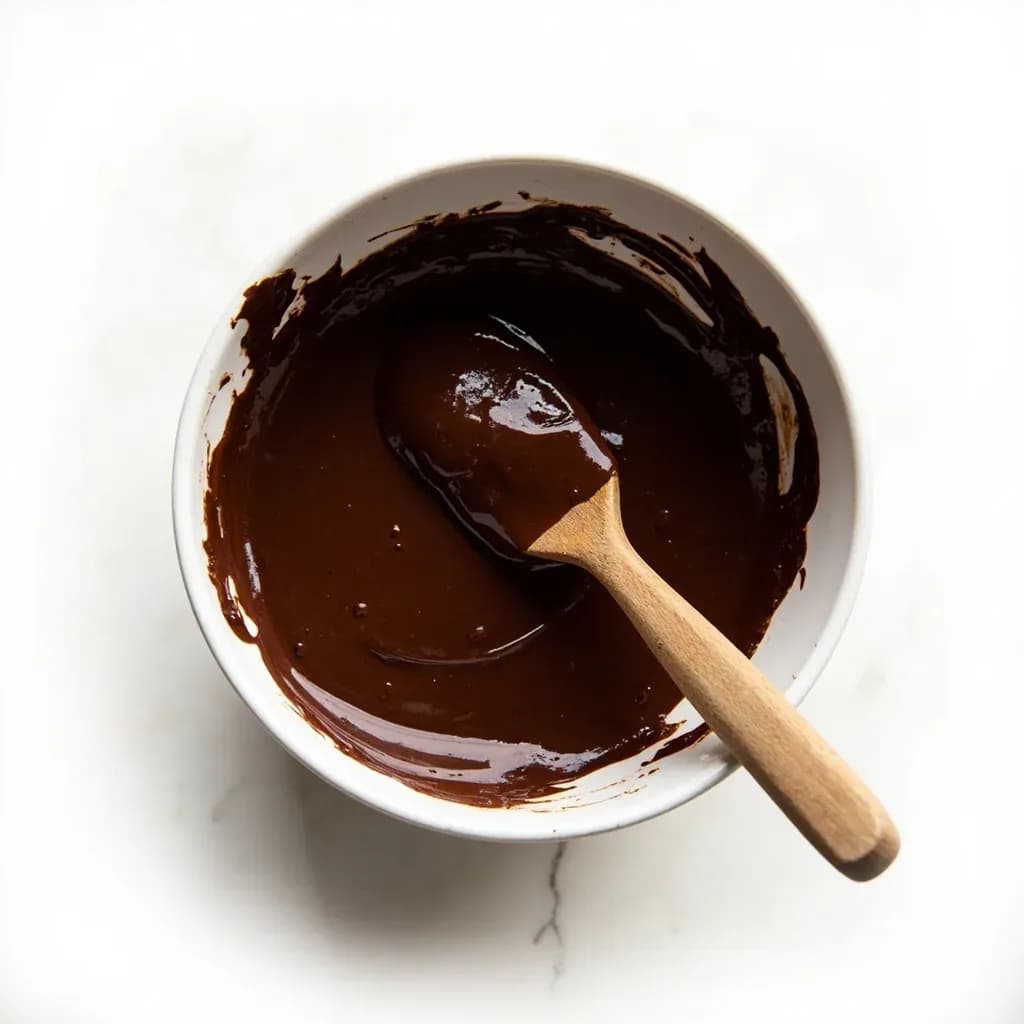
Emulsifying hot cream into chopped chocolate to make a glossy, versatile chocolate mixture.
Ganache is made by pouring hot cream over chopped chocolate and stirring until the two emulsify into a smooth, glossy mixture. The ratio of cream to chocolate sets its use: more chocolate gives a firm truffle filling, equal parts gives a spreadable frosting, and more cream gives a pourable glaze. Stirring gently from the center outward helps form a stable emulsion without breaking.
Ganache is the simplest expression of chocolate work in pastry: chopped chocolate melted with hot cream, stirred into a glossy emulsion with nothing more than heat and a whisk. The mixture is a true fat-in-water emulsion — cocoa butter from the chocolate suspended in the watery phase of the dairy — which is why it can be glossy and pourable one moment and sliceable the next, depending on ratio and temperature. Despite requiring only two ingredients, ganache is one of the most versatile preparations in a pastry kitchen, used as everything from a truffle center to a mirror-smooth glaze.
The single decision that governs everything else is the ratio of chocolate to cream. A 2:1 mix (by weight) is dense and firm once cool, the classic base for rolled truffles. A 1:1 mix is the workhorse middle ground — soft enough to spread, firm enough to pipe, and the standard filling for layer cakes and tarts. A 1:1.5 or 1:2 mix thins out to a pourable glaze or warm sauce. Same two ingredients, three entirely different textures, and each one useful in a different context.
At room temperature ganache firms to a soft, sliceable consistency; chilled, it sets firmer and can be piped, rolled, or whipped. It holds well in the refrigerator, freezes cleanly for a couple of months, and re-emulsifies smoothly when warmed, which is why a single batch can be repurposed across several desserts in the same week.
- Difficulty
- Easy
Types & varieties
Roughly 2:1 chocolate to cream by weight; sets very firm, the base for rolled chocolate truffles.
Equal weights of chocolate and cream; the workhorse for cake fillings, tart fillings, and layer cakes.
More cream, used warm as a glaze, drip, or sauce over cakes and desserts.
Chilled firm ganache beaten like whipped cream until light and fluffy; used for fillings, frostings, and piped decorations.
A firmer, denser version historically used to line ice cream molds before filling.
Infusions or additions such as espresso, vanilla bean, liqueurs (Grand Marnier, Chambord, rum, amaretto), citrus zest, spices, or pralinés folded in.
A small amount of butter, cocoa butter, or glucose syrup added for extra gloss, snap, or stability — common in professional pastry.
How to do it
- 1
Choose your ratio
Decide the final use first, because the ratio drives the texture. Roughly 2:1 chocolate-to-cream by weight for a firm truffle base, 1:1 for fillings and frosting, and 1:1.5–1:2 for a pourable glaze or sauce.
- 2
Chop the chocolate
Finely chop couverture, bars, or pistoles so all pieces are roughly the same small size. Place in a heatproof bowl, ideally metal so it holds warmth.
- 3
Heat the cream
Pour heavy or double cream (at least 30–36% fat) into a saucepan and bring it to just below a boil, with small bubbles around the edge of the pan — about 200°F / 93°C. Remove from heat.
- 4
Pour and rest
Pour the hot cream in a steady stream directly over the chocolate. Make sure all chocolate is submerged. Let the bowl sit undisturbed for 2–3 minutes so the chocolate softens and melts from the inside out.
- 5
Emulsify from the center
Using a whisk or spatula, begin stirring in tight concentric circles in the middle of the bowl. Keep the motion small and slow at first — this pulls the chocolate and cream into a glossy emulsion before you widen the circle.
- 6
Widen the circle and finish
Gradually expand the stirring pattern outward to incorporate the rest of the chocolate. Stop as soon as the ganache is smooth, glossy, and uniform. Avoid whipping in air.
- 7
Adjust texture if needed
Too thick: whisk in a spoonful of warm cream. Too thin or broken: let it cool slightly and stir gently, or whisk a little warm cream in. A pat of soft butter whisked in at the end adds gloss and a softer set.
- 8
Cool, cover, and store
Press plastic wrap directly onto the surface to prevent a skin. Cool to room temperature for fillings, chill until firm for truffles or whipping, or use while still warm (about 90–95°F / 32–35°C) for a glaze.
White Chocolate Ganache
White chocolate behaves differently from dark or milk, and a recipe written for dark chocolate will not transfer cleanly. White chocolate contains no cocoa solids, only cocoa butter, so it generally sets softer than dark at the same ratio and is more sensitive to overheating — the cocoa butter can separate into a greasy puddle if the cream is too hot, and the sugar seizes readily at the first trace of water. Work with slightly lower cream temperatures (around 180–185°F / 82–85°C) and use a higher chocolate-to-cream ratio — roughly 2.5:1 to 3:1 — to get a firm, pipeable set. Stop stirring the moment the mixture is smooth. A small amount of cocoa butter or a teaspoon of neutral oil whisked in at the end can help recover shine if the ganache looks dull or chalky.
Common uses
Tips & pitfalls
- Chop chocolate finely and uniformly — large pieces melt unevenly and leave streaks or unmelted bits in the finished ganache.
- Heat the cream only to a bare simmer, around 200°F / 93°C; a hard boil scorches the milk solids and can destabilize the emulsion.
- Pour the cream in one steady stream directly onto the chocolate, not down the side of the bowl, so the contact is even.
- After pouring, let the cream sit undisturbed for 2–3 minutes to soften the chocolate before any stirring.
- Start stirring in tight concentric circles at the center of the bowl and gradually work outward — this builds the emulsion in a small, controlled zone before thinning it out.
- Stop stirring the moment the ganache is smooth and glossy; over-mixing incorporates air bubbles and dulls the shine.
- If the ganache breaks (grainy, oily, or split), warm a splash of cream and whisk it in a little at a time to bring it back together.
- If the chocolate seizes (goes thick, stiff, and matte), the cream was likely too cool or a trace of water got in; rescue by stirring in small amounts of warm cream, or a teaspoon of neutral spirit.
- Cover with plastic wrap pressed directly onto the surface while cooling to prevent a skin from forming.
- For a pouring glaze, let the ganache cool to about 90–95°F / 32–35°C before pouring over a chilled cake for a clean, even coat.
- Use couverture (high-cocoa-butter) chocolate when possible — it produces a noticeably glossier, snappier set than chips or compound coatings.
Good to know
- Origin
- France, mid-19th century; the word 'ganache' is French slang for a fool or simpleton, a nod to the legend of an apprentice's accidental creation.
- Components
- Chocolate (dark, milk, or white) and heavy cream at 30–36% fat; sometimes butter, glucose, or flavoring.
- Technique
- An emulsion of fat (cocoa butter from the chocolate) into the watery phase of cream, built with heat and gentle agitation.
- Standard ratios
- Roughly 2:1 chocolate-to-cream for a firm truffle base, 1:1 for fillings and frostings, 1:1.5–1:2 for a pourable glaze or sauce.
- Cream temperature
- Heated to just below a simmer, about 200°F / 93°C; a full boil scorches the milk solids and can break the emulsion.
- Setting behavior
- At room temperature ganache firms to a sliceable softness; chilled it sets firmer and can be piped, rolled, or whipped.
- Storage
- Refrigerated in an airtight container 5–7 days; frozen up to 2–3 months.
- Yield
- About 1 pound (450 g) finished ganache per 8 oz (225 g) chocolate plus 1 cup (240 ml) cream.
- Difficulty
- Beginner-friendly, but the emulsion is sensitive to temperature, ratio, and agitation.
Also called
chocolate ganache
Related

Whisk
Beat ingredients smooth and aerated with a looping wire motion

Sift
Pass dry ingredients through mesh to aerate and remove lumps

Strain
Pour through mesh to separate solids from liquid for a smooth result

Filter
Pass liquid through fine material to clarify out the smallest particles

Rice
Press cooked potatoes through small holes for fluffy, lump-free texture

Mash
Crush soft cooked food into a rustic, creamy purée

Grind
Crush food into a coarse to fine texture, from spices to meat

Grate
Shred food into fine bits against a sharp-toothed surface