
Prep & Assembly
Mold
Press food into a form so it sets in a precise shape
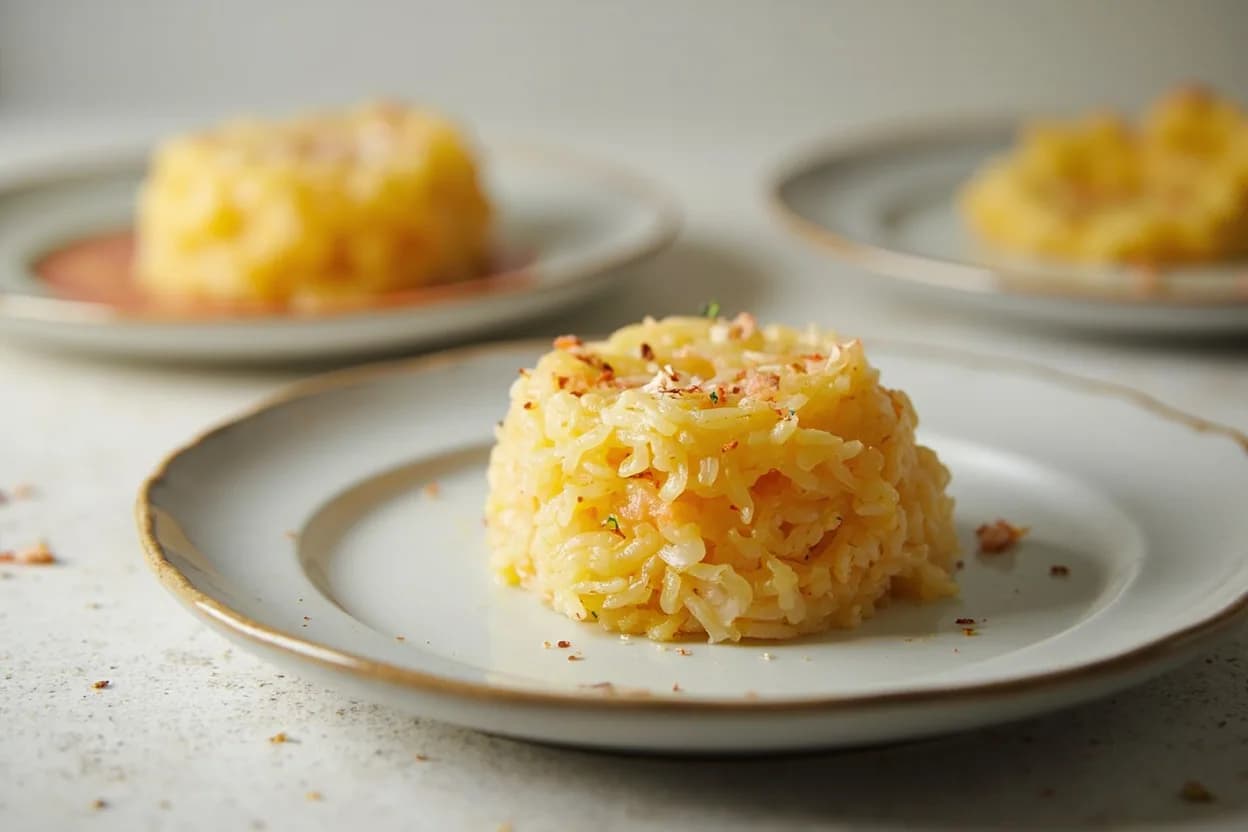
Molding presses food into a form so it sets into a clean, defined shape — a terrine, a ring of rice, a set jelly, or a chocolate. It gives a polished, plated look. Line or grease the mold as needed and chill or set fully before unmolding for crisp edges.
Molding presses food into a form so it sets into a clean, defined shape — a terrine, a ring of rice, a set jelly, a chocolate. It gives a polished, plated look. Line or grease the mold and set it fully before unmolding for crisp edges.
- Difficulty
- Intermediate
How to do it
- 1
Line or grease the mold so it releases cleanly.
- 2
Press or pour the food in, packing out air gaps.
- 3
Chill or set fully — patience pays at this stage.
- 4
Run a knife or warm the mold, then invert to release.
Common uses
Tips & pitfalls
- A brief dip in warm water frees jellies and set custards.
- Plastic-wrap a terrine before filling for a clean lift-out.
- Pack firmly — air pockets show as holes when sliced.
Good to know
- Tool
- Ring mold, terrine, jelly or chocolate mold
- Best for
- Terrines, jellies, plated rice, chocolate
- Difficulty
- Intermediate — setting and release matter
Also called
press into mold
Dishes that rely on it
Related

Whisk
Beat ingredients smooth and aerated with a looping wire motion

Sift
Pass dry ingredients through mesh to aerate and remove lumps

Strain
Pour through mesh to separate solids from liquid for a smooth result

Filter
Pass liquid through fine material to clarify out the smallest particles

Rice
Press cooked potatoes through small holes for fluffy, lump-free texture

Mash
Crush soft cooked food into a rustic, creamy purée

Grind
Crush food into a coarse to fine texture, from spices to meat

Grate
Shred food into fine bits against a sharp-toothed surface