Prep & Assembly
Shell Molding
Pressing a pliable food into a shaped form so it sets into a defined edible shell or shape.
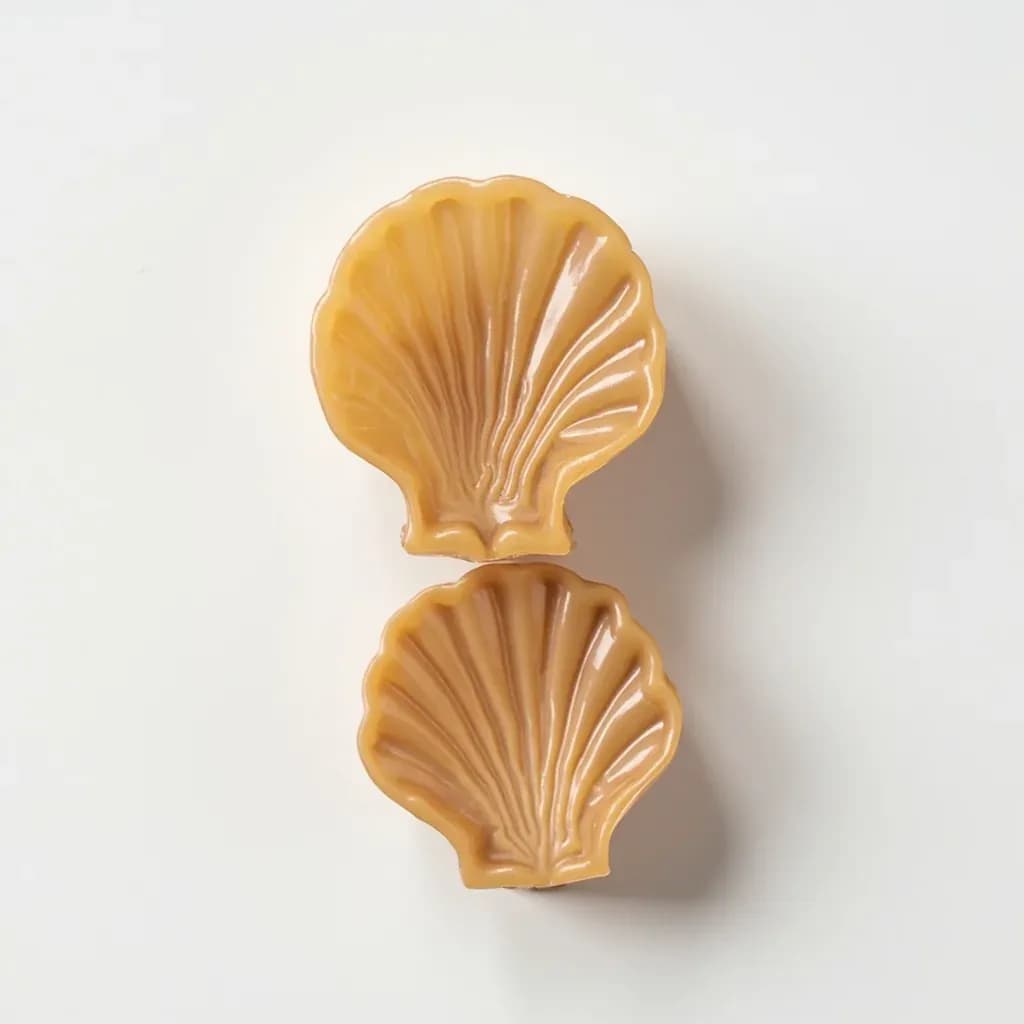
Shell molding presses a workable mixture such as chocolate, tempered sugar, or dough against the inside of a mold to create a hollow shell or a precise shape. Once set or chilled, the molded piece releases cleanly to be filled or assembled. It is common in confectionery, pastry, and plated desserts where consistent geometry matters.
Shell molding is the technique of shaping a pliable food into a hollow or formed vessel that serves as both structure and presentation. The cook brings a material to a workable state, presses, pours, or drapes it into or over a form, and holds it there until the material sets rigid enough to release as a self-supporting case. The shape may be a uniform shell (a chocolate bonbon half, a tuile basket) or an open vessel meant to hold something else (a sugar bowl, a vol-au-vent, a frico cup); what unites every variant is the same underlying trick of making a thin, even layer adopt a shape it could not hold on its own.
Different mediums respond to the same technique because each sets by a different mechanism. Tempered chocolate crystallizes its cocoa butter into a stable form that snaps and shrinks slightly from the mold, giving a clean release and a glossy finish. Cooked sugar cools into a hard amorphous glass, which is why it can be pulled, blown, or cast into shells that hold indefinitely. Cheese and tuile batter set by dehydration as water leaves and proteins and sugars lock together; meringue sets through coagulation of egg-white proteins in a low oven; puff pastry is the odd one out, baked between two ring molds so steam-puffed walls rise into a tall case with the lid formed by the inner ring.
The technique is most closely identified with confectionery — chocolate shells cast in polished polycarbonate molds — but its history is older and broader. Pulled and blown sugar were developed by 16th-century Italian confectioners in Venice and Bologna; the vol-au-vent was systematized by Marie-Antoine Carême in early-19th-century France; the modern chocolate bonbon shell became commercially widespread only in the mid-20th century, when injection-molded polycarbonate forms and a better understanding of tempering arrived together. Across every medium, the fundamentals remain the same: a clean form, a uniformly thin layer, and demolding at the moment the material has set but not fully hardened.
- Difficulty
- Medium
Types & varieties
Tempered chocolate cast in polished polycarbonate molds; the canonical modern shell-molding application, used for filled ganache, caramel, and pâte de fruit centers.
Larger polycarbonate mold, often two halves joined with a piped seam; standard for Easter eggs and molded novelties.
Chocolate set over an inflated balloon, then popped to reveal a free-form bowl — a non-mold alternative that still relies on the same setting principle.
Puff pastry baked between two ring molds of differing diameter so the outer ring forms a tall case and the inner ring becomes the lid.
Finely grated hard cheese, typically Parmigiano-Reggiano, cooked into a thin disc and draped over an inverted bowl while still pliable.
Thin baked batter curved over a rolling pin, cannelle mold, or inverted ramekin while still hot and flexible.
Cooked sugar worked into ribbons or shapes, then built up on a base to form bowls, baskets, and sculptural vessels.
Molten sugar gathered on a pipe and gently inflated like glass to form thin-walled vessels.
Long threads of hot sugar drizzled over a greased form to create an airy dome or nest.
Stiff meringue piped in basket-weave or nest shapes and dried in a low oven.
Round loaf hollowed or formed around a bowl-shaped proofing mould and baked until crisp.
Semolina dough extruded into shell-shaped forms and dried; a savory edible vessel.
How to do it
- 1
Select a mold or form suited to the medium
Match the form to the material: rigid polycarbonate or food-grade silicone molds for tempered chocolate; acetate strips or silicone mats for sugar; an inverted bowl, ramekin, or rolling pin for tuiles, frico, and meringue; ring molds of two sizes for vol-au-vents. The form should be clean, dry, and at room temperature — chocolate streaks on cold molds, sugar crystallizes on damp ones, and cheese sticks to scratched surfaces.
- 2
Bring the medium to its working state
Get the material pliable without overheating. Melt and temper chocolate (dark: melt to 45–50°C, cool to 27–28°C, work at 31–32°C). Cook sugar to its appropriate stage (hard-shell around 150–154°C). Finely grate hard cheese and cook it into a thin lacy disc. Bake tuile batter into paper-thin rounds. Pipe stiff-peak meringue in the desired shape. Each medium has a narrow window of workability; learn it before you begin shaping.
- 3
Apply a thin, even coat
For poured mediums, brush or pour to a uniform 2–3 mm, making sure corners and detail work are fully covered before the bulk of the chocolate pools at the bottom. For pliable mediums (frico, tuile), drape the warm disc directly over the chosen form and press gently into shape — do not force it.
- 4
Remove excess and release trapped air
Invert the mold over a tray to drain surplus, then scrape the rim flush with an offset spatula — leaving a thick foot or ragged edge will telegraph into every later step. Tap the mold firmly on the bench four or five times. Air bubbles rise against gravity, so tap with the working surface facing down to drive bubbles up and out.
- 5
Set under controlled conditions
Cool according to the medium: chocolate at 16–18°C until matte and visibly contracted at the mold edge; sugar at room temperature on a silicone mat; frico and tuiles at room temperature until rigid; meringue dried in a 90–100°C oven; pastry baked at full heat for maximum puff. Avoid the freezer for chocolate unless specifically seeding — rapid chilling dulls the gloss.
- 6
Demold with care
Invert and gently flex the mold; the shell should release on its own at the moment the material has set but not fully hardened. If it resists, return it briefly to the cooler rather than prying. For two-part chocolate shells, pipe a thin ring of melted chocolate along the seam of one half and press the second half in place.
- 7
Fill close to service
Crisp shells (tuiles, frico, meringue, sugar cages) absorb humidity within minutes and should be filled immediately before plating. Chocolate shells hold their texture for several hours if kept cool and dry; ganache-based bonbons can be filled 1–2 hours ahead, caramel or pâte de fruit centers considerably longer. Store unfilled shells in an airtight container with silica gel if you must hold them.
Choosing the right form
The form must match the medium in rigidity, surface energy, and detail. Tempered chocolate demands a polished, high-gloss mold — polycarbonate is standard because it holds a mirror finish and releases cleanly with the right temper; silicone is more forgiving but imparts a softer sheen. Sugar is built on lightly dampened silicone mats or shaped over greased metal forms; acetate strips give sugar clean, sharp edges that other surfaces cannot. Frico and tuiles need a form that can be approached from above while the material is still warm — an inverted bowl, ramekin, or rolling pin works well. Vol-au-vent requires two ring molds of different diameters; the gap between them determines the wall thickness of the finished case. Whatever the medium, the form should be clean, dry, and at room temperature: chocolate streaks on cold molds, sugar crystallizes on damp ones, and cheese sticks to anything with a scratch.
Why shells fail
Most shell-molding problems come down to three causes: the medium was the wrong temperature, the layer was too thick, or the demold happened at the wrong moment. Over-tempered chocolate gives a dull, thick shell that snaps rather than releases; under-tempered chocolate streaks and blooms within hours. Sugar poured too thin shatters; too thick, it traps heat and slumps. Tuiles and frico lose their window of flexibility in seconds — if they cool on the tray before you can drape them, they crack. Meringue dried at too high a temperature browns and cracks instead of drying quietly. In every case, the fix is the same: thinner layers, accurate temperatures, and patience at the moment of release.
- Thick shells crack on release and lose their characteristic snap or bend.
- Dirty or scratched molds produce dull, imperfect chocolate surfaces.
- Demolding too early collapses the shell; too late, and it sticks or shatters on the way out.
- Humidity destroys crisp-shell mediums (tuiles, frico, meringue, sugar cages) within minutes of exposure.
Common uses
Tips & pitfalls
- Polish polycarbonate chocolate molds with cotton and a little rubbing alcohol before each use; even microscopic residue dulls the gloss of the finished shell.
- Temper chocolate correctly — under-tempered shells streak and bloom within hours, over-tempered ones turn thick, dull, and reluctant to release.
- With frico and tuiles, work in seconds; the window of flexibility closes fast as they cool, and a fully cooled disc will only break rather than bend.
- Demold chocolate the moment the shell has visibly contracted from the mold edge — that small gap is the cleanest release point and signals the cocoa butter has crystallized.
- For two-part chocolate shells, pipe a thin ring of melted chocolate along the rim of one half before joining the second; this creates a watertight bond without a visible seam.
- Store unfilled crisp shells with silica gel packets in an airtight container — they absorb ambient humidity quickly and lose their snap within hours otherwise.
Good to know
- Category
- Prep & Assembly technique
- Core principle
- A pliable material is pressed, poured, or draped into a form and held there until it sets into a self-supporting case
- Common mediums
- Tempered chocolate, cooked sugar, hard cheese (frico), tuile batter, meringue, puff pastry
- Standard mold materials
- Polished polycarbonate, food-grade silicone, acetate strips, metal ring molds
- Chocolate temper range (dark)
- Melt to 45–50°C, cool to 27–28°C, work at 31–32°C
- Sugar hard-shell stage
- Approximately 150–154°C / 300–310°F
- Typical shell thickness
- 2–3 mm for chocolate bonbons; 1–2 mm for frico and tuiles; 4–6 mm for vol-au-vent walls
- Difficulty
- Beginner (tuiles, frico) to advanced (pulled and blown sugar, polished chocolate bonbon shells)
Also called
Shell Molding · Molding
Dishes that rely on it
Related

Whisk
Beat ingredients smooth and aerated with a looping wire motion

Sift
Pass dry ingredients through mesh to aerate and remove lumps

Strain
Pour through mesh to separate solids from liquid for a smooth result

Filter
Pass liquid through fine material to clarify out the smallest particles

Rice
Press cooked potatoes through small holes for fluffy, lump-free texture

Mash
Crush soft cooked food into a rustic, creamy purée

Grind
Crush food into a coarse to fine texture, from spices to meat

Grate
Shred food into fine bits against a sharp-toothed surface