Water & Steam
One-Pot Jambalaya Method
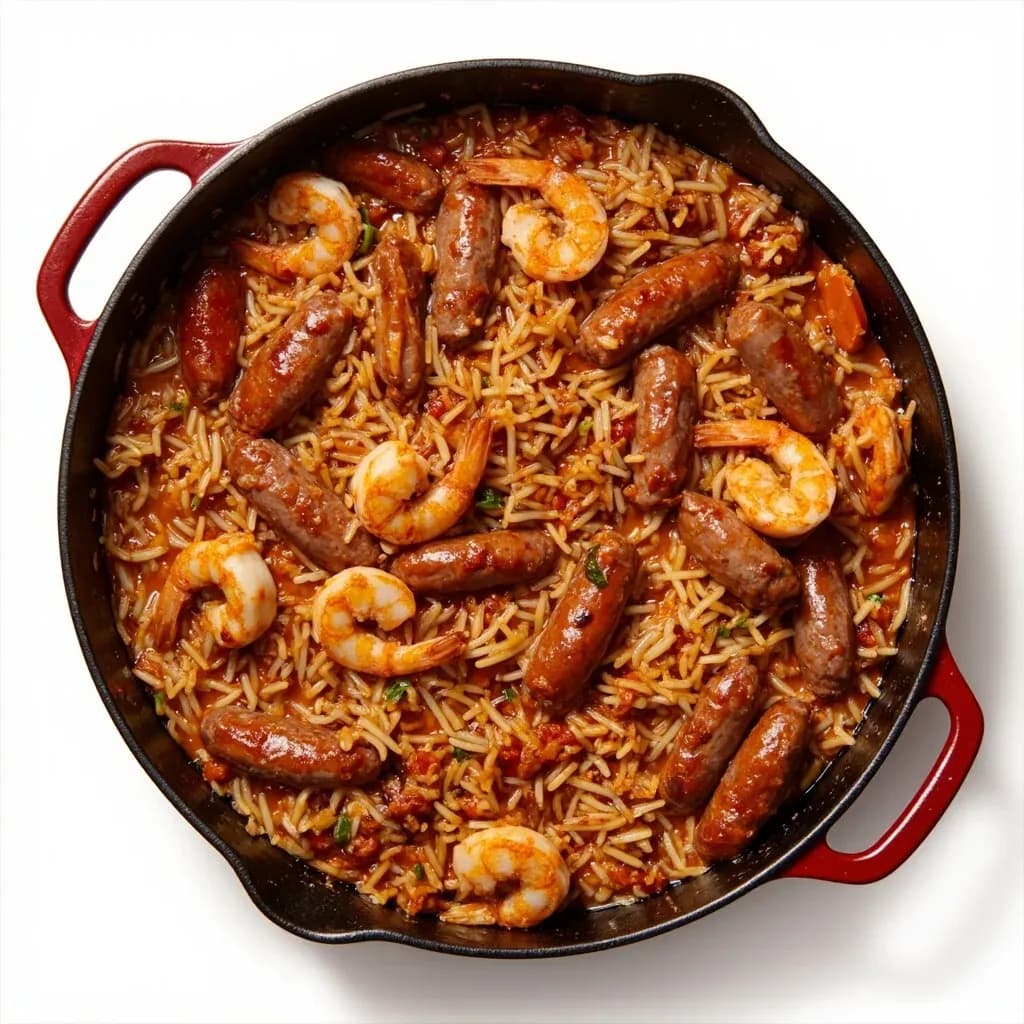
Building a Louisiana rice dish in one pot so the rice absorbs the seasoned stock and meat juices.
The one-pot jambalaya method browns meats and the holy trinity of onion, celery and bell pepper, then adds rice, stock and seasonings to simmer together until the rice is tender and infused with flavor. Cooking everything in a single pot lets the rice soak up the rendered fat and stock for deep, unified taste. The lid stays on during the simmer and the pot is left undisturbed so the rice steams evenly without turning gummy.
Jambalaya is a one-pot pilaf-family technique in which long-grain white rice cooks directly in a seasoned stock loaded with browned meats, the Cajun/Creole holy trinity of aromatics, and the pan fond, absorbing every drop of flavor in a single, hands-off simmer. The method belongs to Louisiana, where it is built in two broad styles — Creole (New Orleans, tomato-based, often called "red") and Cajun (rural Acadiana, no tomato, often called "brown") — but the underlying technique is the same. What sets jambalaya apart from a plain rice pilaf is the deliberate concentration of flavor before the liquid goes in: proteins are rendered and browned, the trinity is sweated soft, and the rice is toasted in the seasoned fat, followed by a strict no-stir, no-peek finish that lets steam do the work.
The behavior of the dish hinges on three variables: liquid ratio, heat intensity, and lid discipline. Roughly 2 to 2.5 cups of stock per cup of rice is the working range — at the lower end for regular long-grain white, the higher end for converted/parboiled — yielding a moist but not soupy pot with grains that hold their shape. Once the lid is on, the cook's job is essentially to wait; lifting the lid or stirring releases the steam that drives even absorption and tends to turn the rice gummy or leave a hard, underdone core at the bottom. Heavy equipment and patient timing are the real ingredients.
- Difficulty
- Medium
Types & varieties
New Orleans–style; built on a tomato base, often with Worcestershire or hot sauce, and a wider mix of proteins including seafood.
Acadiana-style; no tomato, deep brown color from caramelized fond and smoked meats, finished entirely in a single pot.
A lighter Creole variation built on a blonde roux with no tomato, bridging the two regional styles.
The everyday standard — smoked andouille plus bone-in or boneless chicken thighs.
Shrimp, crab, and sometimes oysters stirred in during the last 5–8 minutes so they stay tender.
How to do it
- 1
Render the fat and brown the proteins
Place a heavy Dutch oven over medium heat. Add diced bacon, sliced andouille, or 2–3 tablespoons of oil. When the fat is hot, add chicken pieces (skin on, if using) and sear until deeply browned on all sides. Remove and reserve. Brown the sausage briefly so it renders flavor into the pot without overcooking.
- 2
Sweat the holy trinity and garlic
In the same fat, add diced onion, green bell pepper, and celery in roughly equal volumes. Cook, stirring occasionally, until soft and translucent, 6 to 8 minutes. Add minced garlic and cook 30–60 seconds more. For Creole jambalaya, stir in crushed or diced tomato at this stage and cook 2–3 minutes to concentrate its flavor.
- 3
Toast the rice
Add 2 cups of long-grain (or converted) white rice to the pot. Stir to coat every grain in the seasoned fat and cook 1–2 minutes, until the edges of the grains turn translucent. This step is what gives jambalaya its signature non-sticky texture.
- 4
Season and deglaze
Stir in Cajun or Creole seasoning, bay leaves, dried thyme, and black pepper. Pour in a small splash of stock and scrape up every bit of browned fond on the bottom of the pot — that fond is the backbone of the dish's flavor.
- 5
Add liquid and proteins, then bring to a boil
Pour in warm chicken or seafood stock (about 4–5 cups total, adjusted to your rice). Return the browned chicken and sausage to the pot, along with any slow-cooking pork or smoked meat. Bring to a full, rolling boil and taste the liquid — it should taste slightly saltier and more seasoned than the final dish, because the rice will absorb and mute it.
- 6
Cover and simmer undisturbed
Reduce the heat to the lowest possible setting. Cover the pot tightly and cook without stirring for 18–25 minutes (use your rice package as a guide), until the liquid is absorbed and the rice is tender. If the surface looks dry but the bottom is still wet, leave the lid on for a few more minutes.
- 7
Finish with quick-cooking seafood (optional)
Nestle raw shrimp, scallops, or lump crabmeat on top, replace the lid, and cook 5–8 minutes more, until the seafood is just opaque. The trapped steam cooks it gently and keeps it tender.
- 8
Rest and serve
Remove the pot from the heat, keep it covered, and let the jambalaya rest for 10 minutes. Uncover, fluff gently with a fork, and serve directly from the pot. The grains should be separate, the rice moist but not soupy, and the surface freckled with browned bits.
Choosing the rice
Long-grain white rice is the default because its firm, separate grains stand up to long simmering. Converted (parboiled) rice is more forgiving — it resists overcooking and tolerates a slightly looser liquid ratio, which is why it is the choice for many home cooks. Short-grain and medium-grain rices (arborio, calrose) will turn the pot into a risotto-like porridge; basmati and jasmine work in a pinch but bring their own aromatic notes that can fight the Cajun/Creole profile. Brown rice can be used but needs a meaningful increase in liquid and 15–20 extra minutes.
- Long-grain white: the classic — separate, firm grains.
- Converted/parboiled: most forgiving, resists mush.
- Avoid short-grain: turns gummy under long simmer.
- Brown rice works but needs more liquid and time.
The no-stir, no-peek rule
Once the liquid and rice are combined and the lid goes on, the pot should not be touched until the timer is nearly up. Every stir releases starch and disrupts the even steam distribution that gives jambalaya its characteristic texture; every lid lift bleeds off the steam that drives absorption. The only legitimate mid-cook check is to listen for a quiet, even simmer, or to peek briefly at the very end to confirm doneness. This is the single most important behavioral rule of the technique.
- Stirring releases starch → gummy rice.
- Lifting the lid bleeds steam → uneven or crunchy rice.
- Trust the timer; trust the heavy lid.
- The 10-minute rest after cooking finishes the job.
Building flavor before the liquid
The intensity of a finished jambalaya is decided in the first 15 minutes, not during the simmer. Render the andouille or bacon to give the pot a flavorful fat, brown the chicken and sausage hard enough to develop fond, and sweat the holy trinity slowly until it is truly soft before adding the garlic. This sequence concentrates savory depth into the pot, and when the rice is toasted in that fat and the stock is added, every grain drinks in a richer base than the seasoning alone could provide.
- Render first, brown hard — fond is flavor.
- Sweat the trinity until soft, not just glossy.
- Toast the rice 1–2 minutes in the seasoned fat.
- Deglaze with stock to lift every bit of fond.
Common uses
Tips & pitfalls
- Render the andouille or bacon first and cook the proteins in the rendered fat — the fond that develops is the flavor base of the entire pot.
- Toast the dry rice in the fat for 1–2 minutes before adding liquid; it helps the grains stay distinct and absorb stock evenly.
- Use a heavy Dutch oven so heat is even and the bottom does not scorch during the long simmer.
- Measure liquid carefully: too much makes a porridge, too little leaves a crunchy core — long-grain rice typically wants about 2 to 2.5 cups of liquid per cup of rice.
- Bring the pot to a full boil, drop to the lowest possible simmer, then cover — and resist the urge to lift the lid or stir.
- Add delicate seafood (shrimp, scallops) only in the last 5–8 minutes so it does not overcook and turn rubbery.
- Let the finished jambalaya rest off the heat, covered, for 10 minutes before serving — residual steam finishes the rice and firms the grains.
- If using converted/parboiled rice, lean toward slightly more liquid and a few extra minutes; if using regular long-grain, lean toward less.
Good to know
- Origin
- Louisiana, USA — Creole (New Orleans) and Cajun (Acadiana) traditions
- Technique family
- One-pot pilaf; rice cooks in seasoned stock with no separate boiling step
- Standard rice-to-liquid ratio
- Approximately 1:2 to 1:2.5 by volume; regular long-grain toward the lower end, converted/parboiled toward the higher end
- Preferred rice
- Long-grain white; converted/parboiled is the most forgiving choice
- Aromatic base
- The "holy trinity" — onion, green bell pepper, celery — plus garlic
- Creole vs. Cajun
- Creole jambalaya includes tomato; Cajun jambalaya does not and is browner from fond
- Stirring rule
- Once liquid is in, do not stir — steam absorption must be undisturbed
- Difficulty
- Intermediate; the main variables are liquid control and timing
Also called
jambalaya method · Cajun one-pot rice
Related

Boil
Cook in vigorously bubbling liquid at full rolling heat

Simmer
Hold liquid at a gentle shimmer for tender, unhurried cooking

Poach
Cook gently in barely-trembling liquid for silky, tender results

Steam
Cook in rising vapor to keep color, nutrients, and shape intact

Blanch
Plunge briefly in boiling water, then shock cold to lock color

Braise
Sear, then cook slow in a little liquid until fall-apart tender

Stew
Simmer bite-sized pieces fully submerged into a rich, unified pot

Sous-Vide
Seal and cook in precise warm water for edge-to-edge doneness