Prep & Assembly
Open-Sandwich Building (Smørrebrød)
Layering toppings onto a single slice of buttered bread for a composed open-faced sandwich.
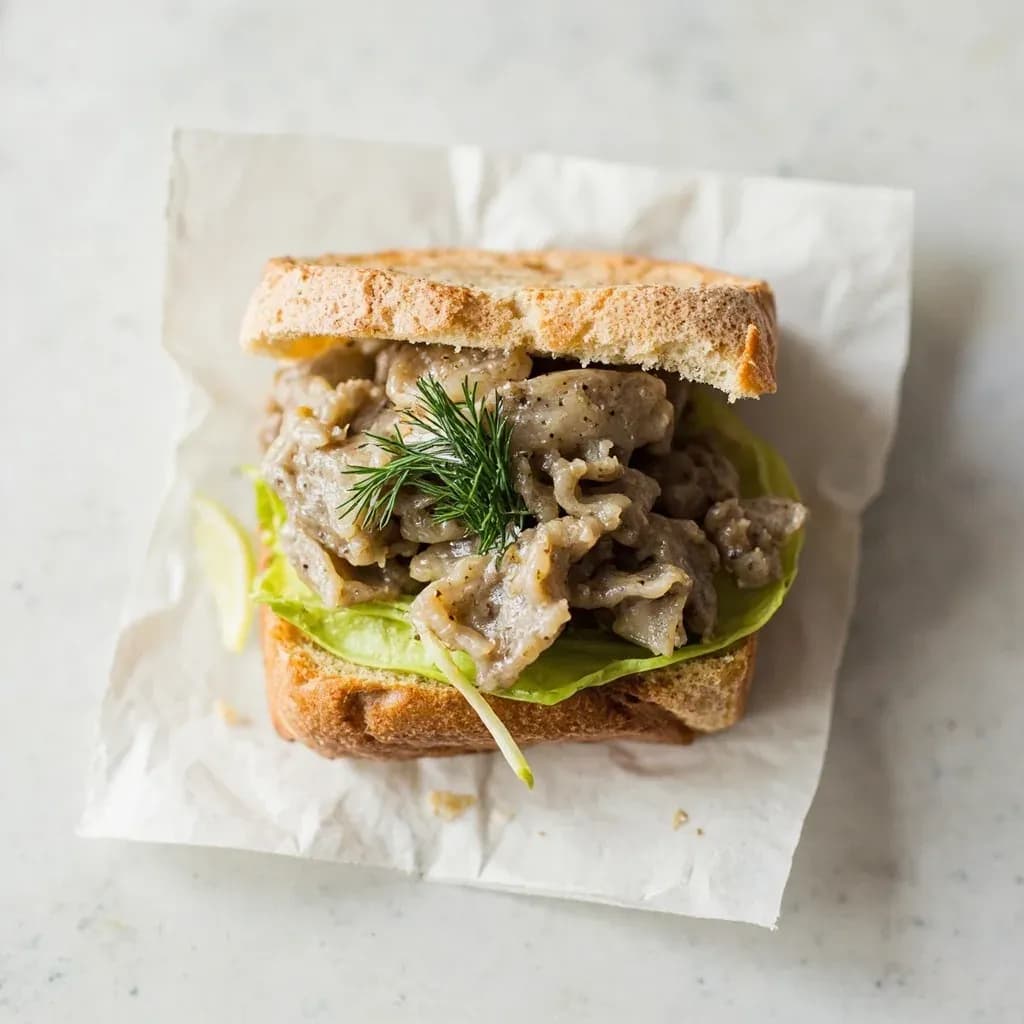
Open-sandwich building is the Scandinavian craft of assembling smørrebrød: a slice of dense rye buttered edge to edge, then arranged with proteins, pickles, and garnishes so every bite is balanced. The butter acts as a seal so the bread doesn't go soggy, and components are placed for height and color rather than piled on. It's eaten with knife and fork, and the order of layering matters for both taste and presentation.
Smørrebrød is the Danish tradition of the composed open-faced sandwich — a single slice of dense rye, most often rugbrød, dressed in a full coat of butter and topped in an arrangement that treats the bread as a small canvas. The form is more demanding than it looks: a smørrebrød is built to be eaten with knife and fork within minutes of assembly, never picked up, never left to sit. The word itself means 'butter and bread,' and that etymology is the recipe — everything else is built on top of two non-negotiable elements.
The architecture is strict and worth internalizing. Butter is not garnish; it is a moisture barrier that protects the crumb from wet toppings and a flavor base that carries the topping in every bite. Beyond the butter, traditional builds run a foundation layer (mayonnaise, remoulade, or a thin salad), a main topping (almost always a protein — herring, roast beef, shrimp, liver pâté, smoked salmon), and a single finishing garnish that gives the eye a place to land. Three to four components is the working ceiling; more turns the slice into a salad. The plate is treated as a small still life: a sprinkle of dill, a curl of lemon peel, a single radish rose, a line of crispy onion — these are not decoration but part of how the form reads.
Practically, smørrebrød is fast to assemble and slow to learn. The bread must be firm enough to bear wet toppings without collapsing; the toppings must be sliced uniformly and arranged with intent; the build must happen close to service. Most mistakes come from skipping the butter, over-saucing, or letting the finished sandwich sit while you finish the rest of the spread. Done well, it is one of the most efficient and elegant ways to turn leftovers, smoked fish, and a few good garnishes into a real meal.
- Difficulty
- Easy
Types & varieties
Herring fillets on buttered rye, often paired with curry salad, dill, or raw onion rings
Two pieces of bread joined on one plate: one with smoked salmon, the other with breaded plaice, plus shrimp, lemon, and asparagus tips
Warm liver pâté on rye, topped with fried mushrooms, bacon strips, and a tomato slice
Liver pâté, salt beef or corned beef, and cress or raw onion on buttered rugbrød
Thinly sliced roast beef, Danish remoulade, crispy fried onions, parsley, and a slice of horseradish
Creamy chicken salad on white or light rye, finished with a thin asparagus spear and a tomato slice
Buttered bread, mayonnaise, sliced hard-boiled egg, peeled Danish shrimp, and lemon or dill
Avocado fanned over buttered bread, topped with shrimp, mayonnaise, and lemon
Smoked salmon on buttered rye or white bread, garnished with fresh dill, lemon, and cracked black pepper
Sliced Danish meatballs on rye with pickled red cabbage, brown sauce, and horseradish cream
How to do it
- 1
Select and slice the bread
Choose a dense, fine-crumbed bread — rugbrød for traditional builds, or a tight white sourdough or pullman for lighter ones. Cut a slice about 1 cm thick, large enough to sit comfortably on a plate. Trim ragged edges if the loaf is irregular.
- 2
Butter the bread fully
Spread room-temperature, high-fat butter (European-style, about 82% fat) edge to edge and corner to corner in an even, thin-to-medium layer. The butter must reach every edge; this seals the crumb and is the flavor foundation. For a warm build like leverpostej, soften the butter further so it melts on contact.
- 3
Add the foundation layer
If using remoulade, mayonnaise, or a thin salad (chicken salad, herring salad, smoked salmon mousse), spread it directly on the butter in a thin, even film. This gives the topping something to anchor to and prevents sliding.
- 4
Place the main topping
Lay the principal ingredient — sliced roast beef, herring fillets, smoked salmon, shrimp, fanned avocado, sliced meatball, liver pâté — in an organized arrangement. Slices should overlap neatly or fan from a single point; shrimp are typically lined up with their tails aligned for visual rhythm.
- 5
Build the accompaniment layer
Add one or two supporting components: a slice of tomato, a line of crispy fried onions, a few capers, a curl of cucumber, a ring of raw onion, a spear of asparagus. Keep flavors in dialogue with the main topping; do not crowd in a third strong flavor.
- 6
Garnish and finish
Crown the sandwich with its signature garnish: a dill sprig, a lemon twist, a parsley leaf, a radish rose, a dot of horseradish, a dusting of paprika, or a single chive. A pinch of flaky salt and a crack of pepper go on at the end.
- 7
Serve immediately, with knife and fork
Place the finished open sandwich on a small plate with optional sides (a spoonful of curry salad, a small pile of crisps, a beer or aquavit alongside). Eat at once with knife and fork; do not pick it up.
Adapting Beyond Rugbrød
Smørrebrød's architecture — dense bread, full butter coat, controlled toppings — translates directly to any open-faced sandwich that has to hold wet ingredients without collapsing. The form works whenever the bread is firm enough to be a real base and the butter can do its job as a barrier. Outside Denmark, you can apply the same logic to whatever dense loaf you have on hand.
- Dense sourdough boule: a strong stand-in for rugbrød on roast beef, smoked salmon, or chicken salad builds; the more open crumb needs a slightly thicker butter coat.
- Pullman or fine-crumb white loaf (crusts off): the traditional base for lighter builds like shrimp and egg, or hønsesalat, where a neutral crumb lets the topping speak.
- Pumpernickel or Jewish rye: the closest cousin to rugbrød in flavor and density; slice thin and butter generously.
- Toast or grilled bread: a valid base for warm builds like leverpostej; the toasted surface adds its own moisture resistance when well-buttered.
- Avoid: ciabatta, focaccia, kaiser rolls, and any soft, holey loaf. The toppings slide, the butter vanishes into the crumb, and the slice collapses under sauce.
Common uses
Tips & pitfalls
- Always butter edge to edge — bare edges let moisture from toppings soak into the bread and turn it soggy. The butter is structural, not optional.
- Choose a bread firm enough to support wet toppings: rugbrød for traditional builds, a dense sourdough or pullman for lighter ones. Avoid soft, airy loaves like ciabatta or focaccia.
- Slice toppings thinly and uniformly. Thickness and shape are part of the visual language; a 3 mm slice of roast beef looks and behaves very differently from a 1 cm slab.
- Build close to service time. A smørrebrød should be eaten within minutes of assembly; even 15 minutes of sitting degrades texture and dulls the visual contrast.
- Do not over-sauce. Apply remoulade, mayo, or dressing as a thin film or piped line, not a puddle; it should be tasted with the bread in every bite, not dominate it.
- Common mistake: piling too many components on one slice. Three to four toppings is the traditional ceiling; more becomes a salad on bread and the butter loses its job as a barrier.
- If a topping releases liquid (cucumber, tomato), salt it briefly and blot dry, or layer it on top of a small bed of lettuce to keep moisture off the buttered surface.
- Keep components cold until assembly, especially seafood, mayo-based salads, and pâté — smørrebrød is meant to be cool and fresh, not warm, except for a few classic warm builds like leverpostej.
Good to know
- Origin
- Denmark; the word literally means 'butter and bread' (smør = butter, brød = bread)
- Traditional base bread
- Rugbrød — dense, slightly sweet Danish rye, usually sliced about 1 cm thick
- Essential barrier
- A full coat of butter spread edge to edge; it seals the crumb against moisture and forms the flavor base
- Layer logic
- Traditionally three: butter, main topping (almost always a protein), and a finishing garnish — with an optional thin sauce or salad as foundation
- How it's eaten
- With knife and fork, on a small plate, immediately after assembly
- Serving rule
- Build just before service; sitting even 15 minutes softens the bread and dulls the visual contrast
- Difficulty
- Easy to assemble, hard to master — visual composition is part of the craft, not decoration
- Documented history
- Evolved from a 19th-century field snack; codified as a composed form in Copenhagen restaurants from the mid-1800s onward
Also called
Smørrebrød · Open-Faced Sandwich
Related

Whisk
Beat ingredients smooth and aerated with a looping wire motion

Sift
Pass dry ingredients through mesh to aerate and remove lumps

Strain
Pour through mesh to separate solids from liquid for a smooth result

Filter
Pass liquid through fine material to clarify out the smallest particles

Rice
Press cooked potatoes through small holes for fluffy, lump-free texture

Mash
Crush soft cooked food into a rustic, creamy purée

Grind
Crush food into a coarse to fine texture, from spices to meat

Grate
Shred food into fine bits against a sharp-toothed surface