Ready to use
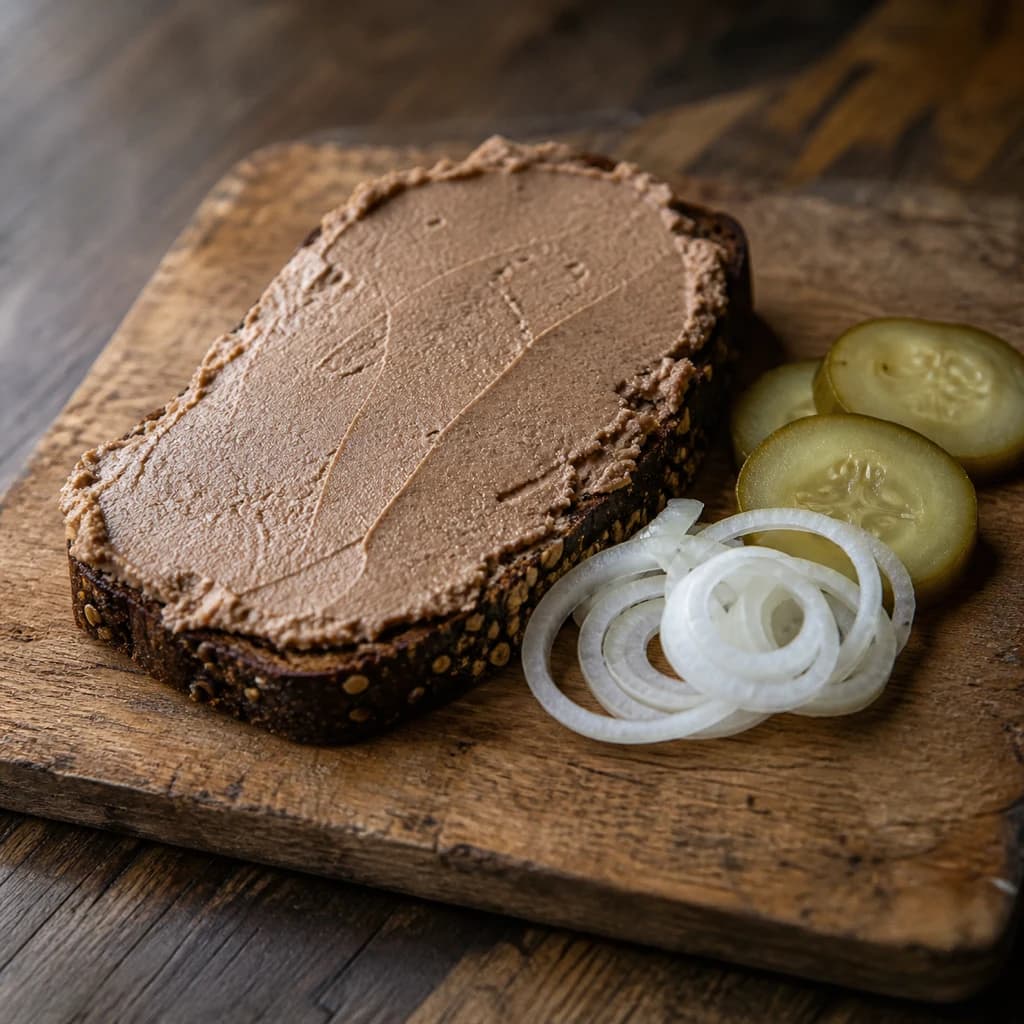
Liver pâté spread thickly on dark rye bread, garnished with sliced pickles and onion rings.
Shows the most common serving context — the Danish leverpostej tradition — making the spread's texture, color, and use immediately recognizable.
Proteins
Liver Pâté
Smooth, rich spread of cooked liver and fat, served on bread or as a cold cut.
Liver pâté is a smooth or coarse paste made from cooked liver blended with fat, aromatics, and seasonings. It is spread on bread or crackers and is a staple of Danish leverpostej, Dutch leverworst, and Luxembourg liver dumplings. Its rich, savory, slightly mineral flavor is often balanced with pickles or onions.
Liver pâté is a smooth, rich spread made by puréing cooked liver with fat—typically butter, rendered poultry fat (schmaltz), cream, or pork fatback—until it achieves a cohesive, spreadable consistency. The technique transforms a nutritionally dense but perishable organ meat into an elegant, long-lasting appetizer. French cooks refined liver pâté in the Loire Valley during the 15th–17th centuries, developing the fine, sieved preparations that define haute cuisine; Jewish cooks independently created schmaltz-based versions as a way to render poultry fat while producing a flavorful spread, resulting in earthier, less smooth preparations. The key to excellent liver pâté is restraint in cooking time, assertive seasoning, and sufficient fat to emulsify the liver into a smooth paste rather than a grainy mass. The finished spread should be dense enough to hold its shape when sliced but supple enough to spread easily—served cold or at room temperature, never hot.
- Measured in
- g
- Storage
- Fridge
Types & varieties
Most accessible; milder flavor; typically prepared with schmaltz or butter
Classic French preparation; richer, more pronounced flavor; often includes cognac or armagnac
Most luxurious; buttery, intensely rich; legal in US but expensive
Common in German and Eastern European traditions; often mixed with pork fat and onions
Combines chicken and pork or veal livers for balanced flavor
Lighter, aerated version whipped with cream or butter; smoother texture
Extremely smooth, sieved preparation; often enriched with butter
Legal US designation; must contain minimum fat content; may include whole liver pieces
Common uses
Tips & pitfalls
- Soak raw liver in milk or brine for 30–60 minutes before cooking to reduce bitterness and improve texture
- Always remove visible veins, membranes, and green bile sacs from pork or beef liver before cooking
- Sauté livers quickly over high heat in small batches to avoid steaming; they should be pink in the center when removed
- Cook livers just past the raw stage—they continue cooking from residual heat; overcooking produces a grainy, dry texture
- Add aromatic vegetables (shallots, onions, garlic) to the pan after livers are nearly done, not before
- Purée while still warm for smoothest results; cold livers resist emulsification and become sticky
- Pass the cooked mixture through a fine-mesh sieve for the smoothest possible texture
- Season generously with salt, white pepper, and a splash of brandy or cognac—liver needs assertive seasoning
- Refrigerate in a covered container pressed with plastic wrap directly on the surface to prevent oxidation
- Bring to room temperature 15–20 minutes before serving to develop full flavor
- If using butter as the fat, brown it first (beurre noisette) for added depth
- Balance richness with acid: serve with cornichons, Dijon mustard, or pickled onions
Nutrition
Energy
1272 kJ · per 100 g
Where the calories come from
Protein
15.2g
30% DV
Carbs
2.1g
1% DV
Fat
25.6g
33% DV
Fiber
0g
0% DV
Sodium
1225mg
53% DV
Source · USDA FoodData Central · Liver cheese, pork
View on FDC →In the shops
Matched grocery products
No matched grocery products for Liver Pâté yet.
Good to know
- Primary liver types
- Chicken, duck, goose, pork, calf, or lamb liver
- Typical fat component
- Butter, rendered poultry fat (schmaltz), cream, or pork fatback
- Origin
- Medieval France; liver spreads also traditional in Jewish and German cuisine
- Flavor
- Rich, earthy, mineral; intensity varies by liver type and preparation
- Serving temperature
- Cold or room temperature, never hot
- Shelf life (refrigerated)
- 3–5 days without preservatives; up to 1 week in tightly sealed container
- Freezer storage
- Up to 2 months in airtight container
- Yield
- Approximately 1 cup per 1 lb (450 g) raw liver
- Prep difficulty
- Intermediate; requires attention to cleaning, cooking time, and emulsification
- Essential equipment
- Food processor or molcajete, fine-mesh sieve, sauté pan, offset spatula for unmolding
Substitutes
- Liverwurst — Commercially prepared pork liver spread; similar flavor but often coarser texture and added fillers
- Cream cheese with minced liver — Reconstituted dried beef liver blended with cream cheese as a lower-cost spread
- Commercially bottled liver spread — Consistent quality but typically lower fat content; often contains preservatives
- Hummus with added tahini — Texturally similar spread; no liver flavor but appropriate for vegetarian contexts
- Country-style pâté (not liver-based) — Meat and fat paste without liver; smoother but different flavor profile
Pairs with
Also called
Leverpostej · Liver Sausage · Leverworst · Liver Dumplings · Liewerkniddelen
Appears in these dishes
Related

Egg
The kitchen's everything ingredient — bind, leaven, enrich, or fry

Chicken Breast
Lean, quick-cooking white meat for everyday dinners

Ground Beef
Versatile minced beef for burgers, ragù, tacos, and meatballs

Pork Loin
Lean, tender roasting cut that stays juicy with care

Salmon
Rich, rosy fish that roasts, grills, or cures beautifully

Egg White
Pure protein that whips to airy peaks for meringue and more

Egg Yolk
Rich, golden yolk for custards, mayonnaise, and pasta

Quail Egg
Tiny, speckled eggs for garnishing and elegant bites