Prep & Assembly
Hand Pasta Shaping
Forming fresh pasta dough by hand into regional shapes like malloreddus, busiate, or stuffed culurgiones.
Hand pasta shaping turns simple flour-and-water or egg dough into distinctive regional forms using fingers, ridged boards, or thin rods. Techniques range from dragging ridges into malloreddus to twisting busiate around a skewer and pleating culurgiones closed. Each shape is engineered to grip a particular sauce, and the skill is passed down through generations across Italy.
Hand pasta shaping is the family of techniques Italian cooks use to form fresh dough into specific regional shapes without extruders or dies — dragging, rolling, pinching, and winding dough against boards, rods, and baskets to create the rough, ridged, twisted, or stuffed forms that define local cuisine. The craft matters because the texture these motions produce — a thumb-dragged cup, a wicker-basket ridge, a knitting-needle twist — is what allows the pasta to grip sauce in ways a smooth, machine-extruded surface cannot. It is also a low-equipment practice: most shapes can be formed with a wooden board, a knife, a fork, or a thin rod, making it accessible to home cooks who want results machine pasta cannot deliver.
The behavior of the dough dictates the technique. Southern Italian semolina-and-water doughs (used for orecchiette, malloreddus, busiate) are firm, low-gluten, and forgiving of heavy handling; they need about 40–45 percent hydration by flour weight and hold their shape after a brief rest. Northern egg doughs (used for cappelletti, tortellini, stuffed shapes) are softer, more elastic, and require careful resting to prevent spring-back during pinching. Across both families, the principles are the same: knead until smooth, rest until relaxed, work in small portions, dust with semolina rather than soft flour, and shape on a surface that grips without grabbing — usually wood.
- Difficulty
- Medium
Types & varieties
Sardinian semolina 'little morsels' ridged on one side, traditionally formed by pressing a dough strip against a wicker basket or butter board; classically served with sausage ragù.
Sardinian stuffed pasta filled with potato, pecorino, and mint; edges pinched upward into a wheat-ear closure (sa serra).
Sicilian twisted spirals from Trapani, made by winding a thin dough strip around a knitting needle or thin iron rod (busa).
Pugliese 'little ears' formed by dragging a small dough piece with the back of a knife against a wooden board, then inverting over the thumb.
Small shell-like shapes from Molise, Abruzzo, and Campania; dimpled by pressing two fingertips into a dough pellet and rolling it off a gnocchi board.
Ligurian thin twists rolled off the palm against a flat surface, traditionally served with pesto, potatoes, and green beans.
Tuscan thick hand-rolled strands made from flour and water, dragged and rolled between palm and board.
Umbrian rough-cut strips of flour-and-water dough, rolled by hand and cut with a knife, classically paired with black truffle.
Calabrian tapered twists formed by rolling dough around a thin stick (filo) or knitting needle.
Sardinian braided ring pasta from Morgongiori, woven around two fingers or a reed; one of the rarest shapes.
Emilian stuffed egg-dough pasta; small discs folded around a filling and shaped into a hat or navel form.
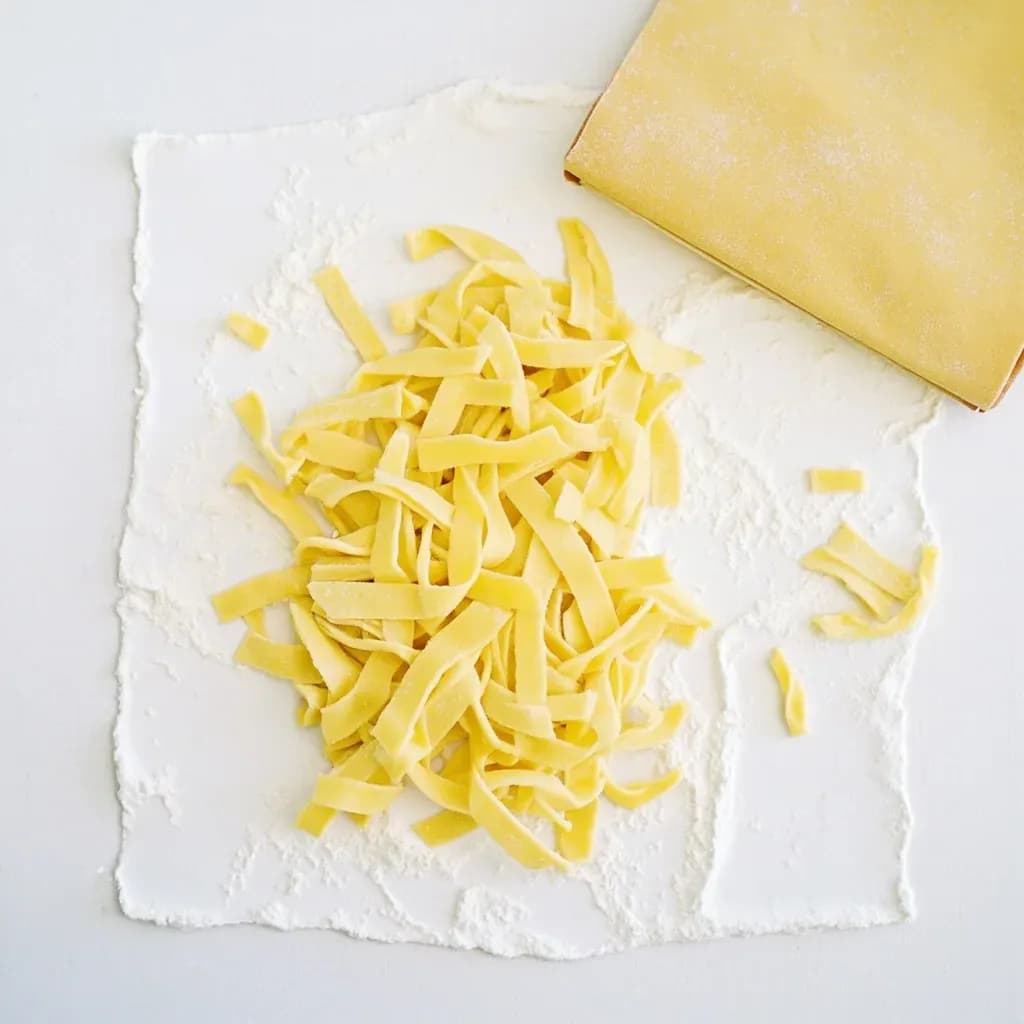
Lombard buckwheat tagliatelle, rolled thin and cut by hand with a knife directly off the dough sheet.
Sardinian large ridged tubes pressed against a forked stick or coarse grater.
How to do it
- 1
Mix and knead the dough
Combine flour (semolina for southern shapes, soft wheat for egg doughs) with water or eggs and a pinch of salt. Knead 8–10 minutes until smooth and elastic; the dough should feel firm but pliable, not tacky. Adjust with flour or liquid in small amounts.
- 2
Rest the dough
Wrap tightly in plastic and rest 30 minutes at room temperature, or up to overnight in the refrigerator, to relax the gluten. Cold dough should be brought back to room temperature before shaping.
- 3
Portion the dough
Cut the rested dough into pieces the size of a lemon; keep the remainder covered. Roll each portion into a rope, log, or thin sheet depending on the shape being formed.
- 4
Shape the pieces
Form each piece using the motion appropriate to the variety: drag a small piece against a wooden board with a knife to make orecchiette; roll a pellet off a gnocchi board with two fingers for cavatelli; wind a thin strip around a rod for busiate; pinch a filled disc into a wheat-ear for culurgiones. Dust hands and surface with semolina as needed to prevent sticking.
- 5
Dust and arrange
As each piece is shaped, toss it in fine semolina and arrange in a single layer on a tray. Keep pieces from touching so they do not fuse together.
- 6
Dry briefly before cooking or storing
Let shaped pasta rest uncovered 15–60 minutes at room temperature to form a light skin. Cook immediately in heavily salted boiling water, or freeze on trays until solid and transfer to bags for longer storage.
- 7
Cook and finish
Drop shaped pasta into boiling water; small shapes like orecchiette cook in 2–3 minutes, stuffed varieties 4–8 minutes. Drain when just al dente and finish in sauce so the pasta absorbs flavor and the surface binds to the condiment.
Reading the dough
The single biggest variable in hand shaping is hydration, and it shows up immediately in how the dough behaves. Semolina-and-water doughs that are too wet stick to hands and tools and tear when pinched; too dry, and the edges crack as you form them. A properly hydrated semolina dough should feel like firm modeling clay — it holds a thumbprint without sticking but does not crumble at the edges. Egg doughs are softer and tackier; they should be rested longer and worked on a lightly floured surface, with the rest of the batch kept covered so it does not dry out while you shape. Always keep a small bowl of semolina at hand and dust hands, tools, and the board lightly as you go.
- A correctly hydrated semolina dough holds a thumbprint without sticking.
- Egg doughs benefit from 30 minutes of rest minimum; semolina doughs can be shaped after 20.
- A dry dough cracks at the edges during pinching — mist lightly with water and re-knead.
- A wet dough clings to hands and tools — work in more semolina a tablespoon at a time.
Tools and surfaces
Tool choice affects texture as much as technique. A wooden gnocchi board (rigagnocchi) with deep ridges produces stronger sauce-cupping on cavatelli than the back of a fork. A butter paddle or wicker basket (ciuliri) creates the classic Sardinian ridge for malloreddus. A thin iron rod, knitting needle, or bamboo skewer gives busiate and fileja their twist. Wood is the preferred working surface because it grips dough gently without the chill of marble or the slipperiness of steel.
- Wooden board: gentle grip, the default surface for most shapes.
- Gnocchi board (rigagnocchi): deep ridges for cavatelli.
- Butter paddle or wicker basket (ciuliri): the traditional ridge-maker for malloreddus.
- Knife (chef's or paring): used to drag and cut dough for orecchiette, strangozzi, pizzoccheri.
- Thin rod, knitting needle, or bamboo skewer: forms the twist in busiate and fileja.
Matching shape to sauce
Hand-shaping exists to create texture that holds sauce, and matching the shape to the condiment is part of the craft. Ridged and cupped forms (orecchiette, malloreddus, cavatelli) catch chunky ragù and vegetable sauces. Twisted spirals (busiate, fileja, trofie) trap oil-based sauces like pesto in their folds. Long rough strands (pici, strangozzi) carry butter, breadcrumbs, or shaved truffle. Stuffed shapes demand a simple butter or oil sauce that lets the filling speak.
- Ridged cups: chunky ragù, broccoli rabe, sausage sauces.
- Twists: pesto, simple olive oil, anchovy sauces.
- Long rough strands: brown butter, breadcrumbs, black truffle, tomato.
- Stuffed shapes: melted butter, sage, light cream, or brodo.
Common uses
Tips & pitfalls
- Rest the dough fully before shaping — even 20 minutes prevents spring-back and tearing during pinching or rolling.
- Keep a small bowl of semolina at hand and dust hands and work surface lightly; soft flour leaves a gummy coating that dulls sauce grip.
- Work with dough portions the size of a lemon so the rest of the batch stays covered and does not dry out.
- Maintain uniform piece size so all pasta finishes cooking at the same time; aim within 1–2 g per piece for stuffed shapes.
- Press firmly rather than dragging lightly when forming orecchiette and cavatelli — a heavy drag thins the dough unevenly and produces fragile edges.
- For busiate and fileja, keep the rod lightly floured and pull the dough off with a quick flick to set the twist cleanly.
- Seal stuffed pasta by pressing out the air pocket before closing — trapped air expands during cooking and bursts the pasta open.
- Cook a test piece before committing the batch; if it cracks, the dough is too dry; if it mushes, it is too wet or under-kneaded.
Good to know
- Origin
- Hand-shaped pasta traditions span Italy, with concentrated regional practice in Sardinia, Puglia, Liguria, Sicily, Tuscany, Umbria, and Emilia-Romagna.
- Typical Doughs
- Semolina flour and water for southern shapes; soft wheat flour and eggs for northern stuffed shapes; soft wheat flour (with chestnut-flour variants) for Ligurian trofie; buckwheat for Lombard pizzoccheri.
- Hydration
- Semolina-and-water doughs run 40–45 percent liquid to flour weight; egg doughs about 30 percent.
- Resting Time
- Dough is rested 30 minutes to overnight, wrapped in plastic, to relax gluten before shaping.
- Storage
- Fresh pieces dry 15–60 minutes on semolina-dusted trays, then refrigerate up to 2 days or freeze on trays before bagging for several months.
- Dusting Flour
- Fine semolina rimacinata is preferred over soft flour; it prevents sticking without leaving a gummy coating.
- Cooking Time
- Fresh hand-shaped pasta cooks in 2–6 minutes; stuffed varieties 4–8 minutes.
- Cultural Status
- Several shapes carry PAT or Slow Food Presidium status, including malloreddus, busiate di Trapani, and culurgiones.
Also called
Hand Pasta Shaping (Malloreddus/Culurgiones) · Hand-Twisting Busiate Pasta · Filling Stuffed Pasta · Pasta Forming
Related

Whisk
Beat ingredients smooth and aerated with a looping wire motion

Sift
Pass dry ingredients through mesh to aerate and remove lumps

Strain
Pour through mesh to separate solids from liquid for a smooth result

Filter
Pass liquid through fine material to clarify out the smallest particles

Rice
Press cooked potatoes through small holes for fluffy, lump-free texture

Mash
Crush soft cooked food into a rustic, creamy purée

Grind
Crush food into a coarse to fine texture, from spices to meat

Grate
Shred food into fine bits against a sharp-toothed surface