Transform & Preserve
Pectin Extraction from Cores and Peels
Simmering fruit cores and peels to draw out natural pectin for setting jams and jellies.
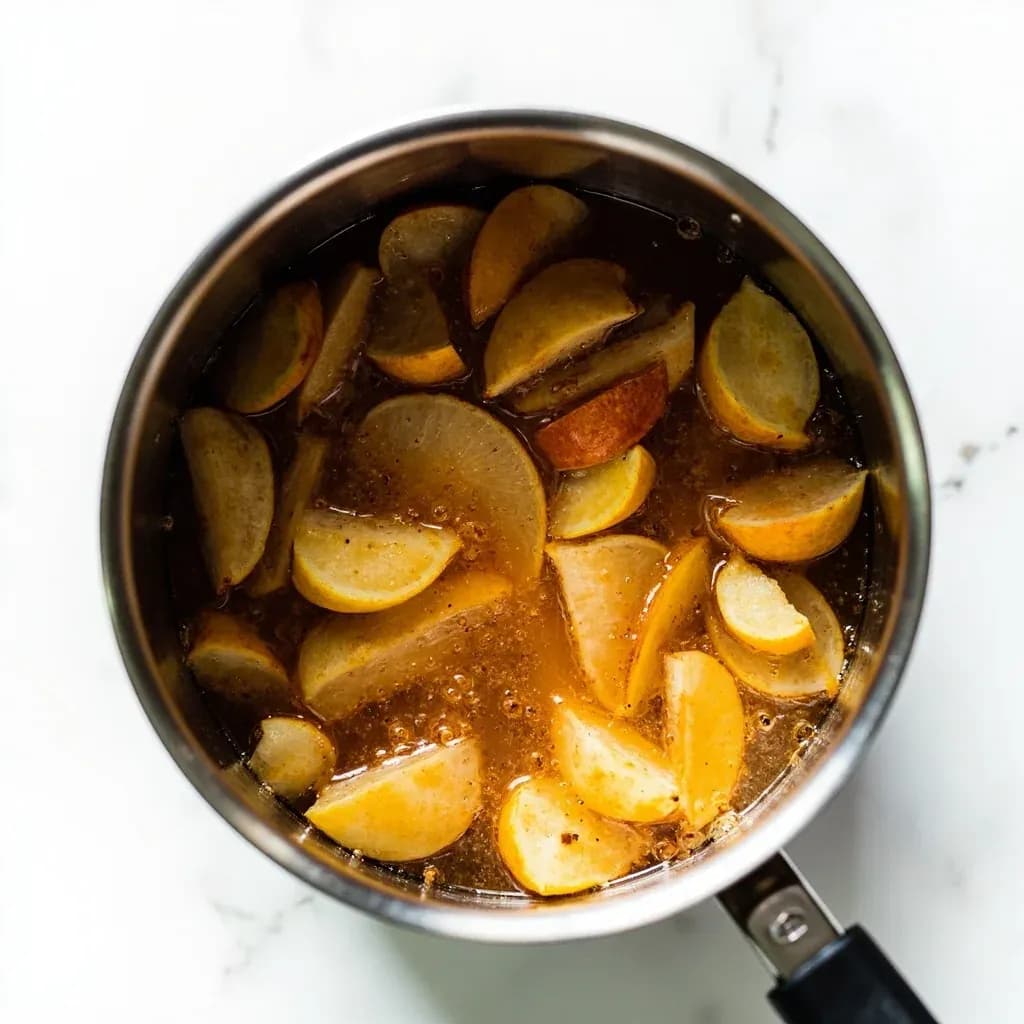
Pectin extraction simmers pectin-rich scraps such as apple cores, peels and citrus pith in water to release the natural gelling agent into a strained liquid. This homemade pectin stock is then added to low-pectin fruit so jams and jellies set without commercial pectin. The technique turns kitchen trimmings into a useful ingredient and depends on using under-ripe or high-pectin fruit for the strongest set.
Pectin extraction is the old-fashioned cook's answer to the box of commercial pectin on the grocery shelf: a gentle simmer of fruit cores, peels, and other trimmings in lightly acidified water to draw out the natural gelling agents locked in the cell walls. The resulting liquid — often called pectin "stock" — is a quiet kitchen workhorse for setting jams and jellies from low-pectin summer fruit such as strawberries, raspberries, cherries, peaches, and outdoor rhubarb that would otherwise refuse to gel. It matters because pectin content drops sharply as fruit ripens, and because homemade stock lets a cook control acidity, strength, and flavor in ways packaged pectin cannot.
The technique rests on three variables working in concert: heat coaxes pectin out of the cell walls, acid keeps the long pectin chains intact, and concentration strengthens the eventual gel. A reliable rule of thumb is 500 g of green or underripe apple scraps, 750 ml of water, the juice of one lemon, and a 45-minute simmer: that produces around 600 ml of medium-strength stock capable of setting roughly a kilogram of jam with 750 g of sugar. The strained liquid can be used immediately, refrigerated for several days, frozen in cubes, or reduced to a syrupy concentrate that keeps on the pantry shelf.
- Difficulty
- Medium
Types & varieties
The classic workhorse — mild, neutral, and high in methylated pectin. Best from Bramley, Granny Smith, crab apples, or any underripe eating apple; a green Bramley core can yield roughly three times the gel strength of a ripe dessert apple.
Exceptionally strong gelling power with a faintly floral aroma. Cores, peels, and hard trimmings all yield a very firm set, which is why French kitchens traditionally combined quince with apple for their most reliable preserves and clear jewel-toned jellies.
Extracted from lemon, orange, or grapefruit peels, pith, and seeds. Highest natural pectin content of common kitchen scraps, and lends a subtle citrus note useful for fig, quince, and bitter-orange preserves.
Strong, slightly tart extractions traditional in Northern European preserves. Stems and unripe berries both contribute, and the bright acidity pairs naturally with low-pectin summer fruit.
How to do it
- 1
Collect and prep the scraps
Reserve cores, peels, and trimmings from pectin-rich fruit as you work through a recipe. Roughly chop larger pieces so they release pectin faster. Aim for about 500 g of scraps per batch, and discard any bruised or mouldy sections.
- 2
Cover with water and acidify
Place the scraps in a heavy non-reactive pot (stainless steel, enamel, or glass — never aluminum or copper) and add just enough cold water to cover them by about 2.5 cm. Stir in 1–2 tablespoons of lemon juice, about ¼–½ teaspoon of citric acid, or a small pinch of cream of tartar to bring the pH into the 3.0–3.4 range.
- 3
Simmer gently
Bring to a bare simmer over medium-low heat and hold there for 30–60 minutes. The liquid should tremble, not roll. Longer extraction pulls more pectin but also more colour and tannin, so taste and check colour at the 30-minute mark before deciding whether to continue.
- 4
Strain without pressing
Set a fine muslin cloth or a clean jelly bag over a bowl and pour the contents through. Let it drip for at least an hour, or overnight in the fridge. Do not squeeze the bag — pressure forces fine solids through and the stock turns cloudy, which yields a dull, hazy gel in the finished jam.
- 5
Test the pectin strength
Cool a tablespoon of the stock. For the alcohol test, stir 1 teaspoon of the cool stock into 1 tablespoon of rubbing alcohol or high-proof vodka (and discard the spoonful): a strong stock forms a single firm blob, while a weak one breaks into fragments. For the wrinkle test, drop a small spoonful of a hot stock-and-sugar test mixture onto a chilled saucer; if it wrinkles when pushed with a fingertip after a minute, the stock is ready to set a jam.
- 6
Concentrate, store, or use
For everyday use, bottle the stock while hot and refrigerate for up to 5 days, or freeze in ice-cube trays for 6–12 months. For a pantry-stable concentrate, return the strained stock to the pot and reduce it to a syrupy third, then pot it hot in sterilized jars with a wax seal. Use the stock at roughly 1:1 with sugar by volume for a standard jam, adjusting with lemon juice to taste.
- 7
Troubleshoot a weak batch
If the jam refuses to set after the wrinkle test, return it to the pot with another squeeze of lemon juice and boil hard for 5–10 minutes, then retest. If it still loosens, the pectin is exhausted; reboil with a splash of fresh stock or a small amount of commercial pectin to rescue the batch.
Testing Pectin Strength
Two field tests let a cook gauge stock strength before committing a large batch of jam to the pot, and the difference between a soft spoon and a clean slice is almost always decided here.
- Alcohol test: stir 1 teaspoon of cool stock into 1 tablespoon of rubbing alcohol or high-proof vodka in a small glass (discard the spoonful). A strong stock forms a single firm blob that holds together; a weak stock breaks into fragments or streaks.
- Wrinkle or cold-plate test: drop a small spoonful of a hot test mixture of stock and sugar onto a chilled saucer, wait one minute, then push it with a fingertip. A ready gel wrinkles cleanly; a loose one runs back together.
- If either test is borderline, return the stock to the pot and reduce it by another third before retesting — concentration is usually the fix when the acid is already correct.
Seasonal and Regional Traditions
Pectin stock was once as ordinary a larder item as flour or vinegar, and the version a household kept reveals its climate and its preserves.
- French kitchens favored apple-quince blends, drawn down into a thick syrup and potted under a wax seal, used for clear jewel-toned jellies and thick quince pastes in the style of pâte de coing.
- Eastern European and Scandinavian cooks relied on white and red currant stems plus gooseberry hulls — both are high in pectin and produce a brightly tart stock ideal for sharp preserves.
- Mediterranean cooks leaned on lemon-peel pectin for fig, quince, and bitter-orange marmalades, where the citrus note doubles as flavoring.
- In modern kitchens, the most common application is rescuing low-pectin summer fruit — strawberries, raspberries, cherries, peaches, and outdoor rhubarb that appears after the early forced-rhubarb season ends.
Low-Sugar and Modern Adaptations
Standard pectin stocks set a gel only inside the sugar-acid-pectin triangle, so a low-sugar jam needs a different approach.
- For reduced-sugar preserves, concentrate the stock further by boiling it down to half or a third of its strained volume before measuring.
- Alternatively, supplement the homemade stock with low-methoxyl pectin activated by calcium, which gels independently of sugar.
- Acid adjustment matters more in low-sugar work: taste the finished jam and add lemon juice in small amounts until it brightens, since low-acid low-sugar jams stay soft and runny.
Common uses
Tips & pitfalls
- Use green or underripe fruit — pectin drops sharply as fruit ripens, and a green apple core can set three times as firmly as a ripe one.
- Add the acid at the start of the simmer, not the end; heat and time release pectin more efficiently in a low-pH environment.
- Keep the simmer gentle — a hard boil fragments the long pectin chains and weakens the eventual gel, the most common error in homemade pectin work.
- Use only stainless steel, enamel, or glass: aluminum discolours the stock and copper reacts with the acids to give a metallic taste.
- Test the strength of your stock before committing to a large batch of jam, because pectin strength varies with fruit, ripeness, and simmer time.
- Let the bag drip and never press it — squeezing forces fine solids through and produces a cloudy stock that sets into a hazy, dull gel.
- Freeze pectin in labelled, dated cubes (about 50 ml each) so you can pull exactly the strength each recipe needs without thawing a whole jar.
- Reduce the stock to a thick syrup for a 'pectin paste' that stores on the shelf in a sealed jar and behaves much like commercial liquid pectin.
Good to know
- Best scraps for extraction
- Apple cores and peels (especially from underripe or green apples), quince trimmings, citrus peels with pith, white currant stems and seeds, gooseberry hulls
- Scrap-to-water ratio
- Roughly 500 g scraps to 750 ml–1 L water, enough to cover by 2.5 cm
- Acid needed
- Lemon juice, citric acid, or tartaric acid — about 1–2 tablespoons of lemon juice (or roughly ¼–½ tsp citric acid) per 500 g scraps
- Simmer time
- 30–60 minutes, never a rolling boil
- pH range for setting
- 3.0–3.4; below 3.0 weakens the gel, above 3.6 will not set
- Setting point
- Gels reliably once the pectin-sugar-acid mixture reaches about 104–105 °C (220 °F) or passes the cold-plate wrinkle test
- Yield
- About 500–750 ml of usable pectin liquid per 500 g of apple scraps
- Storage
- Refrigerated liquid keeps 4–5 days; frozen in cubes 6–12 months; reduced to a syrup and sealed with wax, several months in a cool pantry
Also called
homemade pectin · natural pectin extraction
Related

Confit
Cook slowly submerged in fat for silky tenderness and keeping

Cure
Draw out moisture with salt and time to preserve and concentrate

Pickle
Steep in acidic brine for bright, tangy, crunchy preservation

Ferment
Let friendly microbes transform food into tangy, complex flavor

Marinate
Soak in a seasoned mix to flavor and tenderize before cooking

Brine
Soak in salt water so meat stays juicy and seasoned throughout

Dehydrate
Slowly dry out moisture to concentrate flavor and extend shelf life

Cold-Smoke
Perfume cured food with smoke without cooking it through