Transform & Preserve
Pectin (Alcohol) Test
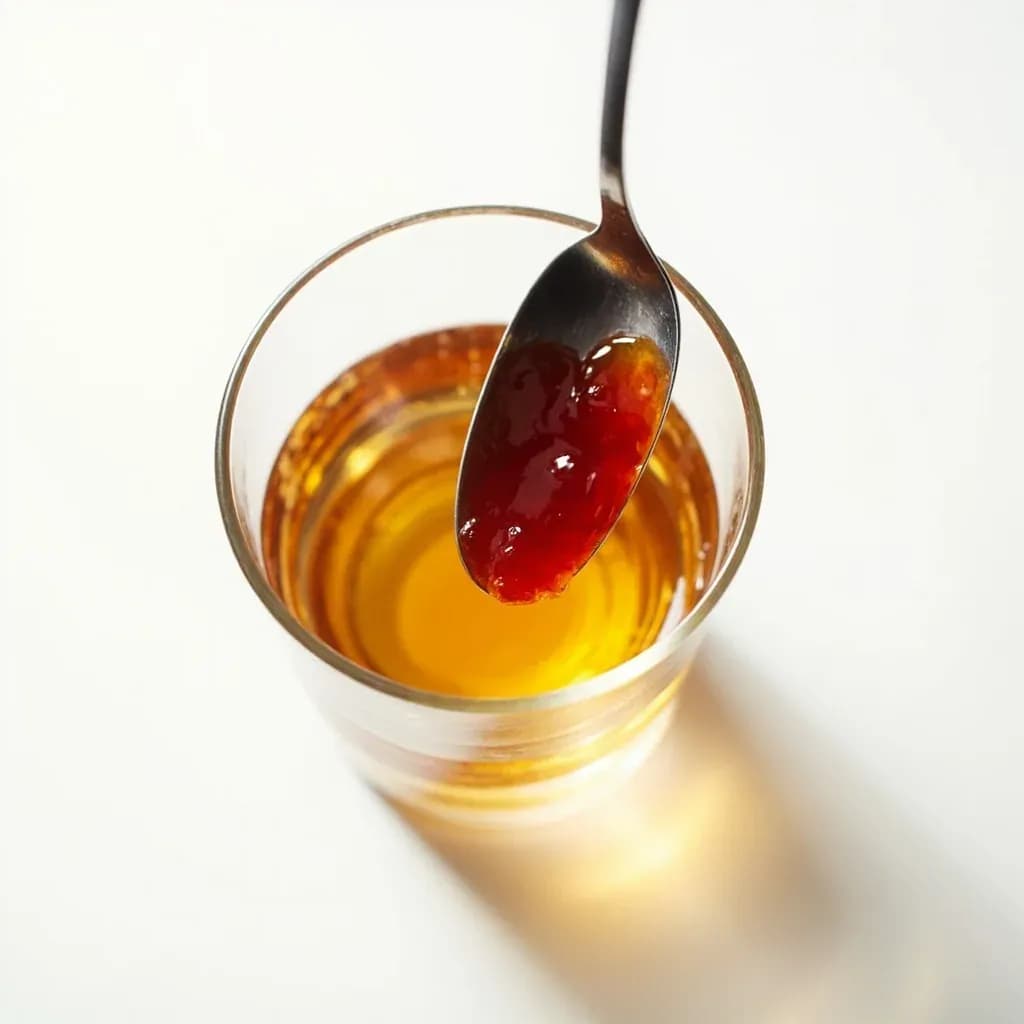
Dropping hot jam into alcohol to judge whether it has enough pectin to set.
The pectin or alcohol test gauges whether a fruit preparation has enough pectin to gel into jam or jelly. A teaspoon of the cooked, cooled juice is added to a small amount of rubbing alcohol; if it clumps into a firm jelly-like mass, pectin is sufficient, while a runny or scattered result signals you need more cooking or added pectin. It is a quick diagnostic that prevents the disappointment of a jam that never sets.
The alcohol pectin test is a quick diagnostic that tells a jam or jelly cook whether the fruit on the stove has enough natural pectin to set, before any jars are filled. Pectin is soluble in water but insoluble in high-proof alcohol, so when a teaspoon of fruit juice is dropped into chilled 70% isopropyl or 151-proof spirit, the pectin immediately coagulates into a visible clump. The size and shape of that clump correlates directly with pectin strength: a single firm mass means the fruit is loaded with pectin, a few medium pieces means medium, a scatter of flakes means low, and nothing forming means essentially none. The test is performed early in the cook, after the fruit has broken down and released juice but before the full measure of sugar goes in, because sugar thickens the juice and can mask weak pectin.
What the test does not do is predict whether the finished preserve will set. Setting depends on three things working together — pectin, sugar in the 60–65% range by weight, and acid around pH 3.0–3.4 — and the alcohol test isolates only the pectin variable. That makes it a planning tool rather than a finishing tool: a cook who gets a strong clump can proceed confidently with a low-pectin recipe, while a cook who gets a ragged result knows to add commercial pectin, lemon juice, or a high-pectin fruit like green apple before going further. For final confirmation at the gel point, the cold-saucer wrinkle test or a 220 °F (104 °C) thermometer reading is still the call.
The technique is older than commercial pectin and remains standard in farm-kitchen and competition preserving circles because it is fast, repeatable, and costs almost nothing once you own a bottle of alcohol. The skill is not in performing the test but in reading the clump honestly — wishful thinking produces soft jam more often than weak fruit does.
- Difficulty
- Easy
Types & varieties
The classic version using 70% isopropyl alcohol from a drugstore — cheapest and most consistent, though not food-grade.
Uses 151-proof rum or Everclear; identical chemistry, preferred by cooks who keep only food-grade alcohol in the kitchen.
A food-safe variant using lemon juice and sugar instead of alcohol; relies on acid-pectin-sugar reaction rather than alcohol precipitation, and is less precise.
How to do it
- 1
Cook the fruit briefly
Bring the fruit and any water called for to a boil for 5–10 minutes, until it breaks down and releases plenty of juice. Hold back the full measure of sugar — sugar thickens the juice and will give a falsely weak reading.
- 2
Cool a small sample
Spoon about 1 teaspoon of the cooking juice or thin puree into a small glass or ramekin and let it cool to room temperature, or chill it briefly in the fridge.
- 3
Chill the alcohol
Pour about 1 tablespoon of 70% isopropyl alcohol (or 151-proof grain alcohol) into a second small glass and put it in the freezer for 10–15 minutes. Cold alcohol is essential; warm alcohol will not coagulate pectin cleanly and produces misleading lows.
- 4
Combine juice and alcohol
Spoon the cooled fruit juice into the cold alcohol rather than pouring. The juice sinks and the alcohol floats clear on top; this clean interface gives the most readable clump. Swirl gently rather than stirring.
- 5
Watch the clump form
Within about 30 seconds the pectin will coagulate. Look for: one solid gelatinous mass that holds together = high pectin; two or three medium clumps = medium pectin; a shower of small flakes or threads = low pectin; nothing at all = essentially no pectin.
- 6
Decide your next step
High: add the full sugar and proceed with the recipe. Medium: cook the fruit a little longer to concentrate pectin, or stir in a small amount of commercial pectin. Low or none: add commercial pectin, lemon juice for acid, or stir in a high-pectin fruit such as chopped green apple or crabapple and re-test.
- 7
Discard the sample
Pour the alcohol-and-juice mixture straight down the drain. Do not return it to the pot, do not taste it, and do not reuse the alcohol — every test needs a fresh tablespoon.
Reading the Clump
The interpretation is the part that takes practice. Within about thirty seconds, the pectin precipitates into a coherent, gelatinous mass where the juice meets the alcohol. A high-pectin fruit produces one solid lump that holds together when you nudge it with a spoon and reforms if you break it — this is the clearest possible signal to proceed with the recipe as written. A medium result looks like two or three smaller clumps that still feel jelly-like; the batch will set, but possibly soft, so plan to cook the fruit down a little longer or add a modest amount of commercial pectin. A ragged, stringy, or shredded clump means the pectin is genuinely weak and the jam will not set without help. Nothing at all in the alcohol means there is essentially no pectin in the fruit; do not attempt a no-pectin-added recipe.
- One solid mass that reforms when broken → proceed with full sugar and standard cook time
- Two or three medium, jelly-like clumps → cook down further or add a small amount of commercial pectin
- Shredded, stringy, or sand-like fragments → low pectin; add commercial pectin, lemon juice, or combine with a high-pectin fruit
- No visible coagulation → no usable pectin; treat as a low-pectin fruit and build the recipe accordingly
High- and Low-Pectin Fruits
Knowing which fruits need help and which do not is half of preserving successfully. The alcohol test is most useful for borderline fruits — under-ripe plums, gooseberries past their peak, a batch of apples that may be more ripe than usual — but the general rule of thumb is worth memorizing.
- High natural pectin (usually set without help): green apples, crabapples, quinces, currants, gooseberries, under-ripe plums, citrus peel and pith
- Low natural pectin (need added pectin, added acid, or a high-pectin partner): strawberries, raspberries, blueberries, sweet cherries, peaches, nectarines, rhubarb, pears, and grapes
Common uses
Tips & pitfalls
- Chill the alcohol in the freezer for 10–15 minutes before testing; warm alcohol gives false lows and is the single most common reason for a confusing result.
- Test before adding the full sugar measure — once sugar goes in, it thickens the juice and the clump becomes hard to read.
- Use only a teaspoon of juice. Too much sample dilutes the alcohol and produces a muddy, unreliable clump.
- Spoon the juice in rather than pouring, and swirl rather than stir, so the alcohol-juice interface stays clean and the clump forms in one place.
- Read the result at about 30 seconds. A clump that reforms after being broken with a spoon is the clearest sign of genuinely strong pectin.
- Discard every sample immediately. Even a drop of isopropyl-tainted juice in a finished jar is unsafe, and used alcohol cannot be reused.
- Do not substitute wine, beer, or any spirit below about 50% ABV — the water content is too high for pectin to precipitate, and you will get a meaningless result.
- Keep the alcohol well away from the stove's open flame; alcohol vapors ignite easily over a burner.
- Pair the test with the cold-saucer wrinkle test or a 220 °F (104 °C) thermometer reading at the finish; the alcohol test measures pectin, while the wrinkle test and thermometer measure the full pectin-sugar-acid balance that actually makes a gel.
- If the clump is ragged and stringy rather than solid, plan to add commercial pectin or extend the boil — a soft-set jam is the usual outcome of weak pectin that was not corrected.
Good to know
- Other names
- Alcohol pectin test, isopropyl test, jellies & jams pectin test
- Alcohol used
- 70% isopropyl (rubbing) alcohol or high-proof grain alcohol such as 151-proof rum or Everclear; never wine, beer, or denatured alcohol
- Sample size
- About 1 teaspoon (5 ml) of cooled cooking juice
- Alcohol volume
- About 1 tablespoon (15 ml), chilled
- Reading time
- 30 seconds to 1 minute
- Reading the clump
- One firm mass = high pectin; 2–3 pieces = medium; many fragments = low; nothing = none
- Sample handling
- Discard immediately — alcohol-fruit mixture is not potable and must not return to the pot
- When to perform
- After 5–10 minutes of fruit boil, before adding the full sugar measure
- Difficulty
- Easy; the skill is reading the clump, not running the test
- Cost
- Negligible — a small bottle of isopropyl alcohol lasts for many batches
- Best paired with
- Cold-saucer wrinkle test or 220 °F (104 °C) thermometer reading at finish
Also called
Alcohol Test · Jam Set Test
Related

Confit
Cook slowly submerged in fat for silky tenderness and keeping

Cure
Draw out moisture with salt and time to preserve and concentrate

Pickle
Steep in acidic brine for bright, tangy, crunchy preservation

Ferment
Let friendly microbes transform food into tangy, complex flavor

Marinate
Soak in a seasoned mix to flavor and tenderize before cooking

Brine
Soak in salt water so meat stays juicy and seasoned throughout

Dehydrate
Slowly dry out moisture to concentrate flavor and extend shelf life

Cold-Smoke
Perfume cured food with smoke without cooking it through