Transform & Preserve
Coagulation (Setting Curd)
Setting milk into curds with rennet or acid, separating solids from whey to make cheese.
Coagulation is the cheesemaking step where rennet enzymes or acid cause milk proteins to bond and gel into a solid curd, separating from the liquid whey. The firmness and timing of the set determine how the curd is cut and handled and shape the final cheese's texture. Temperature, acidity, and coagulant dose all steer the result.
Coagulation is the moment milk becomes cheese. At the protein level, it is the deliberate destabilization of casein micelles — the suspended protein clusters that give milk its chalky whiteness and keep it liquid. Casein carries a net negative charge and is shielded by a layer of kappa-casein; acid drops the pH to the isoelectric point where that charge disappears, and rennet (the enzyme chymosin) cleaves kappa-casein so the micelles can no longer repel one another. In both cases the result is the same: a fragile protein gel that traps fat and moisture as curds, releasing a translucent greenish liquid — whey — that drains away.
This single step defines everything that follows. The choice of coagulant and the conditions of the set determine the curd's texture, moisture, flavor potential, and whether the cheese will be eaten within days or aged for years. Acid-set curds (paneer, queso fresco, mascarpone) are tender, milky, and meant fresh; rennet-set curds (Cheddar, Gouda, Parmigiano-Reggiano) are elastic, lower in moisture, and built to ripen. Vegetable and microbial coagulants broaden the palette further, giving vegetarians access to aged styles and giving Iberian and Sardinian cheeses their characteristic vegetal tang. The same principle, with different proteins, governs tofu made from soy milk and the clarification of consommé.
In practice, coagulation is a matter of temperature precision, gentle handling, and reading the curd. A successful set is firm enough to cut cleanly, releases clear yellow-green whey, and proceeds on a predictable timeline — about 30–45 minutes for rennet at the right warmth, seconds to a few minutes for direct acid. Get these fundamentals right, and the rest of cheesemaking — cutting, cooking, draining, salting, aging — flows from there.
- Difficulty
- Medium
Types & varieties
Slow acidification by starter cultures over 12–24 hours; yields tender, high-moisture curds for yogurt, labneh, and fresh lactic cheeses like Valençay.
Fast set with citric acid, vinegar, lemon juice, or tartaric; the basis of paneer, queso fresco, farmer cheese, and mascarpone.
Calf, kid, or lamb chymosin — the traditional choice for aged European cheeses such as Parmigiano-Reggiano, Manchego, and Cheddar.
Fermentation-produced chymosin from Mucor miehei or Mucor pusillus; widely used in vegetarian and industrial cheese.
Cardoon thistle in Portuguese Serra da Estrela and Spanish Torta del Casar; fig sap in some Mediterranean traditions; nettle or yarrow in folk methods.
Reheating acidified whey to recover residual proteins; the basis of ricotta and brocciu, with parallel traditions in Indian whey-cheese making.
How to do it
- 1
Choose the milk and coagulant
Select pasteurized (not UHT) cow, goat, or sheep milk. Decide between a starter-culture or direct-acid path for fresh, tangy cheeses, and a rennet path for firmer curds that will age.
- 2
Heat the milk to the target temperature
Warm milk slowly in a heavy stainless-steel pot to the recipe's target — about 86–95°F (30–35°C) for most rennet cheeses, or up to 195°F (90°C) for direct-acid paneer-style curds. Rushing the heat scorches the milk and stresses the proteins.
- 3
Add calcium chloride if needed
Stir in 0.02–0.03% calcium chloride by weight of milk (about 1/4 tsp per gallon of a 30% solution) when working with pasteurized milk to replace calcium lost in processing and ensure a firm set.
- 4
Ripen with starter culture (rennet path)
Sprinkle in a mesophilic or thermophilic culture and let it work for 20–60 minutes so the acidity begins to rise before rennet is added. This pre-acidification improves the texture and helps protect against unwanted bacteria.
- 5
Add the coagulant
Dilute liquid rennet in cool, non-chlorinated water (chlorine inactivates the enzyme). For rennet, stir in with a brief up-and-down motion and stop within 30 seconds. For direct acid, add the acid off the heat in a thin, steady stream.
- 6
Let the curd set undisturbed
Cover the pot and hold at target temperature for 30–45 minutes (rennet) or until visible separation occurs (acid). Do not move, tap, or stir the pot — vibration weakens the gel and slows the set.
- 7
Test for a clean break
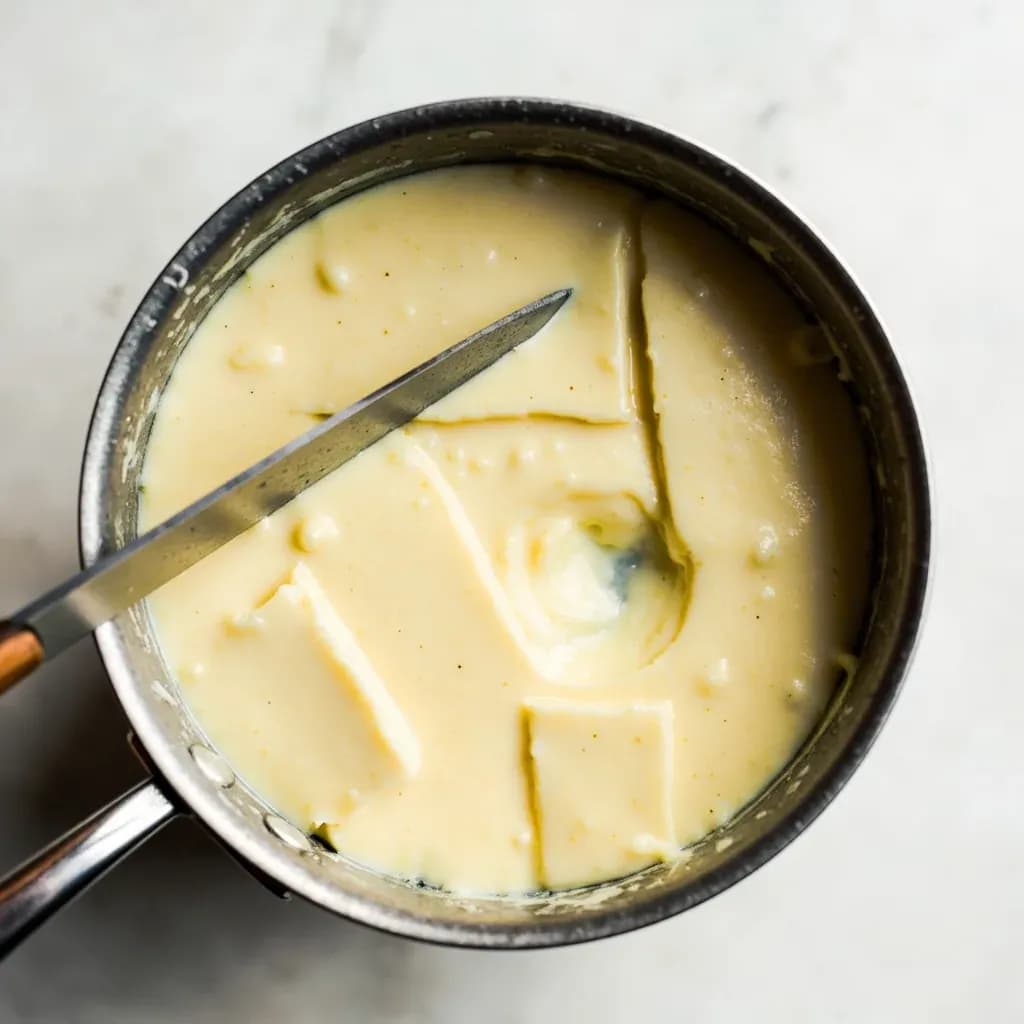
Press a finger or thin knife into the surface. If the curd splits cleanly and clear yellow-green whey fills the gap, it is ready to cut. Milky whey means the set is incomplete; give it more time.
- 8
Cut the curds
Slice vertically then horizontally with a long knife, or use a wire harp, to reach the size dictated by the recipe — pea-sized for hard cheeses, walnut-sized for soft.
- 9
Cook and stir the curds
Slowly raise the heat (if the recipe calls for it) by 1–2°F per minute to the target cook temperature, stirring gently but continuously to keep curds from matting together.
- 10
Drain the whey
Ladle curds into a colander lined with butter muslin or fine cheesecloth and let the whey drain, or transfer to a cheese mold and press to expel moisture.
- 11
Salt, shape, and age (or eat fresh)
Salt by mixing dry salt into the curds or by brining the formed wheel. Press in a mold for several hours to overnight, then eat fresh within a week, or transfer to a cool humid cave for ripening.
Choosing a coagulant
The coagulant sets the personality of the cheese before you cut a single curd. Animal rennet gives the broadest aging potential and a balanced flavor — it is the default for nearly every traditional aged cheese. Microbial rennet behaves similarly and is the practical choice for vegetarian production, though very long-aged wheels can develop slight bitterness. Vegetable coagulants, especially cardoon, produce a distinctly tangy, almost artichoke-like flavor and a softer body; they are the soul of Iberian and Sardinian sheep's-milk cheeses. Direct acid gives a clean, fresh, milky taste with no tang from a culture, and is the only choice for tender curds like paneer and mascarpone that would be ruined by rennet's firmer set. Match the coagulant to the milk too: sheep and goat milk, richer in fat and protein, set more readily than cow milk, and may need less rennet.
Reading the break and cutting the curds
The clean-break test is your single most useful sensory cue. Press a clean finger, knuckle, or thin knife into the surface of the set milk at a 45° angle and lift gently. If the curd splits cleanly and the gap fills with clear yellow-green whey, the gel is ready. If it closes back up or runs milky whey, give it more time. Once you cut, work promptly: undersized curds dry out and yield a hard cheese, oversized curds trap moisture and yield a wet one. Vertical cuts first, then horizontal, using a long knife or wire harp, with even spacing dictated by the recipe — pea-sized for Parmigiano, hazelnut-sized for Cheddar, walnut-sized for soft bloomy-rind styles.
Beyond cheese
The same principle, applied to different proteins, drives several other kitchen techniques. Soy milk coagulates with nigari (magnesium chloride) or calcium sulfate to make tofu. Stocks and consommés clarify themselves when the liquid is brought to a simmer: dissolved proteins coagulate, rise as a raft, and trap suspended impurities, leaving the broth glass-clear. Even a barely-set panna cotta is a gelation rather than a casein coagulation — a useful reminder that "setting" is a universal kitchen verb, not a dairy-only one.
Common uses
Tips & pitfalls
- Use pasteurized (not UHT) milk for rennet-set cheeses; if you must use UHT, add calcium chloride to give the curd the structure it needs to set.
- Dilute rennet in cool, non-chlorinated water before adding — chlorine inactivates the enzyme and you will get a failed set.
- Stir rennet in with a brief up-and-down motion for no more than 30 seconds, then leave the pot completely still; vibration weakens the gel and delays the set.
- Aim for the right rennet dose — roughly 1/4 tsp of single-strength liquid rennet per gallon of milk is a workable starting point; too much produces a brittle, bitter curd and too little gives a soft, slow set.
- Cut curds with a long knife or wire harp in even lines; undersized pieces dry out and oversized ones trap unwanted moisture.
- Watch the whey color at the cut — clear yellow-green means a good break, milky whey means the set is incomplete and needs more time.
- For direct-acid cheeses like paneer, add acid off the heat and watch for the sudden flash of clear whey separation; that is your visual cue that coagulation is complete.
- Salt the curds before draining rather than after; salt draws out more whey and seasons the curd evenly from within.
Good to know
- Definition
- The destabilization of casein micelles in milk so they clump into curds and separate from liquid whey — the foundation of all cheese-making.
- Primary methods
- Acid coagulation (lactic culture, citric, acetic, tartaric) and enzymatic coagulation (animal, microbial, or vegetable rennet).
- Rennet source
- Traditionally from the abomasum of unweaned calves; also kid goats, lambs, microbial fermentation (Mucor species), or vegetable coagulants like cardoon thistle.
- Setting temperatures
- Mesophilic rennet cheeses set at 86–95°F (30–35°C); thermophilic at 100–115°F (38–46°C); direct-acid curds form near 195–205°F (90–96°C).
- Setting time
- Rennet gels milk in 30–45 minutes; direct acid can set in seconds to a few minutes depending on dose and temperature.
- Clean-break test
- A finger or knife pressed into the surface should split the curd cleanly, with clear yellow-green whey filling the gap — that is the cue to cut.
- Target pH
- Rennet cheeses set near pH 6.6–6.7 and ripen down to 5.0–5.2; acid-set cheeses reach 4.5–4.6, the isoelectric point of casein.
- Milk matters
- UHT milk often fails to set with rennet because of denatured whey proteins; pasteurized or raw milk is preferred. Calcium chloride (0.02–0.03% of milk weight) restores structure in pasteurized milk.
Also called
Setting Curd · Curdling · Gelling Milk
Dishes that rely on it
Related

Confit
Cook slowly submerged in fat for silky tenderness and keeping

Cure
Draw out moisture with salt and time to preserve and concentrate

Pickle
Steep in acidic brine for bright, tangy, crunchy preservation

Ferment
Let friendly microbes transform food into tangy, complex flavor

Marinate
Soak in a seasoned mix to flavor and tenderize before cooking

Brine
Soak in salt water so meat stays juicy and seasoned throughout

Dehydrate
Slowly dry out moisture to concentrate flavor and extend shelf life

Cold-Smoke
Perfume cured food with smoke without cooking it through