Transform & Preserve
Salt-Preserving Lemons
Packing lemons in salt to cure them into soft, intensely savory preserved lemons.
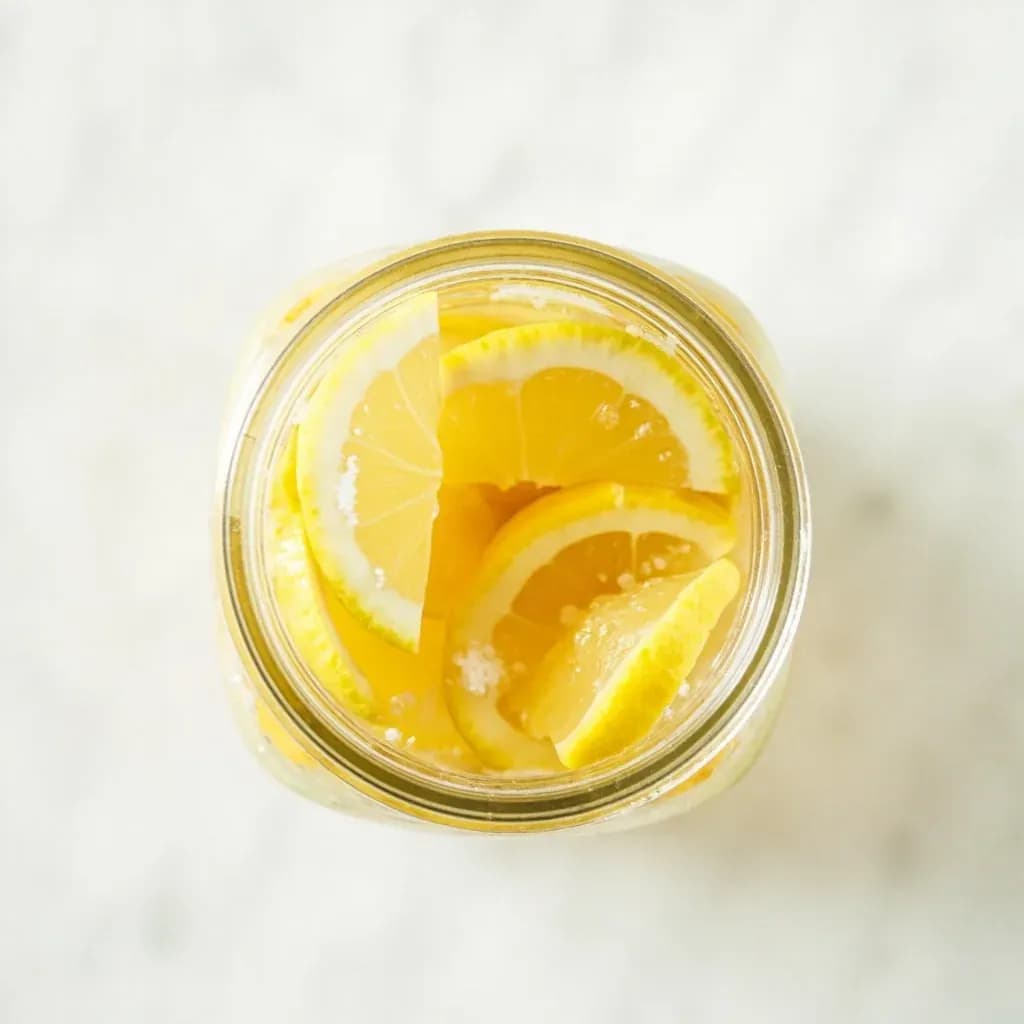
Salt-preserving lemons packs whole or quartered lemons with abundant salt (and their own juice) in a jar, where they cure over several weeks into soft, mellow, deeply savory preserved lemons. The salt draws out juice and ferments the fruit, taming bitterness and concentrating umami. The silky rind is the prized part, central to Moroccan tagines and dressings.
Salt-preserved lemons are a foundational North African preserve, made by packing whole or quartered lemons under generous salt until the rinds soften, the pectin breaks down, and the peel becomes something altogether different from fresh citrus. The salt draws out juice to form a self-brine, the environment becomes both salty and acidic enough to support a controlled lactic fermentation, and over four to six weeks the bitter, bright peel transforms into a savory, almost floral, umami-rich condiment. The result is a soft, translucent rind that tastes more like cheese rind or miso than lemon, and that brings a deeply savory, salty-citrus note to anything it touches.
The flavor is intensely salty and complex rather than simply sour, and that is the point: a small amount of preserved lemon replaces both salt and acid in a dish, lifting tagines, grain salads, roasted vegetables, and vinaigrettes with a single ingredient. The technique is forgiving to a fault — there is no precise measurement, no canner required, and sterilization is a simple wash-and-dry or warm-oven step — but the choice of fruit and salt matters. Thin-skinned, unwaxed lemons cured in coarse non-iodized salt give the cleanest, softest result; waxed, thick-skinned, or out-of-season lemons yield a hard, bitter cure and a cloudy brine.
The Moroccan version, l'hamd markad, is the canonical form and the one most often taught, but the technique sits within a wider family of salt-cured citrus that includes Persian limoo amani and Indian nimbu ka achaar. Understanding what preserved lemons are — softened, lacto-fermented citrus peel suspended in its own salty juice — explains why they behave differently from pickled or candied lemon and why they have become a quiet workhorse of modern kitchens well beyond the Maghreb.
- Difficulty
- Easy
Types & varieties
The canonical version: lemons quartered almost to the base, packed in coarse salt, often with a bay leaf and a cinnamon stick, sometimes coriander seed or peppercorns.
Modern Western variation adding cloves, star anise, fennel seed, cardamom, or pink peppercorns to the jar.
Thinly sliced lemons macerated in salt and lemon juice for 1–7 days in the refrigerator; texture remains firm rather than soft-cured.
Related South Asian technique using limes (sometimes lemons) with salt, chili, and pickling spices; oil- or mustard-oil-based rather than fully brine-cured.
Whole limes (occasionally small lemons) cured in salt with their own juice; the rind turns blackish-green and intensely aromatic.
Softer, sweeter, more floral result using thin-skinned Meyer lemons; they cure slightly faster than Eureka or Lisbon types.
How to do it
- 1
Select and prepare the lemons
Choose 6–8 firm, heavy, thin-skinned, unwaxed or organic lemons. Wash and dry them thoroughly; any surface wax or residue will slow salt penetration. Use coarse non-iodized kosher, sea, or pickling salt — never iodized table salt.
- 2
Sterilize the jar and gather aromatics
Wash a 1-quart (1 L) glass jar and lid in hot soapy water, rinse well, and air dry or warm in a 120°C / 250°F oven for 10 minutes. Optional aromatics: 2–3 bay leaves, 1 cinnamon stick, 1 tsp black peppercorns, 1 tsp coriander seeds, 4–5 whole cloves.
- 3
Cut the lemons
Slice off the stem ends. Stand each lemon upright and cut it into quarters from the top, stopping about 1 cm (1/2 inch) from the base so the lemon stays attached at the bottom. For very small or very firm lemons, quarter them fully through.
- 4
Salt the cuts generously
Pack about 1 heaping tablespoon of salt into the cuts of each lemon, plus a thin coating on the outside. Do not measure precisely; the lemon should look like it is full of salt.
- 5
Layer into the jar with aromatics
Sprinkle a layer of salt on the bottom of the jar. Press the salted lemons in tightly, opening them like flowers, scattering more salt and any aromatics between layers. Pack them firmly — they should release juice as you press.
- 6
Press and top up with lemon juice
Press the lemons down with a wooden spoon or your fist to release their juice. Squeeze 1–2 additional lemons and pour the juice over the packed fruit until everything is submerged by at least 1 cm (1/2 inch). Finish with a final thin layer of salt on top.
- 7
Initial room-temperature cure
Seal the jar loosely (or place the lid on but open it once a day) and leave it at cool room temperature, 18–22°C / 65–72°F, for 5–7 days. Press the lemons down each day as they soften, and top up with more fresh lemon juice if the level drops below the fruit.
- 8
Cold cure to finish
After 5–7 days, tighten the lid and move the jar to the refrigerator. Cure for a further 3–6 weeks until the rinds are soft, pliable, and slightly translucent, and the brine tastes clean, salty, and intensely lemony.
- 9
Use and maintain
Lift out a lemon, rinse the rind briefly under running water, and use only the soft yellow peel and white pith — discard the inner pulp. Return the rest to the brine, ensuring remaining lemons stay submerged. The jar keeps indefinitely, refrigerated, and you can add fresh salted lemons to the same brine to start the next batch.
How the Cure Works
Preserved lemons are a small batch of lacto-fermented fruit in a salt-and-acid environment. Three things happen in the jar at once: salt draws juice out of the lemon by osmosis, building the brine that eventually submerges the fruit; the combined salt and citric acid drop the pH low enough to favor salt-tolerant lactobacilli over spoilage organisms; and the salt slowly softens pectin in the rind and white pith, turning a tough peel into something pliable and almost jam-like. The cure takes weeks because the salt has to migrate from the surface to the center of the peel, and because the enzymes and microbes need time to do their work. This is why a cool room-temperature start of 5–7 days matters: it lets fermentation get going before refrigeration slows it. A properly cured lemon is soft enough to yield to a firm squeeze, the rind is slightly translucent, and the brine is golden, lightly cloudy, and smells clean and salty-lemony rather than yeasty or off.
- Salt softens pectin gradually; do not expect the rind to soften in the first week.
- A loose lid or daily burping for the first 5–7 days releases CO₂ from active fermentation and prevents the jar from leaking or cracking.
- Cloudy brine, a faint haze, or a slight fizz when opened are all normal signs of active fermentation, not spoilage.
The Brine, Used Wisely
The brine is a working ingredient in its own right and should not be poured down the sink. It is intensely salty, so a teaspoon or two is usually plenty. Use it anywhere you want a bright, savory-citrus backbone: in salad dressings, in braising liquid for chicken or fish, splashed into soups, or stirred into a Bloody Mary in place of plain salt. The same brine can also be used to start a new batch — when a jar is running low, simply pack fresh salted lemons into the existing liquid. If the brine ever smells yeasty, alcoholic, or otherwise off, discard it; otherwise it keeps for months in the refrigerator alongside the lemons.
- Use the brine in a 1:1 swap for salt and a portion of the acid in vinaigrettes.
- Add a tablespoon to long-braised dishes (lamb shanks, stewed white beans) in the last 20 minutes.
- Top up the jar with fresh lemon juice if the level drops below the fruit during curing; the cure will not complete with lemons exposed to air.
Common uses
Tips & pitfalls
- Use organic or thoroughly scrubbed unwaxed lemons: surface wax slows salt penetration and can leave an unpleasant texture in the final cure.
- Do not use iodized table salt or salts with anti-caking agents; they cloud the brine, can taste bitter, and may slow the cure.
- If lemons float above the brine, weigh them down with a small glass disc, fermentation weight, or a clean stone so every surface stays submerged — exposed flesh will not cure properly.
- Open the jar every day for the first 5–7 days to release built-up gas from initial fermentation and to press the lemons down as they soften.
- Rinse the rind briefly under running water before using to remove surface salt; taste the brine first and use it sparingly, because it is intensely salty.
- Harmless surface yeasts and a slight cloudiness in the brine are normal; discard only lemons that show fuzzy mold, pink slime, or off odors.
- The pulp softens along with the rind but stays very salty and bitter — most cooks discard it once the jar is opened, though it can be blended cautiously into marinades.
- Reserve the brine: it is excellent in dressings, braises, and Bloody Marys, and can be used to top up the next batch of lemons you cure.
Good to know
- Origin
- North Africa, most strongly associated with Morocco, where they are called l'hamd markad; closely related traditions exist in Tunisia, Egypt, the Levant, and Persia.
- Category
- Salt-cure preservation (controlled lactic fermentation in a self-brine of salt and lemon juice)
- Active time
- 20–30 minutes for a 1-quart (1 L) jar
- Curing time
- 4 weeks minimum; 6–8 weeks for fully soft, translucent rinds; usable at 2–3 weeks if sliced thin
- Yield
- Roughly 6–8 medium lemons fill a 1-quart jar, yielding about 1/2–1 cup (120–240 ml) of brine
- Salt type
- Non-iodized kosher, sea, or pickling/canning salt; iodine and anti-caking agents cloud the brine and slow curing
- Lemon type
- Fresh, firm, thin-skinned lemons; unwaxed or organic is preferred because surface wax inhibits salt penetration; Meyer lemons are popular for their floral sweetness
- Salt ratio
- Approximately 1 heaping tablespoon per quartered lemon, or 1/4–1/2 cup per quart jar
- Storage
- Indefinite in their own brine, tightly sealed, refrigerated once curing is complete
- Edible portion
- Primarily the rind and white pith; the inner pulp is usually discarded (very salty and bitter)
- Difficulty
- Beginner; forgiving, with no precise measurements required
Also called
Salt-Preserving Lemons
Related

Confit
Cook slowly submerged in fat for silky tenderness and keeping

Cure
Draw out moisture with salt and time to preserve and concentrate

Pickle
Steep in acidic brine for bright, tangy, crunchy preservation

Ferment
Let friendly microbes transform food into tangy, complex flavor

Marinate
Soak in a seasoned mix to flavor and tenderize before cooking

Brine
Soak in salt water so meat stays juicy and seasoned throughout

Dehydrate
Slowly dry out moisture to concentrate flavor and extend shelf life

Cold-Smoke
Perfume cured food with smoke without cooking it through