Transform & Preserve
Pickling
Preserving vegetables or fruit in acid or brine for tang, crunch, and shelf life.
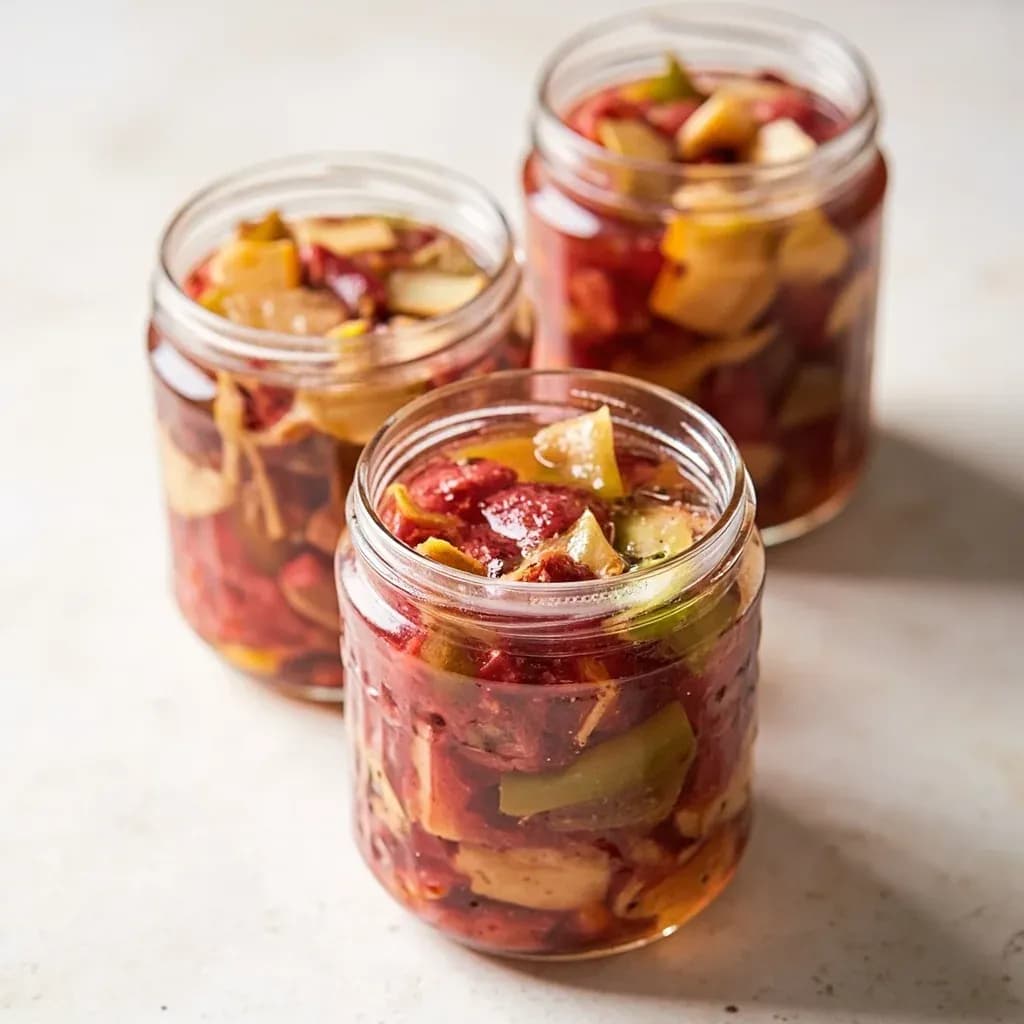
Pickling preserves food by submerging it in an acidic vinegar solution or a salt brine that ferments into acid, halting spoilage while adding sharp, tangy flavor. Quick pickles use vinegar for fast results, while brined pickles develop deeper, sour complexity over days. It shapes condiments worldwide, from Mexican curtido and pickled onions to Japanese tsukemono and Balkan turshi.
Pickling is the broad term for preserving food in an acidified medium, and under that single heading sit two genuinely different techniques. In vinegar pickling, the acid is added directly — usually as 5% acetic acid — which denatures microbes and locks in a bright, predictable sourness. In lacto-fermentation, no vinegar is used; instead, salt and an anaerobic environment favor Lactobacillus bacteria that convert the food's own sugars to lactic acid, producing complex, funky flavors and live cultures. The result is one of the oldest food technologies on record, with documented cucumber pickles in the Mesopotamian Tigris Valley around 2400 BCE and independent pickle traditions in ancient Egypt, India, and China.
What both methods share is the transformation of crisp, often bland produce into something sharper, longer-lasting, and more interesting to eat. Vinegar pickles are crisp and snappy, and they become genuinely shelf-stable once water-bath canned; lacto-fermented pickles are softer, more aromatic, and probiotic, but require refrigeration or further processing for long storage. The science is straightforward but unforgiving: vinegar pickles must stay below pH 4.6 to suppress Clostridium botulinum, and ferments must hold roughly 2–3.5% salt by liquid weight and keep the food submerged to keep spoilage organisms at bay. Treat those numbers as load-bearing, and the rest is seasoning and patience.
Cooks reach for pickling because it solves three problems at once. It extends the working life of seasonal produce, it adds a punchy acidic counterpoint to rich and fatty dishes, and it builds a pantry of bright condiments that can be tailored to whatever cuisine you're cooking. Whether you want a 30-minute refrigerator pickle for tonight's sandwiches or a six-week ferment of sauerkraut to see you through winter, the same handful of principles applies: fresh produce, correct acidity or salinity, full submersion, and clean vessels.
- Difficulty
- Easy
Types & varieties
Vinegar-based and not fermented; ready in hours to days. The everyday refrigerator pickle.
Salt-brine, anaerobic, naturally fermented. Produces sauerkraut, kimchi, traditional sour pickles, and curtido.
Salt draws out moisture to form its own brine; the method behind sauerkraut and kimchi.
Vinegar pickles processed in a boiling water bath for shelf-stable storage; pH must be below 4.6.
Quick or lightly fermented pickles stored cold; not shelf stable but keep for months in the fridge.
Sweet, spiced sliced cucumber pickle in a sugar-vinegar brine with onion and mustard seed.
Garlic- and dill-heavy fermented or fresh-packed cucumbers in a salty brine.
German and Central European dry-salted fermented cabbage, sometimes with caraway seed.
Korean fermented napa cabbage and radish with gochugaru, garlic, ginger, and fish sauce.
Hispanic and Mediterranean: fried or seared foods marinated in a spiced vinegar-and-oil pickle.
Slow-cooked fruit or vegetable pickle with vinegar, sugar, and aromatics; sweet-sour preserve.
Finely chopped pickled vegetables, often with mustard seed and turmeric; used as a condiment.
Tiny French cucumbers pickled in a tarragon-and-shallot vinegar brine.
Italian mix of cauliflower, carrot, pepper, celery, and onion in spiced vinegar or brine.
Salvadoran fermented cabbage relish with carrot, onion, oregano, and chili; served with pupusas.
Japanese pickled vegetables in rice-bran, miso, soy, or vinegar bases.
Filipino pickle of green papaya or mango with ginger, raisins, and sweet vinegar.
British mustardy yellow pickle of mixed vegetables in turmeric-sweetened vinegar.
How to do it
- 1
Choose your method
Decide between quick (vinegar) pickling and lacto-fermentation. Vinegar pickles are ready fast, predictable, and safe for shelf-stable canning. Fermented pickles develop deeper, more complex sour flavor and are probiotic, but require temperature and salinity monitoring plus refrigeration (or further canning) for long storage.
- 2
Select and prep the produce
Use very fresh, firm, unbruised vegetables. Wash thoroughly. Trim the blossom end of cucumbers, peel carrots or onions as your recipe dictates, and cut to the size that matches your eating style — spears, slices, or whole. For maximum crunch, ice-cure cucumbers in a slurry of ice and water for 4–8 hours before packing.
- 3
Make the brine
For vinegar pickles, combine vinegar (5% acidity minimum), water, pickling salt, and sugar in a non-reactive pot. Add whole spices in a cheesecloth bag for easy removal. Heat just until salt and sugar dissolve — don't boil aggressively or you'll drive off aromatic oils. For ferments, simply dissolve non-iodized salt in cool, non-chlorinated water at 2–3.5% by weight.
- 4
Pack the jars
Place raw aromatics (garlic, dill, peppercorns, bay, chiles) in clean, hot jars. Pack vegetables in tightly but without crushing — leave 1/2 inch headspace for vinegar pickles, 1–2 inches for ferments to allow for expansion.
- 5
Add the brine and remove air
Pour brine over the produce to cover. For vinegar pickles, run a chopstick or non-metal tool down the jar sides to release trapped air bubbles, then top up brine to cover. For ferments, weigh the vegetables down so they stay fully submerged — use glass fermentation weights, a small jar filled with water, or a zip-top bag of brine.
- 6
Seal and store
For refrigerator pickles, cap and place in the fridge; they'll be ready in 24–48 hours and improve over 1–2 weeks. For ferments, cover loosely (or use an airlock lid) and set jars in a shallow dish at 18–22°C / 65–72°F out of direct sunlight. Skim any surface mold daily. Taste from day 3; move to the fridge once the sourness and crunch please you.
- 7
Process for shelf stability (optional, vinegar pickles only)
If you want room-temperature storage, water-bath can filled jars for the time specified by your recipe (typically 10–15 minutes for pints, adjusted for altitude). Confirm jars seal as they cool; refrigerate any that don't. Label with date and contents.
- 8
Troubleshoot and refine
Soft pickles: too-old produce, blossom end left on, or brine boiled too long. Cloudy brine: hard water, ground spices, or iodized salt. Hollow pickles: cucumbers grew too fast before picking. Bubbling or hissing ferments are normal CO₂; foul odors, pink slime, or fuzzy mold that returns after skimming mean the batch should be discarded.
Keeping pickles crunchy
Crunch is the defining quality of a good pickle, and it's surprisingly easy to lose. A few targeted techniques will preserve snap from raw produce to finished jar.
- Start with the freshest, firmest produce you can find — limp vegetables make limp pickles.
- Trim 1/4 inch off the blossom end of cucumbers; the soft tissue near the stem carries softening enzymes that wreck texture.
- Ice-cure cucumbers in a slurry of ice and water for 4–8 hours before packing to firm the flesh.
- Use non-iodized salt; iodine causes cloudiness and off-flavors in finished pickles.
- Add a grape, oak, cherry, or horseradish leaf to the jar — the tannins help pickles stay crisp.
- For the crunchiest fresh-pack pickles, raw-pack the cucumbers and pour warm (not boiling) brine over them.
- Commercial Pickle Crisp (calcium chloride) is a reliable additive when you want guaranteed snap.
Common uses
Tips & pitfalls
- Trim 1/4 inch off the blossom end of cucumbers — the soft tissue near the stem carries softening enzymes that ruin crunch.
- Use the freshest, firmest produce you can; limp vegetables make limp pickles.
- Keep vegetables fully submerged in brine — exposed surface invites mold and yeast in ferments and oxidation in vinegar pickles.
- Don't drop the salt below 2% of the liquid weight in a ferment; too little salt lets spoilage organisms outpace the lactobacilli.
- Don't go below 5% acidity vinegar for shelf-stable pickles; food safety depends on that acid level.
- Use non-iodized salt; iodine causes cloudiness and off-flavors, and anti-caking agents cloud vinegar pickles.
- Never use galvanized, copper, brass, or iron vessels for acidic pickles — metal ions leach into the food.
- Garlic turning blue or green in ferments and vinegar pickles is a harmless reaction between sulfur compounds and trace metals, not spoilage.
Good to know
- Origin
- Documented in ancient Mesopotamia around 2400 BCE (cucumbers pickled in the Tigris Valley); also developed independently in ancient Egypt, India, and China.
- Etymology
- From Middle English 'pikken'; the brine sense comes from Dutch 'pekel' or German 'pökel,' meaning salt or brine.
- Safe pH threshold
- Below 4.6 is required to inhibit Clostridium botulinum growth in shelf-stable vinegar pickles.
- Salt to use
- Pickling, canning, or kosher salt without iodine or anti-caking agents; iodine causes cloudiness and off-flavors.
- Common vinegars
- Distilled white, apple cider, white wine, rice wine, and malt vinegars — all at least 5% acidity for canning.
- Standard brine ratios
- Quick pickles: equal parts 5% vinegar and water with 1 tbsp salt and 1 tbsp sugar per cup of liquid. Ferments: 1–2 tbsp kosher salt per 4 cups water (2–3.5% by weight).
- Ideal fermentation temperature
- 18–22°C (65–72°F); cooler slows fermentation, warmer accelerates it and risks spoilage.
- Quick-pickle ready time
- 24–48 hours for basic penetration; full flavor balance usually 1–2 weeks.
Also called
Pickling · Quick Pickling · Brining · Souring
Dishes that rely on it
Related

Confit
Cook slowly submerged in fat for silky tenderness and keeping

Cure
Draw out moisture with salt and time to preserve and concentrate

Pickle
Steep in acidic brine for bright, tangy, crunchy preservation

Ferment
Let friendly microbes transform food into tangy, complex flavor

Marinate
Soak in a seasoned mix to flavor and tenderize before cooking

Brine
Soak in salt water so meat stays juicy and seasoned throughout

Dehydrate
Slowly dry out moisture to concentrate flavor and extend shelf life

Cold-Smoke
Perfume cured food with smoke without cooking it through