Transform & Preserve
Escabeche Pickling
Marinating cooked fish or vegetables in a hot vinegar-and-spice bath to preserve and flavor.
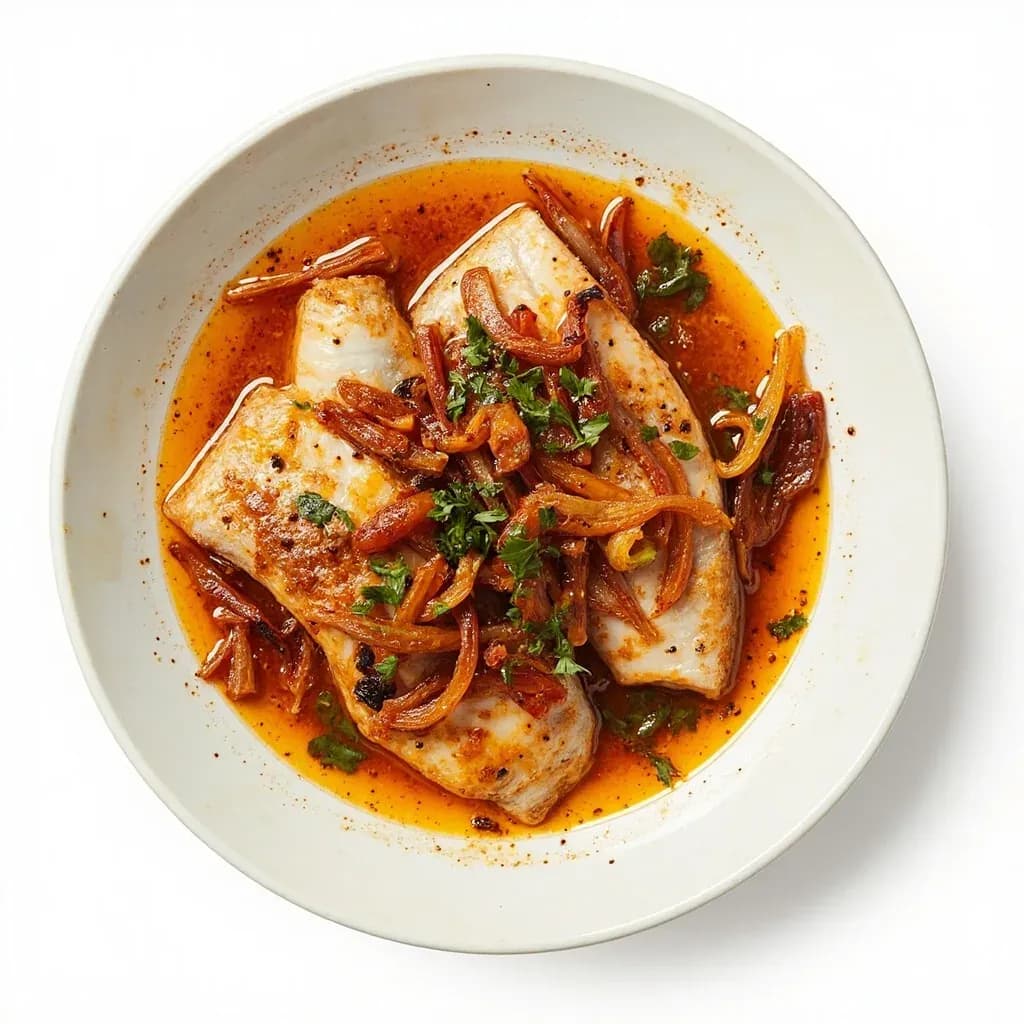
Escabeche pickling cooks fish, poultry, or vegetables, then steeps them in a warm acidic marinade of vinegar, oil, onions, and spices, originally as a way to preserve before refrigeration. The acid both keeps the food and infuses it with bright, aromatic flavor as it cools and rests. It is a staple across Spanish, Latin American, and Filipino cooking, served chilled or at room temperature.
Escabeche is a two-stage preservation technique in which a fully cooked ingredient — most often an oily fish, sometimes chicken, rabbit, or vegetables — is submerged in a hot, aromatic vinegar brine and left to marinate cold. The acid of the brine does a second, gentle "cook" on the surface of the food, firming its texture and carrying the flavors of bay, peppercorns, garlic, and regional spices deep into the flesh, while the vinegar itself inhibits the bacteria that would otherwise spoil oily fish within a day or two.
The technique traces from Persian sikbāj through Arabic cookery into medieval Spain, and from there into the colonial kitchens of the Americas and the Philippines, where it diverged into strikingly different end dishes. In Castilian and Catalan hands, escabeche is a long-keeping, oil-sealed preserve of fried fish. In Mexico and Puerto Rico, the same name describes a quick vegetable pickle eaten as a condiment. In the Philippines, escabeche has become a sweet-sour braise finished with a cornstarch-thickened sauce. The shared thread is the hot acid bath; everything else — the aromatics, the sweetness, the serving style — is regional accent.
Done well, escabeche is forgiving, economical, and well-suited to cooks who want to stretch a few sardines or mackerel across a week of lunches. The active work is twenty to forty minutes; the rest is patience. The dish improves markedly after a day of marination, and properly submerged and oil-sealed, it keeps in the refrigerator for two to three weeks.
- Difficulty
- Medium
Types & varieties
Castilian and Andalusian style; vinegar-and-paprika brine poured over fried or grilled fish (mackerel, sardines, boquerones) and sometimes chicken or rabbit; finished with olive oil.
Lighter and more aromatic; emphasizes bay, peppercorns, and parsley; commonly used for sardines and rabbit.
Often a fresh, quick pickle-relish of jalapeños, carrots, onions, and cauliflower in vinegar with bay, peppercorns, oregano, and marjoram; used as a condiment for tacos, tortas, and fried fish.
Sweet-sour profile; fish is fried then simmered briefly in vinegar with ginger, garlic, bell pepper, onion, and sugar or raisins, finished with a thick cornstarch-thickened sauce.
Pickled vegetable relish of onion, peppers, and carrots in vinegar with bay leaf, oregano, and peppercorns, served alongside fried foods.
Bright, onion-forward pickle with lime juice, ají, and cilantro; quick-pickled rather than long-preserved.
Closely related to the Spanish; wine vinegar, bay, garlic, and onion for fried fish.
How to do it
- 1
Cook the main ingredient
Salt the protein (fish fillets, chicken pieces, or vegetables) and cook it through — fry in olive oil until golden, grill, or roast — then arrange in a single layer in a non-reactive dish or glass jar deep enough to be submerged.
- 2
Build the aromatics
In a wide pan, sweat sliced onion and smashed garlic in olive oil over medium heat until soft and translucent, about 6–8 minutes; this mellows the raw bite before the vinegar is added.
- 3
Add the dry spices
Stir in bay leaves, cracked peppercorns, and any dried spices common to your regional style (smoked or sweet paprika, oregano, cumin, chili). Toast briefly, 30–60 seconds, until fragrant.
- 4
Deglaze and reduce the pickling liquid
Pour in wine vinegar (often half-and-half with water or dry white wine) and a pinch of sugar or salt to balance. Simmer 3–5 minutes so the spices infuse; the liquid should taste sharp and well-seasoned.
- 5
Pour hot over the cooked food
Strain the hot brine directly over the fish, chicken, or vegetables, making sure everything is submerged. Press down with a spoon; the heat finishes gentle cooking of the surface.
- 6
Cool, seal, and marinate
Let cool to room temperature, then cover and refrigerate. For best texture and flavor, wait 24–48 hours before serving. Before sealing for storage, pour a thin layer of olive oil across the surface to exclude air.
- 7
Serve
Lift portions from the cold brine, drizzle with a little of the surface oil, and finish with fresh parsley or oregano. Pair with crusty bread, boiled potatoes, or salad greens.
Choosing the acid
The vinegar you choose shapes the final character more than almost any other decision. Regional tradition, the protein in question, and how long you intend to keep the finished dish all point to different choices.
- Wine vinegar (red or white) is the most traditional base; its mellow acidity carries aromatics without overwhelming the fish.
- Sherry vinegar gives the classic Castilian and Andalusian depth; it is drier and more nuanced than red wine vinegar.
- White distilled or cane vinegar is standard for Mexican and Puerto Rican escabeche; its clean sharpness carries chili and oregano without competing flavors.
- Filipino escabeche often uses cane vinegar (such as sukang Iloco), which gives a sharper, cleaner acidity than wine vinegar.
- A 50/50 blend of vinegar and water (or dry white wine) reduces harshness for delicate fish like sole or whiting.
- Never dilute below roughly a 1:1 vinegar-to-water ratio for long-keeping preserves; the acid level is what preserves the food, not the cook time.
Reading 'escabeche' across regions
The shared technique — a hot acid bath over a cooked ingredient — disguises how widely the end dishes diverge. Before you start, decide which tradition you are cooking in, because the ingredient list, the sugar, and the serving style will follow that choice. A Spanish escabeche poured over fried mackerel and sealed with oil is a preserve to be eaten over weeks. A Mexican escabeche of cauliflower, jalapeño, and carrot is a fresh, week-long pickle meant to garnish a torta. A Filipino escabeche of fried fish in a thick, sweet-sour cornstarch sauce is a hot main course, not a cold preserve at all. Knowing the family you are cooking in keeps you from seasoning a Spanish preserve like a Filipino braise, or worse, treating a quick Mexican relish as a long-keeping preserve.
Common uses
Tips & pitfalls
- Use non-reactive vessels only (stainless steel, enamel, glass); vinegar strips seasoning from cast iron and reacts with copper or aluminum.
- Salt and lightly dredge fish in flour before frying so the surface holds up under the acid bath.
- Bring the pickling liquid to a boil and simmer so the vinegar carries the aromatics into the food; pour it hot over the just-cooked protein.
- Submerge completely in the brine; a floating piece will discolor and dry out at the air line.
- Finish with a thin layer of good olive oil on top of the jar to seal the surface from air and extend keeping time.
- Allow at least 12 hours, ideally 24–48, before eating; the texture firms and the flavors round out as the acid 'cooks' the surface.
- Taste the brine before pouring — it should taste sharper than you think is pleasant on its own, because the food will mute it.
- Strain and reserve the aromatics; they make an excellent base for a vinaigrette or a warm sauce for boiled potatoes.
Good to know
- Origin
- Persian/Arabic; from Arabic 'sikbāj' (itself from Persian 'sikbāj'), carried to Iberia by the Moors and on to the Americas and the Philippines via Spanish colonization.
- Primary acid
- Wine vinegar or sherry vinegar, often blended with water or dry white wine and a portion of olive oil.
- Core aromatics
- Onion, garlic, bay leaf, black peppercorns; paprika, oregano, cumin, and chili are common regional additions.
- Serving temperature
- Cool or at room temperature, never hot; flavors deepen after 12–48 hours of marination.
- Shelf life
- 2–3 weeks refrigerated, submerged in the brine and sealed under a thin layer of olive oil.
- Equipment
- Non-reactive pan (stainless, enamel, or glass) and glass storage jars; never reactive metal.
- Active time
- 20–40 minutes; marination 4 hours minimum, ideally 24–48.
- Difficulty
- Easy; forgiving and well suited to beginners.
Also called
Escabeche · Pescado en Escabeche
Related

Confit
Cook slowly submerged in fat for silky tenderness and keeping

Cure
Draw out moisture with salt and time to preserve and concentrate

Pickle
Steep in acidic brine for bright, tangy, crunchy preservation

Ferment
Let friendly microbes transform food into tangy, complex flavor

Marinate
Soak in a seasoned mix to flavor and tenderize before cooking

Brine
Soak in salt water so meat stays juicy and seasoned throughout

Dehydrate
Slowly dry out moisture to concentrate flavor and extend shelf life

Cold-Smoke
Perfume cured food with smoke without cooking it through