Transform & Preserve
Marinating
Soaking food in a seasoned liquid to add flavor and, with acid or enzymes, tenderize it.
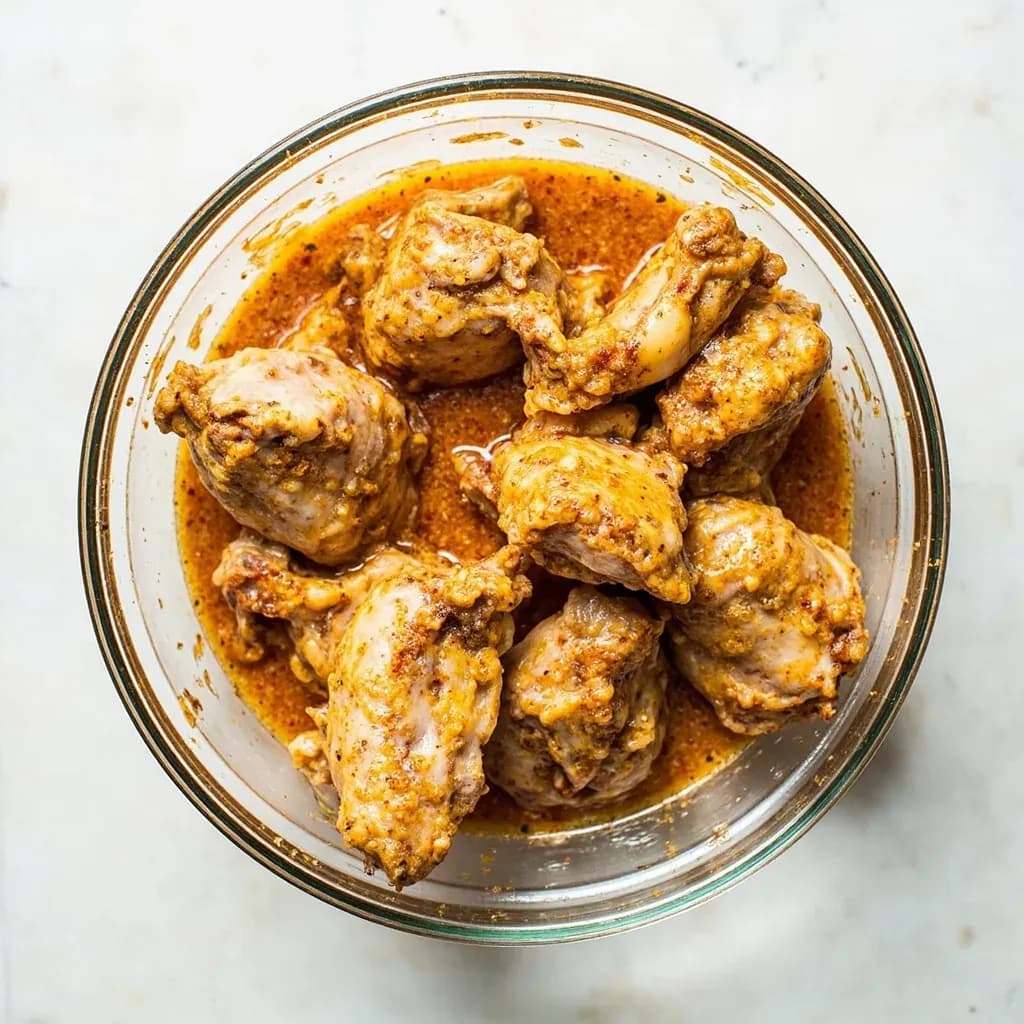
Marinating steeps meat, fish, or vegetables in a seasoned mixture of acid, fat, salt, and aromatics to infuse flavor and, in many cases, tenderize the surface. Acids like citrus, vinegar, and yogurt and enzymes from fruit soften proteins, while oil carries fat-soluble flavors and salt seasons throughout. Marination ranges from a quick rub to overnight soaks, and from dry seasoning pastes to wet brines across nearly every cuisine.
Marinating is the practice of soaking food in a seasoned liquid — typically a balance of oil, acid, salt, and aromatics — to add flavor and, with the right ingredients, tenderize the surface. It is one of the oldest techniques in the kitchen: wet brining and acid preservation date to antiquity, with archaeological evidence of vinegar-based pickling in ancient Mesopotamia and Egypt around 2000 BCE, and the word itself traces from French mariner back to Italian marinare and the Latin marinus, "of the sea." Almost every cuisine has its version, from Korean bulgogi to Latin anticuchos to South Asian tandoori, because the surface of meat is where we actually taste it, and that is exactly where a good marinade works.
What a marinade actually does — and does not do — is worth understanding before you build one. Acid (vinegar, citrus, wine) and proteolytic enzymes (papain in papaya, bromelain in pineapple, actinidin in kiwi) denature surface proteins and break down a thin layer of collagen, while salt changes protein structure via osmosis and, crucially, seasons the meat from the outside in. The flavor and tenderizing effect penetrate only 1 to 3 mm into a typical piece of meat, so a marinade is not a substitute for brining a thick turkey breast or for a flavor injector on a roast. It is also not a moisture "lock": the surface that absorbs liquid tends to release it again during cooking, which is why patting dry before searing is essential.
The real, measurable wins are surface flavor, a modest tenderizing of that outer layer, and the salt-driven seasoning that carries through to the bite. Get the components in balance — enough acid to brighten, enough oil to carry fat-soluble aromatics, enough salt to season and slightly dissolve surface proteins — and you have a tool that turns a plain chicken breast or a flank steak into something worth lingering over.
- Difficulty
- Easy
Types & varieties
Vinegar-, citrus-, or wine-based. Bright flavor and light surface tenderizing. Best for short soaks under 4 hours on delicate proteins; longer turns the surface mushy.
Central to South Asian and Middle Eastern cooking — tikka, tandoori, shish tawook. Lactic acid plus calcium activates the meat's natural proteases for deeper tenderizing than acid alone.
Built on soy sauce with mirin, sake, Shaoxing wine, ginger, garlic, and a touch of sugar. Salt- and umami-heavy; the high sodium pulls flavor in efficiently.
Uses papaya, pineapple, kiwi, or fresh ginger. Powerful and fast — cap at 30 minutes to 2 hours or the surface will turn to paste.
A saltwater solution, sometimes with sugar and aromatics. Functions more by osmosis than flavor delivery; the foundation for juicy poultry and pork. Considered a sister technique rather than a true marinade.
Little or no acid; relies on oil to carry fat-soluble aromatics. Right for vegetables, firm fish, and Halloumi-style cheeses where acid would 'cook' or toughen the surface.
A Mediterranean and Latin American style: fish or meat in vinegar, olive oil, paprika, bay, and often saffron, eaten cold. Closer to a pickle than a soak.
Salt and spices applied without liquid. Functions as a dry brine: salt draws out moisture that then reabsorbs carrying dissolved flavor.
How to do it
- 1
Build the marinade
In a non-reactive bowl, whisk roughly 2 parts oil to 1 part acid (vinegar, citrus, or wine) with ½ to 1 tsp salt per cup, sweetener to taste, and aromatics (crushed garlic, sliced alliums, ground or whole spices, bruised woody herbs). For a yogurt marinade, use 1 cup dairy with the same aromatics plus 1–2 Tbsp acid. Taste it: it should be slightly more aggressive than you want the finished dish to be.
- 2
Prepare the protein
Trim excess fat and silver skin. For cuts thicker than about 1.5 inches, butterfly, score in a shallow crosshatch, or cut into smaller pieces to expose more surface. Pat dry so the marinade can adhere rather than slide off.
- 3
Combine in a non-reactive container
Place the protein in a glass dish, stainless steel pan, or a heavy zip-lock bag. Pour the marinade over and turn to coat; the protein should be just covered or at least making full contact. If using a bag, press out air, seal, and gently massage to distribute.
- 4
Refrigerate and time it
Move to the refrigerator immediately. Delicate fish: 15–30 minutes. Boneless chicken breasts: 1–2 hours. Bone-in chicken or thighs: 2–4 hours. Beef steaks: 1–4 hours. Tough braising cuts: 6–24 hours. Vegetables: 15–60 minutes. Enzymatic fruit-based marinades: cap at 2 hours.
- 5
Remove and prepare for cooking
Lift the protein out and let excess drip off. Pat thoroughly dry with paper towels — this step is non-negotiable for searing and grilling. Discard the used marinade, or bring it to a full rolling boil for at least 1 minute if you intend to use it as a sauce. For thick cuts, let the protein sit at room temperature 20–30 minutes to take the chill off.
- 6
Cook to match the cut
Marinated cuts shine over high heat (grill, sear, broil) when surface flavor is the goal. For tough cuts finished low and slow, the marinade's salt and acid have already begun softening the surface connective tissue, so cook gently to finish the job.
- 7
Rest before slicing
Let the meat rest 5–10 minutes under loose foil so juices redistribute. Slice across the grain for maximum tenderness, especially on marinated flank or skirt steak.
Why the surface is everything
A marinade is a surface treatment, and understanding that saves you from the two oldest myths in the backyard. The first is that acid tenderizes deep into the meat — it does not; the acid is neutralized within a few millimeters by the meat's own buffering capacity and proteins. The second is that a marinade 'locks in' moisture — it does not; Harold McGee and Kenji López-Alt have both measured this, and surface proteins that absorb the marinade typically lose that moisture during cooking. The genuine wins are flavor on the surface, modest tenderizing of that surface layer, and a salt-driven seasoning effect that carries through the first bite.
- Flavor compounds (herbs, garlic, spices, wine) sit on and just under the surface.
- Salt penetrates further than acid and is responsible for most of the perceived improvement.
- For deep, even seasoning through a thick cut, switch to brining or a flavor injector.
Choosing the right marinade for the job
Match the marinade to the protein and the cooking method, not the other way around. A soy-based soak is wasted on a delicate white fish that will spend three minutes on a grill; an oil-and-herb bath is exactly right for it. Tough, chewy cuts (flank, skirt, chuck) reward acid or enzymatic marinades because what needs softening is on the surface, where the acid can reach. Lean, mild proteins (chicken breast, pork loin, tofu) take well to bold, salt-heavy flavor baths because they have almost none of their own.
- Lean proteins: bold, salt-forward, oil-rich marinades.
- Tough cuts: acidic or enzymatic marinades in the 2–24 hour range.
- Vegetables: short soaks in oil-based mixtures — acid turns them soggy if held too long.
- Dairy (yogurt, buttermilk) for deeper tenderizing on poultry and lamb.
Common pitfalls and how to avoid them
Most marinade failures fall into a handful of predictable categories. Over-marinating in strong acid pastes the surface; under-salting leaves the meat flat; marinating in reactive metal taints the flavor; not patting dry before cooking means no browning; using a marinade that touched raw poultry as a sauce without boiling is unsafe. A little attention to each step is the difference between a memorable dish and a wasted one.
- Over-marinating — set a timer; the marinade does not get more effective with more time.
- Under-salting — the salt is doing more work than the acid.
- Skipping the pat-dry — wet surfaces steam, they do not sear.
- Reusing marinade as sauce without boiling — boil for a full rolling minute, or reserve a clean portion.
Common uses
Tips & pitfalls
- Pat proteins thoroughly dry with paper towels after marinating and before cooking — surface moisture is the enemy of browning and crust formation.
- Keep marinating times in check: over-marinating in strong acid turns the surface mushy and pasty, and can dry out the interior during cooking.
- Score thicker cuts or butterfly them so more surface area contacts the marinade; the flavor will never reach the center of an unscored piece.
- Reserve a clean portion of marinade before it touches raw meat if you want a sauce; otherwise boil the used marinade hard for 1–2 minutes.
- For grilled meats, oil-heavy marinades cause flare-ups — blot excess oil or use less oil and baste during cooking instead.
- Bring thick cuts to room temperature for 20–30 minutes before cooking if marinated in the fridge, so they cook more evenly.
- For fish, marinate briefly in citrus just before serving rather than before cooking — the acid will 'cook' the surface unevenly and turn it opaque and chalky.
- Bruise woody herbs like rosemary, thyme, and sage before adding them so their essential oils release into the marinade.
Good to know
- Etymology
- From French mariner (to pickle in sea brine), via Italian marinare and Latin marinus ("of the sea") — originally referred to brining with sea salt.
- Penetration depth
- Marinades flavor and tenderize only the surface — typically 1–3 mm into meat — so thick cuts will always be unevenly seasoned from edge to center.
- Core components
- A typical marinade balances acid (vinegar, citrus, wine), oil, salt, and aromatics (herbs, spices, garlic, alliums); altering the ratio changes what the marinade does.
- Tenderizing agents
- Acid denatures surface proteins; salt restructures proteins via osmosis; proteolytic enzymes (papain, bromelain, actinidin) cleave collagen; calcium in dairy activates the meat's own proteases.
- Time range
- Delicate fish 15–30 min; poultry 1–4 hrs; steaks 1–4 hrs; tough braising cuts 6–24 hrs; vegetables 15–60 min.
- Temperature
- Always marinate in the refrigerator (below 4°C / 40°F) once salt or acid is involved; never leave a marinade at room temperature for more than the briefest prep window.
- Container
- Use non-reactive vessels — glass, stainless steel, ceramic, or food-grade plastic. Avoid aluminum with acidic marinades, which reacts to produce a metallic taste and discolor the food.
- Food safety
- Never reuse a marinade that has touched raw meat unless brought to a full rolling boil for at least 1 minute; reserve a clean portion before adding raw protein if you want a finishing sauce.
Also called
Marinating Meat · Marinate · Mariner · Marination · Seasoning Meat · Brine Marinating · Spice Marinating · Yogurt Marination · Mojo Marinade · Green Seasoning Marinade
Dishes that rely on it
Related

Confit
Cook slowly submerged in fat for silky tenderness and keeping

Cure
Draw out moisture with salt and time to preserve and concentrate

Pickle
Steep in acidic brine for bright, tangy, crunchy preservation

Ferment
Let friendly microbes transform food into tangy, complex flavor

Marinate
Soak in a seasoned mix to flavor and tenderize before cooking

Brine
Soak in salt water so meat stays juicy and seasoned throughout

Dehydrate
Slowly dry out moisture to concentrate flavor and extend shelf life

Cold-Smoke
Perfume cured food with smoke without cooking it through