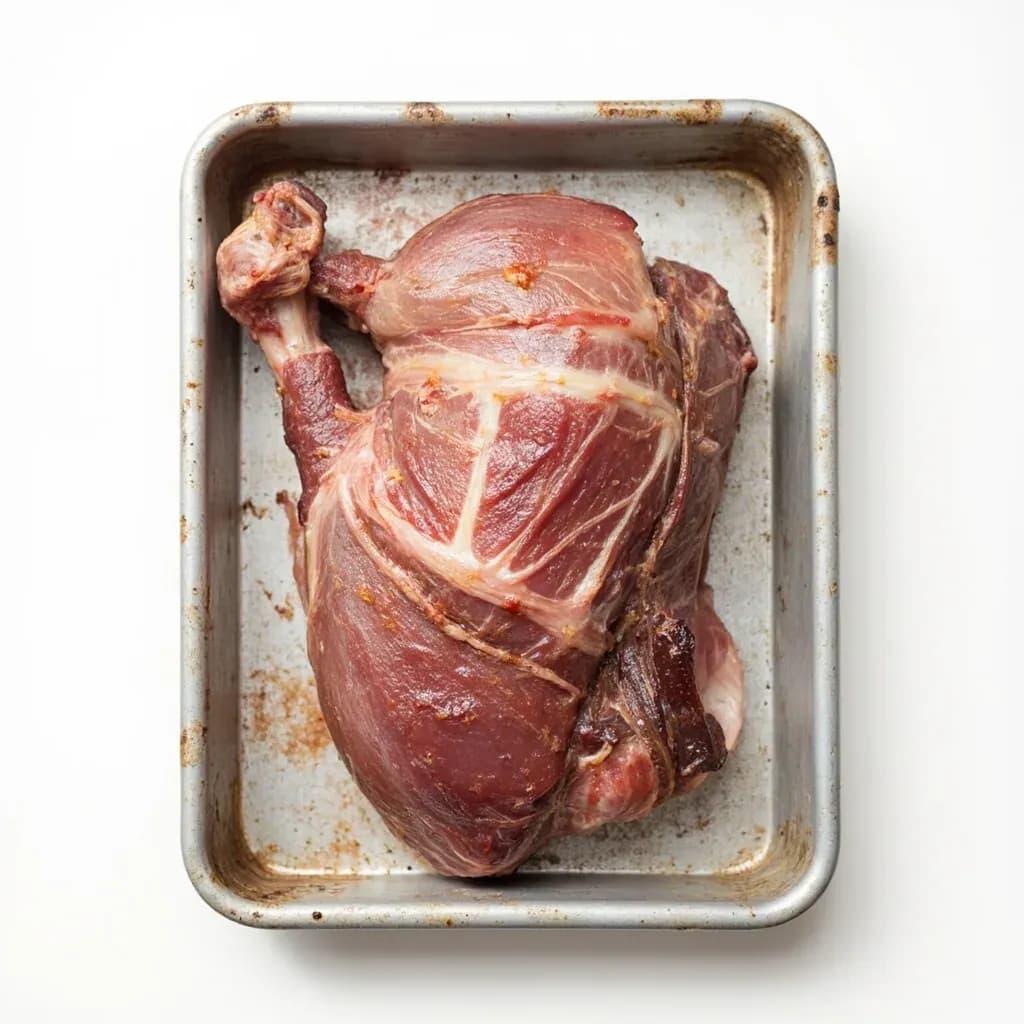
Transform & Preserve
Dry Curing
Preserving meat with salt and time, drawing out moisture to make charcuterie like ham and bacon.
Dry curing packs meat in salt, often with sugar, nitrites, and spices, then ages it so moisture is drawn out and the protein is preserved and concentrated in flavor. It is the foundation of charcuterie such as prosciutto, pancetta, and country ham, where weeks to years of controlled drying develop deep savory taste. Curing salts that include nitrite or nitrate protect against botulism and fix the characteristic pink color.
Dry curing is the oldest reliable way to keep meat edible, and it works on a principle as simple as it is elegant: salt draws water out of muscle tissue by osmosis, and the drier the meat becomes, the harder it is for spoilage bacteria and pathogens to grow. Beyond preservation, the slow exchange of salt, sugar, and aromatic spices into the meat transforms its flavor, firms its texture, and — when combined with smoking or air-drying — produces the entire family of cured meats we call charcuterie. The technique demands patience and a few specific tools, but it is not technically difficult: weigh the meat, calculate salt as a percentage of its weight, rub it on, and let cold and time do the work.
The modern practice of dry curing rests on two distinct but complementary agents. Ordinary salt (kosher or fine sea) is the workhorse, handling both safety and flavor. Curing salt — Prague Powder #1 or #2, which contain measured sodium nitrite and sometimes nitrate — adds a second layer of protection against anaerobic organisms like Clostridium botulinum and fixes the characteristic rosy-pink color of cured pork. Short, hot cures (a week of bacon that will be fried) can rely on salt alone; long, cold, or air-dried products (a whole ham hung for a year) genuinely need curing salt for safety.
Dry curing is not a single endpoint but a phase. Most cured meats move on to a finishing step — hot or cold smoking for bacon and speck, air-drying for prosciutto and bresaola — that concentrates flavor, sets a rind, and further reduces water activity. The line between "dry cured" and "air-dried" is therefore one of degree rather than kind: the salt phase prepares the meat, the drying or smoking phase completes it.
- Difficulty
- Hard
Types & varieties
Cured pork belly, typically 5–7 days, often hot or cold smoked after curing
Italian rolled, dry-cured pork belly, often rubbed with pepper, garlic, and juniper; 2–3 weeks
Rolled pancetta tied into a cylinder and air-aged
Italian dry-cured, air-aged pork leg; 12–36 months
Spanish dry-cured white pig leg ham, 9–18 months
Spanish acorn-fed black pig leg, dry-cured and aged up to 48 months
Alto Adige cured and lightly smoked pork leg
Dry-cured pork shoulder or neck, stuffed into casing and air-dried
Cured pork jowl, traditional in Italian pasta dishes
Spanish dry-cured pork loin, typically with paprika
Italian air-dried, salt-cured beef eye of round; 1–3 months
Swiss air-dried beef
Spanish dry-cured, smoked beef (PGI)
American dry-cured whole leg, salt-heavy open-air or controlled aging 6–18 months
German Black Forest ham, dry-cured and smoked over fir or pine
French dry-cured pork leg aged in the Basque region
How to do it
- 1
Choose and trim the meat
Select a fresh, well-marbled cut suited to dry curing — pork belly for bacon or pancetta, pork leg for ham, beef eye of round for bresaola, pork shoulder for coppa. Trim loose edges and ragged bits but leave a thin, even fat cap about 1/4 inch (6 mm) to slow moisture loss. Pat dry with paper towels.
- 2
Calculate and mix the cure
Weigh the meat in grams on a kitchen scale. Mix the dry cure based on a percentage of that weight: a typical ratio is 2.5–3% salt, 0.25% curing salt (Prague Powder #1 for short cures, #2 for long air-dried cures), and 0.5–1% sugar (brown or white). Add cracked pepper, juniper, garlic, bay, or other dry spices as desired.
- 3
Apply the cure
Rub the salt mixture thoroughly and evenly over every surface of the meat, pressing it on so it adheres. Work the cure into any crevices. There's no need to bury the meat under additional salt unless making a traditional heavy country ham.
- 4
Cure under refrigeration
Place the meat in a non-reactive container (glass, stainless steel, or food-grade plastic), cover loosely, and refrigerate at 34–40°F (1–4°C). Flip and re-rub the meat every 24–48 hours to redistribute moisture and cure. The meat will release liquid — this is the osmosis working. Allow 5–7 days for belly and small cuts; 2–4 weeks for larger muscles; months for whole legs.
- 5
Check the cure
The cure is finished when the meat feels firm throughout and the salt has penetrated evenly. Cut a small slice from the thickest part — color should be uniform pink (with nitrite) or rosy gray-brown (without), with no raw-looking center. Taste a thin slice pan-fried; it should taste seasoned, not raw, with balanced salt.
- 6
Rinse, dry, and form a pellicle
Rinse the meat briefly under cold water to remove surface salt crystals, then pat thoroughly dry. Place uncovered on a wire rack set over a sheet pan and refrigerate uncovered for 12–24 hours to form a tacky pellicle — the dry protein film that helps smoke or air adhere.
- 7
Finish: smoke, air-dry, or store
For bacon or speck: hot or cold smoke at this stage, then slice and refrigerate or freeze. For pancetta arrotolata or coppa: roll or stuff into casing, tie, and hang in a cool, humid (60–75%) space at 55–65°F for 1–6 months depending on size. For whole ham (prosciutto, jamón, country): hang to air-dry 6–36 months, scraping and monitoring for mold and weight loss.
Salt, Curing Salts, and Safety
Three rules of thumb cover nearly every safety question in dry curing at home.
First, never use iodized table salt. The iodine tastes metallic in long cures, and the anti-caking agents cloud the liquid the meat releases. Kosher salt and fine sea salt (without additives) are the standard choices; their flake size makes them easy to weigh and spread.
Second, weigh the meat and treat salt as a percentage of that weight, not a guess. Equilibrium curing — typically 2.5 to 3 percent salt by weight for most charcuterie — produces consistent, repeatable results and forgives small errors in timing. Heavy country hams break this rule on purpose, packing the meat under salt and then soaking it for days to draw the excess back out.
Third, use curing salt whenever the cure is long, cold, or anaerobic. Prague Powder #1 (6.25 percent sodium nitrite) is the right pick for short belly and loin cures, even when the finished product will be cooked. Prague Powder #2 adds sodium nitrate, which slowly converts to nitrite over months and is the right pick for whole legs that will air-dry for a year or more. The amounts are tiny — about 0.25 percent of meat weight — and a kitchen scale that reads to 0.1 g is the single most important tool for getting them right.
Equilibrium Curing vs. Traditional Salt-Packing
Two philosophies divide home and artisan charcuterie. The equilibrium method, popularized by writers such as Michael Ruhlman and Brian Polczynski in their book Charcuterie, calculates salt precisely against the meat's weight and lets the meat rest until the salt has fully and evenly penetrated. The advantage is forgiveness: a few extra days in the cure will not oversalt the meat, because the salt has nowhere left to go.
The traditional salt-pack method, used for country hams and many old-world whole legs, buries the meat under a thick layer of coarse salt for a defined period based on weight, then brushes it off, soaks the ham to remove surface salt, and hangs it to age. The advantage is speed of penetration and a deeply concentrated, complex flavor. The disadvantage is that the cure must be timed precisely — too short and the center is raw, too long and the ham is inedibly salty.
Common uses
Tips & pitfalls
- Never use iodized table salt; the iodine causes off-flavors and anti-caking agents cloud the brine
- Use curing salt (Prague Powder) for safety against Clostridium botulinum in any cold, long, or anaerobic cure — a measured amount is not optional
- Weigh the meat and calculate salt as a percentage by weight (about 2.5–3% for most charcuterie) for predictable, repeatable results
- Cure in a non-reactive container (glass, stainless, food-grade plastic) — never aluminum, which reacts with salt
- Keep the meat refrigerated for the entire cure, flipping and re-rubbing every day or two to ensure even penetration
- Pat the surface dry after curing and let it form a pellicle before smoking or air-drying for proper color and rind
- Maintain stable temperature and humidity for air-drying — too dry case-hardens the exterior, too humid invites rot
- Taste a small cooked slice before committing to long aging; over-salting is far easier to prevent than to fix
Good to know
- Method
- Salt-based preservation that draws moisture from meat by osmosis, lowering water activity to inhibit bacterial growth
- Primary agents
- Non-iodized salt (kosher or sea), often combined with curing salt (sodium nitrite and/or sodium nitrate), sugar, and spices
- Curing salts
- Prague Powder #1 (6.25% sodium nitrite) for short cures; Prague Powder #2 (nitrite + nitrate) for long dry-aged cures where nitrate slowly converts to nitrite
- Typical cure time
- Small cuts (bacon, pancetta) 5–10 days; whole muscle 2–8 weeks; whole legs 6–18 months
- Temperature
- Cure at refrigerator temperature, roughly 34–40°F (1–4°C); air-dry at 55–65°F (13–18°C) with 60–75% humidity
- Salt ratio rule
- Equilibrium curing uses about 2.5–3% salt by meat weight for most charcuterie; country hams use significantly more
- Best meat cuts
- Pork belly (bacon, pancetta), pork loin (lomo), pork leg/shoulder (prosciutto, jamón), beef eye of round (bresaola)
- Origin
- Ancient technique; predates refrigeration, with archaeological evidence in Mesopotamia, China, and the Roman world
Also called
Salt-Box Curing · Salt Curing
Dishes that rely on it
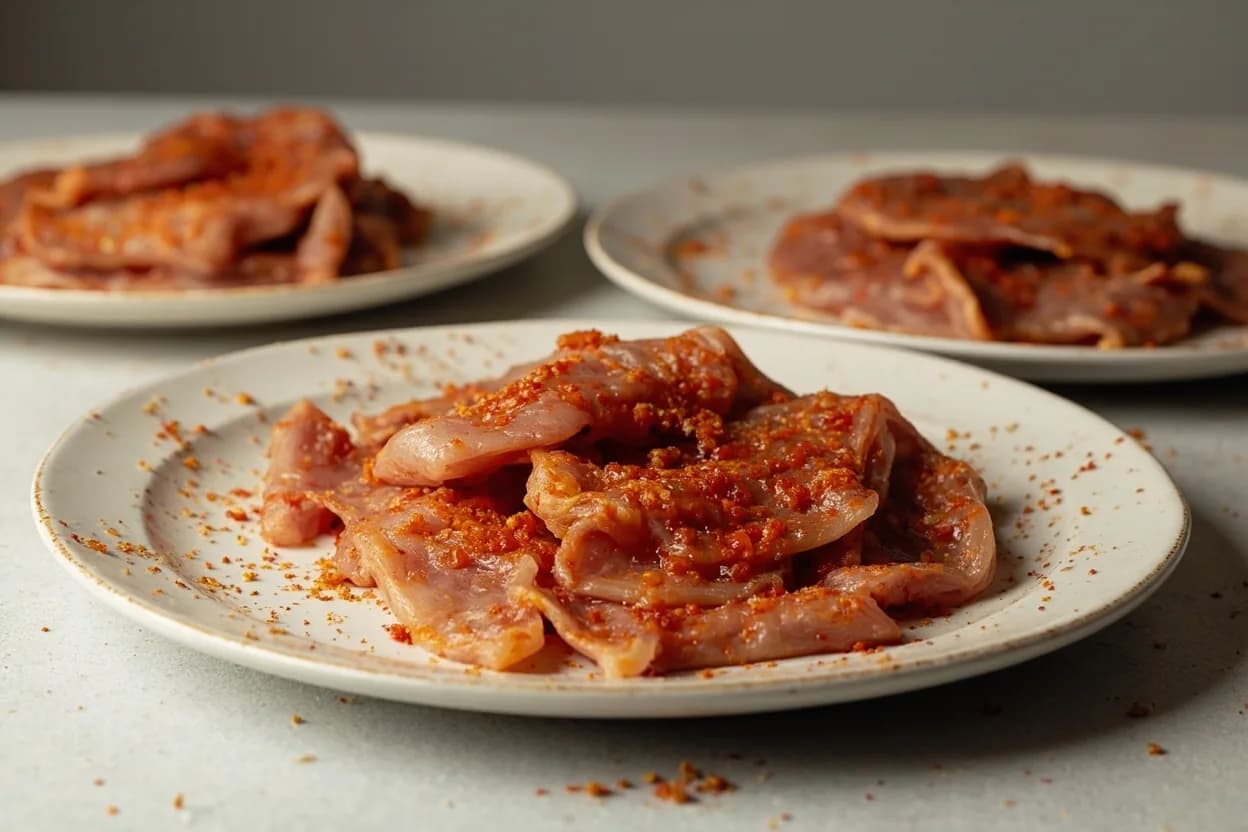

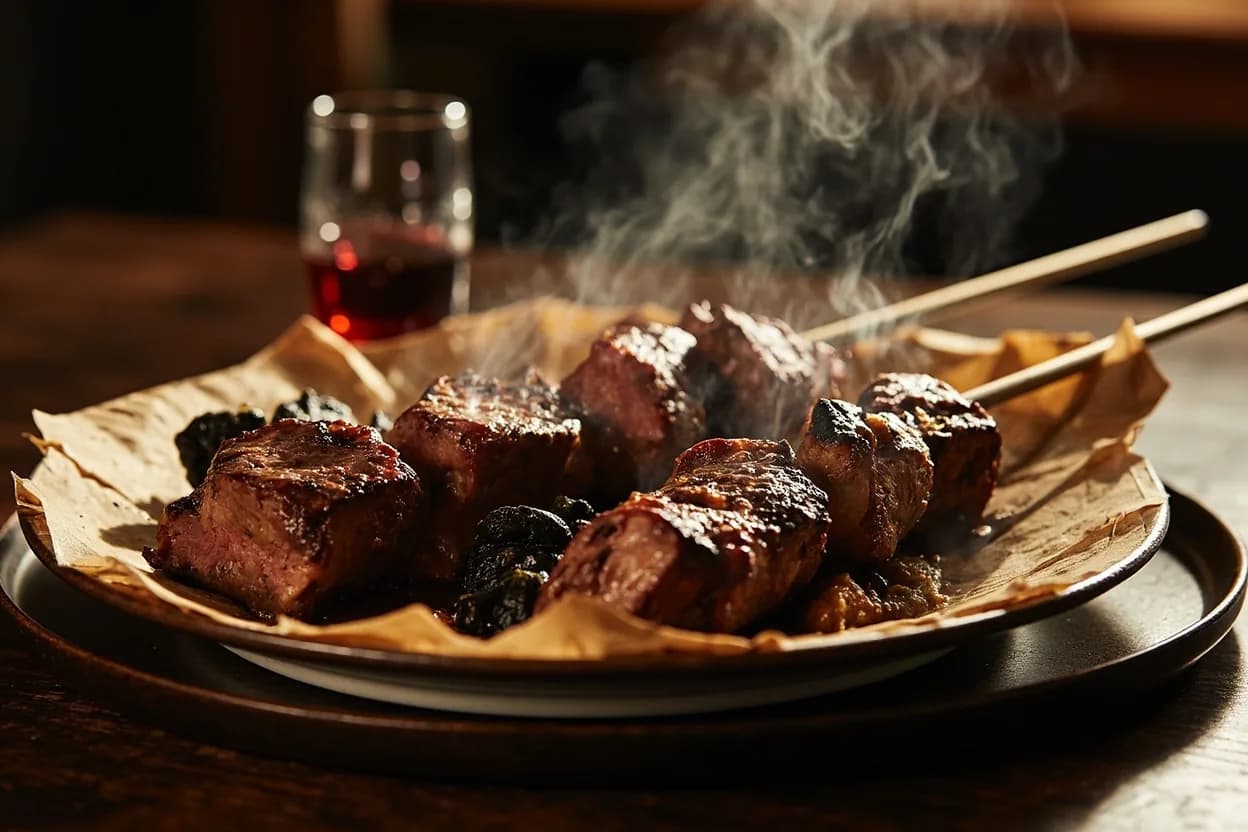


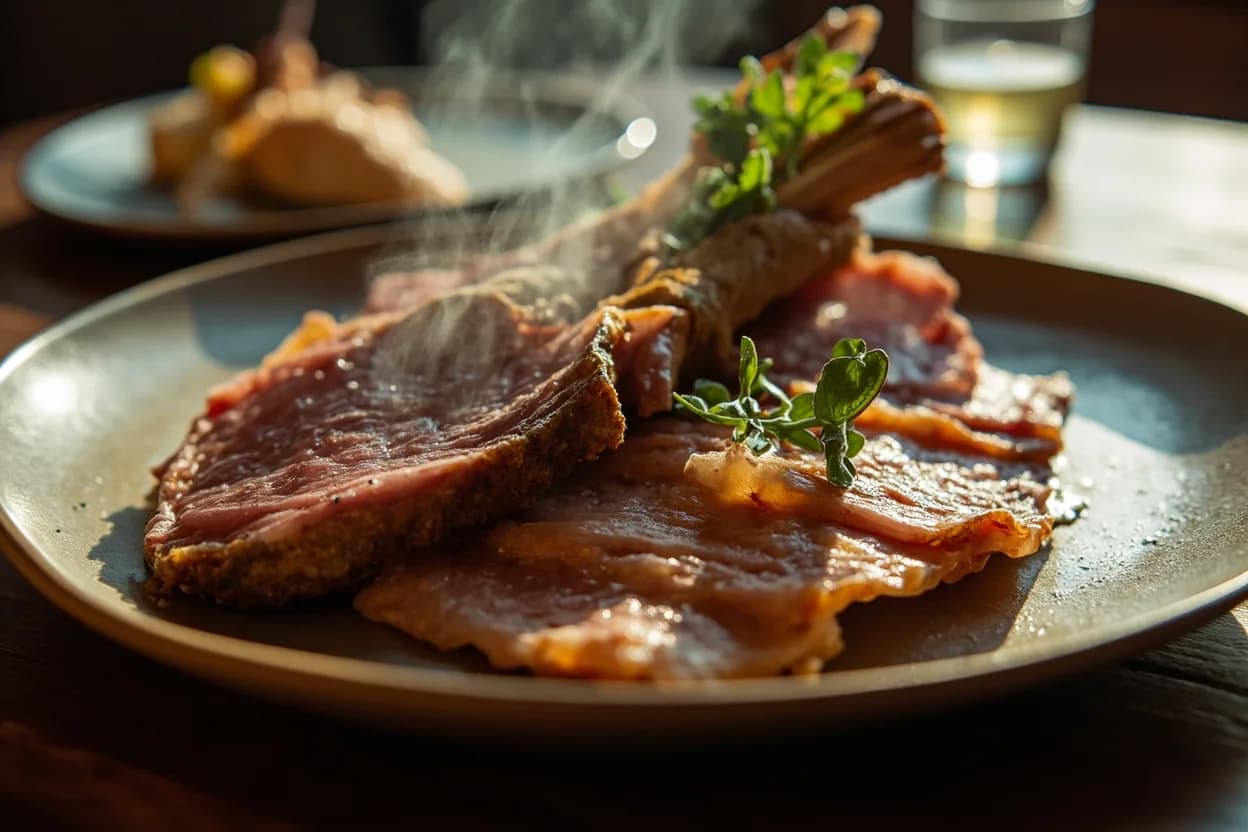
Related

Confit
Cook slowly submerged in fat for silky tenderness and keeping

Cure
Draw out moisture with salt and time to preserve and concentrate

Pickle
Steep in acidic brine for bright, tangy, crunchy preservation

Ferment
Let friendly microbes transform food into tangy, complex flavor

Marinate
Soak in a seasoned mix to flavor and tenderize before cooking

Brine
Soak in salt water so meat stays juicy and seasoned throughout

Dehydrate
Slowly dry out moisture to concentrate flavor and extend shelf life

Cold-Smoke
Perfume cured food with smoke without cooking it through