Transform & Preserve
Air-Drying
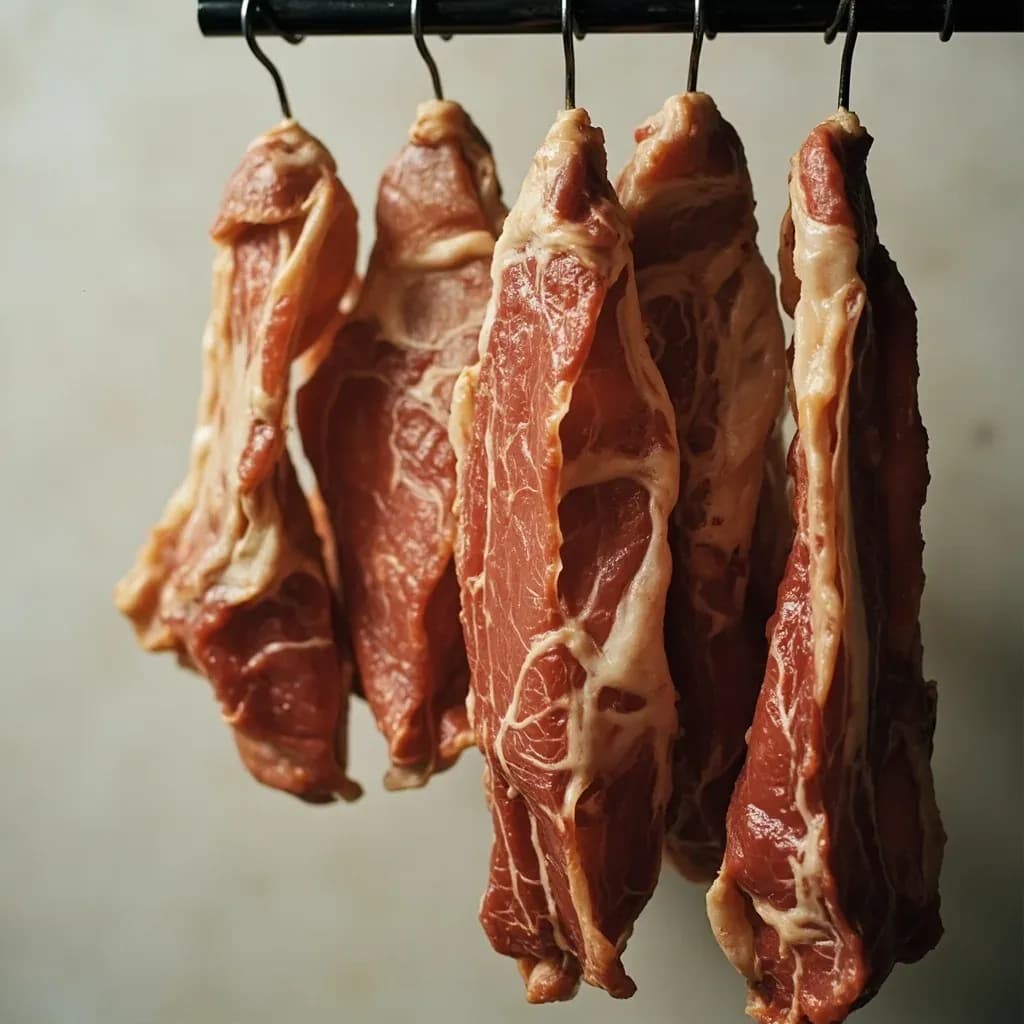
Hanging food in cool moving air to slowly dehydrate and concentrate it for preservation.
Air-drying preserves meat, poultry skin, sausages, and mushrooms by exposing them to cool, circulating air that slowly evaporates moisture, concentrating flavor and inhibiting spoilage. It is the method behind Chinese wind-dried meats and the crisp skin on roast duck, often combined with salt curing. Steady airflow and cool temperatures are essential so the surface dries before bacteria can take hold.
Air-drying is preservation through patience. By exposing food to a steady flow of cool, dry air — usually in a shaded room, breezy attic, or purpose-built curing chamber — moisture migrates from the food's interior to its surface and evaporates, lowering water activity to a level where spoilage microbes and enzymes can no longer function. The technique predates every other method of food storage: ancient Mesopotamians dried dates and barley on reed racks, Mediterranean cooks hung tomatoes and figs on lattice trays, and pre-Columbian communities preserved chiles, beans, and maize in elevated drying lofts long before refrigeration existed.
The success of air-drying rests on three variables working together — temperature, relative humidity, and airflow — and on keeping them steady. Wild swings in humidity are the most common cause of failure: a damp day pushes moisture back into the food, encourages mould, and case-hardens the surface so the inside stays wet. Equally important is what the food has been through before it goes into the air: salting, brining, blanching, or acid dips are almost always part of a 'hurdle' approach where no single barrier (low water activity, salt, pH, competing benign flora) is asked to do the whole job alone.
For home cooks the appeal is partly romance and partly practicality. A small herb bunch, a string of chilli peppers, a tray of apple slices, or a properly salted slab of beef can be transformed with nothing more than a dark closet, a fan, and a hygrometer. What distinguishes air-drying from sun-drying or mechanical dehydrating is precisely its reliance on ambient conditions rather than applied heat, and that constraint is what gives air-cured hams their silken texture, dried tomatoes their leathery chew, and bresaola its dense wine-dark finish.
- Difficulty
- Medium
Types & varieties
Used for delicate herbs, edible flowers, and porcini; preserves volatile oils and green chlorophyll
Traditional in arid mountain and coastal climates (Mediterranean, Norway, Andes); relies on steady breezes rather than heat
Whole-muscle and sausage curing in temperature- and humidity-controlled rooms — prosciutto, jamón ibérico, bresaola, salami, country ham
Slow low-temperature drying of extruded fresh or egg pasta at 35–50 °C for 12–48 hours
Field and post-harvest drying of rice, beans, lentils, and maize to safe storage moisture
Brief resting step for aged steaks, fish, or rice noodles to form a pellicle before searing or further cooking
How to do it
- 1
Select food at peak condition
Start with unblemished, ripe-but-firm produce, very fresh fish, or properly chilled meat. Spoilage before drying cannot be fixed after.
- 2
Pre-treat to control microbes and browning
Salt or brine meat and fish; blanch vegetables briefly; dip fruit slices in lemon juice, ascorbic acid, or a light sulphur solution. Pre-treatment lowers water activity, sets colour, and shortens drying time.
- 3
Cut to a uniform thickness
Slice meat 3–6 mm thick, fruit 5–10 mm, vegetables thin enough to bend without snapping. Uniform pieces finish together; thick centres stay damp and spoil.
- 4
Prepare the drying space
Choose a clean, dark or shaded, well-ventilated room or chamber. Aim for steady 12–25 °C with 50–70% RH and gentle airflow across, not directly onto, the food. Block entry of insects and rodents with screens and muslin.
- 5
Arrange for full air exposure
Lay slices on food-safe mesh or wooden racks spaced for airflow, or thread and hang on rods. Keep pieces single-layer and not touching. Leave headroom for circulating air above and below.
- 6
Dry slowly and steadily
Expect 1–3 days for thin herb or fruit strips, 2–4 days for jerky, 1–3 weeks for air-cured sausages, and many months for whole-muscle hams. Faster drying case-hardens the surface and traps moisture inside.
- 7
Monitor, flip, and inspect
Check twice daily: rotate trays, flip pieces, and discard any showing off-odours or fuzzy non-white mould. Wipe racks between batches.
- 8
Condition and test
When pieces feel dry, gather them into a sealed glass jar for 5–7 days, shaking daily. If condensation forms, return the lot to the dryer. Properly dried food is leathery (meat), pliable (fruit), or brittle (herbs, jerky).
- 9
Store in airtight, light-proof containers
Vacuum-seal, jar, or wrap in parchment then store in a cool (under 15 °C), dark place. Label with date; most air-dried products keep 6–12 months, hard-dried beans and grains for years.
The science of slow moisture loss
Drying is driven by the difference in water vapour pressure between the wet food and the surrounding air. As long as that gradient exists, water keeps moving out — first from the surface, then from deeper layers as it migrates to replace what is lost. The rate is set by air temperature, relative humidity, and velocity, and the trick is to keep the surface drying only slightly faster than the interior can replace it. If the surface dries too quickly it shrinks and seals into a tough skin (case-hardening) that traps moisture inside, where spoilage organisms thrive. If the air is too humid, evaporation stalls. The ideal is a long, even curve of weight loss that ends in a uniformly low water activity.
- Water activity (aw) — not total moisture — determines microbial safety; aim for below 0.60 for shelf-stable dried foods.
- A wet-bulb/dry-bulb reading or a simple hygrometer is worth more than guessing; consistency of conditions matters more than hitting a single number.
- Case-hardening is the classic failure mode: a brittle, leathery exterior with a damp, rot-prone centre.
- Salt and sugar lower water activity and slow enzymatic browning, which is why most air-dried foods are also cured, sugared, or acidified.
Air-drying in charcuterie
In the curing room, air-drying is one strand of a multi-strand defence. Salt first pulls water out of the meat and stabilises proteins; nitrites fix colour and inhibit Clostridium botulinum; fermentation drops pH; smoking lays down phenols and carbonyls; and the slow ambient drying concentrates those hurdles while a benign Penicillium and other moulds colonise the surface and crowd out pathogens. Air alone is not a hurdle — it is the scaffold on which the others are hung — and that is why charcuterie projects demand calibrated chambers, weighed salt, and a written schedule rather than improvisation.
- Whole-muscle cures (prosciutto, jamón ibérico, country ham) need months to years at 12–18 °C and often 70–80% RH in the early stages, dropping later to finish.
- Sausage cures (salami, saucisson, chorizo) rely on a fermentation phase at higher humidity before drying begins.
- The white, powdery bloom on a well-aged salami is typically Penicillium nalgiovense — distinct from fuzzy black, green, or pink spoilage moulds.
- Home cooks should not attempt room-temperature air-drying of low-salt, low-acid meats without a reliable curing chamber and a tested recipe.
Best candidates for the home air-dryer
A kitchen with no dedicated curing chamber can still produce beautiful results if you choose forgiving ingredients. Herbs, hot chillies, garlic, citrus peel, mushroom slices, and salt- or vinegar-pre-treated fruit are all low-risk because they pair drying with at least one other hurdle (sulphurous oils, capsaicin, low pH, or salt). In humid climates, a small fan pulling air through a mesh-bottomed box, or 'fridge-drying' on a plate loosely covered with muslin, often works better than a window-ledge setup where nights are damp.
- Tie woody herbs (thyme, rosemary, oregano, sage) in small bundles and hang in a dark, airy room.
- String ripe chillies — cayenne, guindilla, peperoncino — on cotton thread through the stems.
- Slice apples, pears, tomatoes, or citrus 5 mm thick; dip briefly in lemon juice or a 1% ascorbic acid solution to set colour.
- Slice cleaned porcini or shiitake 3–5 mm thick and dry on mesh in the darkest corner of the kitchen; turn daily.
Common uses
Tips & pitfalls
- Hang or lay product so air reaches every surface; never let pieces touch or overlap, or the contact points will stay damp and spoil.
- Shade herbs, mushrooms, and light-coloured fruits — direct sun bleaches colour and degrades aromatic oils almost immediately.
- Use a hygrometer and thermometer; humidity swings are the most common cause of case-hardening (dry outside, wet core).
- Pre-treat with salt, brine, blanching, or sulphur dioxide when pathogen load is high or sugar content is low; air alone is not a hurdle against pathogens.
- Cover drying food with fine muslin or food-safe netting to keep flies and pantry moths out — they will lay eggs faster than you can swat them.
- Always run a conditioning step: once pieces feel dry, seal them together in a jar for a week so residual moisture equalises before final storage; visible condensation means they are not done.
- Test doneness by feel and weight — properly dried food is leathery or brittle, never pliable with a damp centre; weigh batches and compare to the 50–70% weight loss expected for fruit and vegetables.
- Discard anything that smells sour, ammoniac, or slimy; when in doubt, throw it out — botulism risk is real in low-salt, low-acid, anaerobic pockets, and the senses exist to warn you.
Good to know
- Type
- Low-temperature moisture removal using moving air, distinct from sun-drying and mechanical dehydration
- Origin
- Among the oldest preservation techniques; documented in ancient Egypt, Mesopotamia, the Mediterranean, and pre-Columbian Americas
- Typical temperature range
- Roughly 10–25 °C (50–77 °F); traditional charcuterie rooms often run 12–18 °C
- Ideal relative humidity
- Generally 45–70% RH, depending on product; steady conditions beat fluctuating ones
- Target water activity (aw)
- Below ~0.60 for shelf-stable drying; cured meats often finish around 0.85–0.91 but rely on salt and pH as hurdles
- Air movement
- Gentle, constant circulation; stale air stalls drying and invites spoilage
- Time required
- Hours for herbs; days for sliced fruit or fish; weeks to 18–36 months for whole cured hams
- Common pre-treatments
- Salting or brining, blanching, sulphiting, dipping in honey or citrus juice, smoking as a follow-on step
- Storage after drying
- Airtight containers, vacuum-sealed bags, or wrapped in breathable paper or linen in a cool, dark, dry place
Also called
Air-Drying · Wind-Drying · 风干
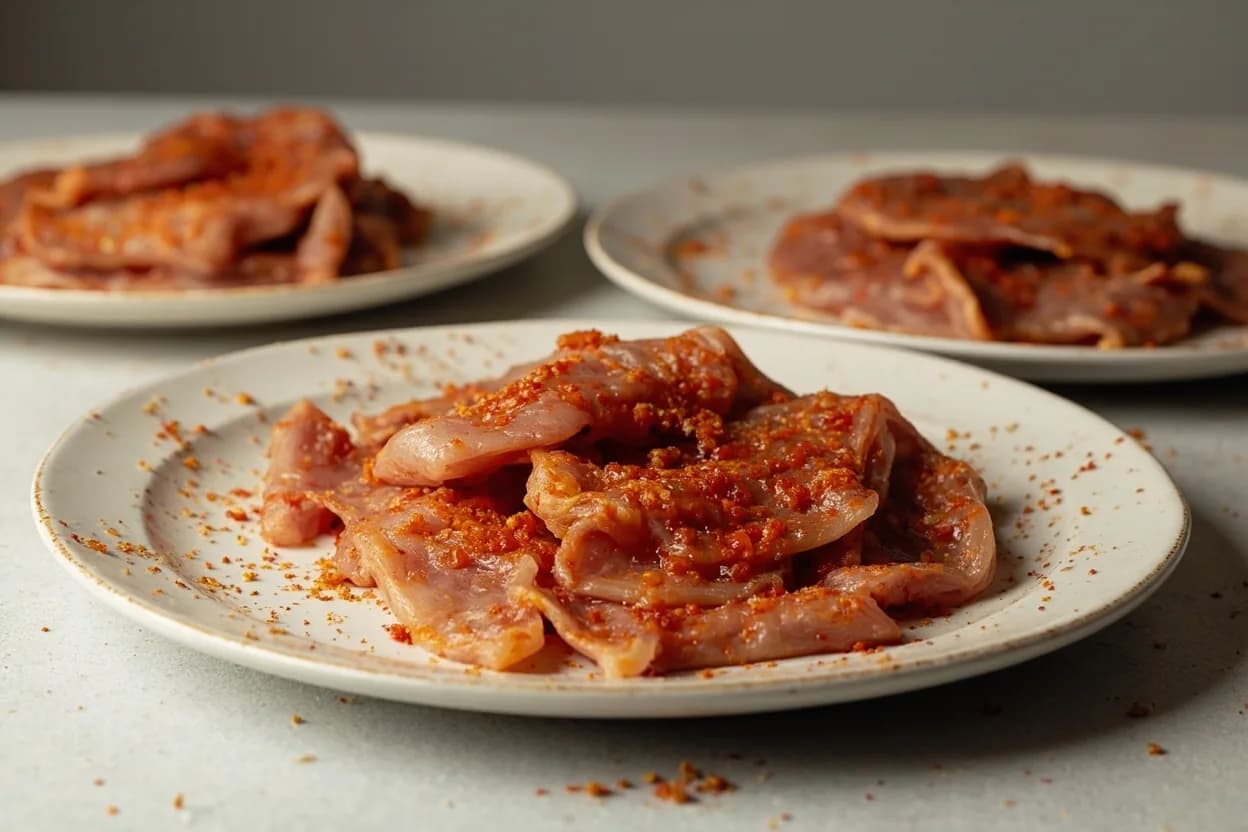
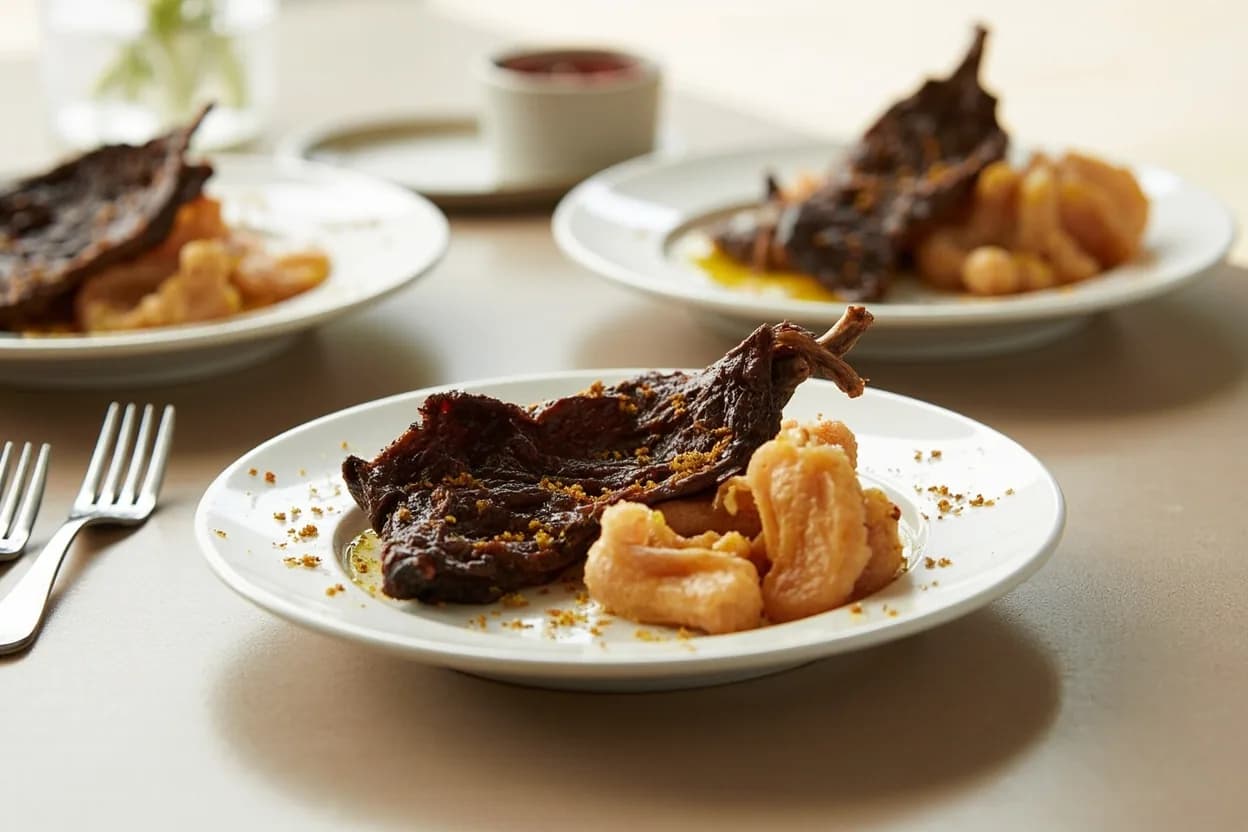
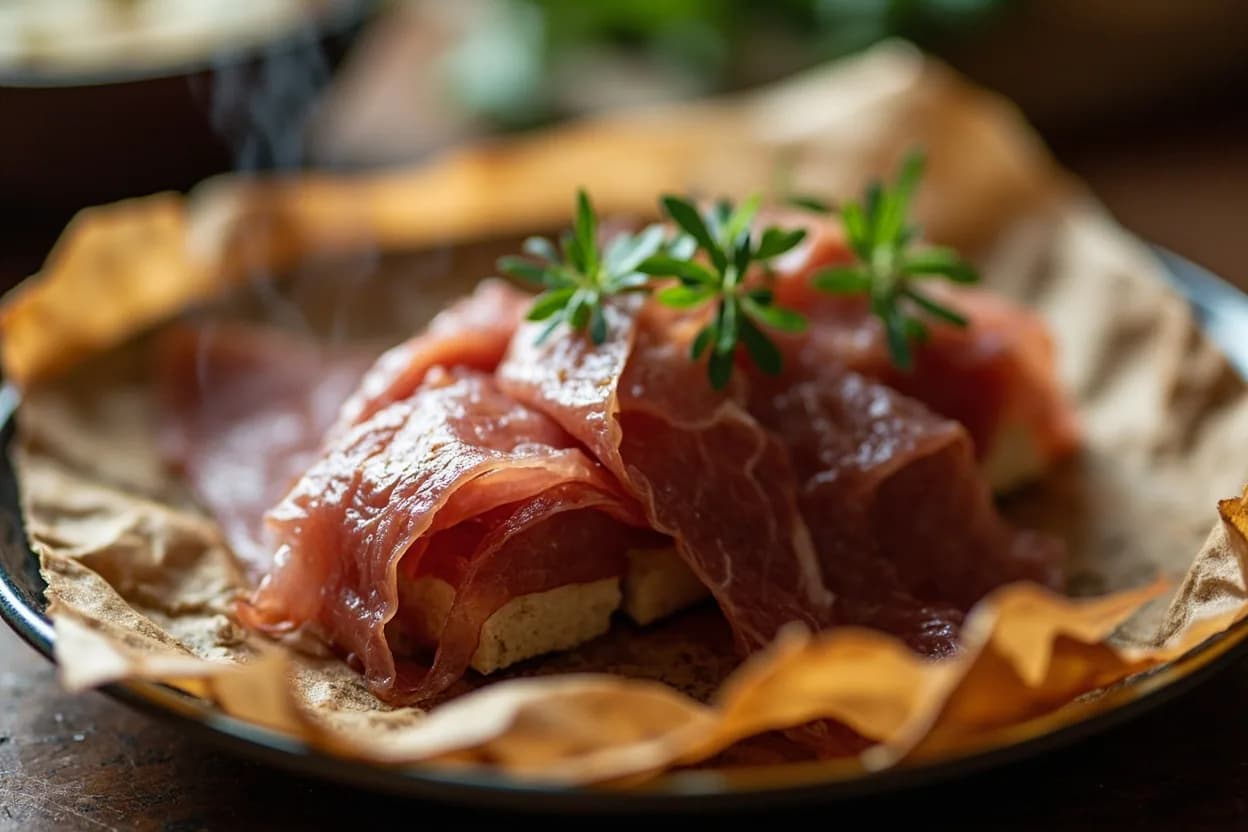
Dishes that rely on it
Related

Confit
Cook slowly submerged in fat for silky tenderness and keeping

Cure
Draw out moisture with salt and time to preserve and concentrate

Pickle
Steep in acidic brine for bright, tangy, crunchy preservation

Ferment
Let friendly microbes transform food into tangy, complex flavor

Marinate
Soak in a seasoned mix to flavor and tenderize before cooking

Brine
Soak in salt water so meat stays juicy and seasoned throughout

Dehydrate
Slowly dry out moisture to concentrate flavor and extend shelf life

Cold-Smoke
Perfume cured food with smoke without cooking it through