Proteins
Bresaola
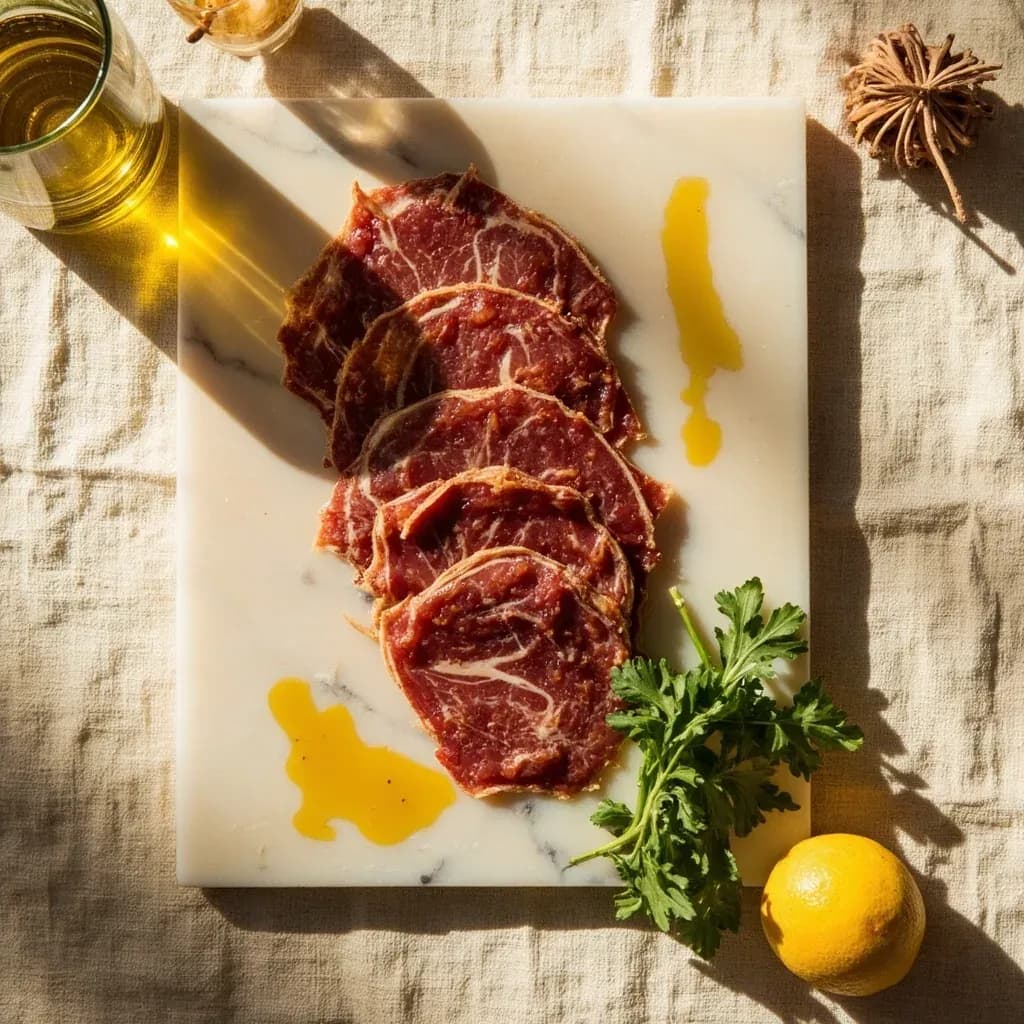
Air-dried, salt-cured lean beef sliced wafer-thin; deep red, tender and barely fatty. Served raw, dressed simply with oil, lemon, arugula and shaved cheese.
Bresaola is an air-dried, salt-cured whole-muscle beef from the Alpine Valtellina valley in Lombardy — a deep-ruby cured meat with almost no fat and a quietly powerful, aromatic savor. Unlike salami or prosciutto, it is not stuffed, fermented, or smoked: a single lean cut is rubbed with salt and spices, pressed briefly to draw out moisture, then hung in cool, moving cellar air for weeks to months until it loses roughly a third of its weight. The result is dense and fine-grained, with a slice so thin it should almost glow against the light.
Its identity rests on three things: the cut (almost always eye of round), the dryness of the cure (which concentrates flavor without making the meat tough), and the slice (paper-thin, against the grain). It is eaten raw, at room temperature, because the cure is complete and heat only toughens the lean fibers. The IGP-protected 'Bresaola della Valtellina' has been made to a fixed disciplinare since 1996, but producers throughout northern Italy and beyond make very similar products under the generic name.
What makes bresaola worth knowing is its restraint: it is one of the few cured meats that can carry a meal on its own without overwhelming a wine, a cheese, or a salad. A few slices, a thread of good olive oil, lemon, pepper, and arugula — and you have an antipasto more elegant than almost anything else you can assemble in five minutes.
- Measured in
- g
- Storage
- Refrigerate
Find it in
Types & varieties
The only protected designation; must be produced in Valtellina from permitted cuts, spiced per the disciplinare, and aged at least eight weeks.
Italian bresaola made outside Valtellina using the same technique; cannot carry the IGP seal and quality varies considerably.
Cut from the hip-tip (point of rump); slightly more textured and a touch richer than the classic eye-of-round version.
Cut from the under-fillet region; rarer and more delicate, often aged longer for a softer, more aromatic slice.
Historic horsemeat variant from Valchiavenna; still produced in small quantities and considerably stronger in flavor.
Smoked after drying — a non-traditional, more assertive style best used in cooked dishes.
How it is made
Traditional Valtellina production is a study in patience and air. The eye of round is trimmed of every trace of external fat and silver skin — fat would turn rancid during the long dry — then rubbed all over with a coarse salt mixed with juniper, black pepper, cinnamon, clove, nutmeg, and sometimes garlic or rosemary. The rubbed cuts are stacked under light pressure and turned daily for ten to twenty days; this pressing both seasons the meat evenly and squeezes out the blood and moisture that would otherwise spoil in the cellar.
After rinsing and air-drying on the surface, the pieces are moved to ventilated cellars held at roughly 8–14 °C, where they hang for a minimum of eight weeks and often three to five months. The cellar air does all the work: it drops water activity low enough to make the meat shelf-stable while concentrating the cured, slightly sweet, spiced flavor. Weight loss of 30–40% is normal; that is why a kilo of fresh beef yields only 600–700 g of finished bresaola, and why a deep, almost burgundy interior and a dry, dark crust are signs of a properly aged piece.
Slicing and serving
Bresaola is almost always served raw and at room temperature — about 15 to 20 minutes out of the refrigerator. Cold mutes the aromatics and firms what little fat there is, dulling both flavor and texture. The slice should be wafer-thin and cut across the grain: a sharp long blade or, ideally, a deli slicer at its thinnest setting. A dull knife tears the fibers and gives a ragged, chewy edge that does not melt on the tongue as it should.
Trim the dark, hardened crust before slicing — it is too dry and intensely salty to eat. Once sliced, dress with restraint: a thread of grassy extra virgin olive oil, a few drops of lemon, freshly cracked pepper, and a small handful of peppery arugula. Shaved Parmigiano-Reggiano or Grana Padano curls are the traditional finishing touch; capers (salt-packed and rinsed) are a welcome briny accent. Anything more aggressive — heavy vinaigrette, raw garlic, vinegar — overwhelms the cured, savory character that makes bresaola worth eating in the first place.
Common uses
Tips & pitfalls
- Slice against the grain, as thin as possible — a deli slicer is worth the effort; a dull knife tears the fibers and ruins the texture.
- Always bring to room temperature before serving (15–20 minutes out of the fridge); cold mutes the aromatics and firms the fat.
- Do not cook traditional bresaola — the cure is already complete and heat toughens the lean protein. If you must warm it, drape it over hot pasta for a few seconds at the very end.
- Trim the dark, hardened exterior before slicing; it is too dry and intensely salty to eat.
- Avoid heavy vinegary dressings — they fight the cured character. Lemon juice or a few drops of aged balsamic is plenty.
- When buying, look for an even deep-red color (not brown or gray), a clean spicy-cured aroma, and minimal surface crystallization; a powdery bloom is fine, slime is not.
- Store the whole piece in muslin or butcher paper, never plastic — bresaola needs to breathe or it develops off flavors and a sticky surface.
- Taste a sliver on its own before seasoning; good bresaola is balanced and often needs nothing more than a thread of oil.
Nutrition
Energy
828 kJ · per 100 g
Where the calories come from
Protein
14.7g
29% DV
Carbs
0.1g
0% DV
Fat
14.9g
19% DV
Fiber
0g
0% DV
Sodium
1217mg
53% DV
Source · USDA FoodData Central · Beef, cured, corned beef, brisket, raw
View on FDC →In the shops
Matched grocery products
No matched grocery products for Bresaola yet.
Good to know
- Origin
- Valtellina, an Alpine valley in the province of Sondrio, northern Lombardy
- Type
- Whole-muscle, air-dried, salt-cured lean beef — not stuffed, not smoked, not fermented
- Traditional cut
- Eye of round (girello); topside, silverside and outside round also permitted under the IGP
- Salting
- Roughly 10–20 days in a salt-and-spice rub, with light pressing to expel moisture
- Aging
- Minimum 8 weeks; most producers age 3–5 months, premium lines longer
- Protected status
- IGP since 1996 as 'Bresaola della Valtellina' — only Valtellina product carries the seal
- Color and texture
- Deep ruby to garnet red, very lean, fine-grained and slightly chewy; never mushy or fibrous
- Storage
- Whole piece in muslin or butcher paper in a cool cellar or fridge (weeks to months); once sliced, refrigerated and tightly sealed for 3–5 days
Substitutes
- Bündnerfleisch (Viande des Grisons) — Swiss air-dried beef from the same Alpine tradition; nearly identical in flavor and use, though typically sliced slightly thicker.
- Prosciutto crudo — Pork rather than beef, but the closest stand-in on an antipasto plate — milder, saltier, with a softer texture and a fattier mouthfeel.
- Speck — Smoked and cured pork shoulder; heartier and smoky, better in cooked dishes where bresaola would be too delicate.
- Carpaccio di manzo — Raw, thinly sliced beef; fills the same serving role but lacks the cured depth and aromatic spice notes.
- Jambon de Bayonne — French air-dried ham; similar silky texture, slightly sweeter, made from pork rather than beef.
- Cecina de León — Spanish cured and smoked beef; more assertive and smoky — best in cooked applications rather than raw antipasti.
Pairs with
Also called
air-dried beef · cured beef · bresaola della Valtellina
Appears in these dishes
Related
Egg
The kitchen's everything ingredient — bind, leaven, enrich, or fry
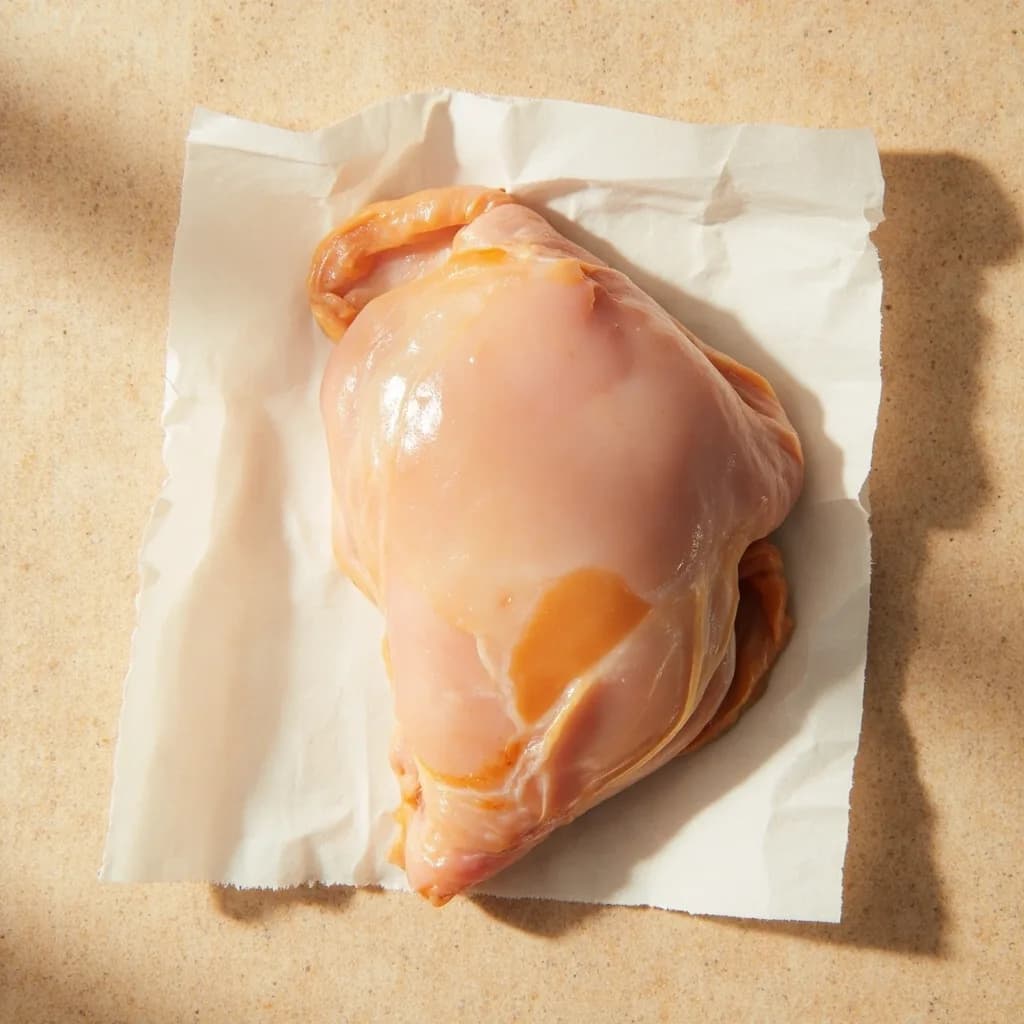
Chicken Breast
Lean, quick-cooking white meat for everyday dinners

Ground Beef
Versatile minced beef for burgers, ragù, tacos, and meatballs
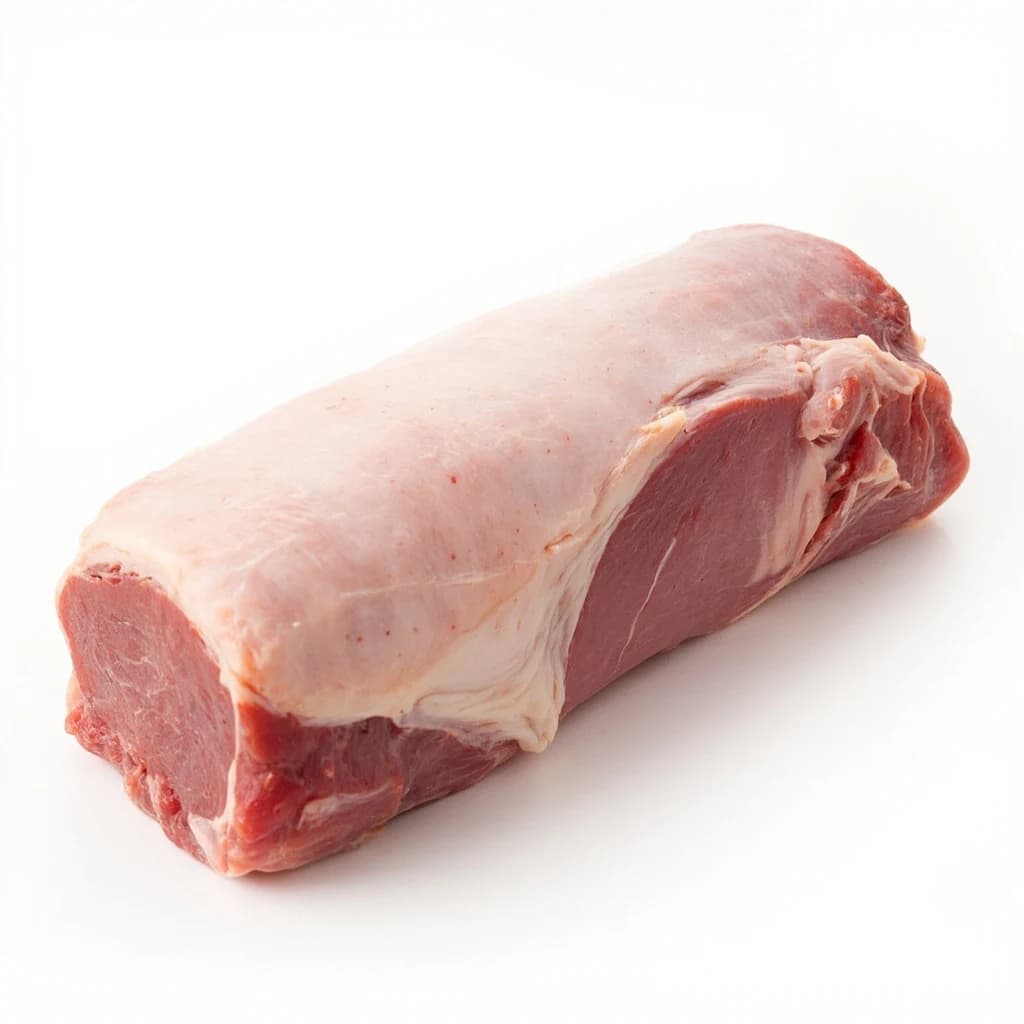
Pork Loin
Lean, tender roasting cut that stays juicy with care
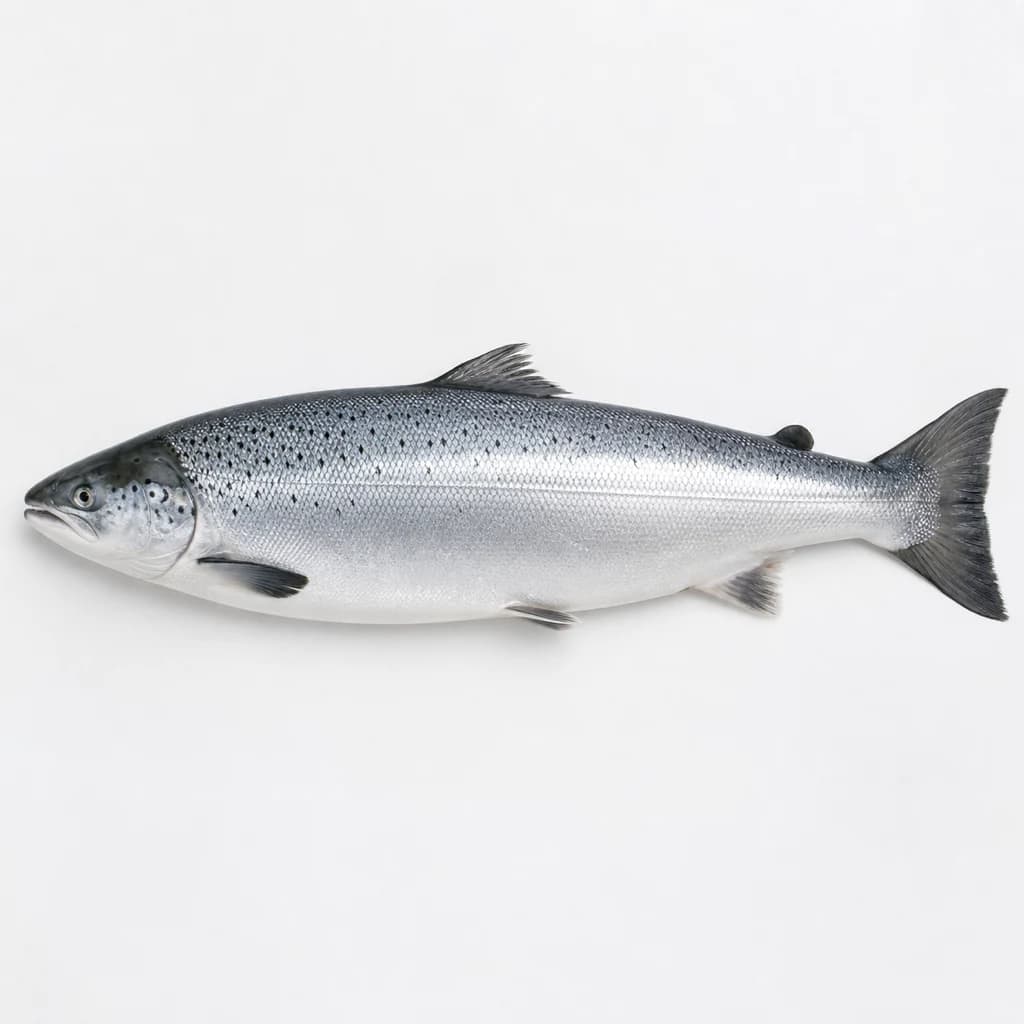
Salmon
Rich, rosy fish that roasts, grills, or cures beautifully

Egg White
Pure protein that whips to airy peaks for meringue and more
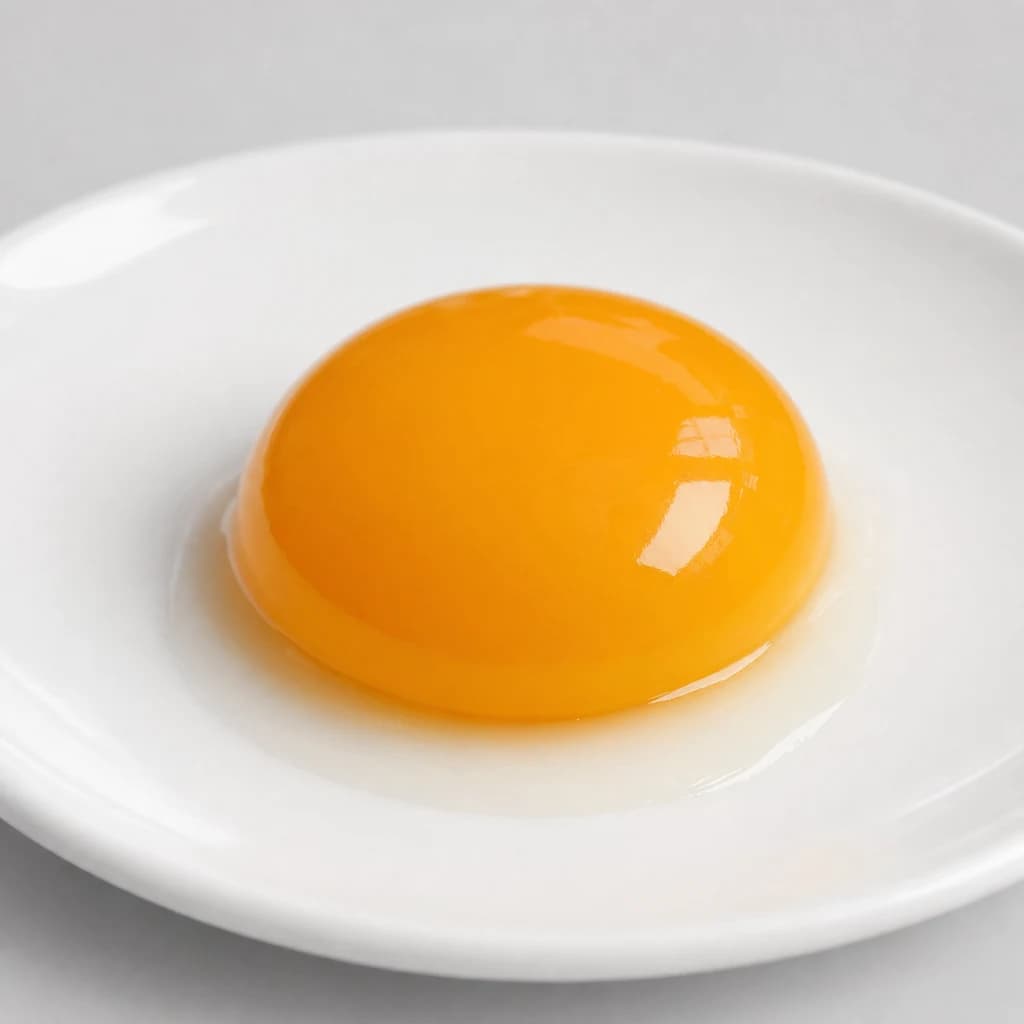
Egg Yolk
Rich, golden yolk for custards, mayonnaise, and pasta

Quail Egg
Tiny, speckled eggs for garnishing and elegant bites