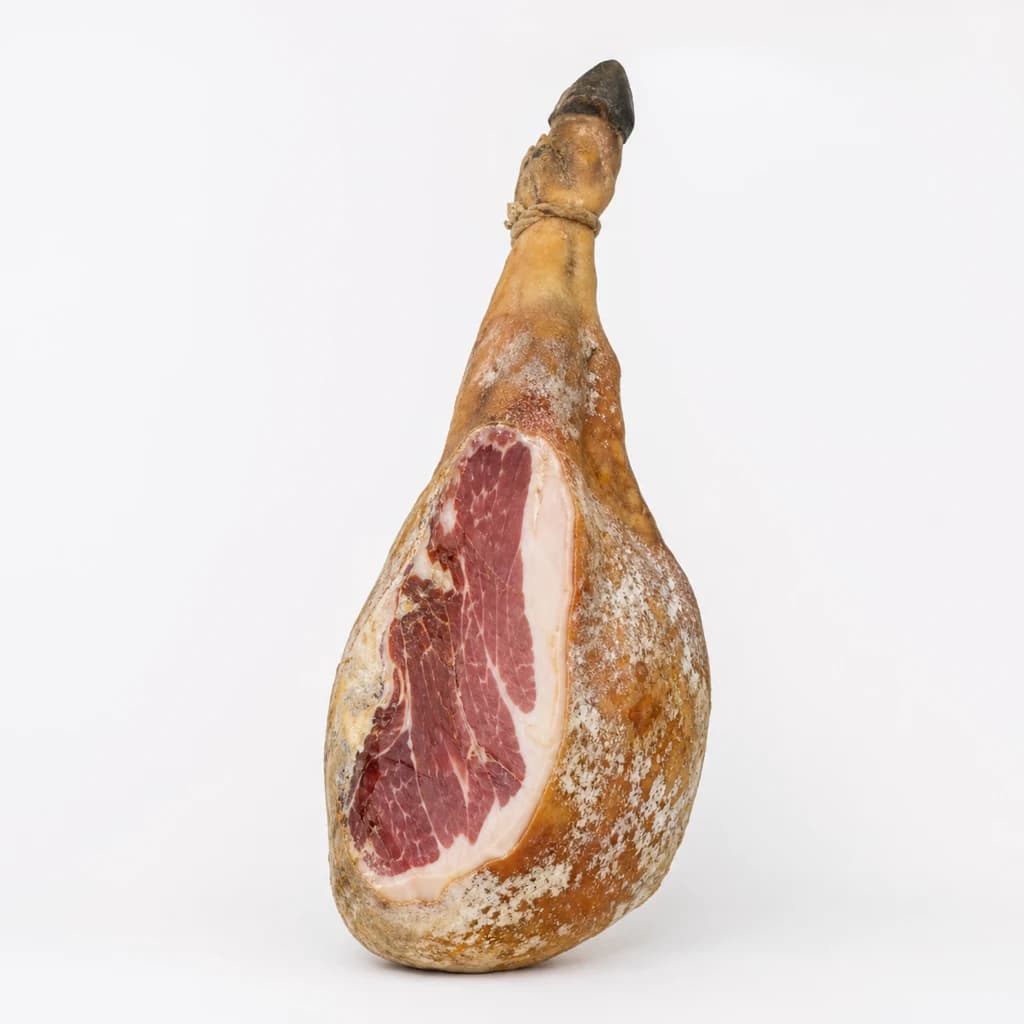
Natural form
A whole prosciutto leg showing the cured exterior rind and exposed rosy-pink meat face.
Shows the reader the recognizable whole-leg form with dark outer crust and characteristic pink interior coloration that distinguishes prosciutto from fresh ham.
Proteins
Prosciutto
Dry-cured, thinly sliced Italian ham — eaten raw, draped over dishes, or used to add savory depth.
Prosciutto is Italian ham that is salt-cured and air-dried for months, producing a silky, deeply savory meat eaten without cooking. It is sliced paper-thin and served with melon or bread, draped over pizza and pasta, or wrapped around vegetables and fish. The long curing gives it a delicate sweetness and concentrated umami.
Prosciutto is dry-cured, uncooked ham from the hind leg of a pig—Italy's answer to the finest charcuterie. The curing process involves nothing more than salt, time, and controlled air drying, a method refined over centuries in the Emilia-Romagna and Friuli-Venezia Giulia regions. Quality prosciutto undergoes a cure of 12 to 24 months, during which the meat loses roughly 30% of its original weight through moisture evaporation, concentrating flavor and developing the characteristic silky texture and deep rose-to-magenta color with translucent white fat marbling. The fat content, approximately 15–20% by weight, should be waxy rather than greasy and evenly distributed throughout the muscle.
What distinguishes great prosciutto from ordinary cured ham is the interplay between provenance and craft. Prosciutto di Parma DOP carries the five-pointed ducal crown mark and derives its signature sweetness from pigs fed on whey and chestnuts in the Parma region's specific microclimate. Prosciutto di San Daniele DOP maintains the full boot-shape of the hind leg during curing, producing a softer, slightly sweeter result. The difference is tangible: when you bite into properly cured prosciutto, the flesh yields immediately, the fat dissolves against your palate, and you taste a delicate nuttiness underscored by a faint mineral quality—this is not a ham to be washed down, but to be savored alone or with a single accompaniment.
A critical point of confusion for cooks is the distinction between prosciutto crudo (raw, meaning uncooked) and prosciutto cotto (cooked ham). All true prosciutto—the kind you eat raw draped over melon or wrapped around asparagus—is crudo. It is safe to eat raw because the extended curing process inhibits pathogen growth. When recipes call for crisping prosciutto in a hot pan, this is purely for texture and aroma; the ham is already completely safe and fully cooked in the culinary sense only by the absence of heat applied during curing.
- Measured in
- g
- Storage
- Fridge
Types & varieties
The benchmark. Made in the province of Parma. Marked with the five-pointed ducal crown. Sweetness comes from pigs fed whey and chestnuts; the local climate shapes the cure.
Made in the town of San Daniele del Friuli. Slightly sweeter and softer than Parma. Identifiable by the distinctive boot-shaped stamp on the rind.
From the Modena area; same curing standards as DOP but less restrictive provenance requirements.
Cured with rosemary, juniper, and garlic. Darker color, more robust flavor, slightly chewier texture than northern varieties.
From Norcia, Umbria. Known for traditional processing methods; often darker and more intensely flavored.
The most prized cut—muscle only from the thigh, tied in a sausage shape. Smaller, more tender, more expensive. Aged 12–24 months. From the Po Valley.
Cooked ham, not dry-cured. Italian deli staple; pale pink, mild flavor. Not a substitute for true prosciutto crudo in raw applications.
Dry-cured from the neck/shoulder. More marbled and robust than prosciutto; better suited for cooking than raw eating.
Slicing: Technique Matters
The difference between a good and mediocre prosciutto experience often comes down to slicing. A dull knife tears and bruises the fibers, destroying the silken mouthfeel that defines quality prosciutto. Use a sharp, flexible slicing knife or a deli slicer set to paper-thin. Slice against the grain and work toward the fat cap—the direction matters for tenderness. Slice only what you will serve immediately; pre-sliced packages oxidize rapidly and lose aroma within days, even when refrigerated.
- A sharp flexible knife is essential; a chef's knife is too thick for paper-thin slicing
- Slice perpendicular to the leg bone, working from the narrow end toward the wide heel
- Individual slices should be translucent enough to read through
Buying: What to Look For
A whole piece should feel firm with no soft spots. Press gently: the flesh should spring back. Inspect the surface for uniform rose color with white fat—never yellow. Gray or brown discoloration indicates oxidation past its prime. The fat cap should be intact and waxy, not oozing or dried out. For pre-sliced packages, check that slices are not stuck together in clumps, which suggests moisture exposure. Smell is diagnostic: quality prosciutto smells sweet and nutty; any sour or ammonia-like notes signal overcure or age.
- Buy whole pieces whenever possible for maximum freshness
- Reject pieces with excessive liquid in the packaging
- The five-pointed ducal crown confirms true Parma DOP
Common uses
Tips & pitfalls
- Buy whole pieces when possible; pre-sliced packages oxidize and lose aroma rapidly, often within days of opening.
- Bring refrigerated prosciutto to room temperature 15–20 minutes before serving. Cold prosciutto has muted flavor and the fat does not release its aromatics properly.
- Slice as needed with a sharp, flexible knife. A dull knife tears and bruises the fibers, destroying the silken texture.
- Slice against the grain and toward the fat cap for the most tender bite.
- Look for uniform rose-to-magenta color with white (not yellow) fat. Gray or brown discoloration indicates oxidation or age beyond prime.
- Press a slice gently: it should cling to itself without sticking excessively. Excess moisture means insufficient cure.
- Never substitute pancetta or bacon for prosciutto when raw eating is called for; the flavor and texture profiles differ fundamentally.
- For wrapping vegetables, stretch the slice slightly before wrapping to maximize contact and ensure even crisping when cooked.
- If a whole piece develops surface mold, trim it away—the interior remains safe and edible.
- Do not confuse prosciutto cotto with true prosciutto crudo; cotto is cooked ham and cannot replicate raw-eating applications.
Nutrition
Nutrition
No USDA FoodData Central match for Prosciutto yet. We surface a per-100 g profile once a generic whole-food entry is matched and verified.
In the shops
Matched grocery products
No matched grocery products for Prosciutto yet.
Good to know
- Origin
- Italy, primarily Emilia-Romagna (Parma) and Friuli-Venezia Giulia (San Daniele)
- Type
- Dry-cured, uncooked ham from the hind leg of a pig
- Curing Time
- Parma DOP: minimum 12 months; most quality prosciutto: 14–24 months
- Flavor Profile
- Sweet, delicate, nutty, faintly mineral; moderately salty
- Texture
- Tender, silky; fat should be waxy, not greasy, with uniform rose-to-magenta color
- Salt Content
- 2–5% by weight after curing
- Storage (whole piece)
- Wrapped in cloth or butcher paper, refrigerated at 35–40°F; up to 6–8 months
- Storage (sliced)
- Refrigerated in airtight wrap; consume within 2–3 weeks for best quality
- Serving Temperature
- Room temperature (65–70°F), 15–20 minutes before serving
Substitutes
- Jamón Ibérico (Spain) — Closest flavor and texture. Cured, raw-eating ham. Use paper-thin. Most expensive substitute.
- Jamón Serrano — Spanish mountain ham. Slightly firmer and saltier than Italian varieties. Good raw-eating substitute.
- Prosciutto Cotto — Italian cooked ham. Only substitute where cooked texture is acceptable—pasta, sandwiches. Not viable for raw applications.
- Coppa — More marbled, slightly chewier. Acceptable for cooked applications; too assertive for delicate raw eating.
- Speck — Smoked, lightly cured Italian ham from South Tyrol. Works in cooked dishes; not a true raw-eating substitute.
Pairs with
Also called
Dalmatian Prosciutto (Pršut) · Prosciutto Crudo · Pršut
Appears in these dishes
Related
Egg
The kitchen's everything ingredient — bind, leaven, enrich, or fry
Chicken Breast
Lean, quick-cooking white meat for everyday dinners

Ground Beef
Versatile minced beef for burgers, ragù, tacos, and meatballs
Pork Loin
Lean, tender roasting cut that stays juicy with care
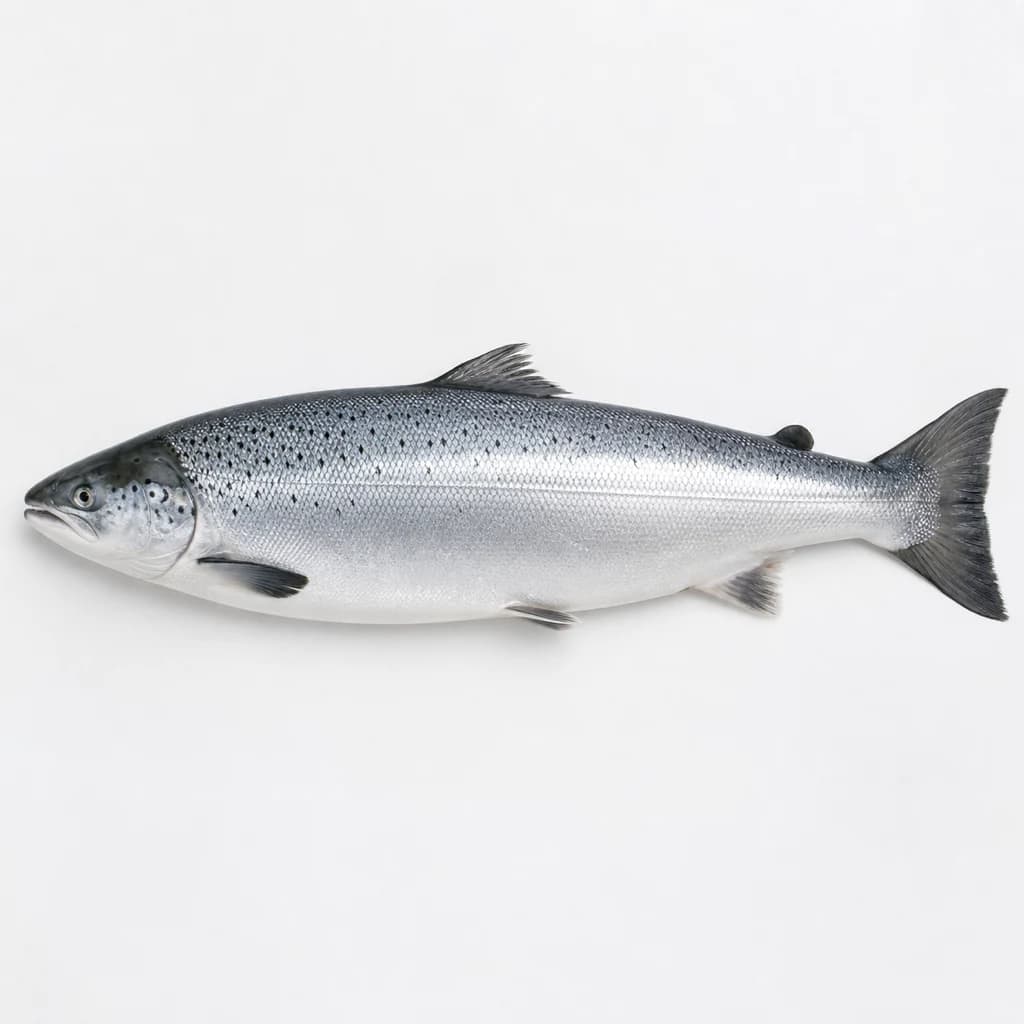
Salmon
Rich, rosy fish that roasts, grills, or cures beautifully

Egg White
Pure protein that whips to airy peaks for meringue and more
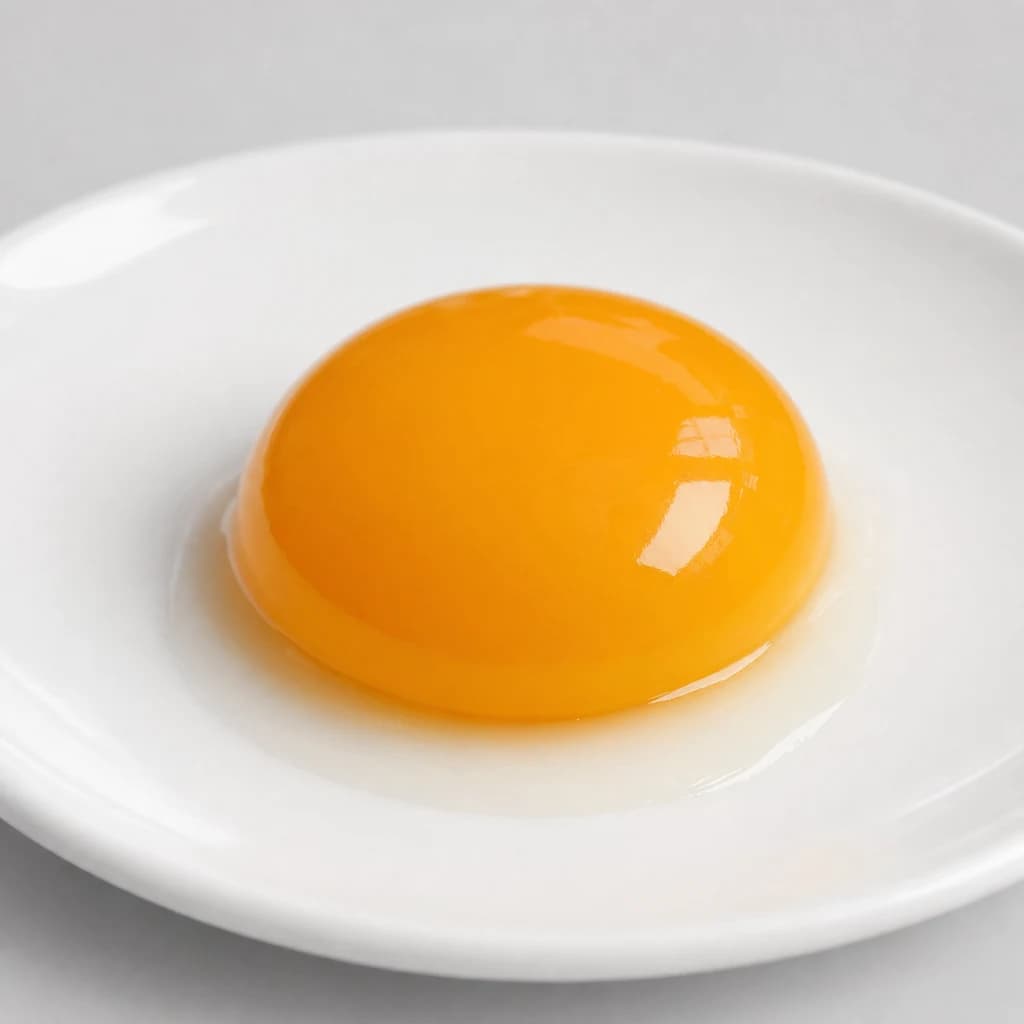
Egg Yolk
Rich, golden yolk for custards, mayonnaise, and pasta

Quail Egg
Tiny, speckled eggs for garnishing and elegant bites