Proteins
Pork Collar / Coppa (fresh)
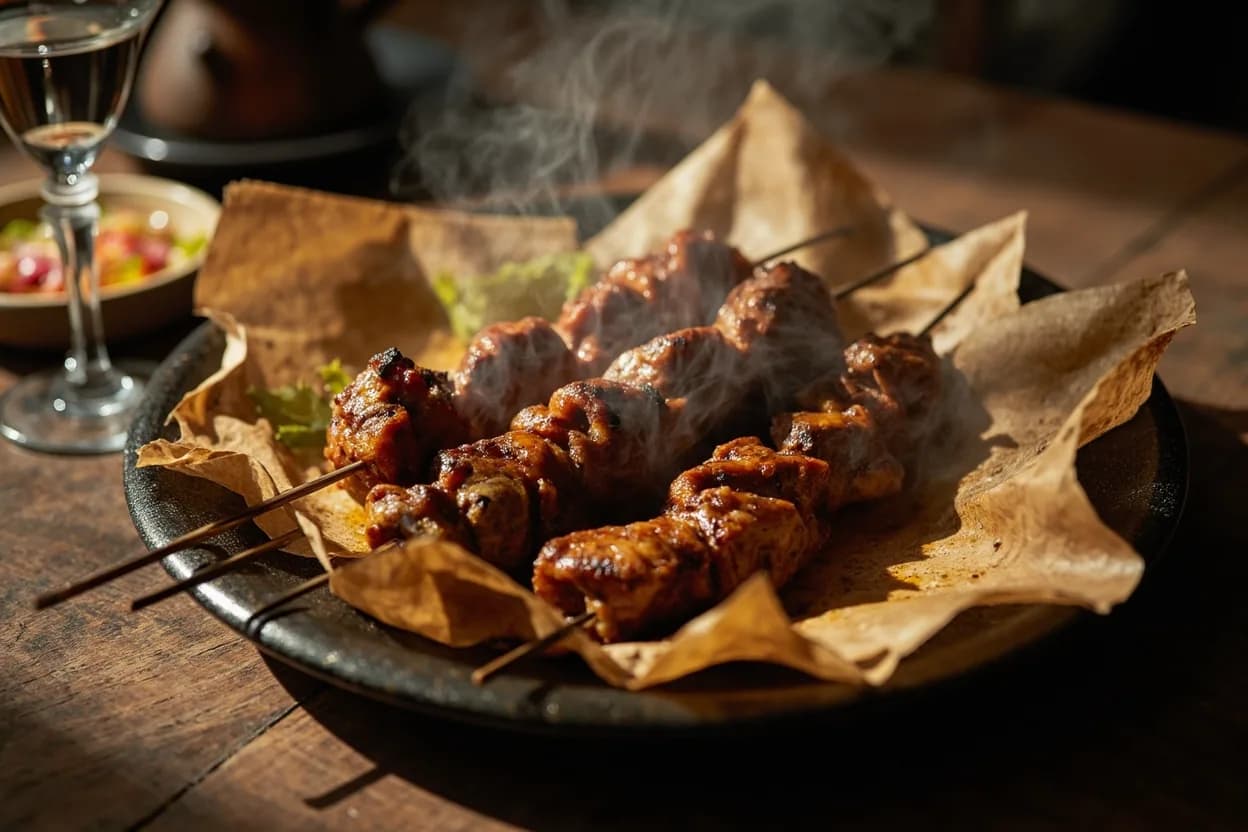
Well-marbled cut from the neck and shoulder, prized for tenderness and fat. Grill as steaks, slow-roast, or char-grill (Thai kor moo yang). Stays juicy where loin dries out.
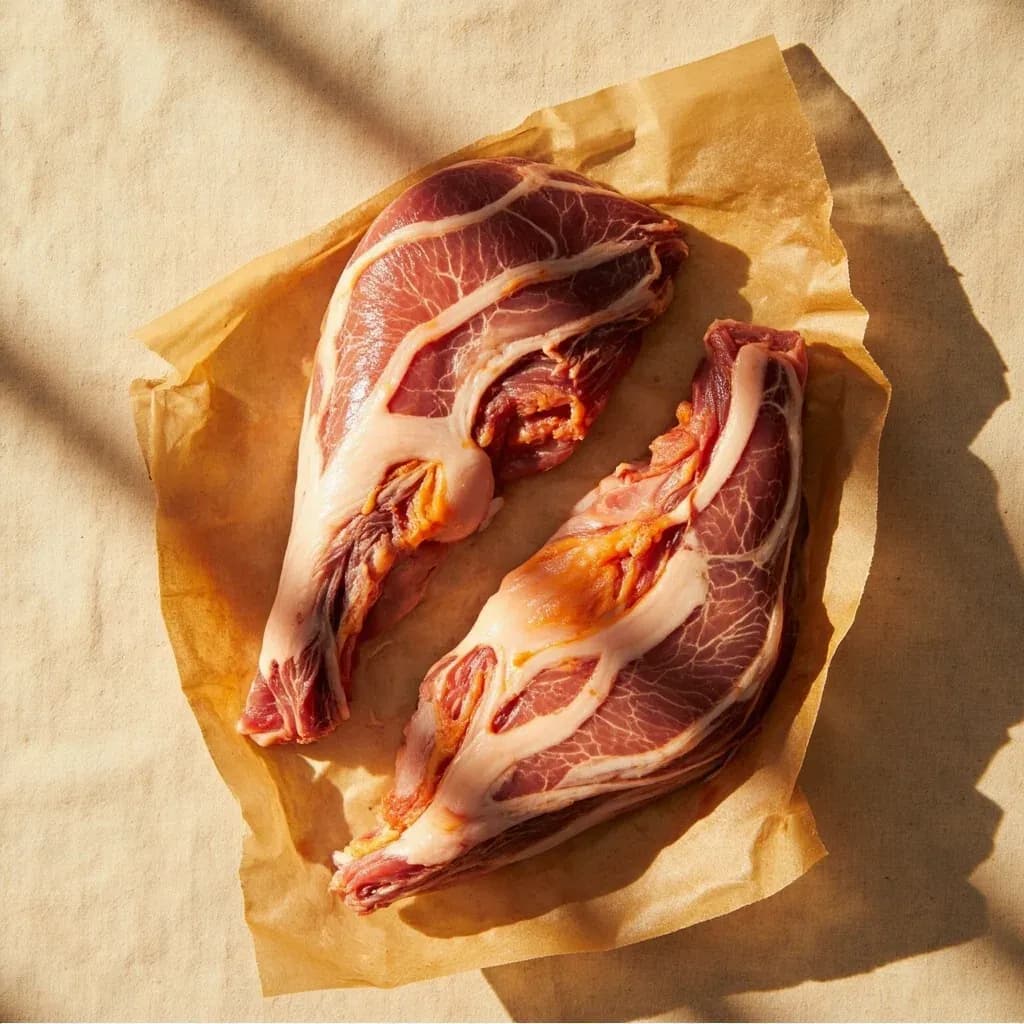
Pork collar is the boneless, marbled muscle that runs along the upper neck of the pig, sitting between the head and the shoulder primal, just forward of the pork loin. It is one of the most under-appreciated cuts in Western butchery and one of the most loved in Asian ones, because it combines the steak-like texture of a quick-cooking cut with the fat content of a slow-cooking one. The muscle does a great deal of work on a living animal, so the fat is laid down as fine intramuscular streaks throughout the muscle, with only a thin cap along the surface — quite unlike the lean muscle of loin or the layered fat of belly. This dispersed marbling is the entire reason to buy it: the meat stays juicy and forgiving at internal temperatures that would turn a pork chop chalky.
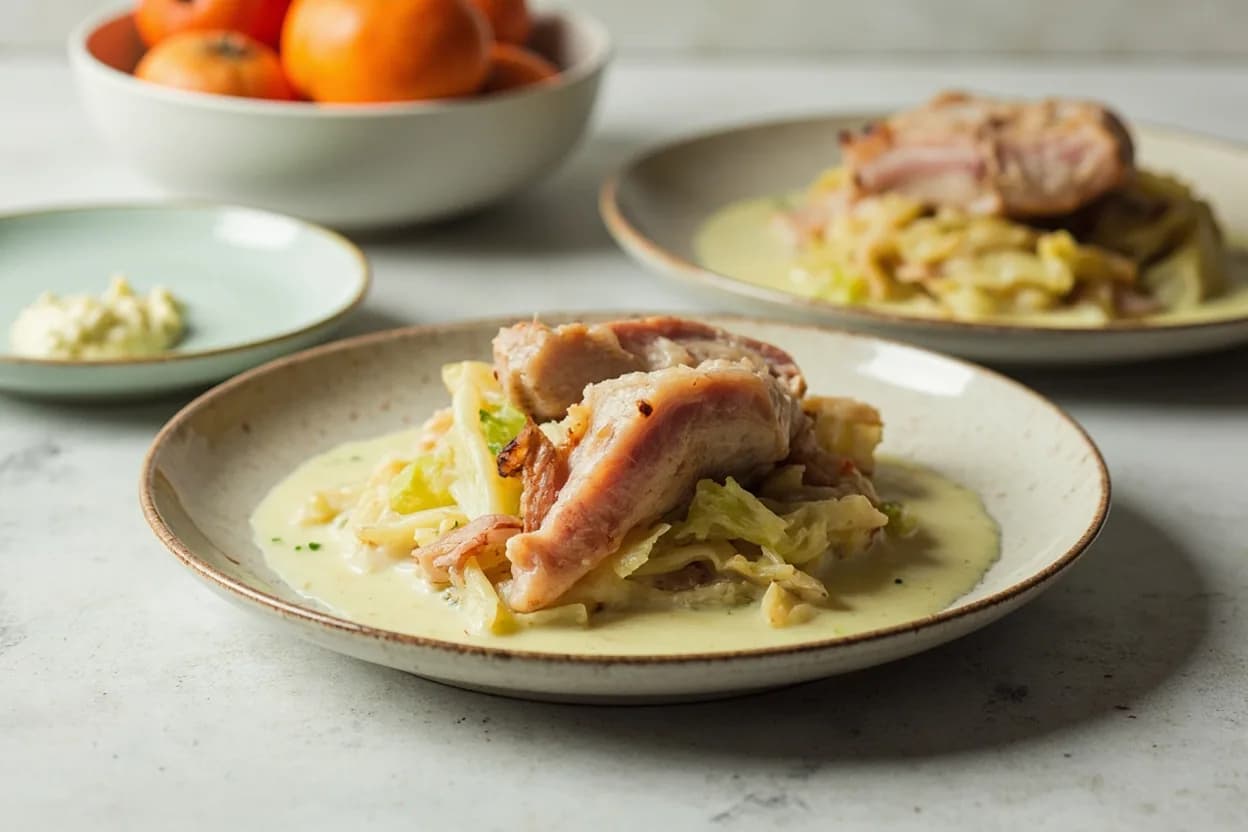
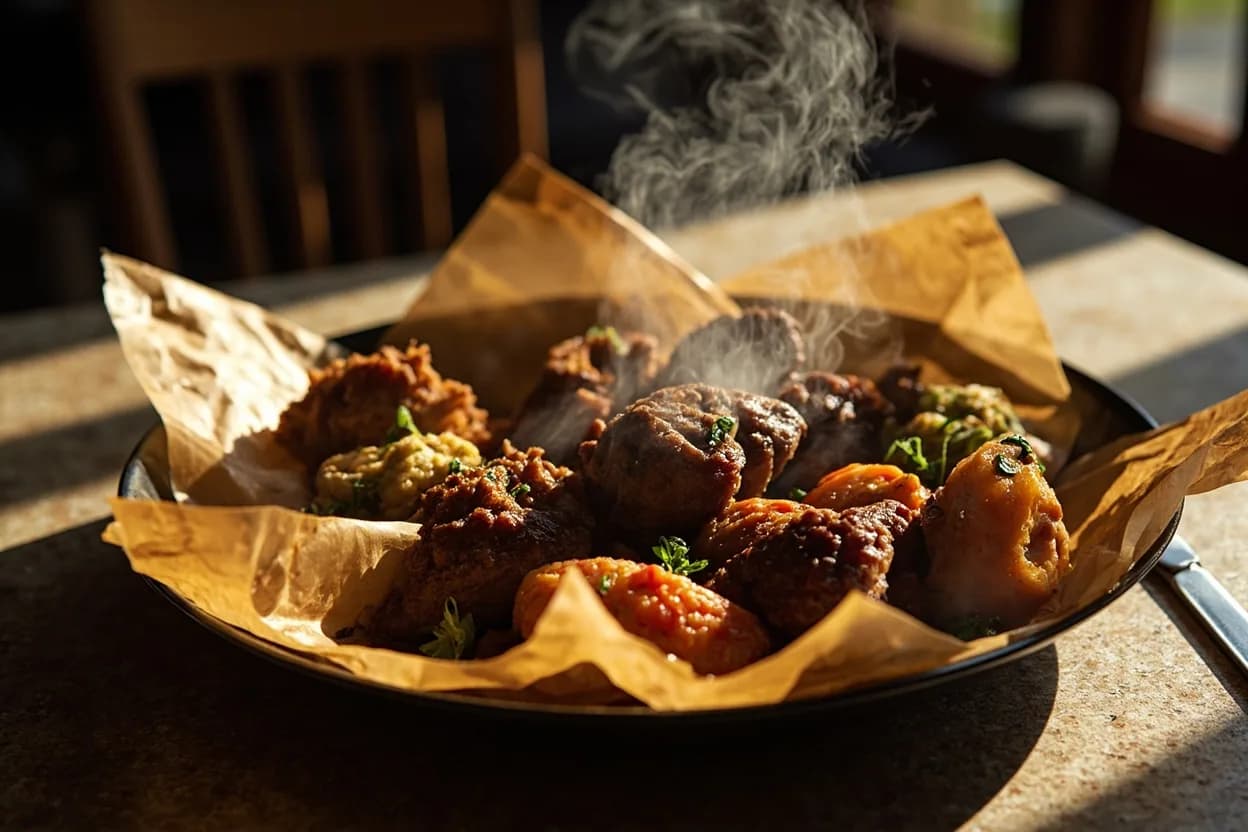
In Italy it is sold fresh as coppa fresca for roasting; in France as échine, often bone-in for pot-au-feu; in Thailand as kor muu, sliced into thick steaks and marinated for the grill; in Japan as buta-kobu, a popular yakiniku cut also used for char siu-style yakibuta. The cured product called coppa or capocollo comes from the same anatomical region, but the fresh cut is a year-round butcher-counter item, usually deboned, rolled, and netted, and portioned into 200–400 g steaks roughly 2–3 cm thick. It is also a capable braising cut, with enough connective tissue in the seams between muscle bundles to produce a silky result — though it carries less total collagen than shoulder, so it becomes tender with shorter cooking times.
For cooks used to working with pork loin, the most important lesson is to treat collar like a piece of beef: salt it well in advance, get a hard sear, and pull it earlier than instinct suggests. A collar steak cooked to 60–63 °C / 140–145 °F is rosy, tender, and sweet; pushed past 70 °C it is still edible thanks to the fat, but it loses the supple texture that makes the cut worth seeking out in the first place.
- Measured in
- g
- Storage
- Refrigerate
Find it in
Types & varieties
Sold deboned and rolled, netted, or tied; the classic cut for arrosto di coppa
Often sold bone-in with rind attached; used for braises and pot-au-feu-style preparations
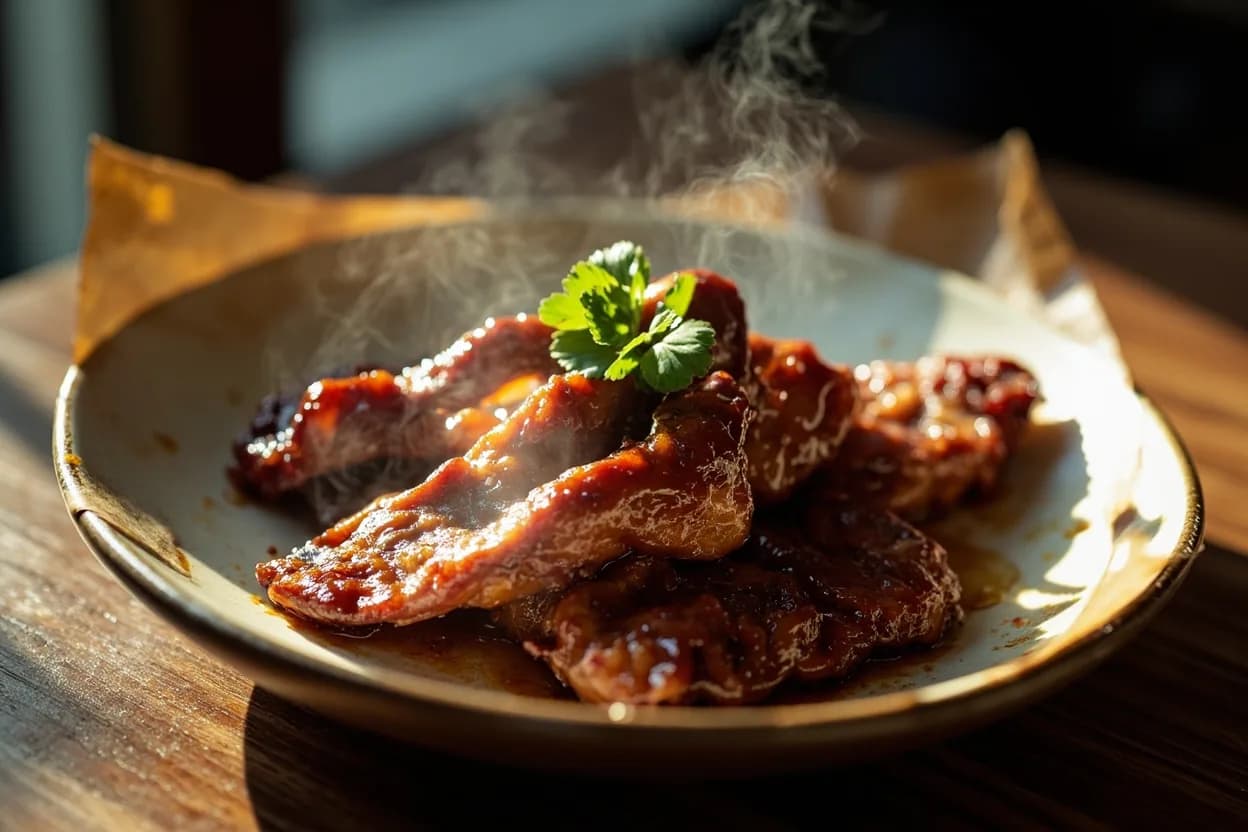
Cut into thick steaks and marinated in soy, fish sauce, palm sugar, garlic, white pepper, and coriander root for kor muu yang (grilled pork neck)
Slow-roasted with smoked paprika and oregano for asado, or ground into coarse embutidos
Sliced thin for yakiniku, cured for char siu-style yakibuta, or pounded and breaded for katsu
Cured and lightly smoked (Kasseler) or roasted with caraway, juniper, and sauerkraut
Boneless, netted, or portioned into steaks; the everyday retail form for grilling
Choosing and buying
The whole primal, sold boned and rolled in netting, gives the cook more control over portion size and lets you trim the fat cap to taste. Pre-sliced steaks from the supermarket case are convenient but oxidise quickly and lose the bright pork flavour that makes the cut special. When buying steaks, look for even marbling that you can see without holding the meat to the light — fine white threads running through the muscle, not just a thick layer along the edge. A bone-in piece is worth asking for if your butcher still breaks the neck whole; the cervical vertebrae add flavour to braises and stocks and can be lifted out after cooking. Avoid pieces with large pockets of gristle or with the fat cap sliced down to almost nothing; both are signs of an over-trimmed industrial cut.
- Whole boned collar (1.5–3 kg) is the best value and keeps longest in the fridge
- Steaks should be 2–3 cm thick for grilling, no thinner, or they overcook before the fat renders
- Ask the butcher to leave 5–8 mm of fat cap on steaks — the fat protects the meat and bastes it as it cooks
- Bone-in échine is worth seeking out for slow roasts and stocks; reserve bones for pork stock
How collar behaves in the pan and on the grill
The internal marbling is what sets collar apart from the rest of the pig. Because the fat lives between the muscle fibres as well as along the surface, it melts from the inside as the meat heats, basting itself. This is why collar can be cooked to medium-rare — even to medium — without drying out, while a loin of the same weight and thickness will turn tough at the same internal temperature. It also means collar takes marinade faster than shoulder: the dispersed fat soaks up soy, fish sauce, and sugar in four to twelve hours where shoulder might need longer. The trade-off is that the fat cap can buckle or flare on a hot grill, so it pays to score it in a shallow crosshatch before cooking, and to keep the fire at medium-high rather than maximum so the exterior does not scorch before the centre rests at 60 °C.
Common uses
Tips & pitfalls
- Score the fat cap in a shallow crosshatch before grilling so it renders flat instead of buckling and flaring.
- Dry-brine steaks 40–60 minutes (or up to 24 hours) ahead; for slow roasts, salt at the end to protect the Maillard crust.
- Pull steaks at 57 °C / 135 °F — carryover will bring them to a juicy 60–63 °C. Pushing past 70 °C wastes the cut's main advantage.
- Slice across the grain at a slight angle; the muscle bundles run lengthwise, and perpendicular slicing is the difference between tender and chewy.
- Marinate Thai-style for 4–12 hours, not longer — the salt in fish sauce and soy will start to cure the surface and turn the texture mushy.
- Rest whole roasts 10–15 minutes, tented with foil; the fat keeps the surface crisp while the interior redistributes its juices.
- Don't throw away the trim: render the fat for lard, and use the bones and silver skin as the base of a pork stock.
- Buy whole and portion yourself when you can — pre-sliced steaks oxidise in the display case and lose the clean pork flavour that distinguishes the cut.
Nutrition
Nutrition
No USDA FoodData Central match for Pork Collar / Coppa (fresh) yet. We surface a per-100 g profile once a generic whole-food entry is matched and verified.
In the shops
Matched grocery products
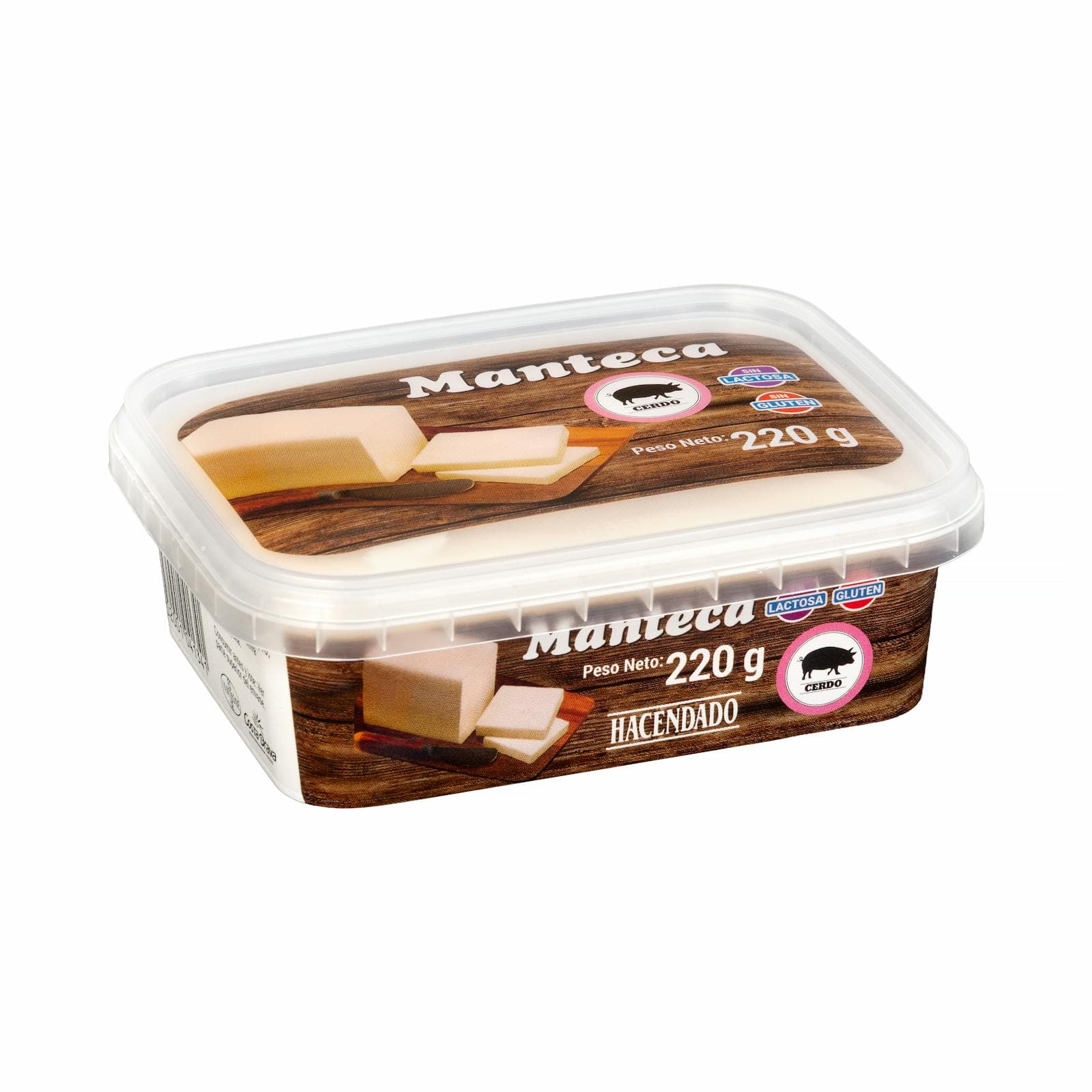 €2.20
€2.20Pork Lard
Hacendado · 220 g · Mercadona
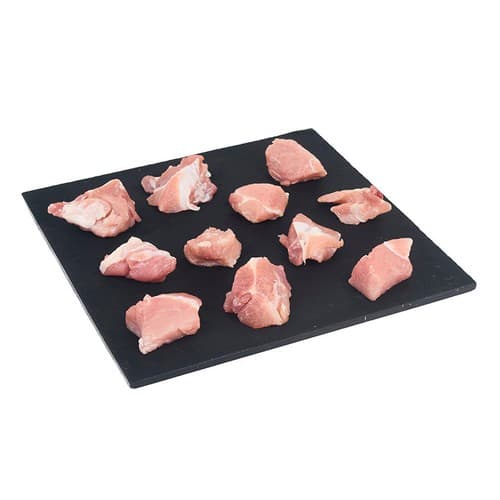 €3.40
€3.40Pork Stew
BONPREU · ud · Bonpreu
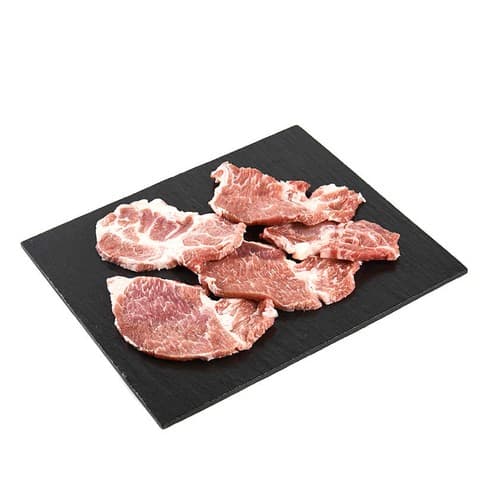 €3.45
€3.45Lean Pork
BONPREU DE L'ERA · ud · Bonpreu
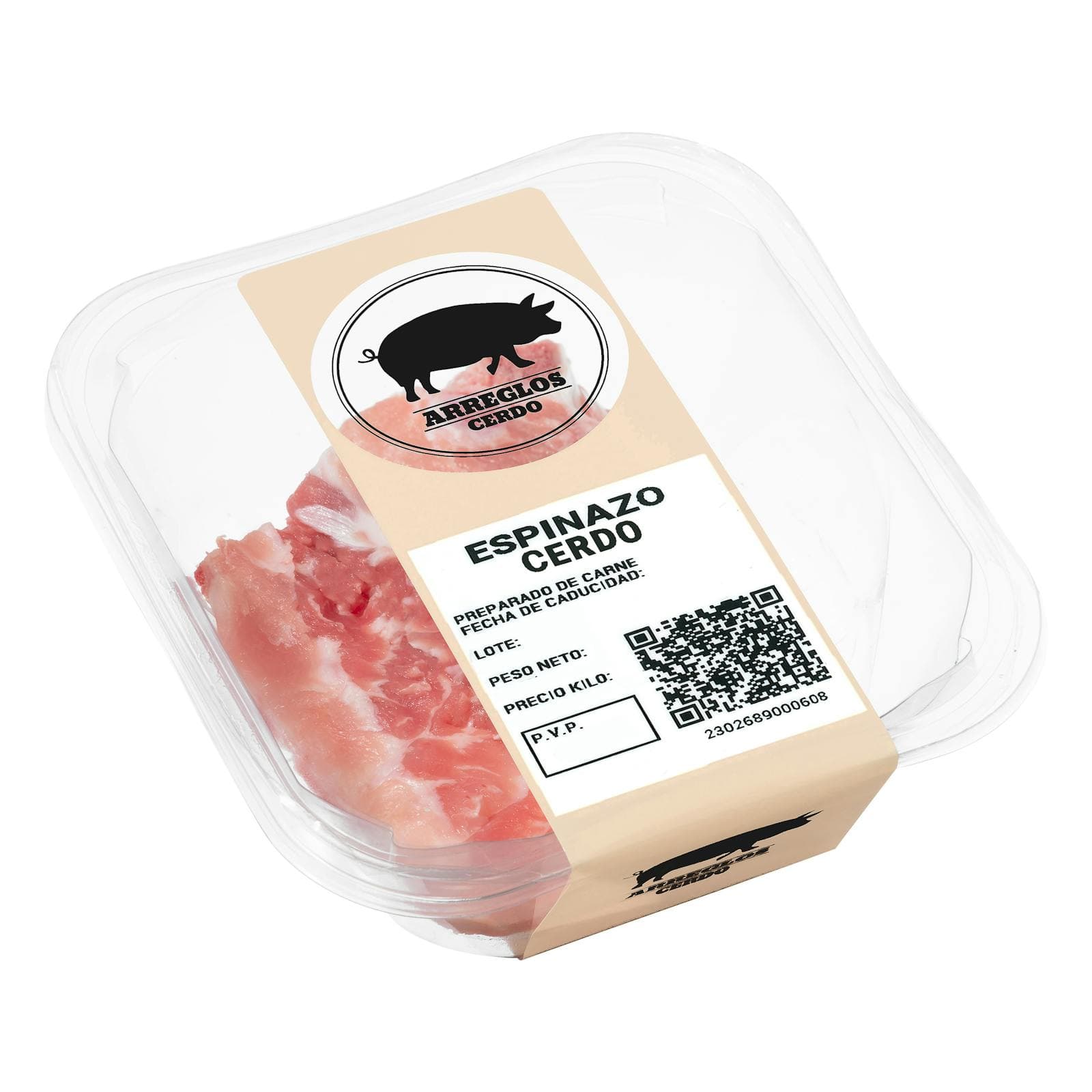 €2.10
€2.10Pork Spine
300 g · Mercadona
 €3.22
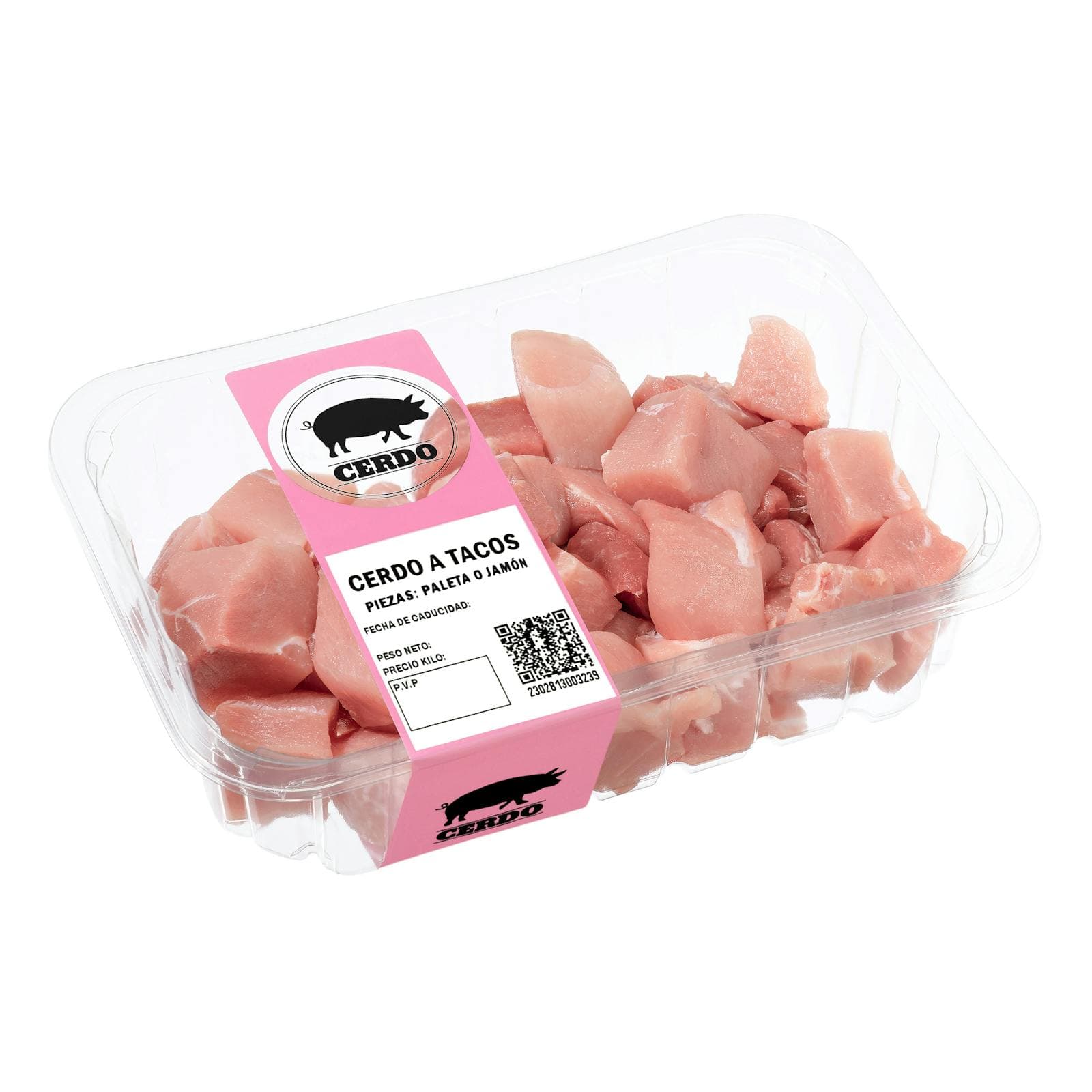
€3.22Diced Pork
560 g · Mercadona
 €3.75
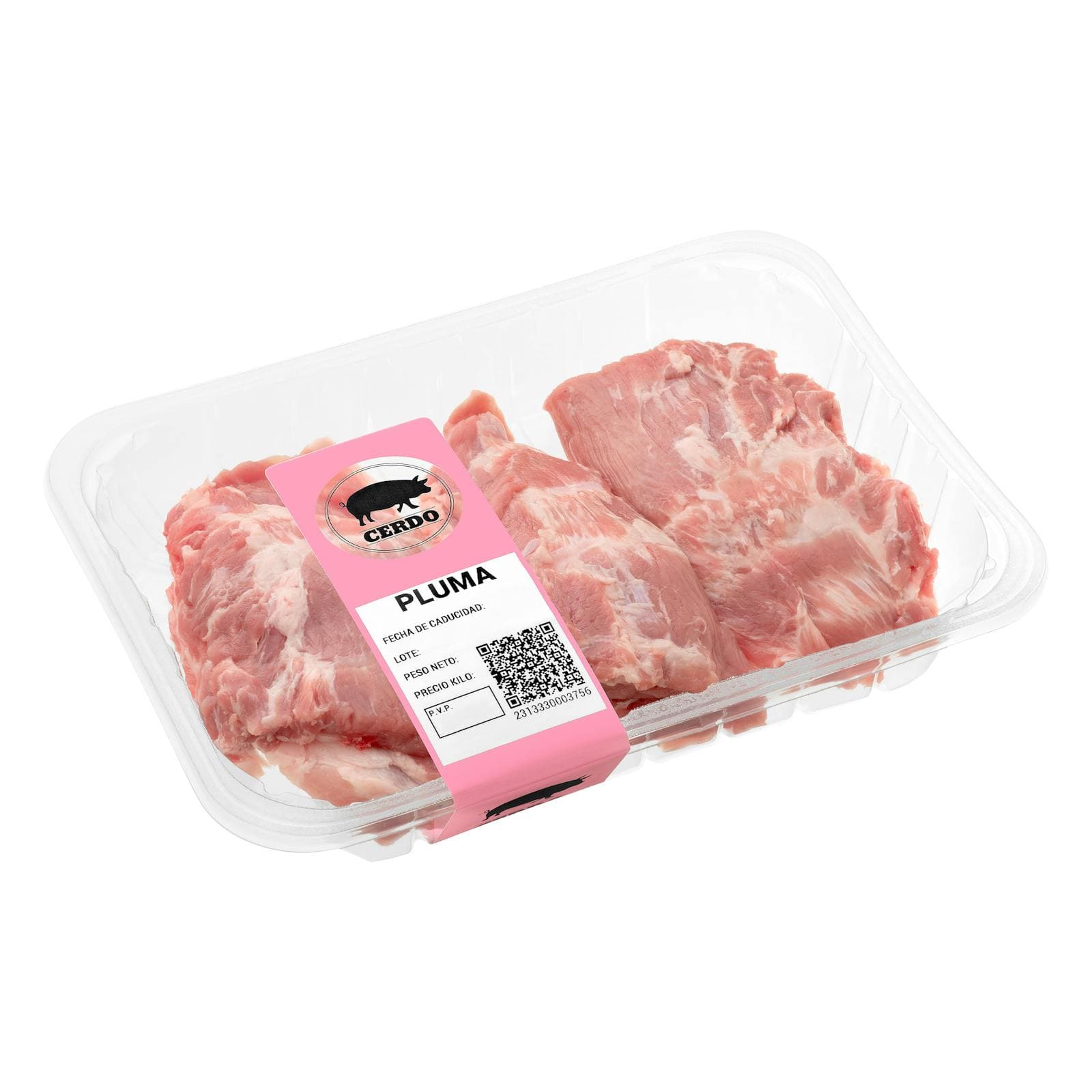
€3.75Pork Pluma
300 g · Mercadona
Good to know
- Primal location
- Upper neck and shoulder, between the head and the foreleg, above the Boston butt and forward of the loin
- Composition
- Heavily intramuscular-marbled muscle with a thin fat cap; sometimes includes cervical vertebrae or a section of shoulder blade
- Typical weight
- Whole collar 1.5–3 kg; retail steaks 200–400 g, usually 2–3 cm thick
- Approx. fat content
- 15–25% depending on trim, much higher than loin (~5%) and only slightly below belly
- Flavor profile
- Pork-forward, richer and more savoury than loin; the fat carries a clean sweetness once rendered
- Best internal temp
- 60–63 °C / 140–145 °F for steaks; 80–85 °C / 175–185 °F for slow roasts when collagen is the goal
- Storage
- Refrigerate 3–5 days raw; vacuum-sealed frozen 4–6 months
- Yield
- Roughly 70–75% after trimming bones, silver skin, and excess fat cap
Substitutes
- Pork shoulder (Boston butt) — Closest match in fat and connective tissue, but needs longer cooking to break down — choose shoulder for braises and stews, collar for grilling
- Pork blade steak — From the same region of the animal, smaller portion; effectively interchangeable on the grill
- Pork belly — Fattier and less meaty; works as a substitute in slow roasts but not in steak-style grilling
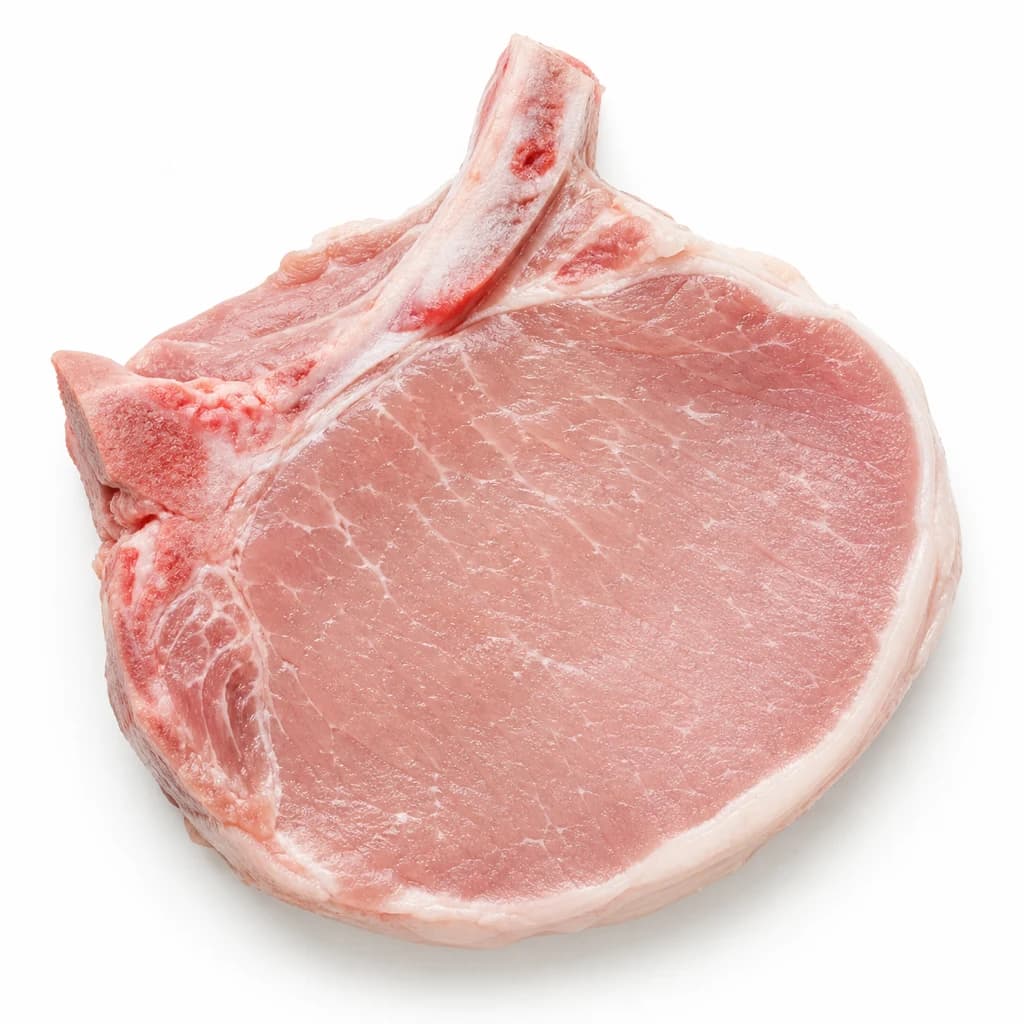
- Pork loin — Leaner and far easier to overcook; only use when collar is unavailable, and brine aggressively
- Lamb neck fillet — Similar marbling and shape; substitute in grilled-steak dishes for a stronger, gamier flavour
- Beef chuck steak — Beefier flavour with comparable connective tissue; use in braises and stews rather than as a grilled-steak swap
Pairs with
Also called
pork neck · coppa · scotch fillet · pork shoulder collar · pork neck collar