Transform & Preserve
Lacto-Fermentation
Fermenting salted vegetables so lactic-acid bacteria sour and preserve them, as in sauerkraut and kimchi.
Lacto-fermentation submerges salted vegetables in their own brine so naturally present lactic-acid bacteria consume the sugars and produce lactic acid, souring and preserving the food. This is how sauerkraut, kimchi, and many tangy pickles are made, developing complex flavor and beneficial probiotics over days to weeks. The salt and the absence of oxygen favor the good bacteria while suppressing spoilage organisms.
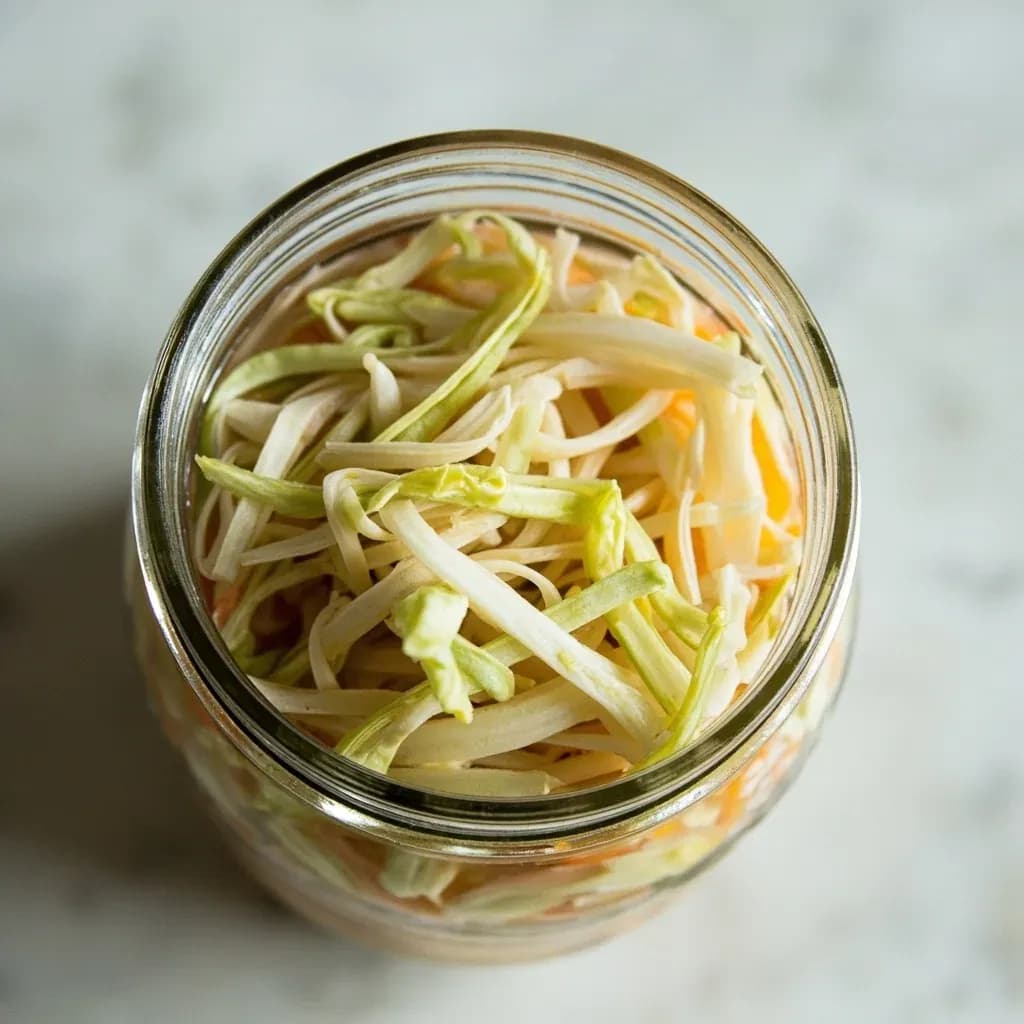
Lacto-fermentation is the controlled, anaerobic transformation of vegetables (and fruits) in salt brine, in which friendly lactic-acid bacteria — naturally living on the skins of raw produce — convert the food's sugars into lactic acid. The acid drops the pH below the threshold that spoilage organisms and most pathogens can survive, which is why a jar of cabbage submerged in its own salty juice can sit on a counter for weeks and emerge not only safe but transformed in flavor and texture. The technique predates refrigeration by thousands of years: shredded cabbage packed in salt has been documented in China since at least the Zhou dynasty (c. 1000 BCE), and the practice took root independently in cuisines from Korea to Germany, traveling trade routes and adapting to local produce, climates, and tastes to become sauerkraut, kimchi, curtido, pao cai, and countless regional ferments in between.
What distinguishes true lacto-fermentation from a quick vinegar pickle is that the acid is made in situ by living bacteria, not poured in from a bottle. That biological process produces a layered, funky, sometimes effervescent flavor profile — think of the sulfurous depth of long-aged kraut or the bright, fizzy tang of tepache — along with tenderized cell walls and improved mineral bioavailability from the acidity. The brine itself is part of the food: it is salty, tangy, and alive, and a reserved splash can inoculate the next batch.
The technique is forgiving enough for a first-time cook but precise enough to reward attention. Salt concentration, temperature, and keeping the food submerged under the brine are the three levers that determine whether you get crunchy, bright results or a soft, off-flavored mess. Once you understand those levers, the same method scales from a 2-quart jar of curtido to a 50-gallon crock of cabbage, and from a 12-hour asazuke-style radish to a multi-year aged pao cai.
- Difficulty
- Medium
Types & varieties
German/Eastern European shredded cabbage, typically 2% salt, fermented 2–4 weeks; the white, still-crisp style is mild; longer ferments turn gold and deeply tangy.
Korean ferment of napa cabbage with gochugaru, garlic, ginger, jeotgal (salted seafood), and radish; ranges from fresh 'geotjeori' to long-aged 'mugeunji'.
Cucumbers fermented 5–7 days in 5%–6% salt brine with garlic, dill, and pickling spices; the garlic is what historically made them 'kosher' (not necessarily kosher-law adherent).
New York Jewish deli style: cucumbers brined just 24–48 hours in low-salt water with garlic and dill, kept cloudy and crisp.
Salvadoran cabbage, carrot, and onion ferment with oregano and sometimes chile, served with pupusas.
Filipino green-papaya relish, lightly fermented with carrots, ginger, and a touch of sugar or raisins.
Italian mixed-vegetable ferment of cauliflower, peppers, carrots, and celery in a salt brine; often oil-packed after fermentation.
Chinese pickled mustard greens or cabbage, foundational to Sichuan cooking; salt brine is reused for generations as a 'mother.'
Eastern European beet-and-salt tonic, 2–3 days at room temperature, traditionally drunk as a digestif.
Fresh chilies (often with garlic, carrot, onion) blended and salt-fermented 7–14 days, then strained or blended smooth.
Mexican pineapple-rind drink, lightly fermented 24–48 hours with piloncillo and spices; a fast, sweet-sour ferment.
German fermented turnips, often eaten alongside cheese or cured meats.
Mild, short ferments (12–24 hours) of radish, cucumber, or cabbage pressed under salt — Japanese in spirit but methodologically the same lacto process.
How to do it
- 1
Choose and prep your produce
Use the freshest, unbruised vegetables you can find; do not wash them more than necessary, since the natural bloom of LAB lives on the skins. Peel roots, remove outer cabbage leaves (reserve one clean outer leaf as a cap), and trim tough stems.
- 2
Cut to size and weigh
Shred cabbage, julienne carrots, quarter radishes, or leave cucumbers whole. Place the cut vegetables in a large bowl on a kitchen scale and note the weight — you'll need 2%–5% of that weight in non-iodized salt (2% for cabbage, 3% for roots, up to 5% for cucumbers).
- 3
Salt and macerate
Toss the salt evenly through the vegetables and work it in by hand or with a wooden tamper for 5–10 minutes. You are trying to rupture cell walls and draw out the natural moisture that will become your brine. Stop when the vegetables look glossy and a pool of liquid sits in the bowl.
- 4
Pack into the vessel
Transfer vegetables and brine into a clean glass jar, ceramic crock, or food-grade bucket, tamping firmly with a wooden pestle, a tamper, or the handle of a clean rolling pin. Press out air pockets — bubbles rising through the mass mean you're packing correctly. Leave 1–2 inches of headspace.
- 5
Submerge and weight
The vegetables must stay 1–2 inches below the brine surface at all times. Top with a reserved cabbage leaf (or a small glass disc, a glass fermentation weight, or a clean folded sheet of plastic) to keep the food pressed down. Top up with extra 2% salt brine if the vegetables haven't released enough liquid to cover them.
- 6
Seal for airflow, not airtightness
Cover with an airlock lid, a loose-fitting lid set on a jar ring, or a cloth secured with a rubber band. The goal is to keep contaminants out while letting CO2 escape; an airtight seal during active fermentation can cause a glass jar to crack.
- 7
Ferment at a steady, cool room temperature
Place the vessel in a 65–75°F (18–24°C) spot away from direct sunlight. Bubbles should appear within 24–48 hours. Begin tasting on day 3; the ferment is done when the flavor is bright, tangy, and pleasantly sour to your taste — typically 5–14 days for vegetables, 2–4 weeks for sauerkraut.
- 8
Skim, monitor, and burp
Each day, lift the lid briefly to release any built-up gas, skim any surface film (a thin whitish layer is normal kahm yeast; wipe it off), and confirm the food is still submerged. Push it back under the brine if it has floated up.
- 9
Move to cold storage
When the flavor is where you want it, cap the jar tightly and refrigerate at 35–40°F. Cold storage dramatically slows — but does not stop — fermentation, so flavors will continue to evolve for months. Properly stored ferments last 6–12 months.
The salt-and-submersion rule
Two conditions separate a successful ferment from a spoiled one: the right salt concentration, and keeping the food under the brine at all times. Salt above about 1.5% selects for the salt-tolerant LAB while suppressing spoilage bacteria and most yeasts; below that threshold, vegetables tend to turn soft and funky rather than tangy and crisp. Above 5%, fermentation is so inhibited that flavors stay flat and vegetables can shrivel. The salt is doing double duty — seasoning and selecting — so weigh it against the trimmed weight of your vegetables rather than guessing by volume. Submersion is the other half: any surface exposed to air invites yeasts and molds. A reserved outer cabbage leaf, a glass disc, or a purpose-made glass weight pressed directly onto the food is more reliable than a floating bag of brine, which tends to leak or work its way loose. A thin white film on the surface (kahm yeast) is harmless and can be skimmed; pink or black growth means the batch is contaminated and should be discarded.
The brine is part of the food
The cloudy, tangy liquid that pools around fermenting vegetables is not a byproduct — it is the medium in which the bacteria live and the seasoning that flavors the finished product. Treat it like stock. Splash it into salad dressings, whisk it into mayonnaise, use it to deglaze a pan, or stir a spoonful into rice or bean dishes for instant acid and umami. Many Asian households keep a 'mother brine' running for generations, adding fresh vegetables to a continuously active salt solution; this inoculates each new batch with a stable, well-adapted LAB population and produces a more consistent flavor than starting from scratch every time. To start your own, reserve 2–4 tablespoons of finished brine from a successful ferment and pour it over your next batch.
Beyond vegetables: the lacto-fermentation family
The same bacterial principle — anaerobic LAB converting sugars to lactic acid — underlies a much wider family of foods than the vegetable pickles this entry primarily covers. Yogurt and kefir ferment milk. Sourdough, idli batter, and dosa batter ferment grain flours. Tempeh, natto, and miso ferment soybeans. Kombucha ferments sweetened tea with a SCOBY in which LAB work alongside yeasts. All of them share the lactic-acid mechanism and many of the same flavor and texture consequences, which is why understanding the basic vegetable technique transfers readily to batters, dairy, and beverages.
Common uses
Tips & pitfalls
- Weigh the vegetables and the salt — don't measure salt by volume. A 2% brine for cabbage is 20 g salt per 1 kg vegetables; eyeballing is the most common cause of mushy or off-flavored ferments.
- Use unchlorinated water for any top-up brine. Chlorine slows or kills the LAB you are trying to cultivate; let tap water sit uncovered overnight or use filtered water.
- Don't seal jars airtight during active fermentation. CO2 builds fast and can crack a mason jar or blow a lid off. Use an airlock, a loose lid, or 'burp' jars daily.
- Taste daily after day 3 — ferment speed is highly temperature-dependent. A jar in a 75°F kitchen will finish in a week; the same jar in a 60°F basement may need three. Pull jars into the fridge at your preferred tang.
- Reserve a few tablespoons of finished brine to inoculate the next batch. This accelerates fermentation, standardizes the flavor profile, and is how traditional 'mother brine' cultures are kept alive for generations.
- Never use iodized table salt — iodine inhibits the bacteria and can darken the product. Sea salt, kosher salt, or pickling salt all work; just avoid anything labeled 'iodized.'
- For firm vegetables like cucumbers or carrots, add tannins (a grape leaf, an oak leaf, or a pinch of black tea) to the jar. Tannins inhibit the pectinase enzymes that cause pickles to soften.
- Pink or fuzzy growth on the surface means discard. A thin, whitish film (kahm yeast) is harmless and can be skimmed, but anything colored, fuzzy, or foul-smelling means the batch is contaminated — don't try to save it.
Good to know
- Origin
- One of the world's oldest preservation methods; fermented cabbage is documented in China by the Zhou dynasty (c. 1000 BCE) and spread west through trade routes to Germany and Eastern Europe, where it became sauerkraut.
- Driving organism
- Lactic-acid bacteria (LAB), chiefly Lactobacillus, Leuconostoc, and Pediococcus species, which are naturally present on the skins of vegetables and fruits.
- Mechanism
- Anaerobic bacteria convert sugars into lactic acid, dropping pH below 4.6 — a level at which spoilage organisms and pathogens cannot survive.
- Typical salt range
- 1.5%–5% by weight of vegetables; 2% is standard for cabbage, 3%–3.5% for harder roots, 5% for water-rich cucumbers.
- Ideal temperature
- 65–75°F (18–24°C); cooler temperatures (55–65°F) slow fermentation and yield more complex, sulfurous notes.
- Time to finished ferment
- 3–7 days for quick vegetable ferments; 2–4 weeks for sauerkraut; kimchi typically ripens 1–2 weeks at room temperature then cold-stores.
- Salt type
- Non-iodized salts (sea salt, kosher salt, pickling salt) — iodine and anti-caking agents can inhibit LAB and darken the product.
- Shelf life
- Properly fermented, sealed, and refrigerated ferments keep 6–12 months; traditional crocks kept in cold cellars lasted through winter.
Also called
Lacto-Fermentation · Hapendamine · Wild Fermentation
Dishes that rely on it
Related

Confit
Cook slowly submerged in fat for silky tenderness and keeping

Cure
Draw out moisture with salt and time to preserve and concentrate

Pickle
Steep in acidic brine for bright, tangy, crunchy preservation

Ferment
Let friendly microbes transform food into tangy, complex flavor

Marinate
Soak in a seasoned mix to flavor and tenderize before cooking

Brine
Soak in salt water so meat stays juicy and seasoned throughout

Dehydrate
Slowly dry out moisture to concentrate flavor and extend shelf life

Cold-Smoke
Perfume cured food with smoke without cooking it through