Prep & Assembly
Rolling Fresh Rolls (Cuốn)
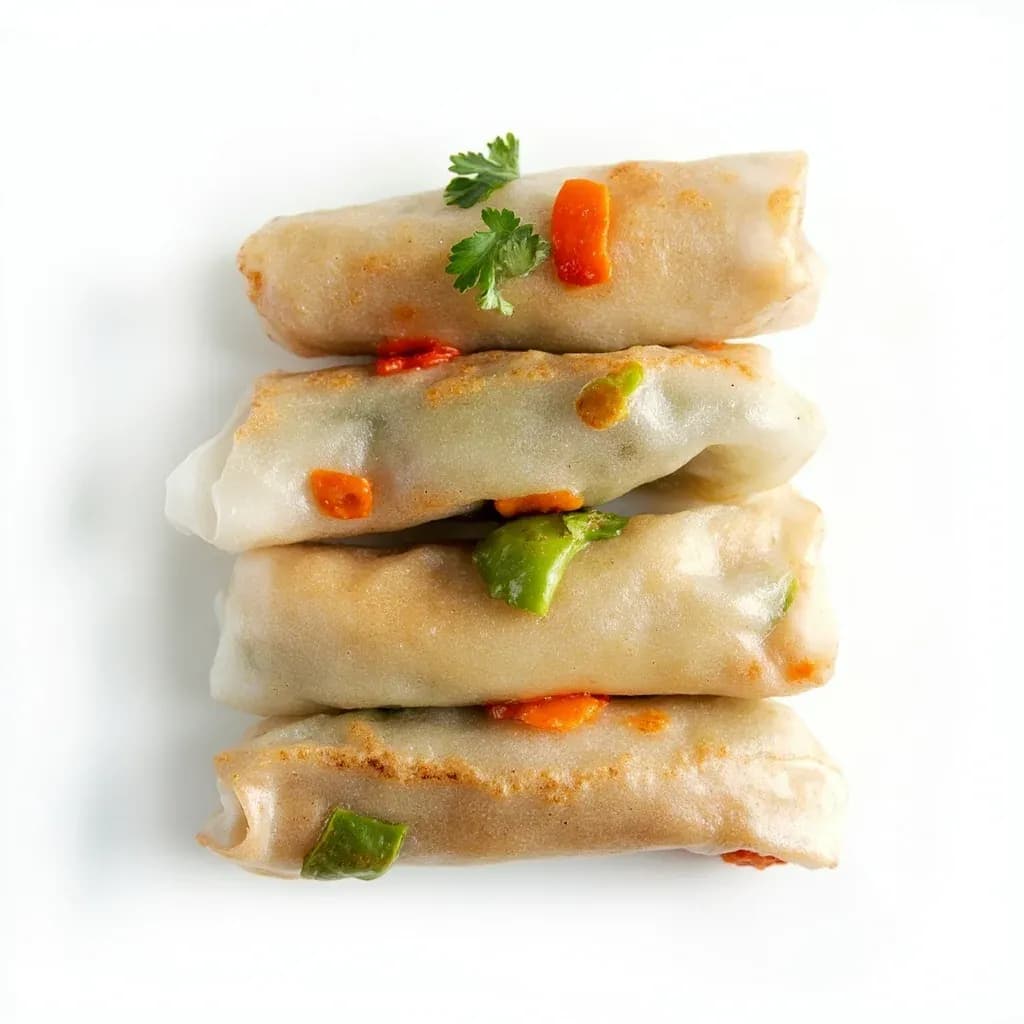
Wrapping rehydrated rice paper around herbs, noodles, and protein into tight summer rolls.
Rolling fresh rolls is the Vietnamese technique of dipping a dry rice-paper sheet in warm water to soften, then layering noodles, herbs, lettuce, and shrimp or pork before folding in the sides and rolling tightly. Speed matters because the rice paper turns sticky and tears once fully hydrated. A snug, even roll keeps the translucent wrapper intact and the fillings neatly arranged for the camera and the bite.
Rolling fresh rolls — gỏi cuốn in Vietnamese — is the assembly technique for wrapping a small bundle of cooked noodles, protein, lettuce, and fresh herbs inside a sheet of rice paper (bánh tráng) softened in water. The method belongs to the Vietnamese repertoire of cold, hand-held foods eaten with a dipping sauce, and at its best it is a study in contrast: cool slippery wrapper, tender noodle, crisp lettuce, fragrant herbs, sweet shrimp or pork, and a sharp-salty dipping sauce on the side. The roll is meant to be eaten the day it is made, ideally within an hour or two of assembly, because the rice paper hardens as it loses moisture.
The defining material is the rice paper itself, and understanding how it behaves is the entire skill. Dry bánh tráng is brittle, opaque, and shelf-stable; the moment it touches water it becomes pliable and translucent within seconds, and it continues to relax on the work surface for another ten or fifteen seconds. Dipping too long makes it gummy and tear-prone; dipping too briefly leaves stiff spots that crack when you roll. Hot water is wrong — it gelatinizes the surface starch and the sheet tears on contact. Lukewarm or cool tap water is correct. The other half of the technique is layering: a wet-resistant green leaf against the wrapper, a compact noodle-protein bundle, more herbs, and a tight, even roll executed in a single forward motion.
The fresh roll is sometimes confused with the Vietnamese fried spring roll (chả giò or nem rán), but they share almost nothing beyond the idea of "a roll." Fresh rolls are served raw, in a hydrated rice wrapper, with cold fillings; chả giò use a thinner wheat-and-rice wrapper, encase a fully cooked filling of minced pork, jicama, and mushrooms, and are deep-fried until shatter-crisp. The rolling techniques are not interchangeable, and once you understand the wrapper difference, the rest of the assembly logic follows.
- Difficulty
- Medium
Types & varieties
The canonical version: whole butterflied poached shrimp pressed pink-side-out plus slices of poached pork belly
Pork-only version, often with thin slices of chả lụa (Vietnamese pork loaf) or grilled pork
Shrimp-only version, sometimes paired with slivered green mango or pineapple
Includes bì — thin shreds of boiled-then-toasted pork skin tossed with toasted rice powder
Vegetarian or vegan version: fried tofu or mushrooms, jicama, carrot, and abundant herbs; dip skips the fish sauce
Hanoi specialty using a wide flat rice noodle sheet in place of vermicelli, often with beef and herbs
How to do it
- 1
Mise en place
Cook and cool rice vermicelli; rinse, drain, and toss with a few drops of oil so it does not clump. Poach shrimp in salted water with a pinch of sugar, peel, halve lengthwise, and devein. Slice poached pork belly or chả lụa into 1/4-inch planks. Wash and dry all herbs and lettuce thoroughly — any water left on the leaves will soggy the roll. Arrange every component in small bowls or on a sheet pan within arm's reach of your rolling station.
- 2
Set up the dipping bath
Pour 2–3 cm of lukewarm tap water into a wide shallow dish (pie plate, half sheet pan, or large salad plate). Fill a second small dish with cool water for wetting your fingers. Lay a damp kitchen towel or a wet wooden cutting board next to it as your work surface — cloth on its own is too grabby.
- 3
Hydrate the rice paper
Submerge one sheet of bánh tráng fully for 2–4 seconds, flip, and pull it out. Lay it flat on the damp work surface. The sheet will look stiff and cloudy at first, then relax and turn pliable within 10–15 seconds — that is when you build the roll. Do not stack hydrated sheets against each other; they fuse together.
- 4
Lay the first layer
Place a small lettuce leaf or a few overlapping herb sprigs in a horizontal band about 5 cm above the bottom edge, leaving 3–4 cm of paper clear on the left and right sides. This green layer acts as a moisture barrier against the wet noodle.
- 5
Build the filling strip
On top of the greens, lay a compact bundle of rice vermicelli (about 35–50 g), then 2–3 butterflied shrimp halves cut-side up in a line (if using), then 2–3 slices of pork. Top with a generous pinch of mixed herbs — Vietnamese mint, Thai basil, perilla, mint, cilantro. The strip should be no thicker than 3–4 cm and span the inner two-thirds of the sheet width.
- 6
First fold
Lift the bottom edge of the rice paper up and over the filling, tucking it snugly underneath. Press lightly to compact the filling without squeezing liquid out.
- 7
Fold the sides
Fold the left and right edges inward over the tucked cylinder, like a burrito, so they overlap the filling by about 2 cm.
- 8
Roll forward
Continue rolling the cylinder forward in one smooth motion, keeping light tension. Slide the finished roll to a platter and cover with a barely damp cloth. Repeat.
- 9
Cut and serve
Just before serving, slice each roll diagonally on the bias into 2–3 pieces with a sharp wet knife — wetting the blade keeps the rice paper from dragging. Arrange on a platter with nước chấm or hoisin-peanut sauce alongside.
Understanding rice paper
Rice paper is sold dry and brittle, in stacks of pre-cut rounds. Hydration is the only thing that makes it rollable, and the timing of that hydration is the whole game. A sheet dunked for two to four seconds per side looks stiff when it comes out, then relaxes on the board over the next ten to fifteen seconds as the water distributes through the starch network. Build the roll during that window, not before. Two practical details matter most: never stack hydrated sheets against each other — they fuse instantly and tear apart in sheets — and never re-dip a stuck sheet; lift it instead with wet fingers. Sheets vary by brand in thickness and flexibility; the standard 22 cm rounds sold for gỏi cuốn are what you want. The smaller 16 cm sheets used for Cantonese cheung fun are too small and behave differently.
- Hot water gelatinizes surface starch and causes the sheet to tear on contact
- A hydrated sheet continues to soften for 10–15 seconds after being lifted out
- Stacked hydrated sheets fuse together and cannot be separated without tearing
Layering logic
The order in which fillings are placed on the wrapper is not arbitrary — it determines both texture and presentation. The first layer against the rice paper should be a moisture-resistant leaf (lettuce or herb sprigs) so the wet noodle and protein do not sit directly against the wrapper, which would make it soggy and prone to tearing. Shrimp meant to show on the outside go pink-side-down against the wrapper so the orange-pink color reads through the translucent paper on the finished roll. The noodle and protein bundle should be compact — a loose, fat bundle is what makes rolls burst open — and herbs go on top so their aroma is the first thing released on the bite.
- Bottom layer (against wrapper): lettuce or sturdy herb sprigs as a moisture barrier
- Shrimp go pink-side-down so the orange back shows through the translucent wrapper
- Noodle-protein bundle should be 3–4 cm tall and span the inner two-thirds of the sheet
- Herbs on top of the bundle release their aroma directly to the nose on the first bite
- Tuck herb sprigs with stems pointing outward (against the wrapper) so the visible end of the finished roll shows clean green color
Common uses
Tips & pitfalls
- Use a wide shallow dish (pie plate or rimmed sheet pan) so a full rice paper sheet can lie flat during dipping; a tall glass or bowl forces the sheet to fold and crease.
- Dip for 2–4 seconds per side only — over-dipping is the single most common cause of tearing, since the sheet continues to soften for another 10–15 seconds on the board.
- Lay the dipped sheet on a damp wooden board or a barely wet cloth, not directly on a dry cloth — dry cloth grips the rice paper and tears it when you lift the roll off.
- Lay ingredients in a tight horizontal strip in the lower third of the sheet, leaving 3–4 cm clear on each side; a fat, loose bundle is what makes rolls split open.
- Place butterflied shrimp pink-side-down against the rice paper so the orange color reads through the translucent wrapper for the classic presentation.
- Tuck herb sprigs with stems pointing outward (against the wrapper) so the visible end of the roll shows clean green color, not ragged stem ends.
- Dip your fingers in water before handling the hydrated sheet — dry fingers grab the surface starch and tear the paper.
- Cover finished rolls with a barely damp cloth or paper towel as you go; once the wrapper dries out it becomes leathery and cracks at the bite, and there is no way to rehydrate it without making it gummy.
- Do not stack uncut rolls directly on top of each other for storage — they will fuse together. Store them in a single layer or separated by damp paper towels in a sealed container.
Good to know
- Also called
- Gỏi cuốn (salad roll), summer roll, Vietnamese fresh roll
- Origin
- Vietnamese cuisine; commonly associated with southern Vietnam though eaten nationwide
- Wrapping material
- Bánh tráng — round rice paper sheets, typically 22 cm (8.5 in), made from rice flour, water, and a small amount of tapioca or salt
- Hydration liquid
- Lukewarm or room-temperature water; hot water gelatinizes the starch and causes tearing
- Yield
- One roll per 22 cm sheet; a batch of 8–10 rolls takes 15–25 minutes once components are prepped
- Best consumed
- Within 1–2 hours of rolling, before the wrapper dries and hardens
- Short-term storage
- Wrap in a barely damp paper towel inside a sealed container; keep chilled up to 4–6 hours
- Not the same as
- Chả giò / nem rán — fried spring rolls made with a thinner wrapper and a fully cooked filling
Also called
Gỏi Cuốn · Summer Roll Rolling · Cuốn
Related

Whisk
Beat ingredients smooth and aerated with a looping wire motion

Sift
Pass dry ingredients through mesh to aerate and remove lumps

Strain
Pour through mesh to separate solids from liquid for a smooth result

Filter
Pass liquid through fine material to clarify out the smallest particles

Rice
Press cooked potatoes through small holes for fluffy, lump-free texture

Mash
Crush soft cooked food into a rustic, creamy purée

Grind
Crush food into a coarse to fine texture, from spices to meat

Grate
Shred food into fine bits against a sharp-toothed surface