Knife Skills
Sashimi Slicing
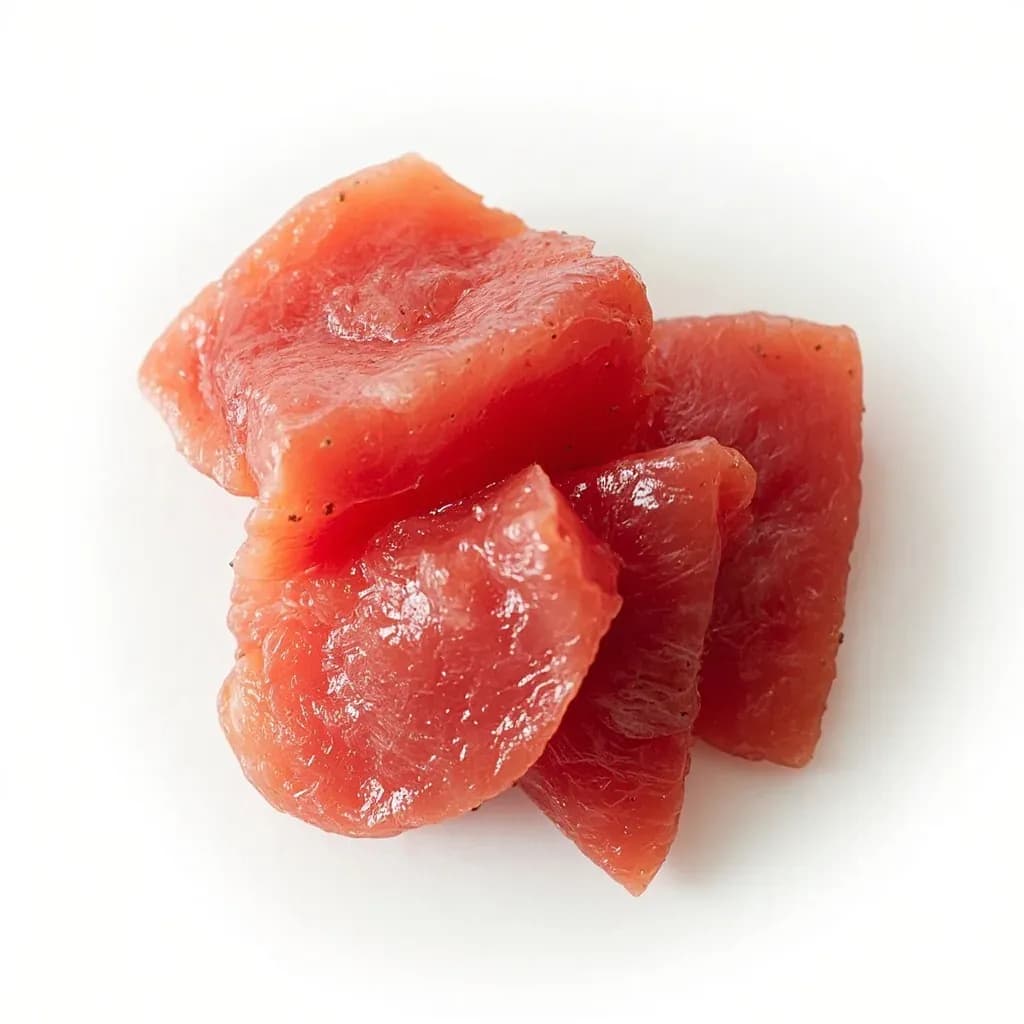
Cutting raw fish in single, clean strokes for glossy, even sashimi slices.
Sashimi slicing is the precise Japanese cutting of raw fish into clean, uniform pieces using a single drawing pull of a long yanagiba knife rather than a sawing motion. The hira-zukuri rectangular cut and the hikizukuri single-stroke pull leave a glossy, unblemished surface that improves both mouthfeel and shine. Cutting against the grain at the right angle is what makes the fish tender and visually flawless.
Sashimi slicing is a single-stroke draw cut performed on exceptionally fresh fish with a long, single-bevel yanagiba, executed across the muscle fibers in one uninterrupted pull. The goal is a slice whose face looks almost wet, with intact cell walls and a translucent sheen — the visual signature that tells a diner the fish has been handled with respect. Unlike a chef's-knife push cut, this is a draw: the blade travels toward the cook while the edge parts the flesh, and the weight of the long blade does the cutting.
The technique matters because a ragged or sawed slice leaks water, loses its gloss, and feels pasty on the tongue, no matter how good the fish is. The single-bevel edge of the yanagiba releases cleanly from the flesh; a double-bevel gyuto, by contrast, tends to wedge and drag, especially in soft species like squid or in the belly sections of fatty tuna. The cut is also the moment where freshness, temperature, and tool converge: a properly chilled loin, a freshly finished edge, and a single confident draw are the only ingredients.
Most failures attributed to the cook are actually failures of sharpening or fish preparation. The yanagiba exists so an entire slice can be made in one uninterrupted motion from heel to tip; using a shorter knife forces multiple strokes and leaves a visibly stepped, torn edge. For whole fish, the heavy deba handles the initial breakdown — the yanagiba is a slicer, not a butcher's tool.
- Difficulty
- Hard
Types & varieties
Standard flat rectangular slice, the default for tuna, salmon, and most sashimi; 5–10 mm thick, cut across the grain.
Paper-thin slices (1–2 mm) for delicate white-fish such as flounder, sea bream, or squid; the translucency is the point.
Long, sharply angled slice from elongated fish like yellowtail, kohada, or mackerel; produces a wide, ribbon-like piece.
How to do it
- 1
Chill and prepare the fish
Refrigerate the fillet or loin at 0–4 °C for 30–60 minutes until firm but not frozen. Pat the surface dry with a clean cloth just before cutting — surface moisture is the enemy of a clean stroke.
- 2
Set up the board and blade
Place a damp towel under a wooden or hard-plastic cutting board. Have a long yanagiba (240–330 mm) freshly finished on a whetstone, and a damp cloth within reach for wiping the blade between cuts.
- 3
Identify the grain
Look closely at the flesh and orient the fillet so the muscle fibers run left-to-right in front of you. The cut must cross these fibers at roughly 90°; cutting with the grain leaves a chewy, stringy slice.
- 4
Position the knife
Hold the yanagiba with the cutting edge facing left (for a right-handed blade). Tilt the blade so the spine rides high and only the edge makes contact with the fish. Set the heel of the blade against the far edge of the fillet, perpendicular to the spine.
- 5
Make the draw cut
In a single, unbroken motion, pull the knife toward you from heel to tip while keeping the blade angle constant. Do not push down or saw — let the edge glide through the flesh as the blade travels.
- 6
Release and wipe
Let the slice fall away naturally, or lift it with the flat of the blade. Wipe the edge clean with the damp cloth before the next cut to prevent fat and slime from dragging across the next face.
- 7
Repeat for uniform pieces
Continue across the fillet, keeping slice thickness consistent. Transfer finished pieces to a chilled plate and cover loosely with cling film until service.
The Single-Bevel Edge
A yanagiba is ground almost exclusively on one face, with a tiny flat (urasaki) on the back. That asymmetry is not tradition for its own sake — it is the geometry that lets the blade release from a slice instead of squeezing into it. The edge itself is honed to a steep, acute angle of roughly 10–15°, while the concave back face creates an air gap that prevents the flesh from being pinched. A double-bevel gyuto has two angled faces meeting at the edge; in soft or fatty fish those faces trap the slice against the board and the edge has to fight its way out, leaving a torn face and a smear of fat across the cut. The yanagiba also tapers to a fine tip and runs 240–330 mm so a single stroke can cover the entire width of a tuna loin without the cook ever repositioning the blade.
Temperature as an Ingredient
Fish for sashimi needs to be tempered to a working state, not just pulled from storage and cut. The target is 0–4 °C — the loin should rest at that temperature for 30–60 minutes after butchering so it feels cool and firm to the touch, like cold butter, with no icy crunch. A loin straight from a hard freeze shatters under the blade, especially along the grain lines, and a loin left out on the counter smears as the fat begins to weep. The same principle applies on the plate: finished slices should rest on a chilled, never frozen, surface, and be covered loosely rather than sealed, which would trap moisture and dull the sheen. Soaking fish in water or ice baths right before cutting is a particular trap — surface moisture prevents clean contact between the edge and the flesh, and the slice slides rather than cuts.
Common uses
Tips & pitfalls
- Sharpen the yanagiba on a finishing stone before every session — a slightly dull edge tears flesh instead of slicing cleanly, and most 'technique problems' are really dullness problems.
- Chill the fish to 0–4 °C for 30–60 minutes so the flesh firms up; overly cold fish shatters, warm fish smears and weeps fat.
- Place a damp towel under the cutting board to stop it sliding during long draw strokes — a moving board will ruin a draw in progress.
- Wipe the blade with a clean, damp cloth between every cut; fat and slime on the edge will drag across the next slice and leave streaks.
- Always cut perpendicular to the muscle fibers, never parallel — parallel cuts leave the slice chewy and stringy no matter how sharp the knife is.
- Pull the knife toward you in one smooth stroke; let the weight and length of the blade do the work rather than pressing down or sawing back and forth.
- Use the full length of the yanagiba from heel to tip in a single motion; partial strokes leave a stepped, uneven edge and double the chance of tearing.
- For fatty fish like otoro and salmon, slice slightly thicker (8–10 mm) to preserve the silky mouthfeel of the fat; thin slices collapse on the plate.
Good to know
- Origin
- Japan, refined alongside the Edo-period sushi and sashimi tradition
- Primary tool
- Yanagiba (long, thin, single-bevel sashimi knife), 240–330 mm blade
- Secondary tools
- Takobiki for long rectangular pieces; deba for breaking down whole fish
- Blade style
- Single-bevel, traditionally right-handed grind; sharpened to roughly 10–15°
- Standard slice thickness
- 5–10 mm for hira-zukuri; 1–2 mm for usu-zukuri
- Ideal fish temperature
- 0–4 °C — firm but not frozen
- Cutting motion
- Single drawing stroke (pull cut); no sawing, no downward pressure
- Blade angle to board
- Approximately 45–60° for hira-zukuri; steeper for thicker cuts
- Direction of cut
- Perpendicular to the muscle fibers, across the grain
- Difficulty
- Intermediate to advanced; depends heavily on blade sharpness
Also called
Sashimi Slicing (Hira-zukuri) · Hikizukuri · Single-Stroke Pull Cut
Related

Chop
Cut into rough, irregular pieces — the everyday workhorse cut

Dice
Cut into uniform cubes for even cooking and a tidy look

Mince
Cut as fine as possible so flavor melts evenly into the dish

Slice
Cut into even, flat pieces for consistent cooking and presentation

Julienne
Cut into thin matchsticks for fast cooking and elegant garnish

Brunoise
Cut into tiny, precise cubes — the finest dice in the kitchen

Chiffonade
Roll and slice leafy greens into delicate ribbons

Batonnet
Cut into tidy sticks, thicker than julienne — think classic fries