Water & Steam
Bitter-First Mixed Curry (Shukto)
Cooking a mixed Bengali vegetable curry that opens on a deliberate bitter note from bitter gourd.
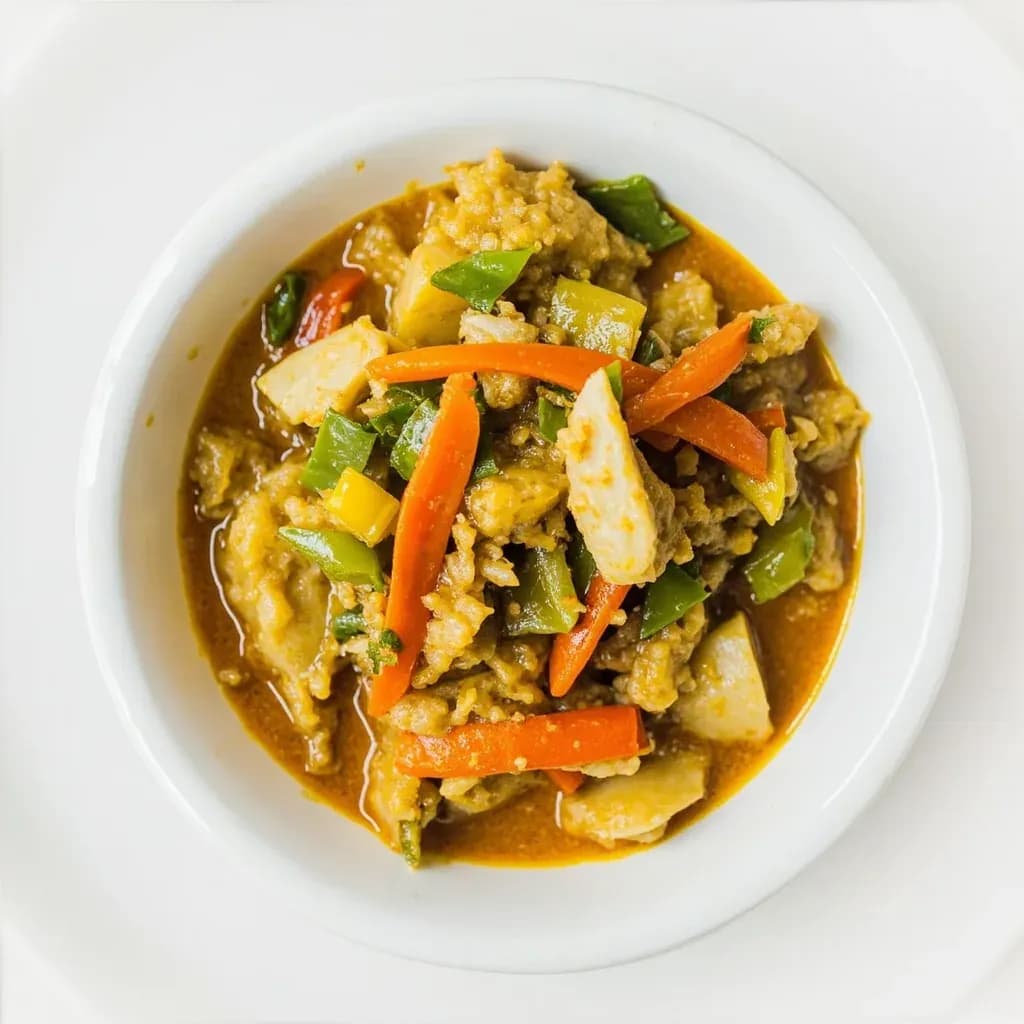
Shukto is a Bengali mixed-vegetable dish built around a deliberate bitterness, usually from bitter gourd, balanced by milk, ginger, and a paste of mustard or poppy seeds into a mild, slightly sweet curry. It is traditionally served at the start of a meal to open the palate. The vegetables are added in stages so each cooks properly, with the bitter element setting the dish's defining tone.
Shukto is a mixed-vegetable curry from Bengal that leads the meal with bitterness instead of hiding it. The cook's task is not to mask the bitter gourd but to frame it: a short tempering of panch phoron, mustard oil heated past its raw edge, and a quiet finish of milk and sugar together round the bitter note into something savory, slightly sweet, and creamy. It is the opening course of a traditional Bengali thali for a reason — bitter is believed to prime digestion, and the mild, vegetable-forward curry sets up the richer fish and meat dishes that follow.
The dish is also a study in texture and timing. A typical shukto holds five to seven vegetables — bitter gourd, raw banana, potato, pumpkin, ridge gourd, drumstick, and sometimes greens or sweet potato — each added at a different moment so the densest pieces cook through and the tenderest keep their shape. Sun-dried lentil dumplings (bori) are stirred in near the end for crunch and body. The vegetables should be recognizable on the fork; an overcooked shukto turns into a uniform mash and loses the point of mixing so many in the first place.
What sets shukto apart from most Bengali curries is how little water is used. The vegetables essentially steam in their own released moisture under a tight lid, and the cook judges doneness by feel, aroma, and the gentle give of a knife tip rather than by reducing a sauce. This minimal-moisture method is why the technique is categorized under water and steam cooking: a few tablespoons of added liquid, plus what the vegetables surrender, is all that is required.
- Difficulty
- Medium
Types & varieties
Strictly vegetarian, often onion- and garlic-free, the temple-style / Brahmin version
Adds small shrimp, lightly spiced, for non-vegetarian Bengali tables
A drier preparation with very little gravy, sometimes pan-fried at the end for a crust
Finished with a fresh coriander paste (dhonepata bata) for an herbaceous lift against the bitter
Cabbage-forward variant common in some East Bengali / Bangladeshi homes
Potato-dominated, simpler everyday version with fewer vegetables
How to do it
- 1
Prepare the vegetables
Cut the bitter gourd into thin rounds. Cut raw banana, potato, pumpkin, and ridge gourd into uniform batons or cubes about 1.5 cm thick. Snap drumsticks into 2-inch lengths. Keep fried or raw bori aside. Uniform size is what lets everything finish together.
- 2
Temper the mustard oil
Pour raw mustard oil into a heavy pan or kadhai and heat over medium until it reaches the smoking point. Reduce the heat and let it cool for 30 seconds — the oil should smell nutty, not sharp or raw.
- 3
Bloom panch phoron
Add the five-spice blend and let it sizzle on low heat for 20–30 seconds until the seeds pop and the fenugreek just turns golden. Do not let it darken or the dish will taste acrid.
- 4
Build the bitter base
Add the bitter gourd with a pinch of salt and sauté 2–3 minutes until the edges turn translucent and the bitterness begins to perfume the oil.
- 5
Add aromatics and the densest vegetables
Stir in ginger paste and slit green chilies, then add the potato and raw banana. Cook 2 minutes, turning to coat in oil.
- 6
Steam in minimal water
Add just a few tablespoons of water — barely enough to film the bottom of the pan — cover, and cook 5–6 minutes on low. The vegetables will release their own moisture and steam together; the dish should never swim in liquid.
- 7
Add the softer vegetables
Uncover, add pumpkin, ridge gourd, drumsticks, and any quick-cooking greens. Toss gently, cover, and cook another 4–5 minutes until everything is just tender with a slight bite. Test with a knife tip — it should slide in with resistance.
- 8
Stir in bori and adjust salt
Add pre-fried bori so they soak up the juices without disintegrating. Taste and adjust salt. If the bori is raw, give them a quick fry in a little mustard oil first until crisp and golden.
- 9
Finish sweet and creamy
Off the heat, swirl in the milk and a pinch of sugar. Cover and let the curry rest 2 minutes so the residual heat sets the sauce. Optionally drizzle a little ghee over the top.
- 10
Rest and serve
Let shukto sit covered for 5 minutes before serving. It is best eaten with steamed white rice as the opening course of a Bengali meal, paired with a simple dal to anchor the plate.
The logic of adding vegetables in stages
Shukto works because each vegetable is added when the one before it is nearly done. The cook is managing a gradient of densities and water contents under a single lid, and the order is the recipe. Bitter gourd goes in earliest so its sharp flavor seeps into the oil and steam; dense starches (potato, raw banana) follow; softer squash and gourds (pumpkin, ridge gourd) come next; and the most delicate items — drumstick, greens, fried bori — finish the dish. Cutting everything to a uniform size is what keeps the gradient from collapsing into mush.
- Salt the bitter gourd lightly and rest it 5–10 minutes before cooking; squeeze out the liquid to soften the harshest edge.
- Add bitter gourd first so its flavor leaches into the cooking medium rather than sitting on the surface.
- Stagger vegetables by density — potato and raw banana before pumpkin and ridge gourd — so they finish within minutes of each other.
- Stir in pre-fried bori at the very end; simmering them in the curry turns them papery and they lose their crunch.
Balancing bitter with sweet and dairy
The point of the sugar and milk finish is not sweetness for its own sake but to round the bitter note. A pinch of sugar off the heat, plus whole milk stirred in while the pan is off the flame, lifts the harshness of the gourd and gives the curry its quiet, creamy finish. Add dairy to a roaring pan and it splits; add it over low heat and it can taste flat. The off-heat swirl is the small move that ties the dish together.
- Taste before reaching for sugar — older, less bitter gourds may need none at all.
- Always add milk off the flame to prevent splitting and to keep the sauce pale and glossy.
- A final drizzle of ghee adds body without changing the flavor profile.
Why the mustard oil is heated to smoking
Raw mustard oil carries its own pungent, almost acrid bitterness. Heating it past the smoking point burns that note off and leaves behind a warm, nutty fat that complements rather than competes with the gourd. This step is non-negotiable for a clean-tasting shukto; skipping it produces a curry that tastes harsh and green from the oil rather than from the vegetables. The oil is ready when the surface shimmers and a wisp of white smoke appears, then it should cool slightly before the spices go in.
- Use a heavy-bottomed pan or kadhai — thin steel scorches the panch phoron before the oil cools.
- Bloom the panch phoron on low heat; fenugreek and nigella scorch fast and turn acrid if rushed.
- If you cannot find mustard oil, ghee is the closest substitute, but the flavor profile will shift noticeably toward richer and less pungent.
Common uses
Tips & pitfalls
- Heat mustard oil past the smoking point every time — this burns off the oil's own raw pungency so the gourd's bitterness is the only one on the plate.
- Salt the bitter gourd and let it sit 5–10 minutes before cooking; squeeze out the released liquid to soften the harshest edge.
- Add bitter gourd first and quick-cooking vegetables last — staggering by density is what keeps each piece recognizable on the fork.
- Bloom panch phoron on low heat; fenugreek and nigella scorch in seconds and turn the whole curry acrid.
- Finish with sugar and milk off the flame to prevent splitting and to keep the delicate sweet-bitter balance intact.
- Fry bori separately in a little mustard oil until crisp and stir in at the end; simmering them in the curry makes them papery.
- Use only a few tablespoons of added water — shukto is a low-moisture curry that lets vegetables steam in their own liquid.
- Taste before adding sugar; older gourds may be mild enough to need none, and the goal is to tame bitterness, not to make the dish sweet.
Good to know
- Cuisine
- Bengali (West Bengal and Bangladesh)
- Place in the meal
- First course of a traditional Bengali thali, served with plain rice
- Primary bittering agent
- Bitter gourd (karela / ucche)
- Signature tempering
- Panch phoron — nigella, fenugreek, cumin, black mustard, fennel
- Fat of choice
- Raw mustard oil, heated to smoking point
- Finishing dairy
- Whole milk, or cream or ghee for a richer version
- Texture element
- Sun-dried lentil dumplings (bori), fried crisp and stirred in at the end
- Sweetener
- A pinch of sugar, off the heat, to round the bitter edge
- Active / total time
- 20–25 minutes active; 20–30 minutes total
- Dietary
- Vegetarian by default; vegan if milk is omitted and ghee replaced with oil
- Storage
- Refrigerate up to 2 days; reheating dulls the bitter note
Also called
Shukto · Bengali Bitter Curry
Related

Boil
Cook in vigorously bubbling liquid at full rolling heat

Simmer
Hold liquid at a gentle shimmer for tender, unhurried cooking

Poach
Cook gently in barely-trembling liquid for silky, tender results

Steam
Cook in rising vapor to keep color, nutrients, and shape intact

Blanch
Plunge briefly in boiling water, then shock cold to lock color

Braise
Sear, then cook slow in a little liquid until fall-apart tender

Stew
Simmer bite-sized pieces fully submerged into a rich, unified pot

Sous-Vide
Seal and cook in precise warm water for edge-to-edge doneness