Water & Steam
Slow-Cooking
Cooking food at a low temperature over many hours to tenderize and develop deep flavor.
Slow-cooking holds food at a low, steady temperature for hours, often in a covered pot or slow cooker, so tough cuts break down and flavors meld gradually. The long, gentle heat dissolves collagen into gelatin, giving fork-tender meat and a rich, concentrated sauce. It is forgiving and largely hands-off, making it a staple for stews, braises, beans, and tougher economical cuts.
Slow-cooking is not one technique but a family of long, gentle methods — braising, simmering, and pit-roasting — that share a single principle: holding food at sub-boiling temperatures for hours so that connective tissue dissolves into gelatin, intramuscular fat softens and bastes the meat from within, and aromatics meld into a unified, deeply savory sauce. Because the heat stays low, muscle fibers relax rather than seize, which is why tough, collagen-rich cuts that would be inedible from a quick sear become silken and almost spreadable after six to ten hours.
The key reaction is collagen hydrolysis: tough white connective tissue begins converting to gelatin somewhere around 70–80 °C / 160–175 °F and keeps converting for as long as heat is applied, so the longer you hold the meat in that range, the more unctuous the result. A second layer of flavor comes from Maillard browning — but because most slow-cooking vessels stay too moist for that to happen on the meat itself, cooks build it in advance by searing in a hot pan before the long cook. The sauce, meanwhile, reduces gently over hours and picks up fond, herb, and bone flavors that no stovetop reduction can replicate in minutes.
Choosing among the methods is mostly about how much attention you want to pay. An oven braise in a Dutch oven is the workhorse of restaurant kitchens; a stovetop simmer is the most responsive but the most demanding; an electric slow cooker is the most hands-off and forgiving; a tagine or pit-cook concentrates flavor through returned steam and a hint of smoke. The underlying physics are identical — only the vessel and heat source change.
- Difficulty
- Easy
Types & varieties
Tough cuts and aromatics cooked covered in a Dutch oven at 150–160 °C / 300–325 °F; classic restaurant technique with excellent flavor development from dry oven heat
Gentle bubbling in a heavy pot on the lowest possible heat; demands more attention and stirring but gives the cook instant control
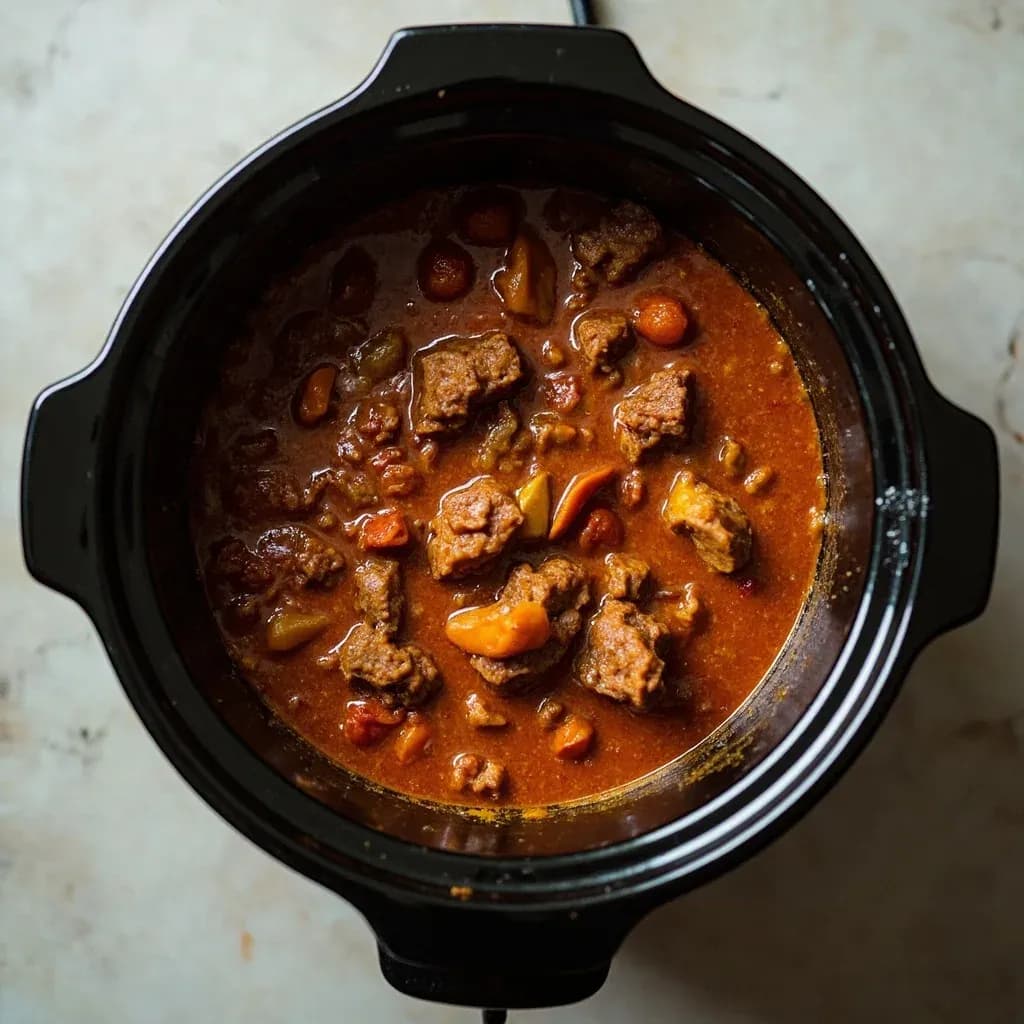
Stoneware crock with a wrap-around heating element; almost no evaporation, fully hands-off, available in manual or programmable models
Modern electric appliances that switch between pressure and slow modes; the slow setting typically runs hotter than a vintage Crock-Pot, so traditional recipes finish 1–2 hours faster
North African conical clay pot that returns condensed steam to the dish; cooked at very low oven heat (140–160 °C) and concentrates flavor through self-basting
Food buried with hot stones or coals and left 6–24 hours; the original 'slow cooker' in many cultures, with characteristic smoke and earth notes
Precision water-bath cooking at exact, lower temperatures (50–85 °C) sealed in bags; adjacent rather than identical — yields even doneness but no evaporative flavor reduction
How to do it
- 1
Select the right cut and vessel
Choose a tough, well-marbled cut — chuck, brisket, pork shoulder, shank, or short rib — and match it to a heavy, lidded vessel: a Dutch oven for oven braising, a heavy stockpot for stovetop, a 5–7 L slow cooker for electric, or a tagine for North African flavors. The vessel should hold the food snugly so steam circulates but liquid does not boil away.
- 2
Prep, season, and sear
Pat the meat dry and season generously with salt and pepper at least 40 minutes ahead, or overnight uncovered in the fridge. Heat a thin film of oil in a heavy pan and sear the meat on all sides until deeply browned, then remove. Sear vegetables and aromatics in the same fat to lift the fond — this is where most of the eventual flavor comes from, since the slow cooker itself is too moist for browning.
- 3
Build the braising liquid
Sweat onions, carrots, celery, leeks, or garlic in the same pan until soft. Deglaze with wine, beer, stock, or tomato passata, scraping up every brown bit, and reduce briefly. Return the meat to the pot and add enough stock, water, or sauce to come roughly one-third to halfway up the sides of the meat — not fully submerged, or the dish will stew rather than braise.
- 4
Add long-cooking aromatics, cover, and set temperature
Tie in fresh herbs (thyme, bay, rosemary), whole spices, and any sturdy vegetables (carrots, potatoes, turnips). Bring to a gentle simmer on the stovetop, then cover and transfer: oven at 150–160 °C / 300–325 °F, electric slow cooker on LOW for 6–8 hours, or stovetop on the lowest possible heat. The liquid should barely tremble, never boil.
- 5
Cook low and slow, checking once near the end
Resist lifting the lid for at least the first 2–3 hours. Total time depends on cut and size: a 1.5 kg / 3.3 lb chuck roast needs 3–4 hours in the oven or 8–10 hours on a slow-cooker LOW. The meat is done when a fork turns in it easily and the internal temperature reaches 90–95 °C / 195–205 °F, the range where collagen fully breaks down.
- 6
Finish with quick-cooking ingredients and adjust seasoning
Lift out the meat and tent loosely with foil. Skim excess fat from the surface, add quick vegetables, fresh herbs, and any acidic ingredients (tomato, vinegar, citrus), and simmer the sauce 10–20 minutes to concentrate. Adjust salt, acid, and body; thicken with a cornstarch slurry (1 tbsp cornstarch to 2 tbsp cold water per cup of liquid) if needed.
- 7
Rest, slice or shred, and serve
Rest the meat 15–30 minutes so juices redistribute. Slice against the grain for roasts, or pull apart with two forks for shoulders and brisket. Spoon the reduced sauce over and finish with fresh herbs, a drizzle of good olive oil, or a grating of horseradish or citrus zest.
Matching method to dish
Each variant of slow cooking excels at different jobs. Use this as a quick guide when you're deciding which vessel to pull out.
- Oven braise — large roasts, whole chickens, bean stews, anything that benefits from even ambient heat and a tight lid
- Stovetop simmer — stocks, broths, custards, and dishes where you need to skim, stir, or adjust heat minute by minute
- Electric slow cooker — long work-day braises, beans, chili, oatmeal, and any recipe where you cannot watch the pot
- Multi-cooker slow mode — small-batch weeknight braises when you want the option to finish under pressure if time runs short
- Tagine — lamb or chicken with dried fruit, olives, and preserved lemon; the shape is essential to the flavor
- Pit-cook / hāngi — large gatherings and root vegetables; the smoke is part of the point
- Sous vide — precise edge-to-edge doneness on premium cuts and proteins where you want a fixed final temperature without evaporative reduction
Common uses
Tips & pitfalls
- Sear or brown the meat in a hot pan before the long cook — Maillard browning is the single biggest flavor upgrade and cannot happen inside a slow cooker.
- Don't lift the lid in the first 2–3 hours: every peek drops the crock temperature by 10–20 °C and adds 15–20 minutes to recovery time.
- Hold back acidic ingredients (tomatoes, wine, citrus, vinegar) for the last 30–60 minutes; acid tightens collagen and can toughen meat if added at the start.
- Add delicate vegetables (peas, zucchini, leafy greens) and dairy (cream, milk, yogurt, coconut milk) in the last 20–30 minutes so they do not break down or curdle.
- Use low-sodium stock and salt at the end: long reduction concentrates seasoning, and cured ingredients (soy, miso, anchovy) grow saltier over time.
- Trim only the thickest exterior fat; leave intramuscular fat and silver skin intact so the meat bastes itself as the collagen renders.
- Defrost frozen meat before slow cooking — putting it in frozen keeps the crock in the food-safety danger zone too long for safe cooking.
- For dried beans in an older low-wattage slow cooker, pre-soak or boil 10 minutes first; older units may hold beans below safe temperature for too long.
- Keep the crock between ½ and ⅔ full: under ½ scorches on the sides, over ⅔ boils over and heats unevenly.
- Thicken sauces after cooking with a cornstarch slurry (1 tbsp cornstarch to 2 tbsp cold water per cup of liquid) or by simmering the uncovered braise on the stovetop; pureeing a portion of the cooked vegetables and liquid is a no-flour way to body up a stew.
Good to know
- Temperature range
- Oven/stovetop braise 150–180 °C / 300–350 °F; electric slow-cooker LOW ≈ 87–93 °C (190–200 °F), HIGH ≈ 95–100 °C (203–212 °F)
- Time range
- Typically 4–10 hours; pot roasts and stocks may run 8–12 hours. Roughly 1 hour on HIGH ≈ 2–2.5 hours on LOW
- Best cuts
- Tough, collagen-rich, well-marbled cuts: chuck, brisket, shank, pork shoulder, lamb shoulder, oxtail, short rib
- Mechanism
- Prolonged moist or dry heat converts collagen to gelatin, melts intramuscular fat, and melds flavors via Maillard products and slowly reduced liquid
- Food-safety floor
- Hold food above 60 °C / 140 °F; cold-filled electric slow cookers should reach that within about 2 hours
- Fill level (electric)
- Between ½ and ⅔ full works best; under ½ may scorch, over ⅔ risks boil-over and uneven heating
- Evaporation
- Closed-vessel electric cookers lose very little moisture; oven braises in a lidded pot lose roughly 10–20% over 4 hours
- Energy use
- A 200–300 W slow cooker running 8 hours uses about 1.6–2.4 kWh — comparable to running a single oven burner
- Origin of the appliance
- Irving Naxon patented the electric slow cooker in 1939; Rival Manufacturing released it commercially in 1971 as the Crock-Pot
Also called
slow-cook · low and slow · crockpot cooking
Dishes that rely on it
Related

Boil
Cook in vigorously bubbling liquid at full rolling heat

Simmer
Hold liquid at a gentle shimmer for tender, unhurried cooking

Poach
Cook gently in barely-trembling liquid for silky, tender results

Steam
Cook in rising vapor to keep color, nutrients, and shape intact

Blanch
Plunge briefly in boiling water, then shock cold to lock color

Braise
Sear, then cook slow in a little liquid until fall-apart tender

Stew
Simmer bite-sized pieces fully submerged into a rich, unified pot

Sous-Vide
Seal and cook in precise warm water for edge-to-edge doneness