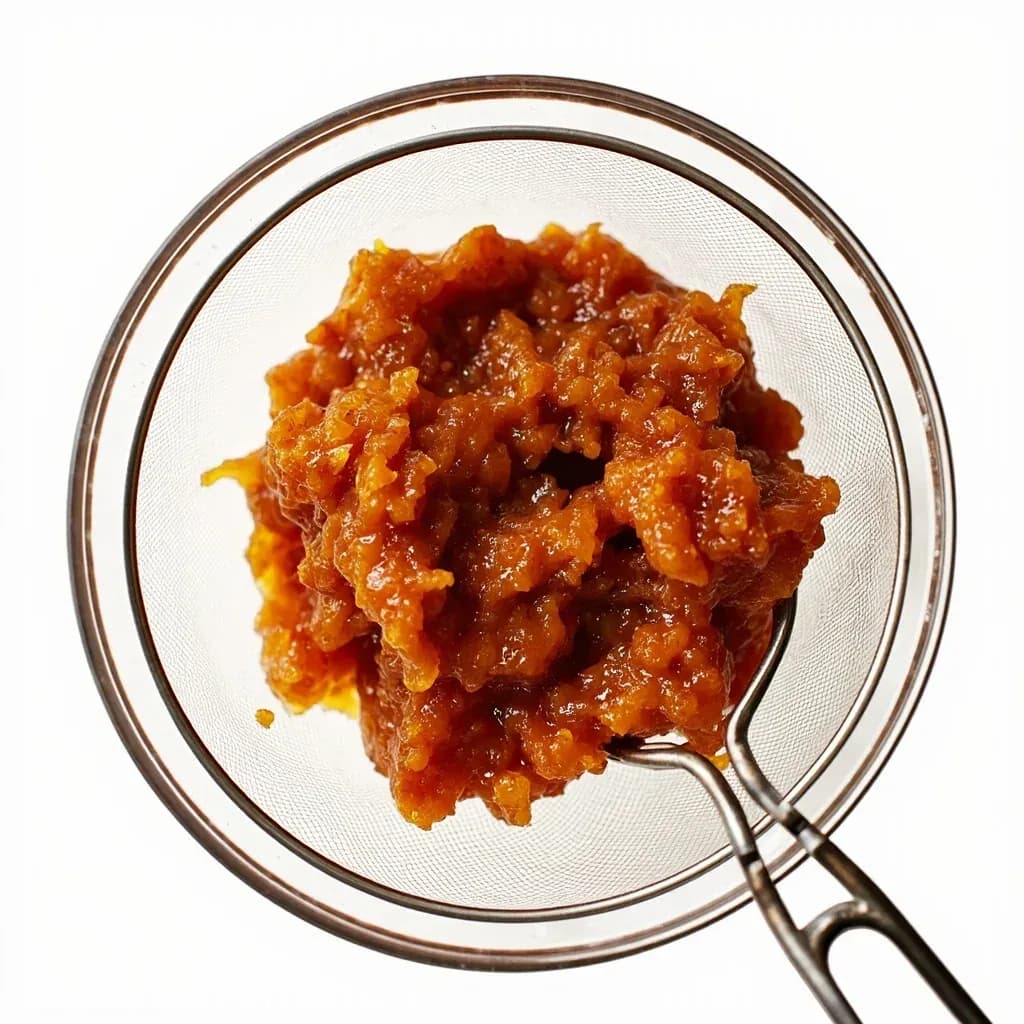
Prep & Assembly
Tamarind Pulping (Kuchuja Ukwaju)
Soaking and squeezing tamarind to extract a tangy pulp, straining out seeds and fibers.
Tamarind pulping involves soaking blocks of tamarind in warm water to soften, then massaging and pressing the mass to release its sour brown pulp before straining away the seeds and stringy fibers. The resulting tamarind liquid is a key souring agent in curries, chutneys, and sauces across East Africa, India, and Southeast Asia. Adjusting the water ratio controls how concentrated the tang becomes.
Tamarind pulping is the foundational technique behind nearly every tangy stew, sauce, chutney, and sour drink in the cuisines where the fruit is king — from South Indian rasam and Thai pad Thai to Swahili coastal fish curries and Mexican agua fresca. The process extracts the pulp's soluble sugars, organic acids, and aromatic compounds from the fibrous matrix that surrounds the hard seeds, leaving behind a liquid that ranges from a thick, jammy paste (for chutneys and marinades) to a thin, bright extract (for soups, dressings, and cocktails) depending on how much water is used.
What makes tamarind worth pulping at home rather than reaching for a jarred concentrate or a splash of vinegar is the complexity hiding inside those brown pods. The acid is predominantly tartaric (the same acid found in grapes and wine), which gives tamarind a clean, rounded sourness rather than the sharp acetic bite of vinegar. Layered over that acidity are caramel, date, and dried-fruit notes that develop as the pulp softens and breaks down in warm water.
The technique itself is forgiving: a bowl, warm water, and fifteen patient minutes will deliver a serviceable pulp for most purposes. The difference between adequate and excellent comes down to two small disciplines — soaking the pulp long enough to soften completely, and massaging it thoroughly so every bit of flesh separates cleanly from fiber and seed.
- Difficulty
- Easy
Types & varieties
Dehusked, deseeded pulp pressed into slabs; the everyday form for pulping; deep, intense flavor and the best value.
Brittle brown shells with sticky pulp wrapped around hard seeds; crack, peel, deseed, then soak — gives a slightly more aromatic, less compressed flavor.
Soft brown shells with pulp that needs only brief soaking or can be pressed raw; used in Thai, Mexican, and Caribbean cooking for brightest flavor.
Already pulped and reduced; skips the technique entirely — use when convenience matters more than freshness or color.
Thai variety low in acid and high in sugar; pulped with little or no water, eaten as a snack or stirred into desserts.
Thai variety high in tartaric acid; the standard choice when the dish needs a sharp, savory tang such as pad Thai or tom yum.
How to do it
- 1
Prepare the tamarind
If using a compressed block, cut off the amount you need with a sturdy knife and break it into rough 2–3 cm pieces with your hands. For whole dried pods, crack the brittle shell with the back of a knife, peel it away, and pull the sticky pulp off the hard seeds. Discard any dark veins or hard cores from the block — they contribute bitterness without much flavor.
- 2
Cover with warm water
Place the pulp in a glass or stainless steel bowl. Add warm water at roughly a 1:1 to 1:2 ratio for a strong extract (good for chutneys and marinades) or 1:3 to 1:4 for a thinner extract (good for soups, drinks, and dressings). Use just-boiled water for dried blocks; lukewarm for fresh pods.
- 3
Soak
Let the mixture stand 15–30 minutes for compressed tamarind, 20–40 minutes for whole dried pods, or 5–10 minutes for fresh pods. The pulp should feel soft and mushy when pressed; if it still resists, add a splash more hot water and wait another 5–10 minutes.
- 4
Break up and massage
Use clean hands or a wooden spoon to squeeze, rub, and mash the pulp against the side and bottom of the bowl. Work in small handfuls: press the pulp between your fingers so the soft flesh squeezes through and the seeds and fibers stay behind. Continue until most of the pulp has disintegrated into the water.
- 5
First strain
Pour the mixture through a fine-mesh sieve set over a bowl. Press down firmly on the solids with the back of a spoon or your fingers to extract as much liquid as possible. Discard the fibrous mass, or set it aside for a second soak.
- 6
Optional second soak
Return the strained fibers to the bowl, add fresh warm water at roughly half the original amount, and massage for 1–2 minutes. Strain again and combine with the first liquid. This produces a more rounded, less intense extract — useful when the dish needs tamarind aroma without sharp acidity.
- 7
Refine for clarity
For clear soups, cocktails, or glossy sauces, strain once more through a layer of cheesecloth or a nut-milk bag. This removes the fine suspended fibers that can dull appearance and leave a fuzzy texture on the tongue.
- 8
Use or store
Use the pulp immediately, or transfer to a clean glass jar. Refrigerate up to 1 week, or freeze in ice-cube trays (about 2 tbsp per cube) for up to 6 months. Label and date; thawed pulp keeps its flavor well in cooked dishes but loses some brightness in raw applications.
Regional approaches to the same pulp
The same basic pulping process yields strikingly different characters across cuisines, depending on water ratio, steep time, and what the pulp is combined with.
- Indian subcontinent — Thin, sharp extract for rasam and sambar; jammy paste for imli chutney; tamarind-date slurry stirred into cooked rice for puliyodarai.
- Thailand — A short, intense steep in modest water keeps the acidity bright for dressings and finishing sauces in pad Thai, tom yum, and som tam.
- Swahili coast (Kenya, Tanzania) — The pulp is often further reduced with onions, tomatoes, garlic, and coconut milk for richer dishes like samaki wa kupaka.
- Mexico and Central America — Lightly pulped and sweetened with sugar for agua fresca and ponche; combined with chiles for savory-sour marinades.
- Caribbean — Fresh pod pulp folded into cold drinks, rum-based cocktails, and pepper sauces.
Common uses
Tips & pitfalls
- Use just-boiled water for compressed blocks, then let it cool 1–2 minutes before adding — it cuts soak time roughly in half without scorching the pulp.
- Do a second, shorter soak of the spent fibers in fresh warm water and combine the two liquids; the second steep pulls out softer, rounder notes and recovers another 10–15% of usable pulp.
- Rub the soaked pulp between your fingertips rather than just pressing it; the fibrous strands cling to the seeds and release pulp only when worked directly.
- For clear soups and cocktails, double-strain — once through a fine-mesh sieve, then through cheesecloth or a nut-milk bag — to remove the fine suspended fibers.
- Tamarind stains plastic, wood, and light fabrics permanently; use glass or stainless steel bowls and protect your work surface.
- Do not seed the tamarind before soaking — the shell fragments help break down the pulp, and the seeds slip out cleanly afterward.
- For darker, mellower flavor (South Indian dishes), let the pulp steep 20–30 minutes longer; for bright, sharp flavor (Thai dressings), keep the steep short.
- Common mistake: using only the first soak and discarding the pulp too early — significant flavor remains in the spent fibers.
- Common mistake: substituting vinegar plus sugar for tamarind in dishes where tamarind is the dominant flavor (pad Thai, rasam); the woody caramel notes cannot be replicated.
Good to know
- Cuisine context
- Practiced across South Asian, Southeast Asian, Latin American, Middle Eastern, and East African (Swahili coastal) cooking
- Swahili term
- Kuchuja ukwaju — 'kuchuja' means to strain or filter, 'ukwaju' is tamarind
- Typical ratio
- 1 part seedless pulp to 1–2 parts warm water for a strong extract; up to 4 parts for a mild extract
- Soak time
- 15–30 minutes for compressed block; 20–40 minutes for whole dried pods; 5–10 minutes for fresh pods
- Yield
- About 200–250 ml of thick pulp per 100 g of compressed seedless block
- Storage of pulp
- Refrigerated up to 1 week in a sealed jar; frozen in ice-cube trays up to 6 months
- Equipment
- Glass or stainless bowl, fine-mesh sieve (plus cheesecloth for clarity), wooden spoon or clean hands
- Difficulty
- Beginner; under 5 minutes of active work plus soaking
Also called
Kuchuja Ukwaju · Tamarind Extraction
Dishes that rely on it

Related

Whisk
Beat ingredients smooth and aerated with a looping wire motion

Sift
Pass dry ingredients through mesh to aerate and remove lumps

Strain
Pour through mesh to separate solids from liquid for a smooth result

Filter
Pass liquid through fine material to clarify out the smallest particles

Rice
Press cooked potatoes through small holes for fluffy, lump-free texture

Mash
Crush soft cooked food into a rustic, creamy purée

Grind
Crush food into a coarse to fine texture, from spices to meat

Grate
Shred food into fine bits against a sharp-toothed surface