Transform & Preserve
Tempering Chocolate
Controlling chocolate's crystal structure through heating and cooling for snap and shine.
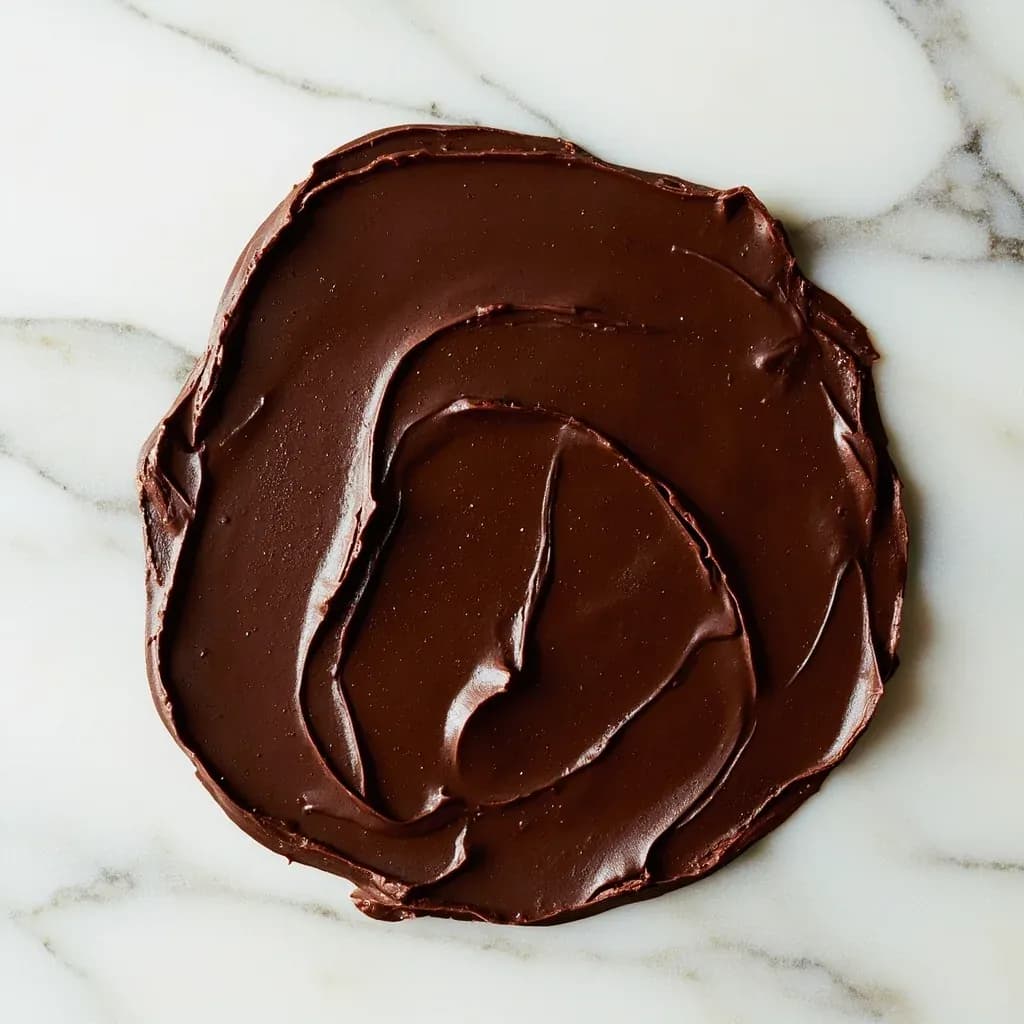
Tempering chocolate is the process of melting, cooling, and gently rewarming it through precise temperatures so the cocoa butter forms stable beta crystals. Properly tempered chocolate sets with a glossy sheen, a clean snap, and resists the dull gray bloom of fat rising to the surface. Confectioners use the tabling method on marble or the seeding method, dropping in tempered pieces, to coat truffles, mold bars, and dip fruit.
Tempering chocolate is the deliberate heating, cooling, and rewarming of real chocolate to lock its cocoa butter into a single, stable crystal form — Form V, the beta crystal. Cocoa butter is polymorphous, meaning the same fat can solidify into six different crystal structures, and only Form V delivers the qualities chocolatiers prize: a glossy surface, a sharp snap, a clean release from moulds, and resistance to fat bloom over days and weeks. Untempered chocolate sets dull, soft, and streaky, then almost always develops that familiar grey-white haze as unstable crystals migrate to the surface.
The technique is fundamentally a temperature dance. You melt the chocolate hot enough to destroy every existing crystal, cool it to a precise point where only stable crystals can form, then rewarm it to a working temperature that keeps the mass fluid but already seeded with the right structure. Seeding — introducing small amounts of already-tempered chocolate — is the shortcut that gives the melted mass the crystal template it needs.
Tempering matters most when the chocolate is the finished surface: enrobed bonbons, moulded bars, dipped fruit, decorative work. For ganache, batter, or ice cream bases where chocolate disappears into another mixture, precise tempering is largely unnecessary, since the surrounding fat and water control the final texture.
- Difficulty
- Hard
Types & varieties
Finely chopped tempered chocolate is stirred into melted chocolate to seed stable crystals — the most reliable home method.
Traditional chocolatier's technique: two-thirds of the melted chocolate is poured over a cool marble slab, worked with a palette knife, and returned to the pot.
Pure cocoa butter powder whisked into melted chocolate to raise cocoa butter and force stable crystallization, useful for colored or flavor-heavy batches.
A sealed bag of chocolate held in a precision water bath is cycled through the three target temperatures for hands-off control.
Continuous tempering in commercial chocolate shops; chocolate passes through heated and cooled zones to maintain working temperature.
How to do it
- 1
Choose and chop the chocolate
Use a good-quality dark, milk, or white chocolate with 30–38% cocoa butter — a couverture disc or a fine bar. Reserve about 20–25% of the total weight as 'seed' chocolate and chop it very finely so it will melt on contact. Chop the remaining 75–80% uniformly so it melts at the same rate.
- 2
Melt to the first temperature
Melt the larger portion in a dry heatproof bowl set over (not touching) barely simmering water, or in short microwave bursts at 50% power, stirring between bursts. Heat dark and milk to 45–50°C (113–122°F) and white to 45°C (113°F). This destroys all existing crystal forms. Remove from heat as soon as the last piece melts — do not continue cooking the chocolate.
- 3
Cool to the seeding temperature
Stir continuously and cool dark to 27–28°C (80–82°F), milk to 26–27°C (78–80°F), and white to 25–26°C (77–79°F). The chocolate should remain liquid, not setting around the edges. If it cools past these targets, rewarm gently to 40–45°C and start the cooling step again — never seed chocolate that is already too cool, as the seed will not melt and you will over-seed.
- 4
Seed the stable crystals
Add the reserved chopped seed chocolate a small handful at a time, stirring constantly with a spatula. Each addition should melt fully before the next goes in. The mass will thicken slightly as Form V crystals populate it. Stop adding seed as soon as the chocolate reaches the working temperature and looks smooth and fluid.
- 5
Hold at the working temperature
Rewarm briefly — never above 32°C for dark — to the working temperature: 31–32°C (88–90°F) for dark, 29–30°C (84–86°F) for milk, 27–28°C (80–82°F) for white. Park the bowl over warm (not hot) water to hold it there while you work. A working bowl stays in temper for 30–60 minutes before needing attention.
- 6
Confirm the temper with a test
Dab a teaspoon of chocolate onto parchment, the back of a knife, or a cool plate kept in the fridge. Within 2–3 minutes it should set with a glossy sheen and no streaks or marbling. After 5 minutes, peel it off: a properly tempered sample snaps cleanly; an under-tempered one bends, smudges, or leaves a dull streak on the paper.
- 7
Work and re-temper as needed
Dip, enrobe, or pour into moulds. If the chocolate thickens, dulls, or develops streaks, it has fallen out of temper. Reheat gently to 40–45°C, cool to the seeding temperature, and seed again with a small amount of fresh chopped chocolate. Do not try to push a fallen bowl through to the end of a session.
Why Tempering Works: The Crystal Forms
Cocoa butter can crystallize into at least six distinct forms (I through VI), each with its own melting point, density, and surface character. When chocolate cools without guidance, it solidifies into a chaotic mixture of Forms II, III, and IV — soft, waxy, and prone to bloom. Form V, the beta crystal, melts at roughly 33–34°C, just below body temperature, which is why good chocolate melts on the tongue. By heating past the melting point of all forms, then cooling and seeding, you give the fat only one stable structure to follow. The result is a tighter molecular packing that reflects light evenly (gloss), contracts uniformly as it cools (easy mould release), and resists the slow migration of liquid fat that causes bloom.
Reading the Working Chocolate
A bowl of tempered chocolate is a living thing and will quietly fall out of temper as you work. Learn to read three signals: thickness, sheen, and streakiness. Freshly tempered chocolate flows like warm honey and pools in a smooth, mirror-bright puddle on the bench. As it thickens, the puddle becomes ropey, and the surface dulls from a reflection to a soft sheen — the first warning. Streaks of lighter chocolate, sometimes called 'marring,' mean unstable crystals are forming and you are moments from full loss of temper. Heat gently and re-seed rather than waiting for a complete failure.
Troubleshooting Bloom
Fat bloom and sugar bloom look similar but have different causes and different preventions. Fat bloom comes from temperature swings, especially finished pieces stored in a warm cupboard or a cold fridge: unstable crystals migrate, or liquid fat rises and re-solidifies on the surface. Sugar bloom comes from condensation — cold chocolate meets warm, humid air and the moisture dissolves surface sugar, which recrystallizes as a rough, sandy crust. Keep finished work at a steady 15–18°C with 50–55% humidity, and avoid refrigerating tempered chocolate for storage. If a piece has bloomed, it is still edible; melt it down and re-temper rather than discarding.
Common uses
Tips & pitfalls
- Use a digital instant-read thermometer — guessing by feel is the most common reason a batch fails; the working window is only 2–3°C wide.
- Keep water strictly away from melted chocolate; even a drop or two will seize it into a thick, grainy, unusable paste that requires cream or butter to rescue.
- Chop seed chocolate very finely so it melts quickly without overcooling the surrounding mass; large chunks lower the temperature too sharply and you will overshoot the seed.
- If the seed chocolate refuses to melt, your melted base is already too cool — reheat it gently to 40–45°C and start the cooling step over rather than fighting a seized bowl.
- Test on a cold surface, not room-temperature parchment — a chilled plate or knife gives a faster, more honest read on set and shine in under a minute.
- Re-temper as soon as the working chocolate thickens, dulls, or develops a 'muddy' look; it has fallen out of temper and will not recover on its own.
- Work in a still, 18–20°C room away from drafts and direct sunlight; both destabilize the crystal set as the chocolate sets.
- Callebaut, Valrhona, Cacao Barry, and Lindt Excellence workhorse bars all temper reliably; inexpensive chocolate chips often carry a fat glaze that resists proper crystallization, so avoid them for tempered work.
Good to know
- Purpose
- Stabilizes cocoa butter into Form V (beta) crystals for a glossy sheen, clean snap, and resistance to fat or sugar bloom.
- Working temperatures — dark
- Melt to 45–50°C (113–122°F); cool to 27–28°C (80–82°F); rewarm to 31–32°C (88–90°F) for working.
- Working temperatures — milk
- Melt to 45–50°C (113–122°F); cool to 26–27°C (78–80°F); rewarm to 29–30°C (84–86°F) for working.
- Working temperatures — white
- Melt to 45–50°C (113–122°F); cool to 25–26°C (77–79°F); rewarm to 27–28°C (80–82°F) for working.
- Best chocolate to use
- Couverture (30–38% cocoa butter) or fine bars. Compound coatings with cocoa butter substitutes do not need tempering.
- Equipment
- Dry heatproof bowl, digital instant-read thermometer, spatula; optionally a marble slab, seed chocolate, or Mycryo cocoa butter powder.
- Test for doneness
- Smear on cool parchment or a knife blade — sets in 2–3 minutes, looks shiny, and snaps cleanly when peeled.
- Cause of bloom
- Unstable Form IV or VI crystals rise to the surface as fat bloom (grey-white streaks); sugar bloom comes from condensation.
Also called
Tabling · Seeding
Dishes that rely on it
Related

Confit
Cook slowly submerged in fat for silky tenderness and keeping

Cure
Draw out moisture with salt and time to preserve and concentrate

Pickle
Steep in acidic brine for bright, tangy, crunchy preservation

Ferment
Let friendly microbes transform food into tangy, complex flavor

Marinate
Soak in a seasoned mix to flavor and tenderize before cooking

Brine
Soak in salt water so meat stays juicy and seasoned throughout

Dehydrate
Slowly dry out moisture to concentrate flavor and extend shelf life

Cold-Smoke
Perfume cured food with smoke without cooking it through