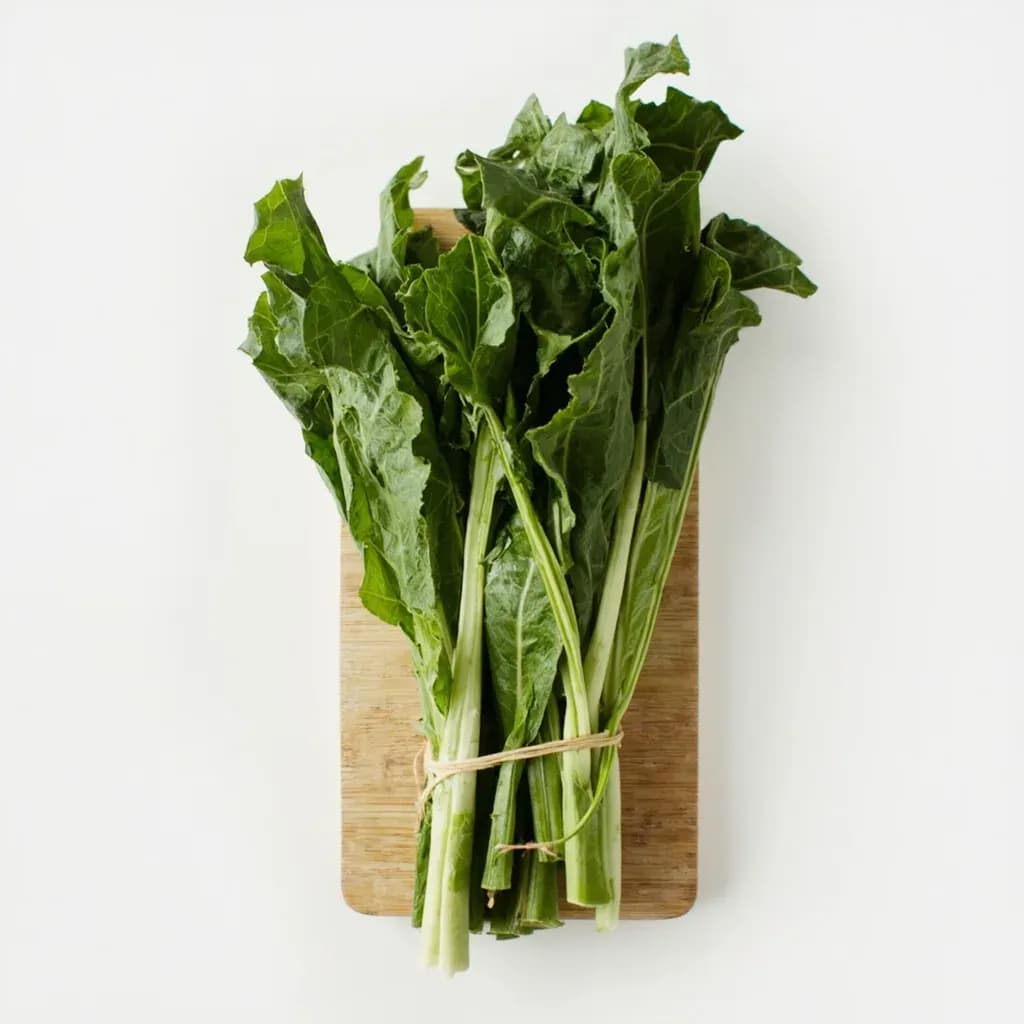
Prep & Assembly
Ti-Leaf Wrapping (Laulau)
Bundling fish and pork in taro and ti leaves before steaming, the Hawaiian laulau parcel.
Ti-leaf wrapping is the Hawaiian technique of enclosing salted pork and fish, cushioned in luau (taro) leaves, inside large ti leaves to form a laulau bundle. The parcel is tied and then steamed for hours, traditionally in an imu, until everything is meltingly tender. The leaves seal in moisture and impart a subtle vegetal aroma.
Laulau is the Hawaiian practice of bundling salted meat and fish in taro and ti leaves for a long, slow steam — a wrapper-and-steamer technique as much as a recipe. The taro leaf (lau, which becomes luau when cooked) gives the parcel its bulk and its vegetal depth, while the ti leaf (ki, Cordyline fruticosa) does the structural work, holding the bundle together through hours of moist heat without splitting the way banana leaves tend to. The leaf combination is not decorative: the ti leaf contributes a faintly sweet, grassy, almost floral aroma, and the taro leaf steams down into a silky green layer that flavors and protects the filling.
What makes the technique distinctive is the long unattended cook. The parcels are stacked in a steamer or, traditionally, an imu underground oven, and left over briskly boiling water for four to six hours. The ti leaf wrapper is robust enough to survive this bath, the result being fall-apart pork shoulder or chicken that picks up a subtle herbal perfume and a characteristic greenish tinge from the leaves. Modern cooks value laulau as much for its freezer-friendly nature as for its flavor: assembled raw bundles steam beautifully straight from the freezer, making it a make-ahead centerpiece for plate lunches and lūʻau.
The technique carries cultural weight beyond the kitchen. Ti was carried across the Pacific by voyaging canoes and is regarded in Hawaiian tradition as a plant of good luck, used in hula and on altars. Treating the leaves as a structural and aromatic ingredient — and not as garnish — is what separates a proper laulau from a generic leaf-wrapped steamed meat.
- Difficulty
- Medium
Types & varieties
The classic; pork shoulder or pork belly, salted and wrapped.
Traditional combination of salted pork chunks with salted, dried aku (skipjack).
Bone-in chicken thighs, a common modern home-cook adaptation with shorter steam time.
A 20th-century adaptation using beef cuts with shorter cooking times.
Salt-cured fish wrapped without pork.
Cocktail-sized bundles in ti-leaf cups, served as pupu.
Breadfruit, sweet potato, or taro corm wrapped in luau and ti leaves.
How to do it
- 1
Source and prep the leaves
Rinse ti leaves and taro (luau) leaves in cold water. Snap off the hard basal end of each ti leaf where it meets the stem. On the taro leaves, fold each leaf in half and tear or cut out the tough central rib. Stack the cleaned leaves in a damp towel to keep them pliable.
- 2
Wilt the leaves
Pass the leaves briefly over a gas flame, press them onto a hot dry skillet for a few seconds, or hold them in a steamer for 20–30 seconds until they turn glossy and supple. This step prevents cracking when you fold the leaves around the filling.
- 3
Season the filling
Cut pork shoulder or pork belly into roughly 2-inch chunks. If using salted butterfish (aku), rinse it briefly and pat dry. Toss the meat with Hawaiian sea salt — about 1 teaspoon per pound — and let it rest 10 minutes. No marinade is traditional, though some cooks add a splash of shoyu.
- 4
Build the bundle
Lay 2–3 ti leaves flat, shiny side down, with their tips pointing the same direction and edges overlapping to form a rectangular mat. Layer 2–3 taro leaves on top, oriented in the opposite direction. Place a portion of pork in the center; add a piece of butterfish on top for the classic combination.
- 5
Wrap the parcel
Fold the long sides of the leaf mat over the filling to enclose it, then fold the short ends in like a burrito. Roll the bundle and tuck the final end tightly underneath. The finished package should be compact and well sealed, roughly the size of a deck of cards or larger.
- 6
Bundle for steaming
Stack the wrapped laulau seam-side down in a steamer basket or on a rack set above boiling water. Pack them snugly so they support one another without crushing the filling. Cover the pot.
- 7
Steam
Steam over a rolling boil for 4–6 hours for pork-and-butterfish laulau, 3–4 hours for chicken or fish-only bundles. Top up the water as needed so the pot never boils dry. Traditionally imu-cooked laulau can run 8 hours at lower heat.
- 8
Rest and serve
Remove the pot from the heat and let the parcels rest, covered, for 10 minutes — the ti leaf holds a lot of steam and will burn fingers if opened immediately. Unwrap by slicing the ti leaf lengthwise to expose the greens and tender meat. Serve with poi, steamed white rice, and/or Hawaiian-style macaroni salad.
The role of each leaf
The two leaves in a laulau are not interchangeable. The ti leaf is the wrapper: tough, waxy, and flexible once wilted, it survives hours of boiling steam without tearing and provides a faint grassy, almost floral note. The taro leaf is the lining and the flavor base: it collapses during cooking into a dark, silky green layer that mingles with the meat juices. Substituting banana leaf for ti changes both the texture and the flavor of the finished parcel — banana leaves tear more easily and lend a more resinous, vegetal aroma that sits outside the traditional profile.
Sourcing leaves
Fresh ti leaves are available at Hawaiian, Pacific Islander, and many Asian markets, especially on the U.S. West Coast. Frozen ti leaves are widely sold and work well; thaw them in the refrigerator overnight. Avoid leaves sold for floral arrangements, which may be treated with preservative sprays, and never use ornamental 'ti' houseplant cultivars of unknown chemical treatment.
Freezer strategy
Laulau is one of the most freezer-friendly assembled dishes in Hawaiian cooking. Build raw bundles, wrap them tightly in plastic, and freeze flat. Steam directly from frozen, adding about an hour to the cook time. The leaves protect the filling from freezer burn and the long steam thaws and cooks the meat evenly.
Common uses
Tips & pitfalls
- Pick young, pliable ti leaves; older leaves crack and split when folded and will not survive a long steam.
- Wilt the ti and taro leaves briefly over a flame or in a steamer so they fold without tearing — never wrap dry, brittle leaves.
- Trim the stiff midrib from taro leaves and the hard basal stem from ti leaves before assembling, or the bundles will not seal flat.
- Wrap tight enough to keep steam out of the meat pocket but loose enough to allow a little expansion; an over-tight wrap compresses the filling.
- Always cook taro leaves fully — raw or under-cooked leaves release calcium oxalate raphides that irritate the mouth and throat.
- Use Hawaiian red or gray sea salt for the most authentic flavor; kosher salt is a workable substitute, but skip iodized table salt which can taste metallic after a long steam.
- Keep the pot at a rolling boil the entire cook; if the water drops to a simmer the meat will turn gray and stay tough.
- Save the steaming liquid — it is a fragrant, slightly grassy broth that is excellent for cooking the accompanying rice.
- Do not substitute banana leaves for ti without adjusting your expectations: banana leaves tear more easily and lend a more resinous, vegetal note that changes the character of the parcel.
Good to know
- Origin
- Hawaiian; roots in pre-contact Polynesian voyaging cuisine
- Hawaiian name
- Laulau (lǎu lǎu); lau means leaf
- Outer wrap
- Ti leaf (ki, Cordyline fruticosa)
- Inner wrap
- Taro leaf (lau, called luau once cooked)
- Traditional filling
- Pork shoulder or pork belly with salted butterfish (aku)
- Cooking method
- Steaming, traditionally in an imu underground oven
- Typical steaming time
- 3–4 hours for chicken or fish; 4–6 hours for pork; up to 8 hours in an imu
- Taro leaf requirement
- Must be fully cooked to neutralize calcium oxalate raphides
- Ti leaf flavor
- Mildly sweet, grassy, slightly floral; subtle on the finished meat
- Yield per bundle
- One portion, roughly 6–8 oz of meat per parcel
- Serving temperature
- Hot, straight from the steamer
- Classic accompaniments
- Poi, steamed white rice, Hawaiian-style macaroni salad, lomi salmon
- Difficulty
- Easy assembly with a long unattended cook time
- Shelf life
- 3–4 days refrigerated; raw bundles freeze well for several months
Also called
Laulau Wrapping · Ti-Leaf Parcel
Dishes that rely on it
Related

Whisk
Beat ingredients smooth and aerated with a looping wire motion

Sift
Pass dry ingredients through mesh to aerate and remove lumps

Strain
Pour through mesh to separate solids from liquid for a smooth result

Filter
Pass liquid through fine material to clarify out the smallest particles

Rice
Press cooked potatoes through small holes for fluffy, lump-free texture

Mash
Crush soft cooked food into a rustic, creamy purée

Grind
Crush food into a coarse to fine texture, from spices to meat

Grate
Shred food into fine bits against a sharp-toothed surface