Water & Steam
Leaf-Wrapping
Encasing food in banana or other leaves to steam it in a fragrant, sealed packet.
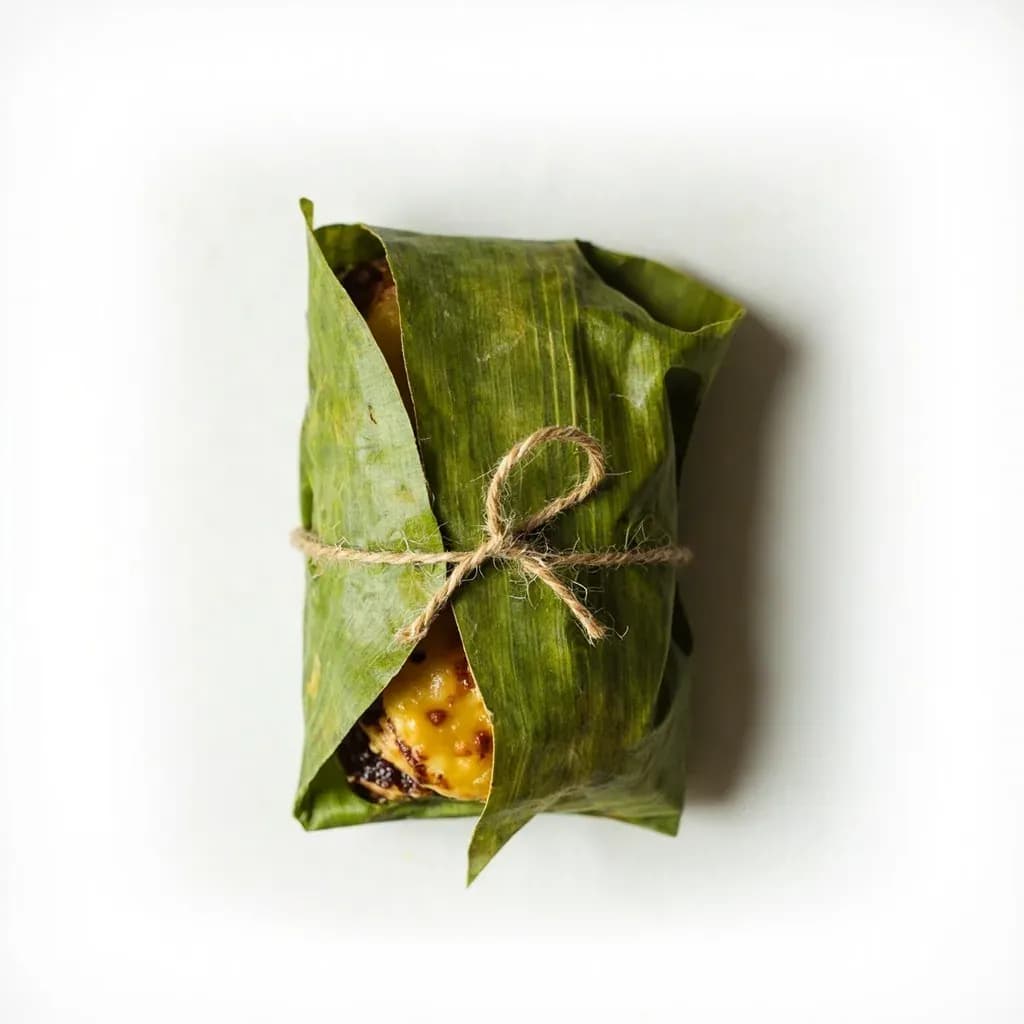
Leaf-wrapping bundles food inside banana, lotus, or corn leaves before steaming or grilling, trapping moisture and infusing a subtle vegetal aroma. It is essential to Southeast Asian dishes like mok and ho, where seasoned fish or custards steam inside the parcels, and to many tamale and packet preparations worldwide. The leaf both flavors the food and acts as a natural, biodegradable cooking vessel.
Leaf-wrapping is a near-universal technique in which a broad, flexible leaf — banana, lotus, taro, grape, pandan, teak, or one of dozens of regional alternatives — is folded around a filling and cooked by steam, grill, or pit heat. The leaf is not just a wrapper: it acts as a sealed micro-environment that traps moisture, distributes gentle heat evenly, and contributes a quiet, region-specific fragrance that no other material can imitate. Because the food cooks in its own condensate rather than against dry metal, leaf-wrapped dishes are reliably moist and aromatic, even when the filling is lean or delicate.
The technique shares its physics with French en papillote and with bamboo-leaf dumplings: a thin, semi-permeable barrier holds steam close to the food while letting excess pressure vent, so proteins set in their juices and aromatics infuse inward rather than escaping into the pot. What distinguishes leaf-wrapping is the wrapper itself. A banana leaf contributes a faint green, resinous note; a lotus leaf lends an earthy, almost mineral aroma; a fig leaf gives a surprising coconut-vanilla perfume. These flavors are subtle, but they are the reason leaf-wrapped fish, sticky rice, and spice pastes taste the way they do, and they are what makes the dish a finished presentation the moment the parcel is cut open at the table.
Banana, lotus, and teak leaves are the most forgiving for beginners because they are large, tough, and heat-tolerant. Smaller, more fragile leaves — grape, pandan, cabbage — are best reserved for compact parcels and short cooking times. The skill is less in the cooking than in the fold: wilt or soak the leaf so it bends without cracking, oil the inner surface, leave a vent for steam, and tie the parcel snugly enough to hold its shape but loosely enough that it does not burst.
- Difficulty
- Medium
Types & varieties
The most widespread version. Large, waxy, heat-tolerant leaves used whole or cut; classic for pasteles, hallacas, pepes, otak-otak, and Thai hor mok.
Chinese dim sum lo mai gai and steamed sticky-rice parcels. Imparts a distinct earthy, mineral aroma; leaves are dried and rehydrated before use.
Hawaiian and broader Polynesian laulau: pork, butterfish, or chicken wrapped in taro leaves (often with ti), then steamed or buried in an imu.
Used for Mexican and Central American tamales; technically a husk rather than a leaf, but the same enclosing-and-steaming logic. Soaked in hot water before folding.
Indonesian and Javanese technique. Young teak or similar broad leaves lend a resinous, smoky note to grated coconut and spice pastes.
Mediterranean dolmas and Middle Eastern stuffed leaves; usually vine or grape leaves preserved in brine. Distinctly tart and herbaceous.
Greek and Aegean use for grilling fish or wrapping fresh cheeses; gives a coconut-vanilla–like fragrance to whatever it encloses.
Southeast Asian sweets (kuih) and grilled fish (ikan panggang); long, blade-like leaves tied into knots or pouches, contributing a sweet grassy perfume.
Used across southern India and Sri Lanka (patra, ada dosa) and in parts of Malaysia and Indonesia; leaves are often layered and color-coded by filling.
Polynesian companion to taro leaf in laulau; also used alone to bundle and steam fish or root vegetables.
How to do it
- 1
Choose and inspect the leaves
Pick leaves large enough to fully enclose the filling with at least 2–3 cm (about 1 in) of overlap on every side. Discard any with tears, large holes, or brown rotting patches; small pinholes can be patched by overlapping a second leaf.
- 2
Clean the leaves
Rinse under cool running water to remove dust, sap, and insects. Pat dry. For banana leaves, a quick wipe with a damp cloth is usually enough; for lotus, grape, or taro, a thorough rinse is essential.
- 3
Soften the leaves
Pass banana leaves briefly over a gas flame or a hot dry pan until they turn bright green and pliable, about 5–10 seconds per side. Soak lotus, grape, and taro leaves in a bowl of hot water for 1–5 minutes until bendable, then pat dry.
- 4
Trim the ribs and shape
Slice off the thick central rib of banana or taro leaves, or shave it flat with a vegetable peeler so the leaf folds without snapping. Cut the leaves to size: long rectangles for parcels, rounds or squares for bundles.
- 5
Oil the inner surface
Brush the side that will face the food with a thin layer of neutral oil or melted fat. This keeps rice grains and fish pastes from welding to the leaf and helps the leaf char cleanly on the grill.
- 6
Place the filling
Lay the filling in the center, leaving a clear border on all sides. For pastes, shape into a log along the long axis so the parcel rolls neatly. For whole fish or chicken, lay the item flat and tuck aromatics underneath.
- 7
Fold the parcel
For a roll (banana-leaf tamale, pepes): fold the long sides over the filling, then roll away from you into a tight cylinder. For a packet (laulau, lo mai gai): bring opposite edges together over the filling, fold down tightly, then tuck the ends under like a burrito.
- 8
Secure the parcel
Tie with kitchen twine, a strip of banana leaf, or a pandan knot. Use two or three ties along the length of a roll to keep it from unwrapping; one tie around the middle is usually enough for a packet.
- 9
Cook by the chosen method
Steam in a covered basket or pot over briskly simmering water: 15–25 minutes for fish parcels, 30–45 minutes for meat parcels, 45–75 minutes for rice-filled parcels. Or grill over medium coals 8–15 minutes per side until the leaf chars at the edges and the filling is firm and hot through. Or bake at 180–200°C / 350–400°F, usually 25–40 minutes for small parcels.
- 10
Rest and open at the table
Let the parcel rest 3–5 minutes out of the steamer or off the grill so the steam inside settles. Cut it open with scissors or a sharp knife; expect a fragrant puff of steam. The leaf is part of the presentation and can be folded back to expose the food.
The logic of the parcel
Every leaf-wrapped dish, from a Sundanese botok to a Brazilian moqueca, works on the same principle: a flexible, water-resistant wrapper is folded around a moist filling and exposed to gentle, even heat. The leaf traps steam, so the food braises in its own condensate rather than against a hot surface. Because steam transfers heat efficiently and the leaf slows evaporation, even a lean piece of fish or a tightly packed rice cake emerges tender and aromatic after a short cook. The leaf also acts as a flavor membrane — it gives up volatile oils to the food, but very slowly, so the dish tastes of itself with a quiet herbal frame around it. Vent the parcel and you lose that internal steam; seal it airtight and pressure can split the leaf; the sweet spot is a snug, loosely tied fold with a small opening for steam to escape.
Choosing and storing leaves
Most large leaves — banana, lotus, teak, taro — are sold fresh, frozen, or dried, depending on the region. Fresh banana leaves keep a week refrigerated if wrapped in plastic; frozen banana leaves stay usable for months and thaw quickly at room temperature. Lotus and taro leaves are often sold dried and must be rehydrated in hot water before use. Grape leaves come preserved in brine and need only a rinse. When you cannot find the traditional leaf, the closest workarounds by behavior are:
- Banana leaf → large collard or cabbage leaves (blanched), or Swiss chard leaves for small parcels
- Lotus leaf → banana leaf, used doubled for extra stiffness
- Grape leaf → large nasturtium leaves, or blanched bok choy leaves for very small parcels
- Pandan leaf → a thin strip of banana leaf, knotted
- Corn husk → banana leaf strips (different flavor, but the same enclosing-and-steaming logic)
Common uses
Tips & pitfalls
- Always wilt or soak leaves before folding. Pass banana leaves briefly over a gas flame or dip them in hot water for 10–15 seconds, otherwise they crack and split along the midrib.
- Trim or score the tough central rib of banana and taro leaves so the leaf lies flat and folds without snapping.
- Brush the inner surface of the leaf with a thin film of oil to stop rice or fish pastes from sticking as they cook and to keep the leaf from welding to the filling on the grill.
- Seal parcels snugly enough to trap steam but loosely enough that internal pressure can vent; a small opening or a loose top tie is safer than a hermetic seal, which can burst the leaf.
- Tie with kitchen twine, strips of banana leaf cut lengthwise and stretched, or natural-fiber string; avoid plastic twine in direct heat, which can melt or give off fumes.
- Open parcels at the table with scissors or a knife. A jet of hot, fragrant steam escapes, and the leaf is part of the presentation, folded back to expose the food.
- Most leaf wrappings are not eaten (banana, lotus, teak, mature taro) because of texture and fiber; grape, fig, cabbage, and very young taro leaves are tender enough to eat.
- Banana leaves freeze well flat between sheets of parchment for months; thaw at room temperature before use, and they will be nearly as pliable as fresh.
- Common mistake: overcooking. Leaf parcels are usually thin and small, so they finish faster than a covered pot of the same filling would — start checking a few minutes before the recipe says.
- Common mistake: stacking raw parcels on top of one another without leaving steam gaps. The bottom layers waterlog, tear, and never get enough heat to cook through.
Good to know
- Also known as
- Leaf-parcel cooking; botok, pepes, or otak-otak style (region-specific technique names)
- Primary leaves used
- Banana, lotus, taro, corn husk, grape, fig, teak, pandan, phrynium/mangrove palm
- Cooking methods
- Steaming, grilling over fire or coals, baking, hot-ash roasting in a pit, boiling
- Typical cooking temperatures
- Steam at 100°C / 212°F; grill at moderate heat so leaves char without burning through; bake at 180–200°C / 350–400°F
- Typical cooking time
- 15–25 minutes for fish parcels, 30–45 minutes for meat parcels, 45–75 minutes for rice-filled parcels
- Leaf preparation
- Wilt banana leaves briefly over a flame; soak lotus, grape, and taro leaves 1–5 minutes in hot water until pliable
- Flavor contribution
- Subtle grassy, tea-like, or floral notes — banana reads as faintly green and resinous, lotus as earthy and herbaceous, fig as coconut-vanilla
- Difficulty
- Easy to intermediate; the real skill is in sealing the parcel so it holds steam without bursting
Also called
Leaf-Wrap Steaming · Steaming in Banana Leaf · En Feuille · Steam Packets
Dishes that rely on it
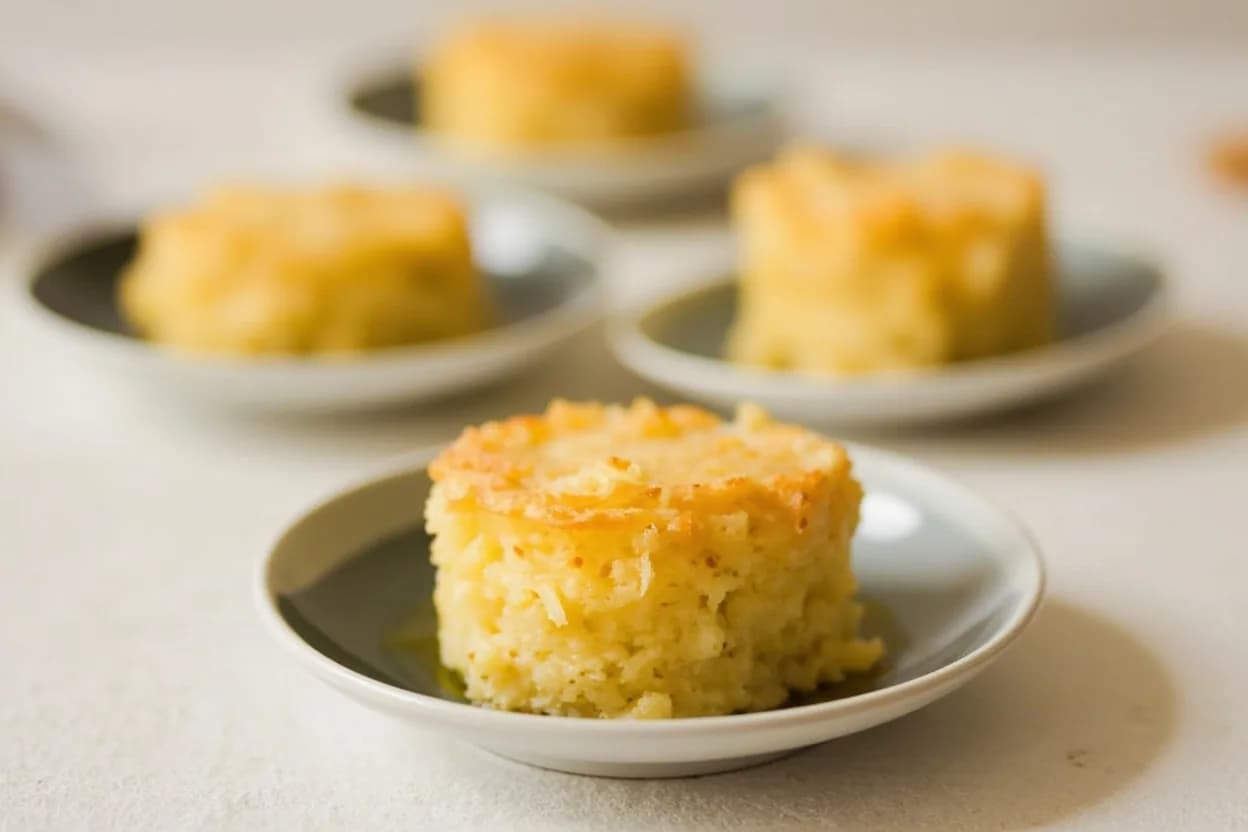
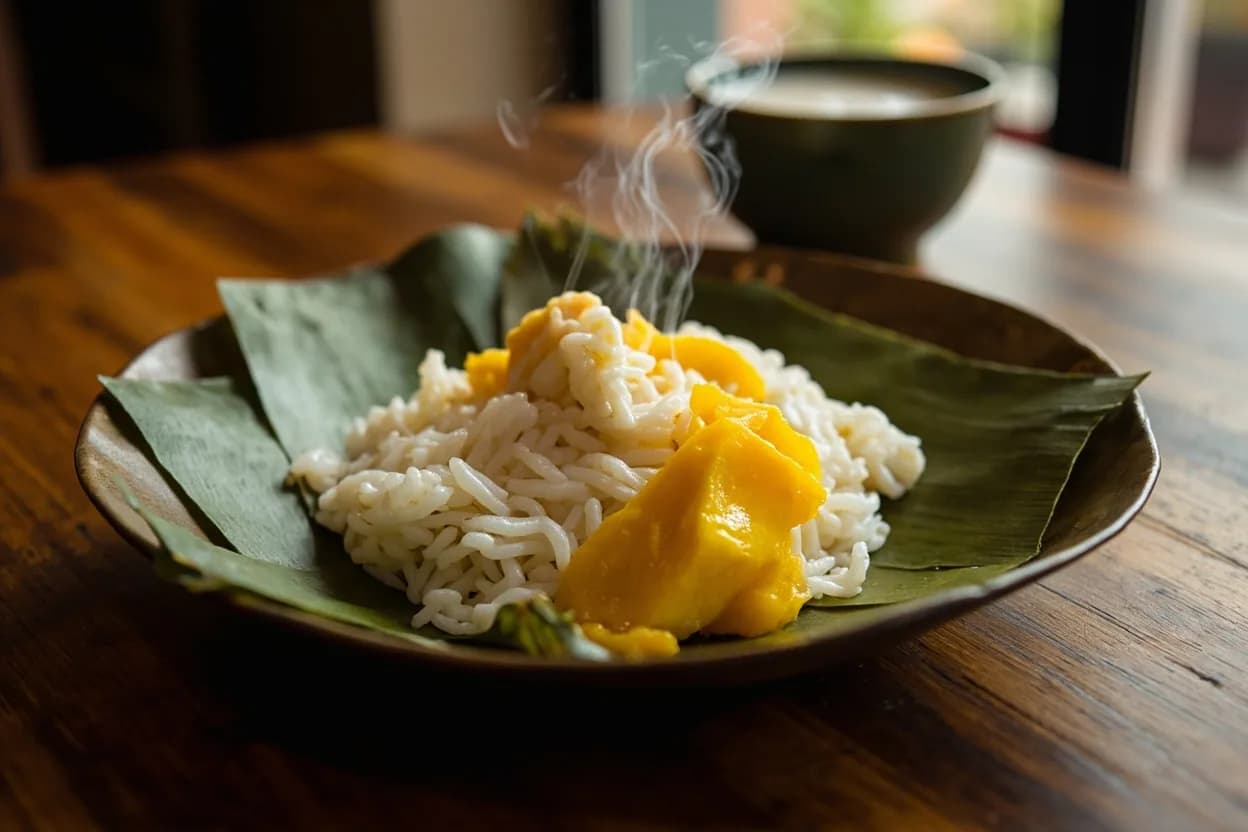
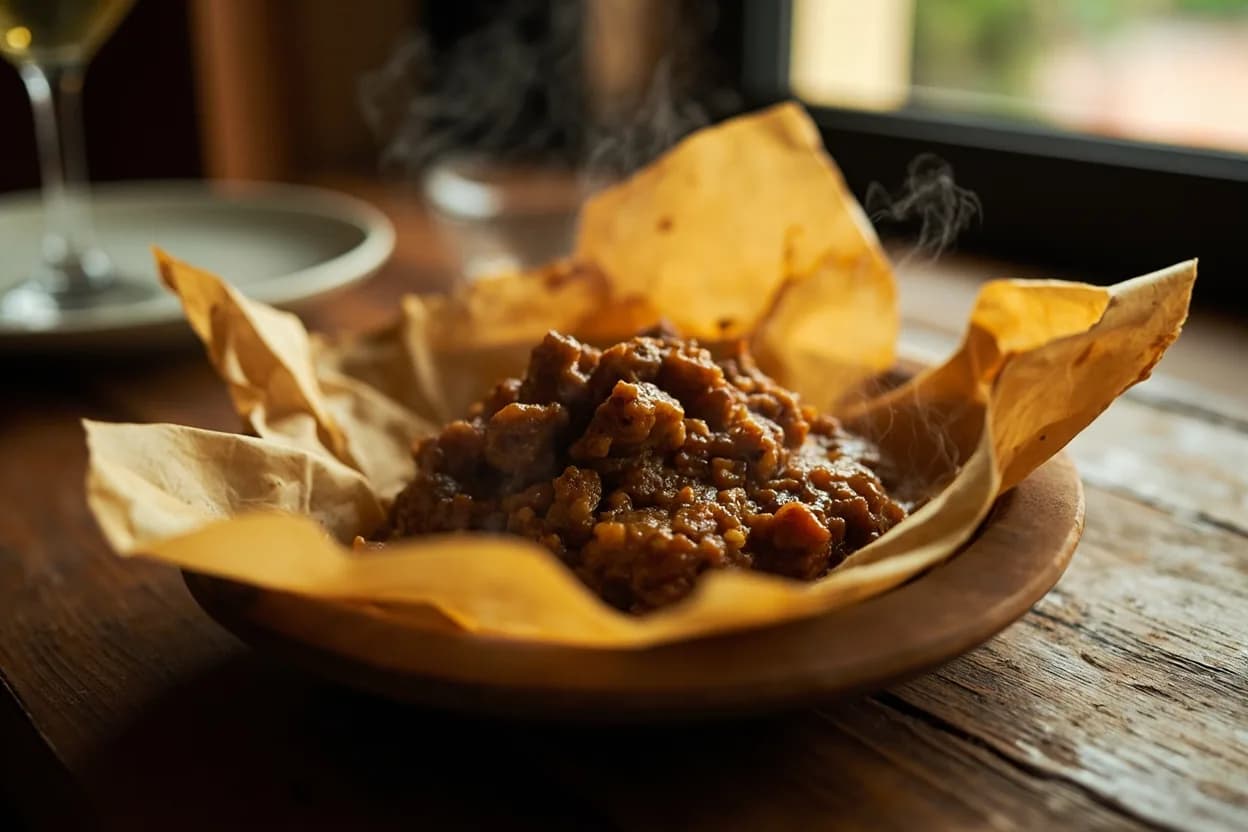
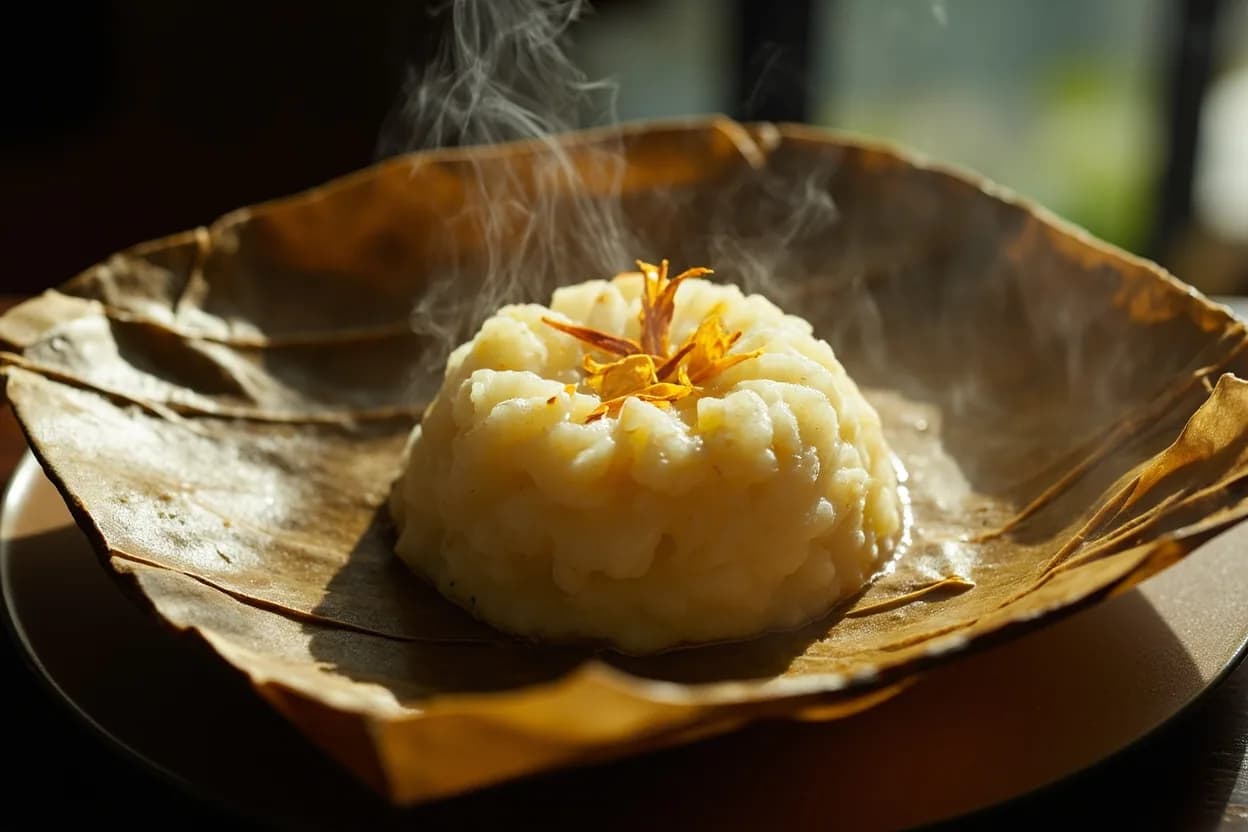
Related

Boil
Cook in vigorously bubbling liquid at full rolling heat

Simmer
Hold liquid at a gentle shimmer for tender, unhurried cooking

Poach
Cook gently in barely-trembling liquid for silky, tender results

Steam
Cook in rising vapor to keep color, nutrients, and shape intact

Blanch
Plunge briefly in boiling water, then shock cold to lock color

Braise
Sear, then cook slow in a little liquid until fall-apart tender

Stew
Simmer bite-sized pieces fully submerged into a rich, unified pot

Sous-Vide
Seal and cook in precise warm water for edge-to-edge doneness