Prep & Assembly
Whipping Aquafaba
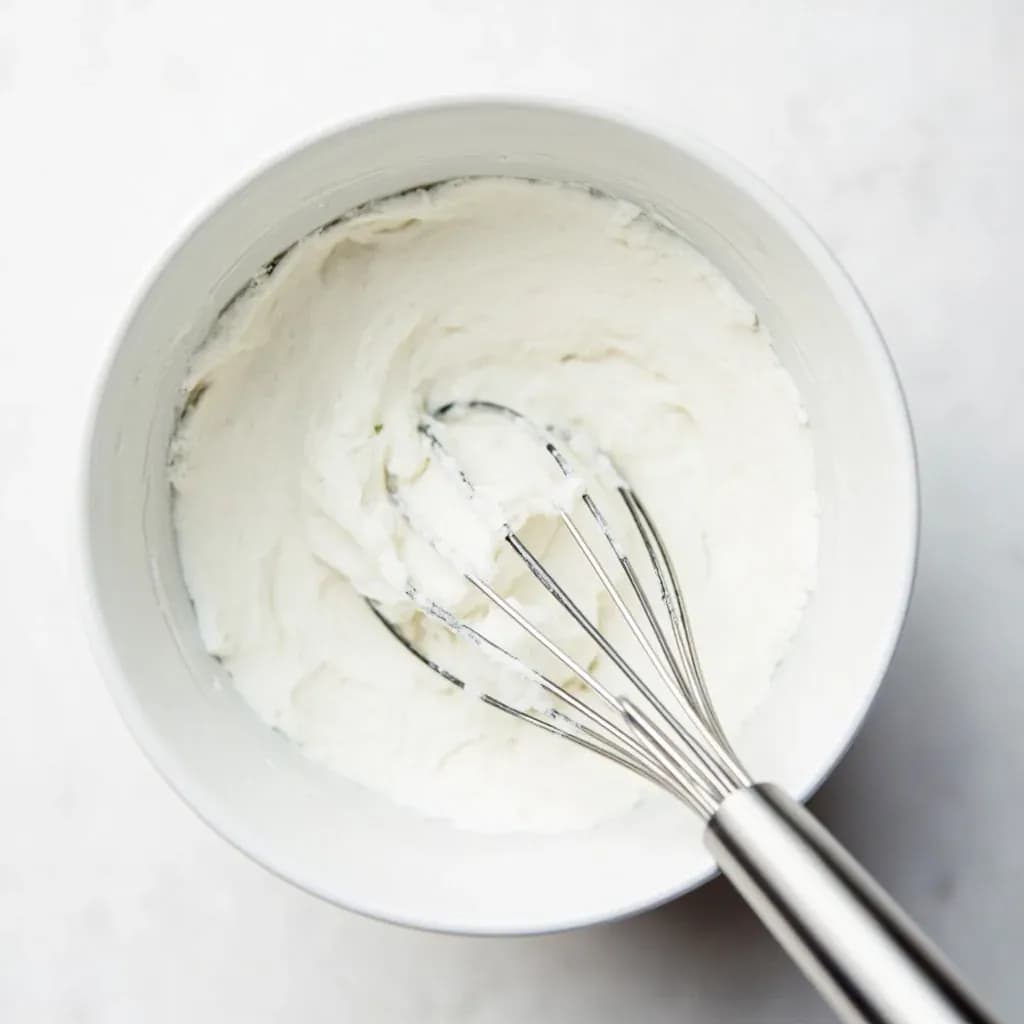
Beating chickpea cooking liquid into a stable vegan foam that mimics whipped egg whites.
Whipping aquafaba beats the viscous liquid from canned or cooked chickpeas until it forms a glossy, stable foam that behaves remarkably like egg-white meringue. The dissolved proteins and starches trap air, making it a plant-based substitute for meringues, mousses, and baked goods. A pinch of cream of tartar and patience help it reach firm peaks.
Whipping aquafaba is the technique of beating the viscous liquid drained from canned or cooked chickpeas into a stable foam that closely mimics whipped egg whites. The liquid — long poured down the drain by home cooks — contains dissolved storage proteins (7S and 11S globulins) and saponins, which together give it foam-building power similar to egg white. That is why a few minutes in a mixer produces a white, glossy foam capable of holding soft, medium, or stiff peaks. The technique matters because it solves a problem that defeated vegan cooks for decades: foaming without eggs. A foam built from aquafaba will pipe into meringue shells, suspend air in a chiffon cake, emulsify a mayonnaise, or stabilize a cocktail sour, and it does so from an ingredient most people throw away. It is not a perfect analog — aquafaba cannot set a custard the way an egg does — but for every application that depends on whipped structure, it is a near-substitute that any cook can master with a clean bowl, a whisk, and a few minutes.
How it behaves depends on three variables: protein concentration, acidity, and temperature. Canned chickpea liquid is already protein-rich enough to foam, but simmering it down by half concentrates those proteins dramatically and yields the firm, glossy peaks that pâtissiers rely on for macarons. A small amount of acid — cream of tartar or lemon juice — tightens the protein network and improves stability, especially over time. Cold aquafaba whips faster and to greater volume, while room-temperature aquafaba produces a finer, silkier texture. Understanding these levers is what separates a weepy foam from one that pipes like a dream.
- Difficulty
- Medium
Types & varieties
Simply beaten to soft or stiff peaks with no sugar; used in vegan mayo, mousses, and as an egg binder.
Whipped to soft peaks, then sugar added gradually; glossy but the least stable of the three — best for pavlovas baked the same day.
Aquafaba warmed with sugar to 140°F / 60°C, then whipped; silky and very stable, ideal for buttercream and piped decorations.
Hot sugar syrup poured into whipping aquafaba; the firmest and glossiest peaks — best for macarons and marshmallows.
Simmered to roughly half volume to concentrate proteins; superior volume and stability, especially for low-sugar foams.
Whipped aquafaba slowly churned with cocoa butter or vegan butter to make an egg-white-butter hybrid used in vegan buttercreams.
How to do it
- 1
Drain and strain the liquid
Pour the contents of a can of unsalted chickpeas into a fine-mesh strainer set over a bowl. Reserve the chickpeas for another use — hummus, pasta, salads, or roasted for snacking. Strain the collected liquid through the mesh once more to remove loose skins and starch granules; these will give a gritty texture if left in. If you see any oil film on the surface, blot it off with a paper towel.
- 2
Measure and chill
Measure what you need (3 tablespoons per large egg white, or scale to recipe). For best volume, chill the aquafaba in the freezer for 20–30 minutes until very cold but not frozen solid. Place the mixing bowl and whisk attachment in the freezer too — a cold metal bowl helps the foam build quickly.
- 3
Begin whipping
Pour the aquafaba into a scrupulously clean, grease-free metal or copper bowl. Start on low speed for 30 seconds to break it up, then increase to medium-high. The liquid will look loose and bubbly at first, then turn pale and uniformly foamy after 1–2 minutes.
- 4
Add acid stabilizer
When the foam is uniformly bubbly (about 2 minutes in), sprinkle in ¼ teaspoon cream of tartar per 3 tablespoons of aquafaba, or ½ teaspoon lemon juice. Continue whipping on high. The foam will turn whiter and more opaque as the acid tightens the protein network.
- 5
Reach soft to medium peaks
After 3–5 minutes total, the mixture should hold soft peaks that curl over at the tip when the whisk is lifted. If your recipe calls for this stage — binders, fold-ins, mayonnaise, mousse bases — use it now.
- 6
Add sugar gradually for meringues
With the mixer on medium, add superfine or caster sugar 1 tablespoon at a time, waiting 15–20 seconds between additions. Use roughly 2 tablespoons sugar per 3 tablespoons aquafaba for a stable meringue. The mixture will loosen then re-firm as each addition dissolves. If using the Swiss method, dissolve the sugar into the aquafaba in a saucepan over low heat to 140°F / 60°C, cool, then whip from cold.
- 7
Whip to stiff, glossy peaks
Return to high speed and continue 1–3 minutes more. Properly whipped aquafaba should hold straight, upright peaks that do not flop, and the surface should look glossy and smooth — never dull or grainy. Rub a pinch between your fingers: it should feel silky. Grit means undissolved sugar; whip another 30 seconds to dissolve it.
- 8
Use immediately or bake
Fold or pipe as the recipe requires. Meringues and pavlovas go straight into the oven; marshmallows and buttercreams are used immediately. Whipped aquafaba begins to weep after 1–2 hours at room temperature, so plan your timing. If making ahead, under-whip slightly and finish the whip right before using.
Why aquafaba foams
The science is the same as for egg white. When you whip, the whisk draws air into the liquid and the dissolved proteins migrate to the air-water interface, where they unfold and link together into a viscoelastic film around each bubble. Saponins, the natural surfactants in legumes, lower the surface tension and help bubbles form in the first place. Acid (cream of tartar, lemon juice) brings the pH closer to the proteins' isoelectric point, which tightens the film and lets the foam hold more water. Starch granules from the canned liquid thicken the continuous phase and slow drainage, which is one reason canned brine is often more reliable for foaming than freshly cooked chickpea water.
The three meringue methods compared
Each method trades stability for ease. French-style is the simplest — whip, then add sugar — and produces a foam good for same-day pavlovas. Swiss-style warms the aquafaba with the sugar first, which dissolves the sugar completely and partially denatures the proteins before whipping; the result is denser, glossier, and pipeable for hours. Italian-style adds a hot sugar syrup mid-whip, which cooks the proteins and sets the foam almost like a cooked meringue; it is the method professional pâtissiers reach for when they need a macaron or marshmallow that holds a sharp peak. For most home cooks, Swiss-style is the best balance of stability and effort.
- French: easiest, softest peaks, use within an hour of whipping
- Swiss: warmed with sugar, glossy and stable, good for buttercream
- Italian: hot syrup, firmest and driest, best for macarons and marshmallows
Reducing aquafaba for stronger foams
The single most useful upgrade is reduction. Pour the strained liquid into a small saucepan and simmer gently — not a rolling boil, which causes foaming over — until the volume drops by half. The result is a slightly cloudy, more viscous liquid with a higher protein-to-water ratio. Reduced aquafaba whips to noticeably greater volume than unreduced, holds stiff peaks longer, and is far more forgiving in low-sugar foams like macarons. Cool it completely before whipping; warm liquid will not foam properly. Freeze any extra reduced aquafaba in ice-cube trays for convenience, portioned to match your typical recipe needs.
Common uses
Tips & pitfalls
- Use a scrupulously clean, grease-free metal or copper bowl — any fat residue, even fingerprints, will prevent peaks from forming. Wipe the bowl with a little vinegar or lemon juice and dry it before you start.
- Cold aquafaba whips faster and to greater volume; chill it 20–30 minutes in the freezer along with the bowl and whisk for best results.
- Add cream of tartar (or a few drops of lemon juice) only once the foam turns foamy, not from the start — adding acid too early can deflate the network before it has built.
- For meringue, add sugar only after soft peaks form, then a tablespoon at a time so it dissolves fully without weighing the foam down. Sugar that never dissolves will make the meringue weep.
- Stop at stiff, glossy peaks. Over-whipping turns the foam grainy, dry, and eventually collapses back into liquid — once you see any clumpiness or curds, you have gone too far.
- Reduce the aquafaba by half on the stovetop if you need it to behave more like fresh egg whites, especially for macarons and other low-sugar foams. The concentrated protein makes an enormous difference.
- Avoid chickpea brine with added salt, oil, or flavorings (some seasoned or 'deli-style' varieties); they sabotage foam formation. Stick to plain canned chickpeas or cook your own from dried beans.
- Bake aquafaba meringues low and slow — about 200°F / 95°C for 1.5 to 2 hours — for a crisp shell with a marshmallow interior, then cool them in the turned-off oven to prevent cracking.
Good to know
- Discovered
- 2014–2015 by vegan software developer Goose Wohlt, who coined the name and launched a community wiki
- Source liquid
- Brine from canned chickpeas, or cooking water from dried/soaked chickpeas
- Standard yield
- A 15-oz (425 g) can yields roughly ½–¾ cup (120–180 ml) aquafaba
- Egg-white equivalent
- About 3 tablespoons (45 ml) aquafaba ≈ 1 large egg white
- Key stabilizers
- Residual chickpea proteins (globulins, albumins) and saponins, plus dissolved starches
- Acid helpers
- Cream of tartar (¼ tsp / 1 g per 3 Tbsp) or ½ tsp lemon juice — improves stability and gloss
- Whipping time
- 3–5 minutes on medium-high in a stand mixer; up to 8–10 minutes by hand mixer
- Optimal temperature
- Cold (40°F / 4°C) whips faster and to higher volume; room temperature gives finer texture
- Reduction trick
- Simmer to half volume to concentrate proteins; dramatically improves meringue and macaron structure
- Storage (unwhipped)
- Refrigerated 3–4 days in a sealed jar; frozen up to 3 months — ice-cube trays portion into ~2 Tbsp cubes
Also called
Aquafaba Meringue · Chickpea-Water Whipping
Related

Whisk
Beat ingredients smooth and aerated with a looping wire motion

Sift
Pass dry ingredients through mesh to aerate and remove lumps

Strain
Pour through mesh to separate solids from liquid for a smooth result

Filter
Pass liquid through fine material to clarify out the smallest particles

Rice
Press cooked potatoes through small holes for fluffy, lump-free texture

Mash
Crush soft cooked food into a rustic, creamy purée

Grind
Crush food into a coarse to fine texture, from spices to meat

Grate
Shred food into fine bits against a sharp-toothed surface