Transform & Preserve
Wort Aeration / Oxygenation
Dissolving oxygen into cooled wort so yeast can multiply healthily before fermentation.
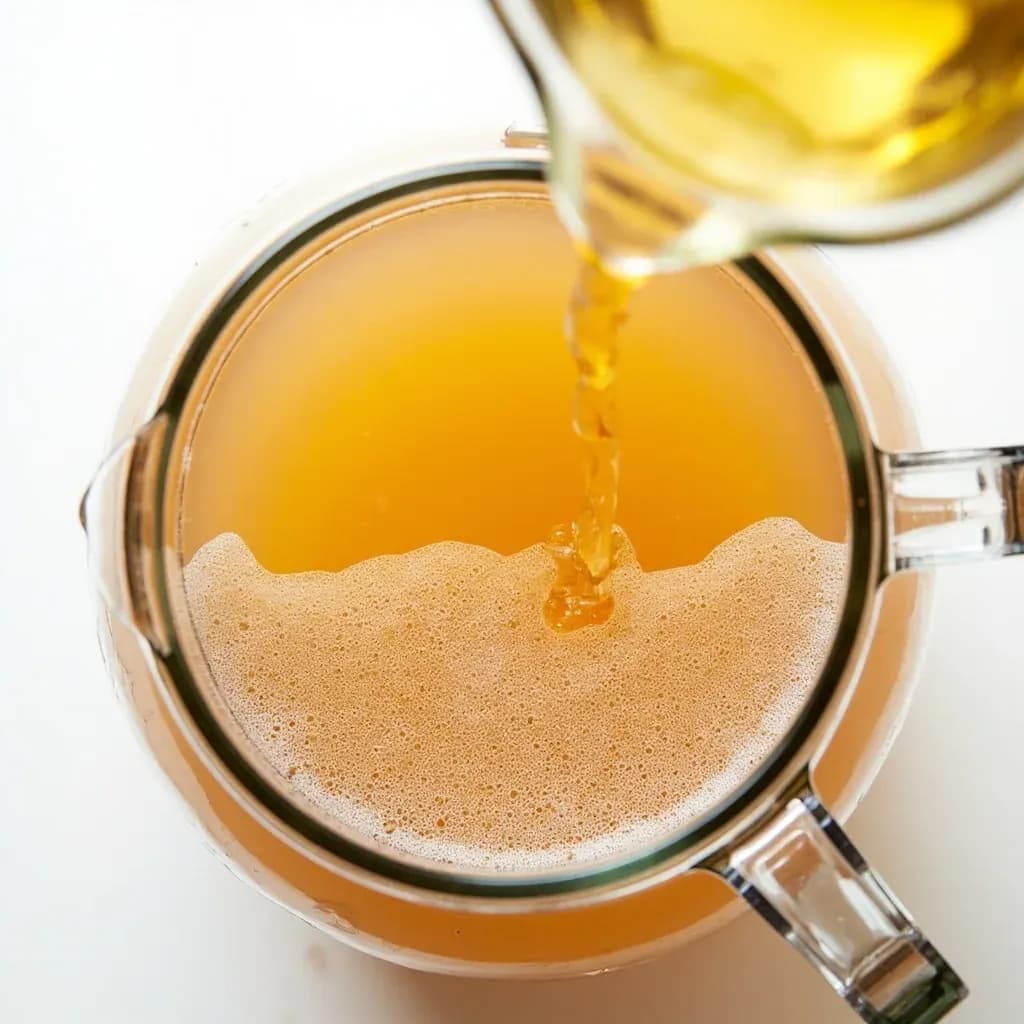
Wort aeration introduces oxygen into cooled, unfermented beer wort by shaking, stirring, or injecting air or pure oxygen before pitching yeast. The dissolved oxygen lets yeast build healthy cell membranes and reproduce vigorously, giving a clean, complete fermentation. Too little oxygen causes sluggish, stressed yeast and off-flavors.
Wort aeration — more precisely, wort oxygenation — is the deliberate dissolution of molecular oxygen into cooled wort in the narrow window just before yeast is pitched. It is the single pre-fermentation step that decides whether fermentation starts cleanly or stumbles from the first twelve hours onward. Yeast is unusual among fermentation organisms: although it ferments anaerobically once growth begins, in its lag phase it still needs dissolved O2 to synthesize sterols and unsaturated fatty acids, the lipids it inserts into the membranes of daughter cells. Without enough of those building blocks, new cells are fragile, growth is sluggish, and the wort can stall at high gravity or finish with diacetyl and other byproducts that should have been reabsorbed.
The chemistry is unforgiving. Oxygen solubility in water plummets as temperature rises, so hot or even warm wort cannot hold meaningful dissolved oxygen — which is why aeration must wait until the wort is at or near pitching temperature. It is also a one-shot operation: once yeast is pitched and fermentation is visibly active (typically within 12–24 hours), additional oxygen does harm rather than good, oxidizing hop compounds and malt-derived melanoidins into cardboard, sherry, and papery off-flavors. The brewer's job is to put the right amount of O2 into the wort, in the right form, at exactly the right moment — and then to keep oxygen out for the remainder of the run.
- Difficulty
- Medium
Types & varieties
Seal the carboy or bucket and shake vigorously for 1–2 minutes; the simplest zero-cost method, fine for session-strength ales.
Pouring cooled wort from height to entrain air; imprecise and insufficient for lagers or high-gravity worts.
Cheap and common; relies on ambient air so is slower than pure O2, with sterility dependent on a fine filter stone.
Medical-grade O2 tank, 0–3 L/min flowmeter regulator, and 2 µm stainless or ceramic sintered stone; hits target ppm in under a minute.
O2 injected into the wort stream between kettle/chiller and fermenter via a Venturi fitting or injection port; the production-brewery standard.
A sterile stir bar in an open fermenter or yeast-pitching vessel draws in surface oxygen; gentle, low-foam.
Counterflow or plate chiller with an O2 port upstream of the fermenter, combining cooling and aeration in one pass.
How to do it
- 1
Cool the wort to fermentation temperature
Chill the wort to the yeast strain's pitching temperature — typically 18–24 °C (64–75 °F) for ales, 7–13 °C (45–55 °F) for lagers. Oxygen solubility is far higher in cold wort, and hot or warm wort cannot hold meaningful dissolved oxygen. This is why aeration comes after cooling, not during the boil.
- 2
Sanitize every surface that will contact the wort
Sanitize the fermenter, lid, airlock, transfer tubing, airstone or diffusion stone, and the nozzle of any O2 regulator. A no-rinse sanitizer such as Star San is standard. Aeration equipment is a direct route for wild yeast and bacteria into cold, oxygen-rich wort, and is the most common contamination vector in an otherwise clean process.
- 3
Transfer wort into the fermenter
Move wort from kettle or chiller into the fermenter. If you intend to rely on splashing, pour from as much height as practical; if you are using a stone or in-line injection, transfer quietly to minimize foaming — you will add oxygen deliberately in the next step.
- 4
Diffuse oxygen into the wort
Lower the sanitized stone to within a few centimeters of the bottom of the fermenter and run pure O2 for 30–60 seconds at roughly 1 L/min, or an aquarium pump for 5–15 minutes. Alternatives: seal the fermenter and shake hard for 1–2 minutes, or inject O2 in-line as the wort passes through the chiller. The goal is small bubbles and a long contact path, not a violent boil of foam.
- 5
Verify dissolved oxygen if possible
If a DO meter is available, sample the wort and confirm 8–10 ppm for standard ales or 10–15+ ppm for lagers and high-gravity worts. Add more O2 if you are short of target. If you do not have a meter, follow the timing above and trust the method.
- 6
Pitch the yeast and seal the fermenter
Pitch the yeast slurry or dry yeast directly into the freshly aerated wort, then seal with a sanitized airlock or blow-off tube. From this point forward, keep oxygen out — additional exposure risks oxidation, staling, and the cardboard and sherry notes that come with it.
Why oxygen matters to yeast — and only briefly
Most fermentation-related microbes either tolerate oxygen without using it for biosynthesis or are actively harmed by exposure. Saccharomyces is unusual: it is a facultative anaerobe that nonetheless requires O2 for the first rounds of cell division. During the lag phase, before the wort is fully anaerobic, the cell uses oxygen to manufacture ergosterol (its membrane sterol) and a suite of unsaturated fatty acids. These lipids are inserted into new membrane as daughter cells bud off, and without them the new cells are leaky, weak, and prone to dying mid-fermentation. That is what an under-aerated pitch looks like in practice — a long lag, a slow start, and a fermentation that peters out before terminal gravity. Once yeast has built up its reserves of sterols and unsaturated fatty acids, additional oxygen becomes a liability rather than a nutrient, oxidizing hop alpha acids into off-flavor compounds and turning malt-derived melanoidins stale.
- Sterols and UFAs are built only in the presence of O2 — they cannot be sourced from wort.
- Under-aerated worts commonly show diacetyl retention, elevated final gravity, and sulfurous off-aromas.
- Over-aeration is rare in practice but can suppress ester formation in some clean ale strains.
Reading the equipment ladder
Methods line up neatly from least to most controllable. Shaking and splashing are free and adequate for pale ales under roughly 1.060 original gravity. An aquarium pump and a fine-pore airstone buys reproducibility on a budget but is limited by the 21% oxygen content of air; expect 5–15 minutes of diffusion to reach 8–10 ppm in a 19 L batch. Pure O2 with a stainless or ceramic sintered stone is the next step up and the default in any brewery that cares about consistency. In-line injection through a Venturi fitting is the same idea, just integrated into the wort transfer. The shared rule: finer bubbles, colder wort, and a longer contact path all raise the amount of O2 that ends up dissolved rather than escaping as foam.
- Stone porosity matters: 0.5 µm stones for air, 2 µm stones for O2 — finer pores make smaller bubbles that dissolve faster.
- A carboy shaken for 90 seconds typically lands near 8 ppm — surprisingly close to the pure-O2 target.
- A DO meter is the only way to confirm any of the above; visual foam is gas that has not yet gone into solution.
Common uses
Tips & pitfalls
- Cool the wort fully before aerating; trying to oxygenate hot or even warm wort is wasted effort, because most of the O2 simply flashes off as the wort continues to cool.
- Use a 0.5 µm sterile-filter airstone with an aquarium pump; coarser stones push oxygen in but also push wild microbes in alongside it.
- Sanitize stones, tubing, and the nozzle of any O2 regulator before every use — a quick Star San dunk on the stone end is enough — because this is the most common contamination point in a clean brewery.
- Thirty to sixty seconds of pure O2 is enough for a standard 19 L (5 gal) batch; once the target ppm is reached, more oxygen is not better, and from 12–24 hours after pitch it is actively harmful.
- For lagers and high-gravity worts above roughly 1.060, oxygenate in two doses — at pitch and again 6–10 hours into fermentation if signs of a stuck start appear — rather than trying to load all the O2 in at once.
- Do not trust foam and bubbles as a measurement; only a dissolved-oxygen meter confirms ppm, and the eye sees only gas that has not yet gone into solution.
- A pure-O2 setup with a stainless diffusion stone is the single most cost-effective upgrade for homebrewers who regularly brew above 1.060; the cost is recovered in fewer stuck or sluggish fermentations.
- Treat mead, wine, and cider more cautiously than beer; these fermentations are far less tolerant of oxidative handling, and excess O2 produces volatile acidity and other oxidation faults rather than the healthy start you would see in beer wort.
Good to know
- Technique type
- Pre-fermentation brewing step; dissolves O2 into cooled wort immediately before yeast pitch.
- Yeast's oxygen need
- O2 is required during the lag phase to build sterols and unsaturated fatty acids for healthy cell membranes.
- Timing window
- Once, at pitch — after wort is cooled to fermentation temperature, before yeast is added.
- Temperature
- Cool to 18–24 °C (64–75 °F) for ales or 7–13 °C (45–55 °F) for lagers; warmer wort cannot hold DO.
- Target dissolved oxygen (ales)
- ~8–10 ppm at pitch.
- Target dissolved oxygen (lagers / high-gravity)
- ~10–15+ ppm; bigger worts need more O2 per cell.
- Air vs. pure O2
- Ambient air is ~21% O2; pure O2 delivers roughly 5× the oxygen in the same contact time.
- Sanitation
- Stones, tubing, and regulators must be sanitized — aeration is a leading contamination vector.
- Measurement
- Only a dissolved-oxygen meter confirms ppm; bubbles and foam are gas that has not yet dissolved.
Also called
Wort Oxygenation · Aerating Wort
Related

Confit
Cook slowly submerged in fat for silky tenderness and keeping

Cure
Draw out moisture with salt and time to preserve and concentrate

Pickle
Steep in acidic brine for bright, tangy, crunchy preservation

Ferment
Let friendly microbes transform food into tangy, complex flavor

Marinate
Soak in a seasoned mix to flavor and tenderize before cooking

Brine
Soak in salt water so meat stays juicy and seasoned throughout

Dehydrate
Slowly dry out moisture to concentrate flavor and extend shelf life

Cold-Smoke
Perfume cured food with smoke without cooking it through