Prep & Assembly
Aeration (Oxygenation)
Beating air into a mixture, or exposing liquids to oxygen, to add lightness or develop flavor.
Aeration incorporates air into foods, as when whipping cream, beating egg whites, or creaming butter and sugar to make batters rise and feel light. It also covers oxygenating liquids, such as decanting wine or splashing wort during brewing to help yeast thrive. The trapped air or dissolved oxygen changes texture, volume, and in fermentation, microbial activity.
Aeration is less a single technique than a family of related actions that share one principle: introducing air, or letting oxygen reach a food, to change its texture, volume, or flavor. In the kitchen it takes many forms — whisking egg whites, sifting flour, creaming butter, laminating dough, decanting wine, blooming coffee — but every one of them relies on either trapping gas inside a structure or exposing a liquid to the air around it.
The most useful way to think about aeration is by its goal. For lightness, you build a foam or open structure: egg-white proteins unwind around air bubbles, butterfat globules capture air when creamed, or steam lifts apart the butter layers in croissant dough. For flavor, you let oxygen reach a liquid: young red wines soften and open up in a decanter, freshly roasted coffee degasses during the bloom, and rested batters even out as trapped bubbles migrate. The two goals call for different intensity, timing, and tools, but the underlying mechanism is the same — gas meeting a food and changing it.
Aeration is deceptively simple. The motions are easy; the results are not, because every foam depends on a delicate balance of fat, protein, temperature, and time. A trace of yolk in the whites, butter that's a few degrees too warm, or sugar added too quickly can mean the difference between a glossy meringue and a weeping puddle. Watch the texture rather than the clock, and stop at the first moment the structure holds its target shape.
- Difficulty
- Easy
Types & varieties
Whisking or machine-beating eggs, cream, or batters to trap air bubbles in a protein or fat network.
Passing flour, cocoa, or powdered sugar through a fine-mesh sieve to break up lumps and lighten the particles.
Folding butter into dough in thin layers (croissant, puff pastry) so that steam lifts the layers apart during baking.
Beating fat and sugar together until pale and fluffy; sugar crystals cut into butter, creating tiny air pockets that contribute to leavening along with steam and any chemical agents.
Transferring wine or coffee from one vessel to another to expose the liquid to oxygen and release aromas.
Pre-wetting coffee grounds or tea leaves with a small amount of hot water so trapped CO2 escapes and extraction begins evenly.
Gentle combination of aerated components (such as folded meringue into a base) used to preserve the air already incorporated.
How to do it
- 1
Decide the goal
Clarify whether you are aerating for lightness (cake foam, whipped cream, sifted flour) or for flavor and aroma (decanted wine, bloomed coffee, rested batter). The goal dictates the tool, the intensity of agitation, and how long you continue.
- 2
Prepare the ingredients and equipment
Bring eggs, butter, and cream to the right temperature. Chill the bowl and whisk if you are whipping cream or egg whites in a warm kitchen. Ensure every surface that touches the foam is free of fat, water, and detergent residue.
- 3
Build the foam or emulsion
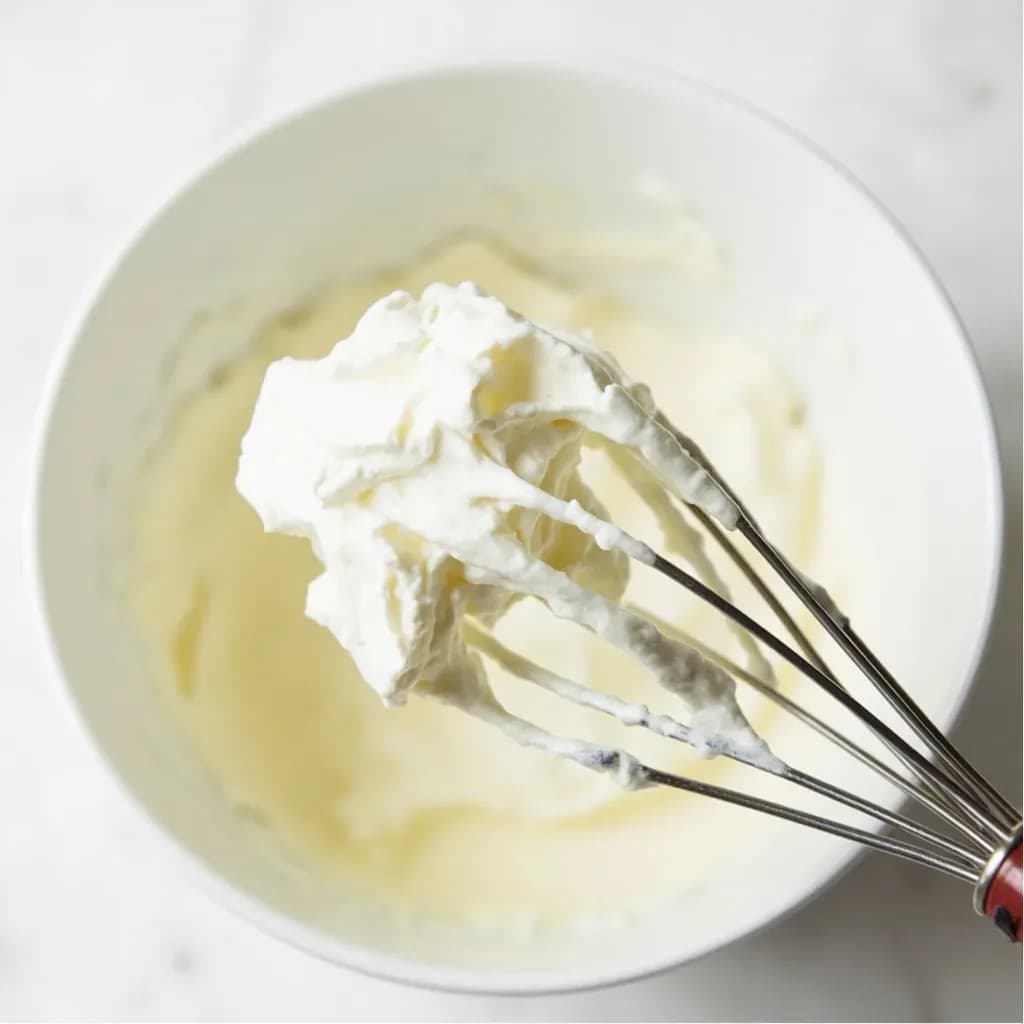
Begin at a lower speed to disperse the ingredient, then increase to medium or high. For egg whites, start foamy before adding sugar; for whipped cream, stop when the trails in the cream just hold. Watch the texture, not the clock.
- 4
Test for the right stage
Egg whites: soft peaks curl over, medium peaks bend slightly, stiff peaks stand straight. Whipped cream: the whisk leaves clear trails and the surface holds soft mounds. Sifted flour: falls in a fine, even shower, not clumps. Decanted wine: aromas lift from the glass, not just from the bottle.
- 5
Stop at the right moment
Over-aeration is the most common failure. Stiff egg whites become dry and collapse when folded; cream turns grainy and then to butter; sifted flour gets re-compacted if handled too much. Pull the mixture at the first moment it holds its target texture.
- 6
Combine and bake or serve promptly
Fold aerated components gently into heavier bases. Bake foam cakes as soon as the batter is in the pan; serve whipped cream and decanted wine soon after, because trapped air and dissolved oxygen both dissipate with time.
- 7
Aerate liquids for flavor
For wine, pour slowly from bottle to decanter and let rest. For coffee, pour a small amount of water first, wait for the bed of grounds to bubble and settle, then continue the brew. For tea, a brief steep in a shallow vessel speeds oxidation and brightens the cup.
Reading foam stages
Most light-textured dishes depend on catching the foam at exactly the right stage. Pull too early and the structure collapses during folding or baking; pull too late and the foam breaks down, weeps liquid, or turns grainy. The classic reference points below let you judge by eye and feel rather than by timer.
- Egg whites, soft peaks: the foam curls over when the whisk is lifted. Use for delicate folding, as in a soufflé base.
- Egg whites, medium peaks: the tip bends slightly upright. A good stage for most French meringues and a génoise.
- Egg whites, stiff peaks: the tip stands straight and the surface looks glossy. Best for Italian and Swiss meringues, and for pavlovas where the structure must hold shape in the oven.
- Whipped cream: stop when the whisk leaves clear trails that briefly hold their shape. Past this point the cream quickly goes grainy and then to butter.
- Sifted flour or cocoa: falls in a fine, even shower, not clumps. Re-sift if you see lumps — they create dense pockets in the finished cake.
- Creamed butter and sugar: pale yellow, almost white, and fluffy enough that a ribbon of the mixture leaves a brief trail on the surface before sinking back in.
Aerating liquids for flavor
When the goal is aroma and taste rather than texture, the technique is gentler and the stakes are lower. Most young, tannic, or freshly roasted products benefit from a controlled dose of oxygen; very old or delicate ones do not.
- Decant young red wines — Barolo, young Bordeaux, tannic Rhône blends, Brunello — 15–60 minutes before serving. Pour slowly down the side of the decanter to minimize splashing and excess oxidation.
- Be cautious with very old wines, anything more than 15–20 years old, unless there is heavy sediment to leave behind. Their fruit is fragile and they oxidize quickly once exposed.
- Bloom coffee by pouring just enough hot water to saturate the grounds (roughly twice the weight of the coffee). Wait 30–45 seconds for the bed to bubble and settle, then continue the pour.
- For tea, a brief steep in a shallow, wide vessel speeds oxidation of the leaf and brightens the cup. Use this for black and oolong; for green and white teas, keep the leaf submerged but undisturbed.
- Whisk sabayon or warm egg yolks over a bain-marie to fold air into a sauce; the trapped bubbles lighten the texture and carry the aroma to the palate.
Common uses
Tips & pitfalls
- Bring eggs and butter to room temperature before whipping most batters; cold fat resists aeration and cold whites deflate easily. Whipped cream and some egg-white foams are the exceptions — they whip best when the bowl and cream are well chilled.
- For egg whites, use a scrupulously clean bowl and whisk with no trace of yolk or grease; even a thin film of fat will prevent the foam from reaching stiff peaks. Wipe the bowl with a little white vinegar or lemon juice and rinse, then dry thoroughly.
- Stop whipping the moment peaks hold their shape. Over-whipped cream separates first into a grainy texture, then into butter and buttermilk; over-whipped egg whites turn dry, lose their gloss, and weep liquid in the oven.
- Sift measured flour and cocoa after measuring if the recipe depends on a light texture. Scooping straight from the bag compacts the powder and can throw off hydration by 10–20%, enough to make a sponge dense.
- When folding a foam into a batter, cut down through the center, sweep up along the side, and rotate the bowl a quarter turn between strokes. Never stir in a circle — you will deflate the air you just built.
- Decant young, tannic reds 15–60 minutes before serving; do not decant very old wines that have thrown a sediment but little fruit, as they oxidize quickly and lose their remaining aroma.
- Let coffee bloom 30–45 seconds with a small amount of water before the rest of the pour, to release CO2 and improve even extraction across the bed of grounds.
- For laminated doughs, keep the butter pliable but cold — around 60°F / 15°C. If it melts into the dough, the distinct air layers are lost and the bake will not rise into separate flakes.
Good to know
- Definition
- Incorporating air into a mixture, or exposing a food or liquid to oxygen, to lighten texture, build volume, or release volatile aromas.
- Primary mechanisms
- Mechanical agitation (whisking, beating, folding), sifting of dry ingredients, lamination of doughs, and decanting or pouring of liquids.
- Core tools
- Whisk, hand or stand mixer with whisk attachment, fine-mesh sieve, rolling pin (for dough lamination), decanter, wine aerator.
- Where it matters most
- Egg-foam cakes (sponge, génoise, meringue), whipped cream, creamed butter and sugar, sifted flour and cocoa, laminated doughs, decanted wine, freshly brewed coffee and tea.
- Typical time
- Seconds for sifting a cup of flour; several minutes for whipping egg whites or cream to stiff peaks; 15–60 minutes for decanting a young red wine.
- Difficulty
- Low to moderate. The motions are simple, but results are highly sensitive to fat contamination, temperature, and over-mixing.
- Common pitfalls
- Greasy bowls preventing foam, over-beaten cream that turns to butter, sifted flour that gets re-compacted by over-handling, and over-aerated aged wine that loses fruit.
- Not the same as
- Leavening with chemical or biological agents (baking powder, yeast) generates gas inside the food; aeration incorporates air from outside, though the two often work together.
Also called
Oxygenation · Whipping
Dishes that rely on it
Related

Whisk
Beat ingredients smooth and aerated with a looping wire motion

Sift
Pass dry ingredients through mesh to aerate and remove lumps

Strain
Pour through mesh to separate solids from liquid for a smooth result

Filter
Pass liquid through fine material to clarify out the smallest particles

Rice
Press cooked potatoes through small holes for fluffy, lump-free texture

Mash
Crush soft cooked food into a rustic, creamy purée

Grind
Crush food into a coarse to fine texture, from spices to meat

Grate
Shred food into fine bits against a sharp-toothed surface