Prep & Assembly
Decanting
Pouring a liquid off its sediment to clarify it and, for wine, let it aerate.
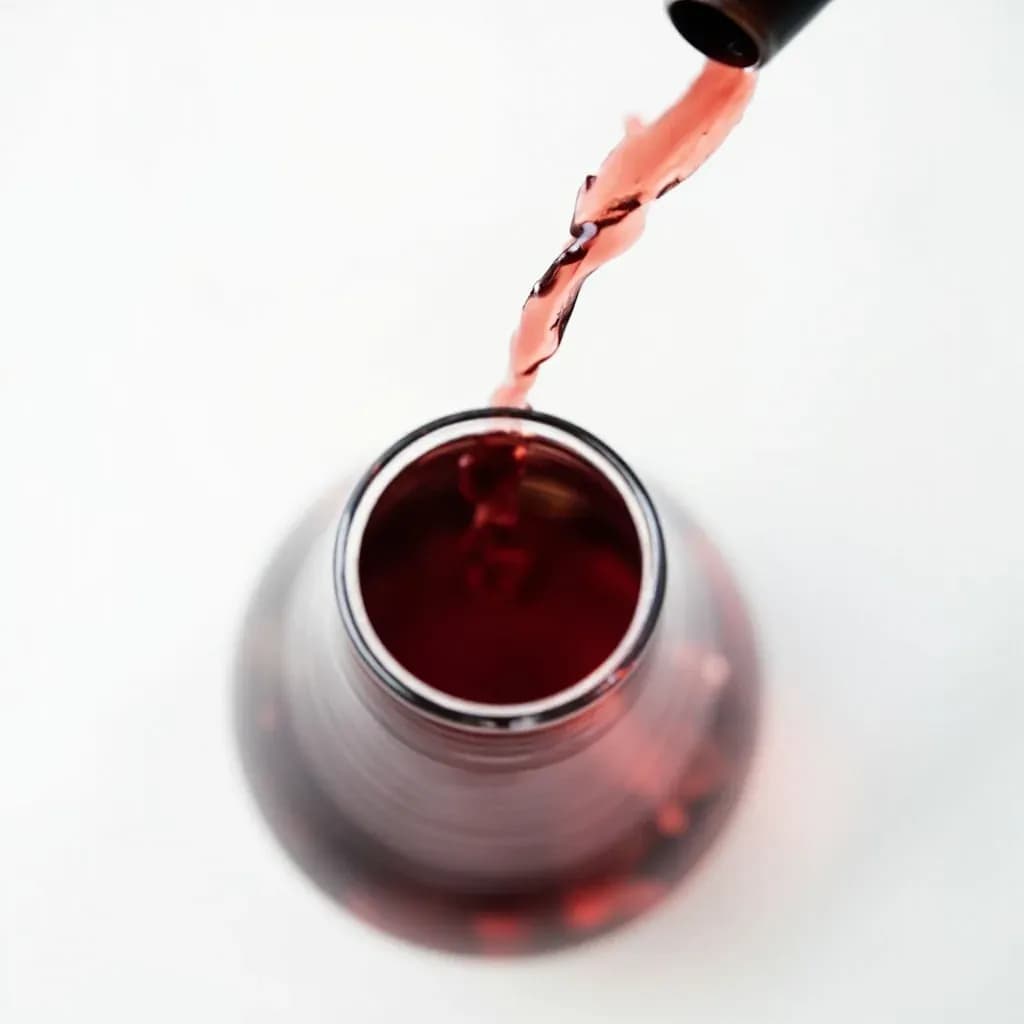
Decanting carefully pours a liquid from one vessel into another, leaving sediment behind in the original container. For wine it both separates aged wine from its deposits and exposes it to air to soften tannins and open up aroma. The same gentle pour is used to clarify stocks, oils, and other liquids that have settled.
Decanting is one of those techniques whose name changes meaning depending on which side of the kitchen you're standing on. In the dining room it almost always refers to wine — pouring a bottle into a glass vessel so the liquid can be separated from sediment and, in the case of young reds, exposed to enough air to soften the tannins and open the aromatics. In the kitchen, the same word describes the simple gravity pour that separates a clear liquid from the solids that have settled at the bottom of a pot — stocks lifted off their sediment, rendered fat poured off from cracklings, custards strained of cooked egg, and clarified butter separated from its milk solids.
The principle is identical in every case: let gravity do the work, then pour carefully and stop before the sediment is disturbed. What changes is the equipment and the urgency. A wide-bellied wine decanter is shaped to maximize contact with air; a narrow-necked ship's decanter is engineered to minimize it. A stock pot is decanted cold, after the fat has solidified into a removable lid. A fragile 30-year-old Burgundy is decanted in seconds, with a candle or flashlight behind the bottle so the pourer can see exactly when to stop.
Done well, decanting improves clarity and flavor without anyone noticing the technique was used at all. Done badly, it loses you a bottle of wine or a pot of carefully built consommé.
- Difficulty
- Easy
Types & varieties
The classic use — separating sediment and aerating tannic reds such as Cabernet Sauvignon, Bordeaux blends, Barolo, and aged Burgundy.
Rarely done for sediment; sometimes used briefly to remove a crumbly cork or to soften an oaky Chardonnay.
Port throws a heavy crusty sediment; decanted just before service and consumed within 1–3 days to avoid over-oxidation.
Cooling the liquid completely so fat solidifies on top and solids sink, then pouring off the clear middle layer.
Ghee-style clarification: letting milk solids settle, then pouring the clear golden fat into a clean vessel.
Pouring warmed custard, lemon curd, or anglaise through a fine sieve to remove bits of cooked egg or undissolved gelatin.
Using a funnel or careful pour to divide immiscible liquids — useful when making infused oils or reductions where clarity matters.
How to do it
- 1
Prepare the bottle (wine)
Stand the bottle upright 24–48 hours before decanting so any sediment sinks to the bottom. Gather a clean decanter, a light source (candle, phone flashlight, or low-angle lamp), and optionally a decanting funnel fitted with a small sieve or a piece of muslin.
- 2
Open without disturbing sediment
Cut the foil cleanly below the lip. Insert the corkscrew straight in, twist, and lift the cork slowly without tilting the bottle. Wipe the neck with a clean cloth if any crusty sediment is visible at the rim.
- 3
Pour steadily into the decanter
Hold the bottle at a slight angle over the decanter and pour in a slow, continuous stream. Place a candle or flashlight behind the lower shoulder of the bottle so you can watch the sediment line as it approaches the neck.
- 4
Stop at the first sign of sediment
The moment you see cloudy liquid or particles reaching the shoulder, ease off and stop pouring. A small amount of wine will remain in the bottle — that is the trade for a clean decanter. Top the decanter with a stopper if the wine will sit more than a few minutes.
- 5
Let the wine rest (optional)
For young tannic reds, let the decanted wine sit 15–30 minutes — longer for highly structured wines — so oxygen can soften the tannins and lift the aromatics. For older, mature wines, serve within minutes of decanting.
- 6
Decant stocks and broths
Cool the stock completely, ideally overnight in the refrigerator, so the fat solidifies into a removable lid on top and the solids settle to the bottom. Lift or skim off the fat cap. Hold the pot steady and pour the clear middle layer into a clean saucepan or storage container, stopping before the cloudy sediment at the bottom is disturbed. For restaurant-clear consommé, finish by straining through a chinois lined with several layers of cheesecloth.
- 7
Clean the decanter immediately
Rinse with hot water as soon as the wine is gone; tannins polymerize on glass and become very hard to remove once dried. A handful of coarse salt or rice swirled with warm water helps scrub residue from narrow-necked vessels where a brush won't reach.
Choosing the right decanter
The shape of the vessel is not decorative — it controls how aggressively the liquid meets air.
- Wide-base 'duck' or 'swan' decanters spread a full bottle into a broad, shallow layer. Best for young, tannic reds that benefit from heavy aeration.
- Narrow-necked ship's decanters keep the wine in a deep column with minimal surface area. Use these for fragile old reds where oxidation is the enemy.
- Bottle-shaped decanters are essentially a second bottle with a stopper — handy for transport or short storage, but they do little for aeration.
- For stocks and broths, no decanter at all is needed; a clean saucepan or storage container works, ideally one with a pouring lip.
- Materials matter: lead-free crystal is the standard for wine, but any food-safe glass works. Avoid leaded crystal for anything acidic stored longer than a pour or two.
When not to decant
Decanting is a fix, not a default. In a few cases it actively hurts the drink or dish.
- Sparkling wines lose carbonation the moment they meet a wide decanter; pour them straight from bottle.
- Very old, fragile reds can collapse in the wide decanter — use a narrow-necked vessel or pour through a funnel and serve within minutes.
- Most modern filtered whites and rosés have no sediment and gain little from decanting; a quick pour through a sieve is plenty.
- If the goal is to filter aggressively (cold-brew coffee, herb-infused spirits), decanting alone leaves fines behind — finish with a fine mesh or paper filter.
Common uses
Tips & pitfalls
- Stand wine bottles upright well in advance — 24 hours minimum for fine sediment, longer for very old bottles that have been stored on their side for years.
- Decant over a candle, phone flashlight, or low-angle light so you can see sediment approaching the neck and stop in time — never try to decant blind.
- Never shake the bottle before decanting; the goal is to leave sediment behind, not resuspend it.
- Do not decant sparkling wines — they lose carbonation rapidly, and any 'sediment' is usually dosage crystals that dissolve on pouring.
- For old, fragile wines, use a narrow-necked decanter or a funnel with a sieve to minimize air contact; serve within minutes, not hours.
- For stocks, chill thoroughly first — an ice bath speeds this — so the fat solidifies on top and can be lifted off in one piece before pouring.
- Rinse the decanter immediately after use; wine tannins polymerize on glass and are very hard to remove once dried, especially in narrow-necked vessels.
- Avoid lead-crystal decanters for long storage of wine or any acidic liquid — lead can leach into the liquid over hours of contact.
Good to know
- Etymology
- From medieval Latin 'decanthare' — de- + canthus ('edge/lip of a cup') — literally 'to pour off from the edge of a vessel.'
- Earliest documented use
- Sediment separation is recorded in Pliny the Elder's writings on Roman winemaking, 1st century CE.
- Standing time before decanting
- Bottles with sediment should stand upright 24–48 hours (up to 72 for very old bottles) so the sediment settles cleanly.
- Young red wine timing
- 15–30 minutes of contact with air; bold young tannins like Barolo or vintage Port may need 1–2 hours.
- Aged red wine timing
- Just long enough to separate from sediment — often under 5 minutes; prolonged exposure oxidizes fragile older wines.
- Decanter materials
- Lead-free crystal, glass, stainless steel, silver, and unglazed ceramic. Leaded crystal is avoided for long contact with acidic liquids.
- Standard decanter volume
- About 1.5 L for a 750 mL bottle — the extra space lets the wine spread into a thin layer for aeration.
- Decanting vs. straining
- Decanting is a single gravity pour with no pressure or suction; the moment liquid is actively forced through a medium, it becomes straining or filtering.
Also called
Decantation
Dishes that rely on it
Related

Whisk
Beat ingredients smooth and aerated with a looping wire motion

Sift
Pass dry ingredients through mesh to aerate and remove lumps

Strain
Pour through mesh to separate solids from liquid for a smooth result

Filter
Pass liquid through fine material to clarify out the smallest particles

Rice
Press cooked potatoes through small holes for fluffy, lump-free texture

Mash
Crush soft cooked food into a rustic, creamy purée

Grind
Crush food into a coarse to fine texture, from spices to meat

Grate
Shred food into fine bits against a sharp-toothed surface