
Water & Steam
Stock Clarification
Removing impurities from stock to produce a crystal-clear consommé.
Clarification turns a cloudy stock into a sparkling clear consommé by gently simmering it with a raft of egg whites and aromatics that trap suspended particles. As the raft rises, it filters the liquid, which is then ladled out without disturbing the sediment. The result is a refined, intensely flavored broth prized for elegant soups and aspics.
Stock clarification is the classical technique for transforming a well-made stock into a clear, gleaming consommé. It relies on a 'raft' of coagulating proteins — most often raw egg whites beaten together with lean ground meat, finely diced mirepoix, and aromatics — that floats to the surface as the stock slowly heats, trapping suspended solids and cloudiness within its mesh. The result is a liquid that is simultaneously clarified and enriched: as the raft simmers, the meat and vegetables gently poach in the stock, concentrating flavor while the protein web acts as a physical filter.
The technique behaves like a controlled experiment. The stock must begin thoroughly cold so the egg whites disperse evenly before any heat is applied; the temperature then rises gently until the raft sets, after which the liquid simmers — never boils — through a small 'chimney' in the center of the floating mass. Any disturbance (stirring, a rolling boil, too much fat in the raft) shatters the protein web and re-introduces the very impurities you are trying to remove. It is unforgiving of impatience, but executed calmly, it is one of the most reliable transformations in the classical repertoire.
Beyond aesthetics, clarification does practical work: it strips residual fat and fine particulates, producing a stock with a lighter body, more concentrated flavor, and the brilliant translucency required for aspics, chaud-froids, and refined sauce bases. It is the finishing step that distinguishes a consommé from an ordinary broth, and the bridge between rustic stock-making and the precision of garde-manger.
- Difficulty
- Hard
Types & varieties
The traditional French method using egg whites, lean ground meat, mirepoix, and aromatics.
An older technique using fresh blood (e.g., in civet or game consommés); blood proteins coagulate and trap impurities in the same way as egg whites.
A modernist method in which a dilute agar gel is set with the stock, frozen, and thawed; as the gel melts, it releases a clear liquid while the agar mesh retains suspended solids.
A modernist alternative using dissolved gelatin (sometimes with a small amount of egg white) to form a gel that traps particles when strained.
An industrial and modernist method using a centrifuge to separate suspended solids without heat, preserving volatile aromatics.
How to do it
- 1
Chill and degrease the stock
Start with stock that has been thoroughly chilled so fat solidifies on top. Skim every trace; any residual fat will break the raft and cloud the final liquid. If the stock is warm, the raft will not disperse properly.
- 2
Prepare the raft
Whisk together roughly 6–8 egg whites per gallon of stock with about 1 lb (450 g) lean ground meat, 8 oz (225 g) finely diced onion, carrot, and celery, an optional spoonful of tomato purée for color and depth, and aromatics such as thyme, bay, parsley stems, and cracked peppercorn. Do not salt the raft — salt affects the protein network, and seasoning is easier to control at the end.
- 3
Combine with cold stock
Whisk the raft mixture into the cold stock until homogeneous. Starting cold gives the proteins time to disperse evenly and trap fine particles instead of sealing in large bubbles of impurity.
- 4
Heat slowly to a simmer
Place over medium heat and bring just up to a bare simmer. As the temperature rises, the egg whites will coagulate and rise, gathering the meat and vegetables into a single floating mass at the surface.
- 5
Open a chimney and simmer undisturbed
Once the raft has set, gently poke a small hole in the center with the back of a ladle so liquid can bubble up through it. Reduce to a very gentle simmer and do not stir. Cook 45–90 minutes — the longer end gives a more deeply flavored, more concentrated consommé.
- 6
Strain carefully
Ladle (do not pour) the consommé through several layers of damp cheesecloth or a chinois lined with cheesecloth. Avoid pressing or squeezing the raft, which would force trapped particles back through.
- 7
Adjust, season, and serve
Degrease the strained consommé once more if needed, taste and adjust salt and pepper, and serve hot. Garnish with a carefully cooked brunoise of vegetable, small quenelles, or julienne of herbs as appropriate to the consommé.
The science of the raft
Clarification is two operations happening in the same pot. The first is mechanical: as the egg-white proteins denature and coagulate, they form a three-dimensional mesh that rises through the liquid, sweeping up fine solids the way a net catches fish. The second is flavor: the ground meat and diced vegetables suspended in that mesh poach gently in the simmering stock, releasing savory depth without the cloudiness a rougher simmer would create. Cold start, gentle heat, and stillness are what allow both jobs to be done well. Heat the raft too fast and the whites set in clumps; stir the pot and the mesh tears; leave fat on the surface and the raft cannot form a clean seal.
Choosing the right stock
A clarified consommé is only as good as the stock beneath it. The stock should already be well-flavored, properly skimmed during its initial cook, and reduced enough to taste like itself once diluted by the water locked in the raft. Very lean, intensely flavored stocks — veal, chicken, game, or a rich beef — clarify most dramatically because they have the most to lose in volume and the most to gain in concentration. Vegetable and fish stocks clarify well too, though their delicate aromatics are best protected by a brief, gentle simmer and an unstirred raft.
Troubleshooting
If the finished consommé is cloudy, the cause is almost always one of three things: the simmer was too vigorous, the raft was stirred, or the stock still carried fat. None of these are fixed by reboiling. The remedy is to strain again through fresh cheesecloth, or to start over with a new raft in a cleaner, leaner stock. If the raft never forms at all, the whites were likely salted before being added — salt tightens the protein network and can prevent an even dispersion — or the stock was not cold enough when the raft was whisked in. If the consommé tastes flat, remember that salt levels behave unpredictably during clarification; always season to taste at the very end.
Common uses
Tips & pitfalls
- Use extremely lean meat for the raft — even small amounts of fat will not be trapped and will re-cloud the finished consommé.
- Never stir once the liquid is hot — a single stir can shatter the raft and force impurities back into the stock.
- Hold the simmer low and steady; aggressive bubbling tears the raft apart and produces a cloudy result.
- If the consommé is not perfectly clear after the first pass, strain again through fresh cheesecloth — do not reboil with a new raft.
- Always season the finished consommé after clarification; salt levels concentrate unpredictably during the process.
- Degrease the stock aggressively before clarifying — surface fat prevents the raft from forming a clean seal on top.
Good to know
- Primary clarifying agent
- Egg whites (albumen), which coagulate and trap suspended particles as the stock heats.
- Traditional raft ratio
- Roughly 6–8 egg whites + 1 lb (450 g) lean ground meat + 8 oz (225 g) mirepoix per gallon (~3.8 L) of cold stock.
- Volume loss
- About 25–35%, as liquid is held within the raft.
- Cooking time
- Approximately 45–90 minutes of gentle, undisturbed simmering once the liquid comes up to heat.
- Cooking temperature
- Bare simmer only; a rolling boil or any stirring breaks the raft and re-clouds the stock.
- Starting temperature
- Stock must be thoroughly cold so proteins disperse and coagulate slowly and evenly.
- Straining
- Ladled gently through several layers of cheesecloth or a chinois lined with cheesecloth — never poured, to avoid disturbing the raft.
- Origin
- Classical French cuisine; 'consommé' derives from the French consommer ('to consume' or 'to finish'). Codified in 19th-century professional kitchens.
Also called
Clarifying · Clarifying Stock · Making Consommé
Dishes that rely on it
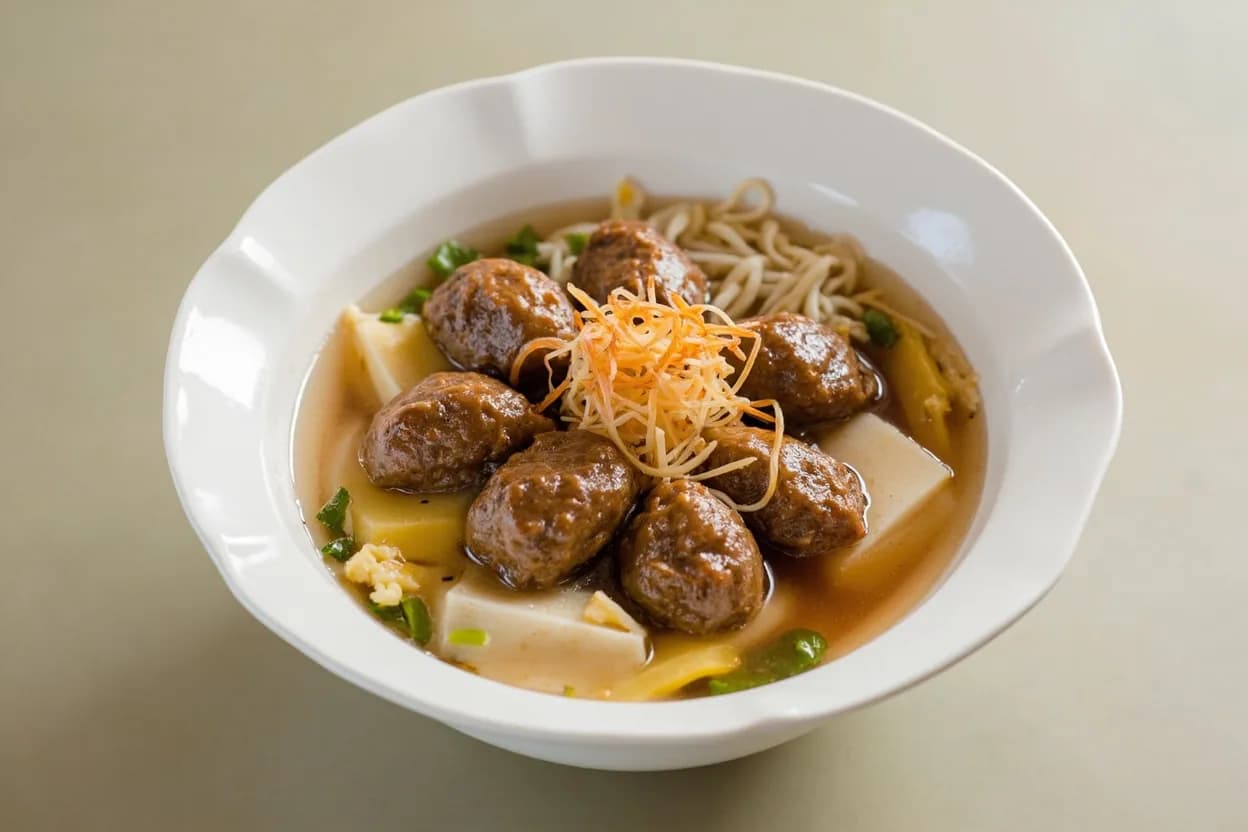
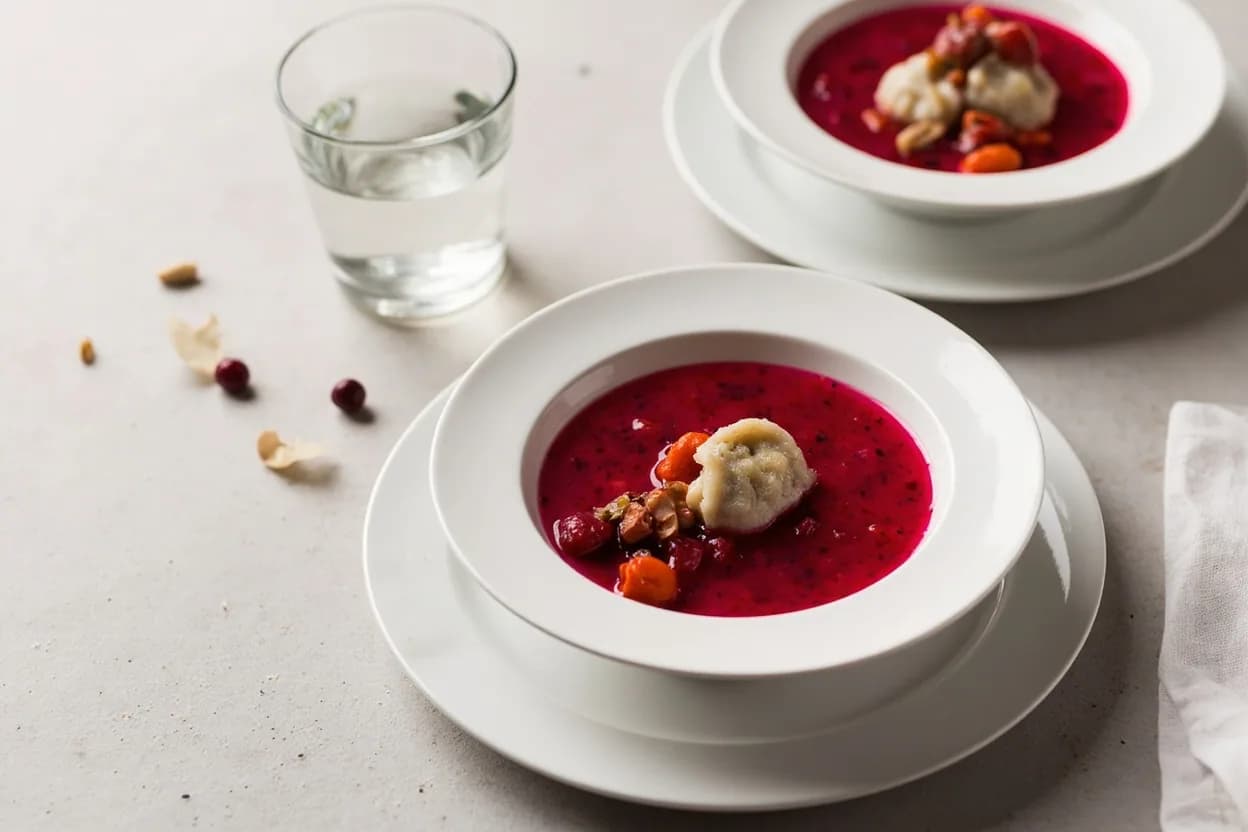
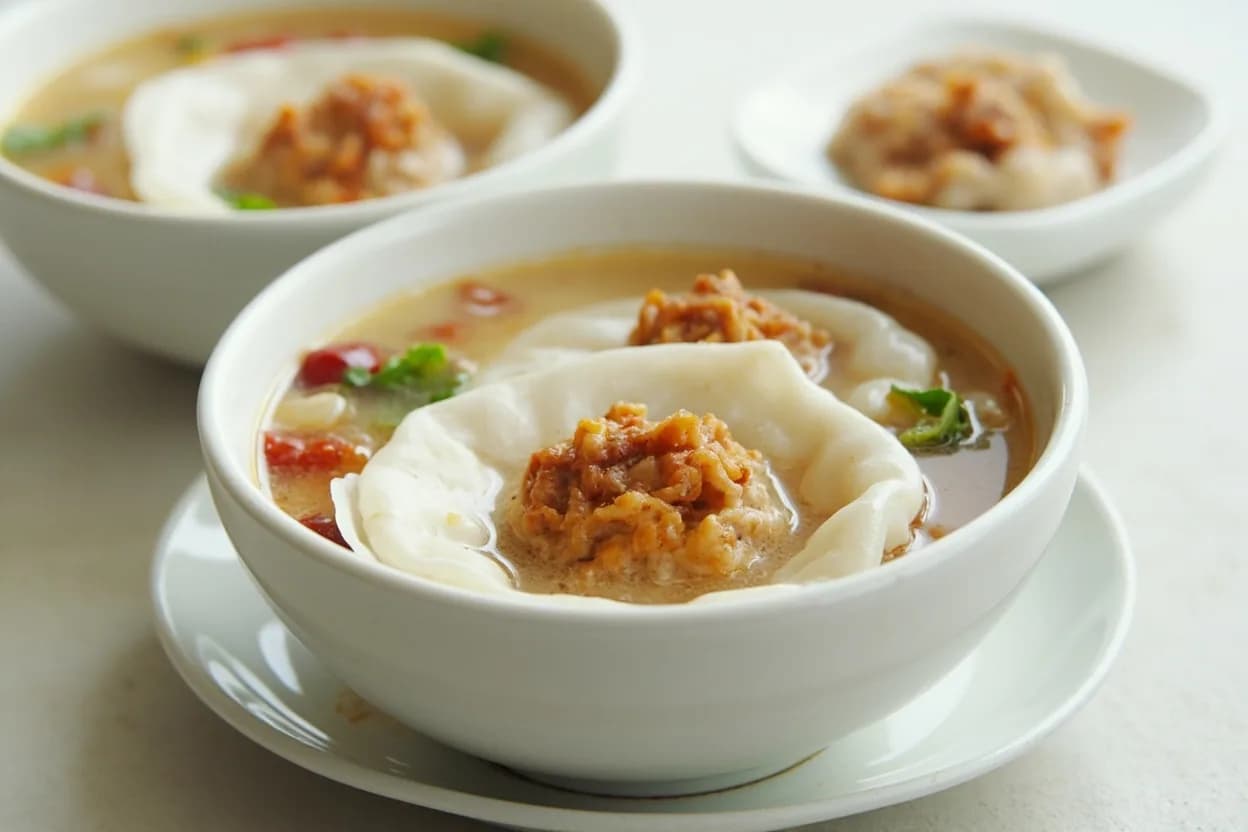
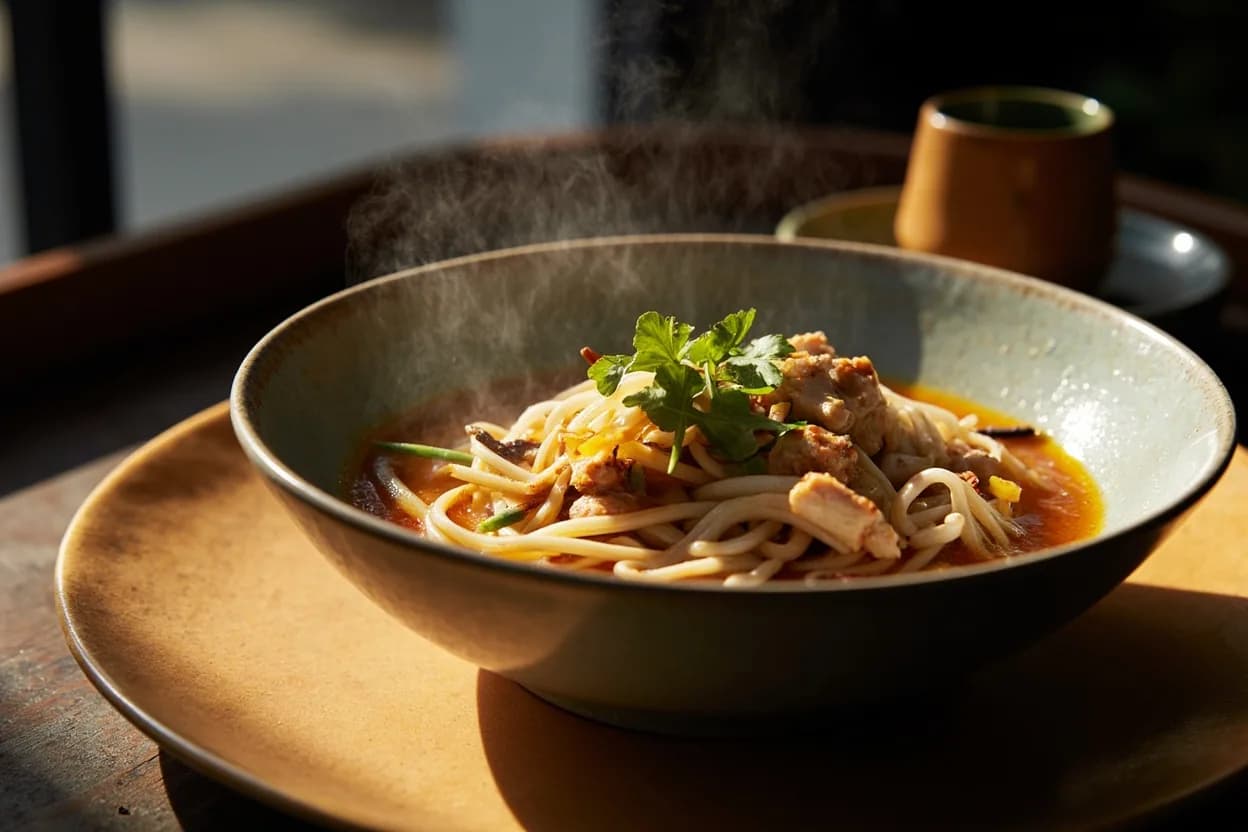

Related

Boil
Cook in vigorously bubbling liquid at full rolling heat

Simmer
Hold liquid at a gentle shimmer for tender, unhurried cooking

Poach
Cook gently in barely-trembling liquid for silky, tender results

Steam
Cook in rising vapor to keep color, nutrients, and shape intact

Blanch
Plunge briefly in boiling water, then shock cold to lock color

Braise
Sear, then cook slow in a little liquid until fall-apart tender

Stew
Simmer bite-sized pieces fully submerged into a rich, unified pot

Sous-Vide
Seal and cook in precise warm water for edge-to-edge doneness