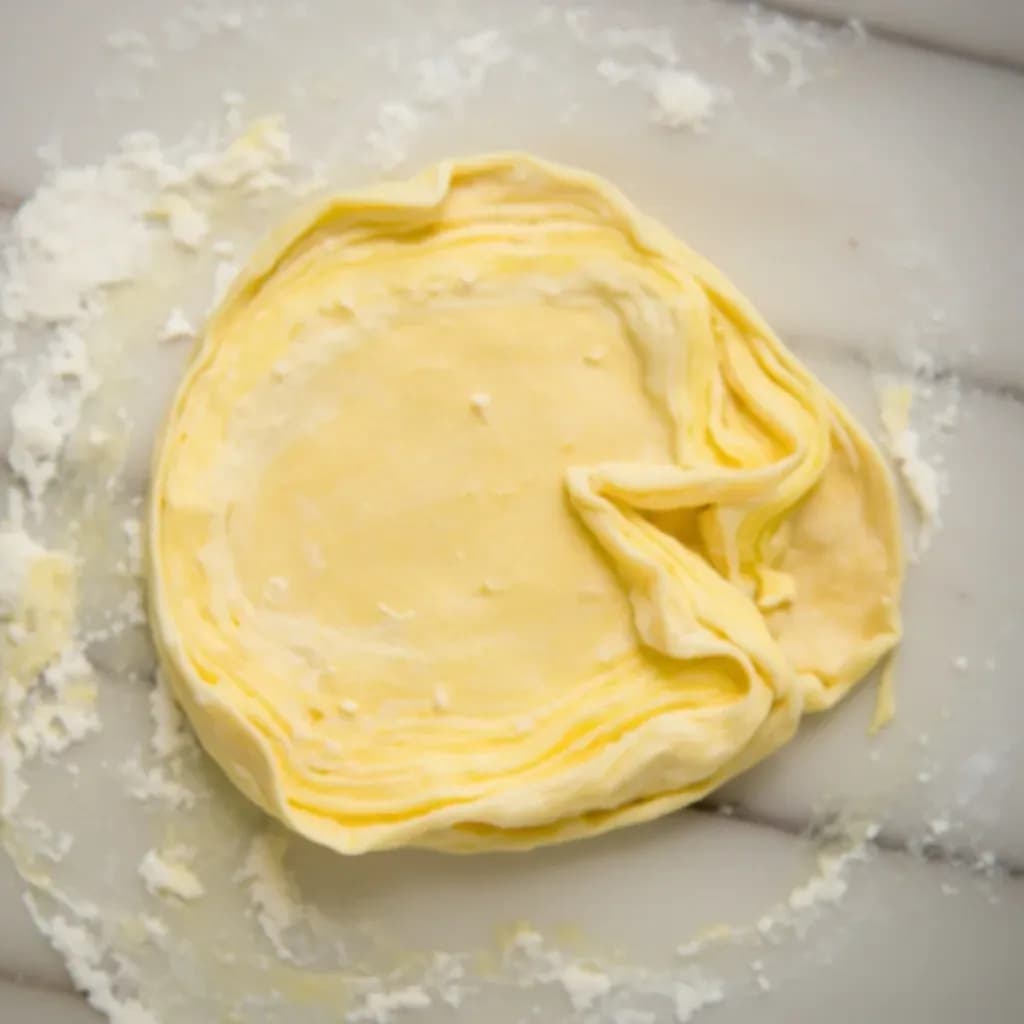
Prep & Assembly
Lamination (Tourage)
Folding butter into dough in many thin layers for flaky pastry.
Lamination, or tourage, encloses a sheet of butter in dough and repeatedly rolls and folds it to build dozens of alternating thin layers of dough and fat. During baking, the butter's water turns to steam and lifts the layers apart, creating the flaky rise of croissants, puff pastry, and Danish. Keeping the dough and butter cool and at similar firmness is critical to clean, distinct layers.
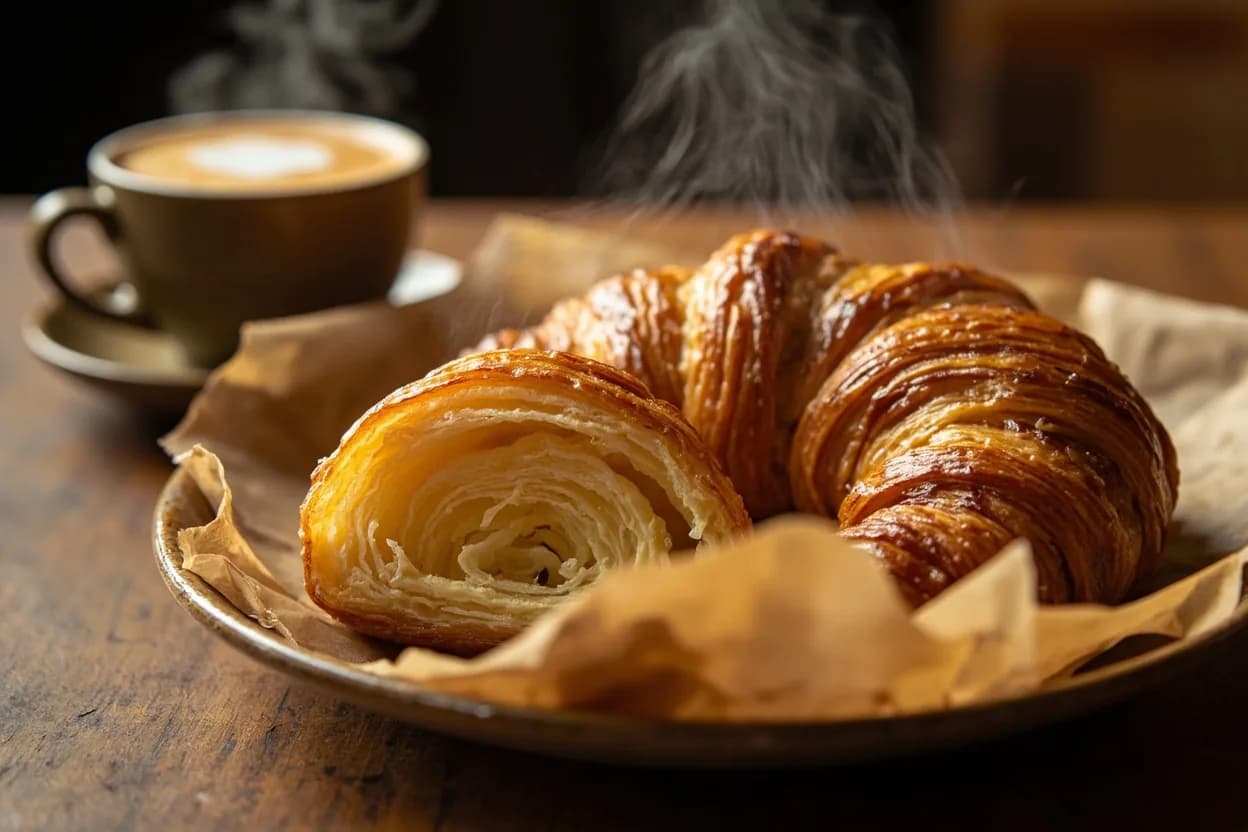
Lamination is the disciplined process of enclosing a block of cold butter inside a lean dough and folding them together, again and again, to build up hundreds of alternating layers of fat and dough. When the finished pastry hits a hot oven, the water in the butter flashes to steam and inflates those layers, lifting them apart into the honeycomb structure we recognize in a croissant or a mille-feuille. The technique is more a temperature ritual than a recipe: every rest, every chill, and every roll exists to keep the butter solid enough to stay distinct from the dough while the gluten relaxes enough to roll without springing back.
French pastry names everything. The base dough is the détrempe, the butter block the beurrage, and the enclosing of one in the other is the enrobage. Each folding pass is a tour — a turn — and the standard methods are the tour simple (letter fold, ×3 layers), the tour portefeuille (book fold, ×3 layers), the demi-tour (half fold, ×2 layers), and the tour double (×4 layers). The math is seductive — three letter folds give 27 layers, four give 81 — but after four or five turns the layers begin to merge, and a finished pastry rarely shows more than thirty to sixty visible flakes no matter how many turns you log on paper.
The real skill is not the math but the feel. Butter and dough must bend at the same rate. If the dough resists and the butter squirts out the sides, the dough is too cold; if the dough stretches and the butter breaks into cracks, the butter is too cold. Most lamination failures are temperature failures masquerading as technique failures, which is why every successful laminated pastry is, in the end, a story about patience between turns.
- Difficulty
- Hard
Types & varieties
Dough folded in half; doubles layer count. Rarely used alone in modern viennoiserie but appears in some regional recipes.
Dough folded in thirds like a letter; triples layer count. The standard for croissants and Danish.
Outer thirds folded into the center like a book; produces 3 layers. Common in Danish and some puff pastry recipes.
Folds in quarters; quadruples layer count. Used in puff pastry to reach high layer counts with fewer turns.
3 letter folds = 27 layers (standard commercial); 4 = 81 layers (haute pâtisserie); butter ≈25–30% of flour.
Typically book or letter folds with a richer détrempe containing milk, eggs, and sugar; 27–32 layers.
4–6 letter folds, butter up to 50% of flour weight; 81–729 theoretical layers, ≈30–40 visible after baking.
Détrempe wrapped around the butter but rolled and folded so the final outer layer is dough; produces a more upright, contained rise — used for some croissant styles.
How to do it
- 1
Make the détrempe
Combine bread or pastry flour, water (sometimes milk), a small amount of softened butter (5–8% of flour weight for tenderness), salt, and optionally sugar and yeast for viennoiserie. Mix just until the dough comes together — do not develop full gluten. Shape into a rectangle, wrap, and refrigerate at least 1 hour, preferably overnight.
- 2
Prepare the beurrage
Place cold European-style butter (82–84% fat) between two sheets of parchment and pound or roll it into a flat, even rectangle about 1.5–2 cm thick. It should be pliable but cold — not cracked, not greasy. Chill until it matches the firmness of the détrempe.
- 3
Enrobe the butter (enrobage)
Roll the détrempe into a rectangle roughly twice the size of the butter block. Place the butter in the center and fold the dough over it from both long sides, pinching the seams to fully enclose the butter with no exposed edges.
- 4
First turn
With the seam side up, roll the package into a long rectangle about 60–70 cm / 24–28 in. Fold in thirds like a letter (letter fold) or in a book fold depending on your recipe. Wrap and refrigerate 30–60 minutes. Mark the dough with a finger-press or notch so you always know the orientation of the layers.
- 5
Subsequent turns
Repeat the rolling and folding for the number of turns your recipe requires — typically 3 letter folds for croissants, 4–6 for puff pastry — resting 30–60 minutes between each. Always roll in the same direction, rotate 90° between rolls, and keep the rectangle's edges square by tapping them in with the pin at the end of each roll.
- 6
Final rest and shaping
After the last turn, rest the dough at least 1 hour (overnight is better) before rolling out for shaping. This final rest is critical for viennoiserie, which is then rolled, cut, shaped, and proofed. For puff pastry, the dough is now ready to roll out for its final use.
- 7
Bake hot
Laminated doughs need a blast of high heat so the water in the butter turns to steam and pushes the layers apart before the fat fully melts out. 200–220 °C / 400–425 °F for 8–10 minutes, then reduce if needed to finish cooking through.
Choosing butter and flour
Two ingredients do almost all of the work in lamination, and the quality of each shows in the finished pastry. Choosing them well is the single biggest upgrade you can make before touching a rolling pin.
- Use European-style butter with 82–84% fat. Standard 80% American butter contains more water, which means more leakage; the drier, more pliable block of high-fat butter resists breaking during rolling and yields a taller, more even flake.
- Use French Type 45 or 55 flour (≈9–11% protein), or a strong bread flour for croissants. Too weak a flour tears under the pin; too strong a flour makes layers compress and the finished pastry tough.
- For the détrempe, mix only until the dough comes together. Overdeveloped gluten fights you at every roll and prevents the dough from extending around the butter without springing back.
When layers go wrong
Almost every lamination problem is a temperature problem wearing a different costume. Read the dough, not the recipe, when things start to slip.
- Butter squishing out the sides — the détrempe is too cold (too firm to stretch) or the butter is too warm. Rest both until they bend at the same rate.
- Butter cracking into shards — the butter is too cold. Pound it gently to soften it back to pliable, or let it sit at room temperature for 5–10 minutes.
- Floury striations between layers — too much bench flour trapped during folding. Brush it off before each fold.
- Dense, bread-like crumb instead of flakes — insufficient turns, butter absorbed into the dough, or a proof that was too warm and melted the structure before baking.
- Croissants that spread flat in the oven — over-proofed, or the oven wasn't hot enough to lift the layers before the butter melted out.
Common uses
Tips & pitfalls
- Keep everything cold. The single most common cause of failure is butter softening and absorbing into the dough, destroying the layers before they reach the oven.
- Match the consistency of butter and dough — they should bend at the same rate. Dough too cold and the butter squirts out the sides; butter too cold and it cracks through.
- Always roll in the same direction (lengthwise) and rotate 90° between rolls to maintain an even rectangle and even layers; roll from the center outward to keep edges square.
- Brush off excess bench flour between folds. Flour trapped between layers prevents adhesion and creates dry, gummy striations in the finished pastry.
- If a small amount of butter breaks through, dust the spot with flour, fold it into the dough, and continue. If a large amount escapes, rest the dough cold and restart that turn.
- Resting between turns is non-negotiable — it relaxes gluten so the dough rolls without springing back and re-chills the butter to a workable temperature.
- For very flaky croissants, target 81 layers (4 letter folds); for sturdier Danish that holds weight under fillings, 27–32 layers is more practical.
- Final proof at room temperature (23–26 °C) in a humid environment. Proofing in a warm oven will melt the butter and collapse the structure before the bake can lift it.
Good to know
- French name
- Tourage; the base dough is the détrempe, the butter block the beurrage
- Butter ratio
- 25–30% of flour weight for viennoiserie (croissant, Danish); up to 50% for classic pâte feuilletée
- Fold count
- 3 letter folds for commercial croissants (≈27 layers); 4–6 for puff pastry (81–729 theoretical)
- Working temperature
- Dough 12–16 °C / 54–60 °F; butter 14–16 °C; room below 20 °C / 68 °F
- Rest between turns
- 30–60 minutes in the refrigerator, ideally around 4 °C / 39 °F
- Flour choice
- French Type 45 or 55 (≈9–11% protein) — strong enough to hold steam but not so strong that layers compress
- Butter choice
- European-style butter with 82–84% fat; lower-fat butter contains more water and breaks more easily
- Earliest documented use
- 17th-century French pastry, traditionally attributed to the apprentice Claudius Gele (Paris, c. 1645); codified by Marie-Antoine Carême in the early 19th century
Also called
tourage · laminating
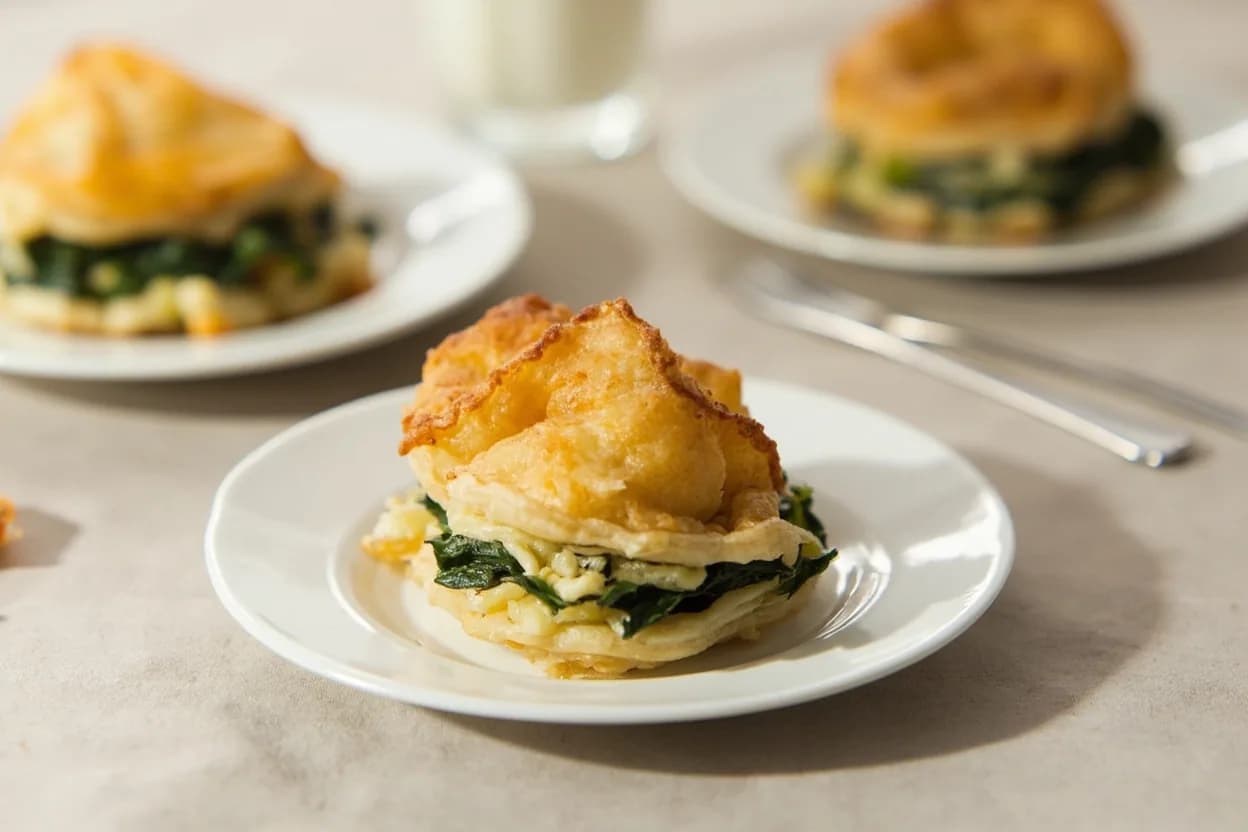
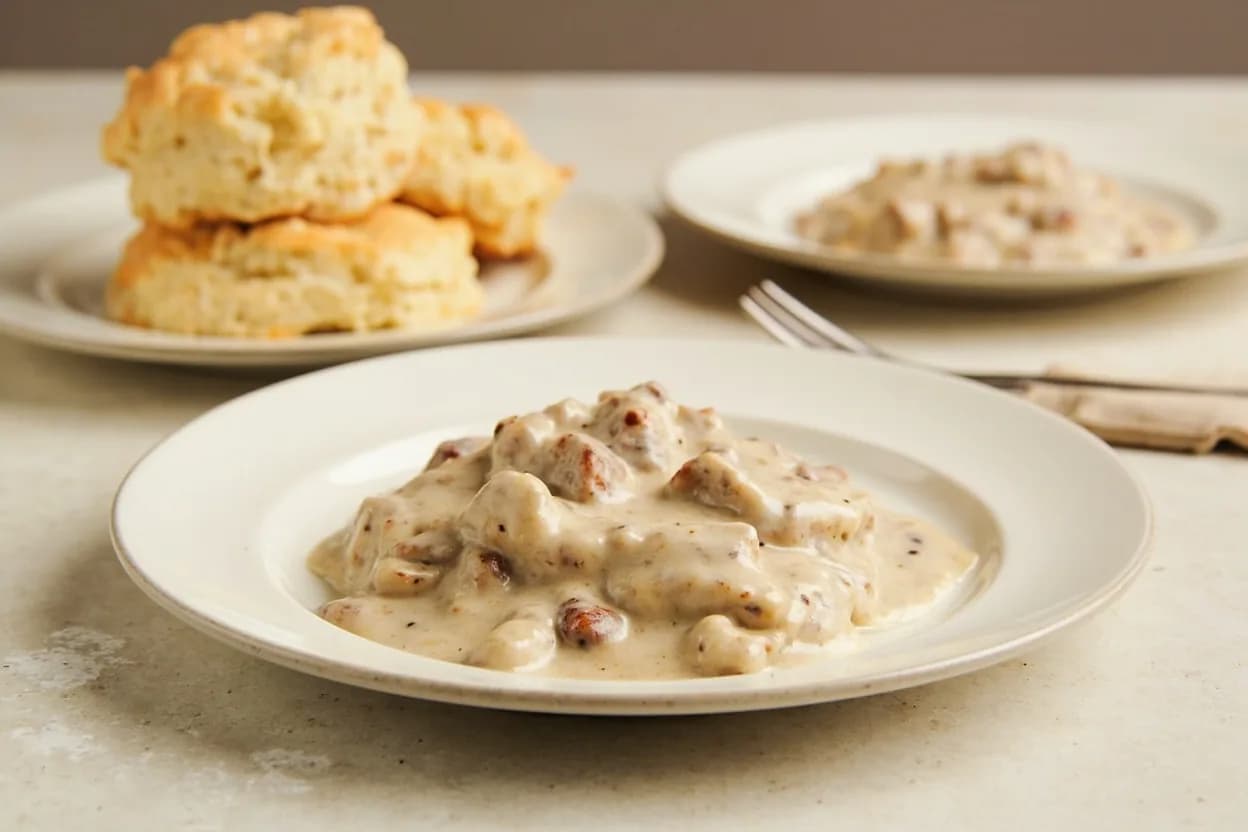
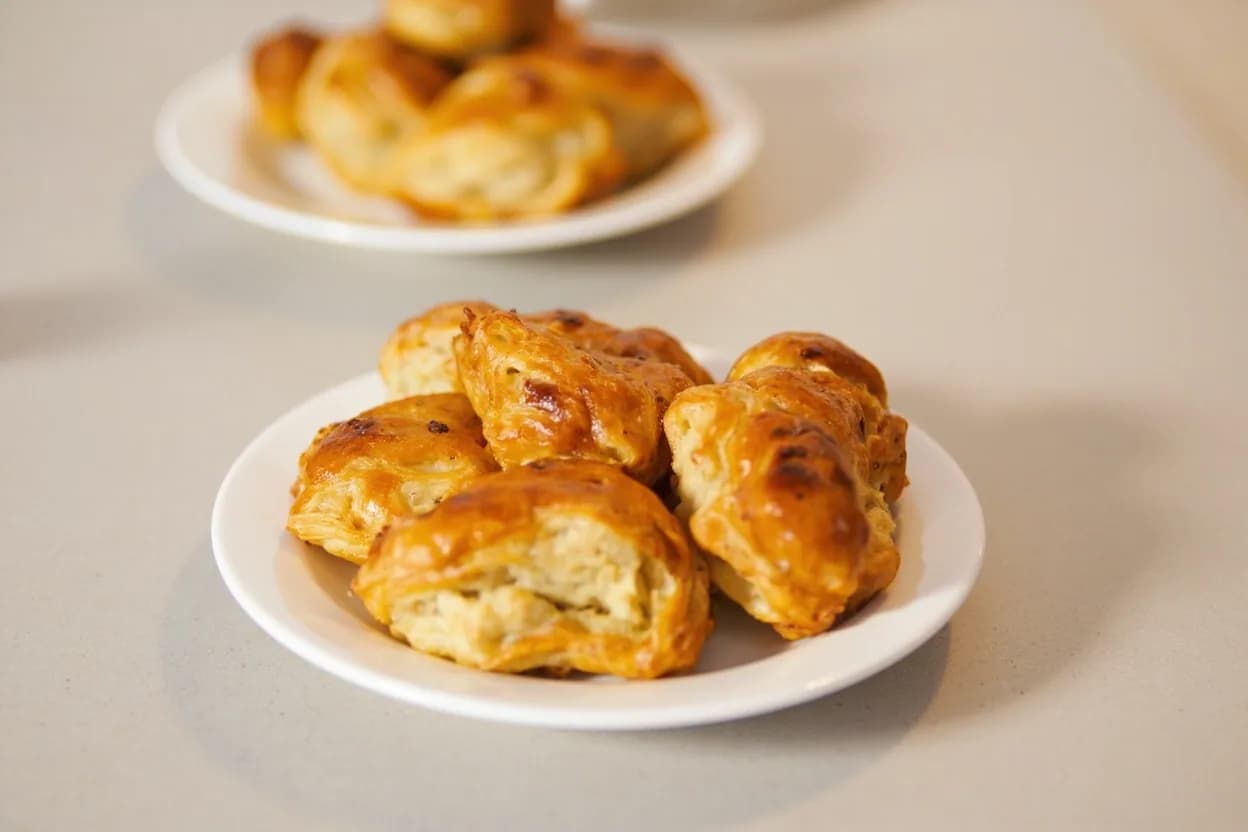
Dishes that rely on it

Related

Whisk
Beat ingredients smooth and aerated with a looping wire motion

Sift
Pass dry ingredients through mesh to aerate and remove lumps

Strain
Pour through mesh to separate solids from liquid for a smooth result

Filter
Pass liquid through fine material to clarify out the smallest particles

Rice
Press cooked potatoes through small holes for fluffy, lump-free texture

Mash
Crush soft cooked food into a rustic, creamy purée

Grind
Crush food into a coarse to fine texture, from spices to meat

Grate
Shred food into fine bits against a sharp-toothed surface