Prep & Assembly
Double Fold (Book Fold / Tour Double)
Folding laminated dough in four like a book to multiply butter layers quickly.
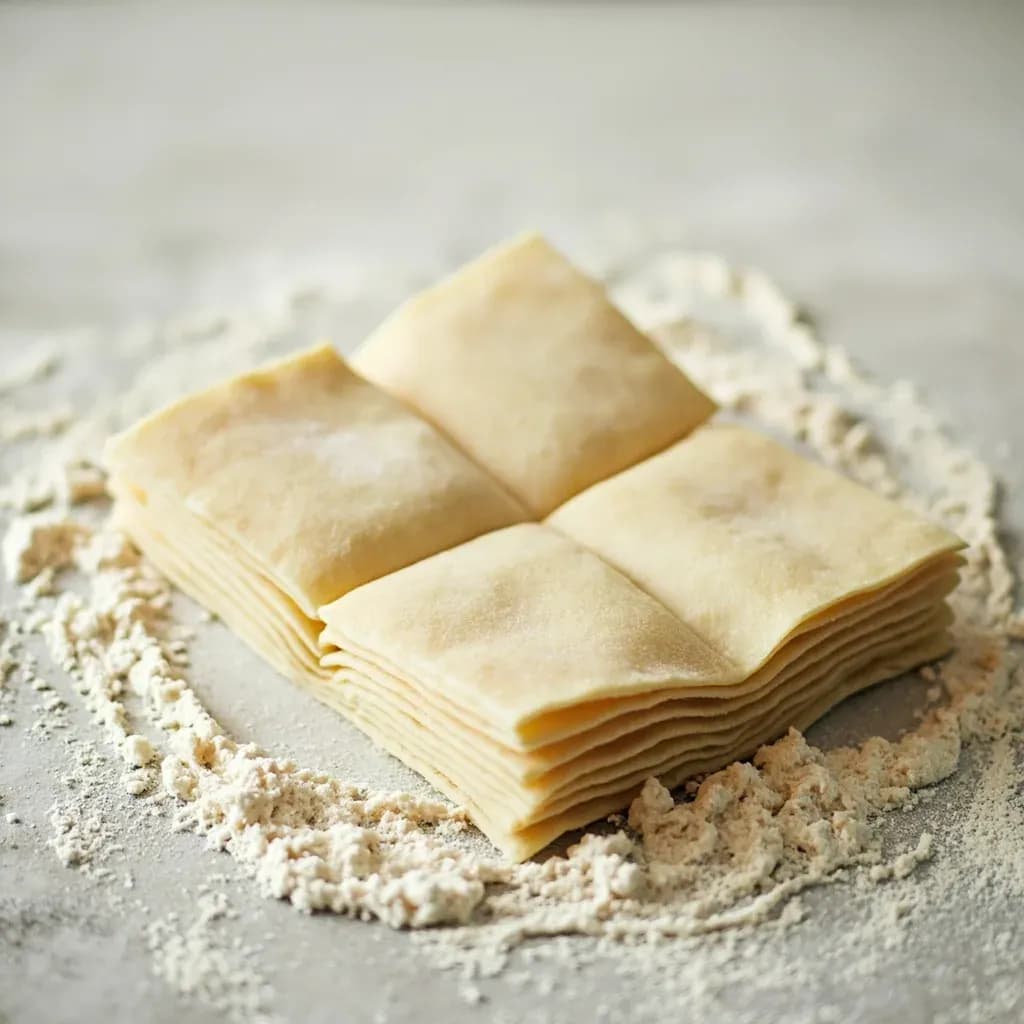
The double fold, or book fold, folds the outer edges of a laminated dough to meet in the center, then folds it closed like a book, creating four layers in one turn. It builds butter layers faster than a single fold and is used in puff pastry and croissant lamination. Dough is chilled between turns so the butter stays firm and the layers stay distinct.
The double fold — known in French as tour double and in English as the book fold or letter-double fold — is a lamination turn in which the rolled-out dough is folded in two stages: first the two short ends are brought to the center, then the dough is folded in half along that center line, like closing a book. Each tour double quadruples the number of butter-and-dough layers (from 1 to 4, 4 to 16, 16 to 64) and so builds the same final layer count in fewer turns than the traditional single (letter) fold, which only triples. The technique is the workhorse turn of modern professional viennoiserie, prized because it produces regular, predictable layers faster and pairs well with the standardized rolling routines of a production bakery. Compared with a tour simple, however, it compresses the dough centrally, which means any trapped air or excess flour becomes concentrated in the middle of the rectangle; disciplined tapping and brushing are therefore non-negotiable.
- Difficulty
- Hard
Types & varieties
Dough folded in thirds like a business letter; produces 3 layers per turn.
A single fold of dough over a portion of butter or filling; produces 2 layers.
A simplified regional fold that mixes single and double principles.
How to do it
- 1
Enclose the butter block
Place the chilled beurrage (butter slab) in the center of the détrempe (dough), positioned diagonally so its points face the corners of the dough. Fold the four corners of the dough up and over the butter and pinch the seams tightly so no butter shows. Wrap in plastic and chill 20–30 minutes so both components relax to the same temperature.
- 2
Roll into a rectangle
On a lightly floured, cool surface (marble or steel preferred), roll the package into a long rectangle about 20 × 60 cm (8 × 24 in), keeping the edges square and the thickness even. Always roll from the center outward and in one direction; never roll back and forth, which shifts the layers and rounds the edges.
- 3
Brush and tap
Brush off every trace of loose flour from the dough surface with a dry pastry brush — trapped flour creates white streaks and breaks layers. Tap the dough flat with your palm or a bench scraper to release any trapped air, especially in the central zone where the book fold will compress it.
- 4
Fold both ends to center
Fold the two short ends of the rectangle inward so they meet exactly in the middle, with no gap and no overlap. Use a bench scraper to lift and square the edges so the seam is crisp.
- 5
Fold in half (book fold)
Fold the dough in half along the center line, as if closing a book. The result is four distinct layers of butter and dough stacked on top of each other.
- 6
Seal, mark, and chill
Press gently along the open seam with a bench scraper to seal the layers in place. Mark the fold count on the dough (a single fingertip impression per turn is the classic bakery system), wrap tightly in plastic, and refrigerate 30–60 minutes at 4–7 °C (39–45 °F) before the next turn.
- 7
Repeat for the remaining turns
For classic croissant, repeat the double fold two more times, chilling between each, for a total of three tour doubles = 64 layers. For puff pastry, two double folds (16 layers) or a combination such as two singles plus one double (36 layers) is typical. Some recipes alternate a single fold between doubles to open up the crumb.
- 8
Final rest before shaping
After the last fold, chill the dough for at least 1 hour, or overnight if the schedule allows. The gluten needs to relax so the dough rolls out cleanly for cutting, and the butter must firm back to working temperature so it doesn't smear through the layers during shaping.
Why bakers choose the book fold
The double fold exists because time matters in a busy bakery. A croissant dough that needs 64 layers can be built in three turns instead of the four a tour simple would require, saving one chilling cycle and one rolling pass. In a production setting that compounds into real labor savings, and the rectangular shape the fold produces is well suited to production bakeries where the dough is sheeted to the same dimensions turn after turn. The trade-off is central compression: where a letter fold leaves the dough's edges looser and more open, a book fold packs the middle, so any air or loose flour gets trapped there. Bakers manage this by tapping the dough flat, brushing the surface clean, and — for very open-crumb croissants — alternating a double fold with a single fold from time to time to vary layer thickness.
- 3 double folds = 64 layers (classic croissant)
- 2 double folds = 16 layers (lighter Danish, some puff pastry)
- Alternating single and double folds produces a more open, irregular crumb
- Central compression is the main pitfall — tap and brush before every roll-out
Layer math and timing
Each tour double multiplies the existing layer count by four, so 1 → 4 → 16 → 64 across three turns. The rest between turns is not optional: it lets the butter re-firm and the gluten relax, both of which are required to roll the next rectangle without tearing the dough or squeezing the butter out the sides. Cutting the rest short is the single most common cause of butter break-through and uneven lamination.
- Turn 1: 1 → 4 layers
- Turn 2: 4 → 16 layers
- Turn 3: 16 → 64 layers
- Rest 30–60 minutes between turns, longer if the kitchen is warm
Common uses
Tips & pitfalls
- Match dough and butter plasticity — at 15–18 °C (59–64 °F) both should feel like cold modeling clay. Butter that is colder shatters into the dough; butter that is warmer absorbs into the flour and kills lamination.
- Always roll in one direction between folds, never back-and-forth, to keep the rectangle square and the layers uniform.
- Brush off loose flour before every fold. Trapped flour creates white streaks, glues layers together, and prevents the dough from puffing evenly in the oven.
- Tap the dough flat before folding. The book fold compresses the center, so any air pocket left in the rectangle will balloon and burst a layer during the next roll-out.
- Chill until the dough is firm to the touch but still gives slightly when pressed. Dough that is too cold cracks at the edges and tears through the butter; dough that is too warm lets the butter absorb.
- If butter breaks through the dough during a turn, dust the spot lightly with flour, fold it back over, and chill for 20 minutes before continuing — do not try to patch it with extra dough.
- Press the open seam with a bench scraper after every fold. An unsealed seam lets the layers shift and the dough lose its rectangular shape by the next turn.
- Count carefully. 3 double folds = 64 layers, the standard for classic croissant. Skipping a rest or losing track of a turn is the most common reason home bakers end up with croissants that are either too tight or too flat.
Good to know
- French name
- Tour double
- Alternative names
- Book fold, letter-double fold
- Layers per turn
- Multiplies layer count by 4 (1 → 4 → 16 → 64)
- Compared to single fold
- Tour simple triples layers; tour double quadruples them
- Standard for classic croissant
- 3 double folds = 64 layers
- Working temperature
- Dough and butter both 15–18 °C (59–64 °F)
- Rest between turns
- 30–60 minutes at 4–7 °C (39–45 °F)
- Ideal rectangle before folding
- Roughly 20 × 60 cm (8 × 24 in)
- Primary use
- Laminating viennoiserie and puff pastry doughs
- Difficulty
- Intermediate — faster than a letter fold but easier to trap air or burst the butter
Also called
Book Fold · Tour Double · Wallet Fold
Dishes that rely on it

Related

Whisk
Beat ingredients smooth and aerated with a looping wire motion

Sift
Pass dry ingredients through mesh to aerate and remove lumps

Strain
Pour through mesh to separate solids from liquid for a smooth result

Filter
Pass liquid through fine material to clarify out the smallest particles

Rice
Press cooked potatoes through small holes for fluffy, lump-free texture

Mash
Crush soft cooked food into a rustic, creamy purée

Grind
Crush food into a coarse to fine texture, from spices to meat

Grate
Shred food into fine bits against a sharp-toothed surface