Water & Steam
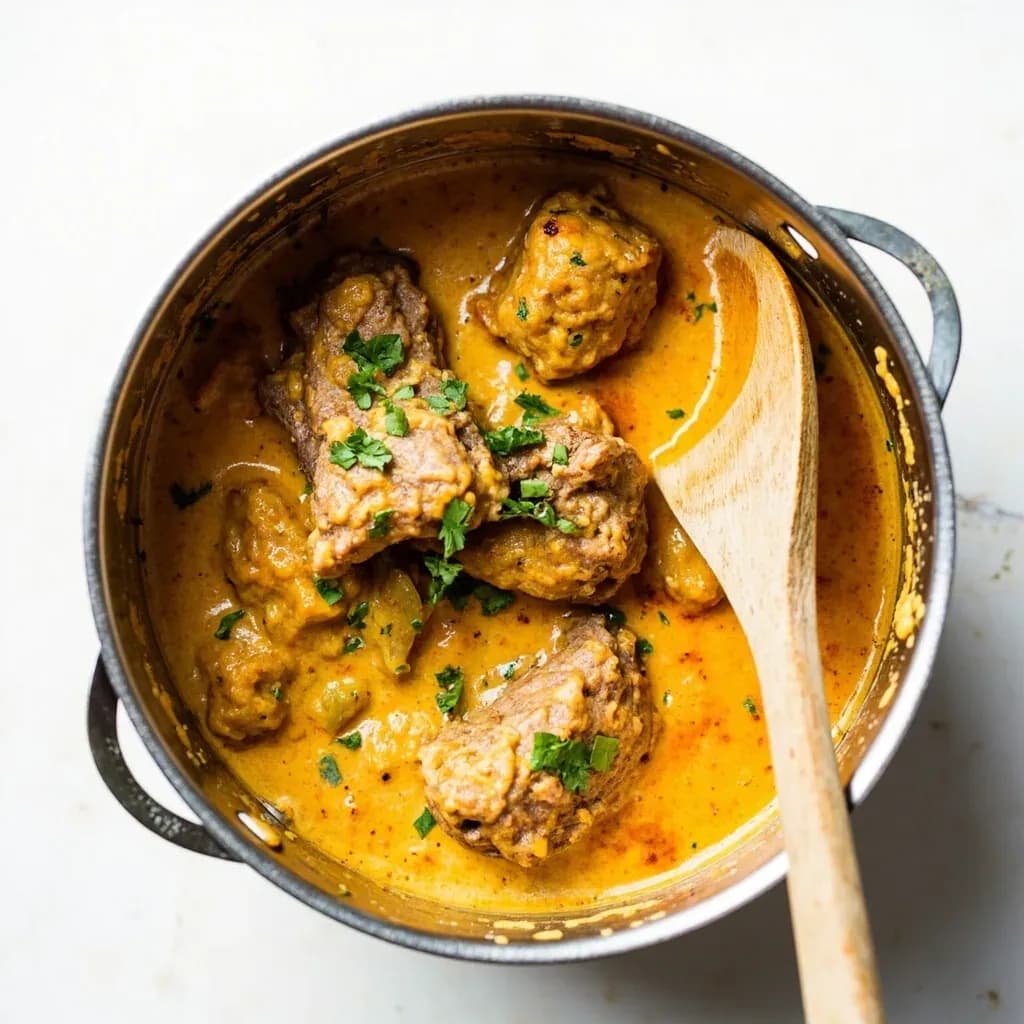
Yogurt-Based Braising (Yakhni)
Slow-cooking meat in a spiced yogurt sauce for a tangy, silky South Asian braise.
Yakhni braising simmers meat gently in a base of whisked yogurt with aromatics like fennel, ginger, and warm spices, common in Kashmiri and Awadhi cooking. The yogurt is added carefully and stirred to prevent curdling, building a smooth, tangy gravy that tenderizes the meat over a long low cook. The result is a delicate, aromatic curry rather than a tomato- or onion-heavy one.
Yakhni is the South Asian answer to a velouté braise: meat cooked gently in a spiced yogurt sauce until the liquid turns silken and the protein falls apart at the fork. Its roots run back through Persian and Central Asian kitchens, but it is in Kashmir — and in Kashmiri Muslim households especially — that yakhni is treated as a foundational braise, the pale, fragrant counterpart to the fiery red curries further south. The name comes from the Persian yakh, meaning ice or cold, a quiet tribute to yogurt's cooling character and the gentle nature of the cooking.
What sets yakhni apart from most yogurt-based dishes is what it leaves out. There is no turmeric, no chili powder, no ground coriander — just whole spices (cinnamon stick, green and black cardamom, cloves, peppercorns, fennel, dried ginger) bundled in a muslin potli and simmered into the sauce. The result is a pale ivory to light-gold gravy, tangy and gently perfumed, that lets the flavor of the meat and the dairy speak for itself. The dish leans on three pillars: the lactic tang of full-fat yogurt, the warm aromatic complexity of toasted whole spices, and the richness of ghee or cream to round out the sharpness.
Cooking yakhni well is mostly a matter of patience and temperature control. Yogurt wants to curdle, and a split sauce is the classic failure of this technique — so cooks stabilize the dairy with a teaspoon of besan or rice flour, temper it with hot pot liquid before adding it to the pot, and keep the flame low from the moment dairy enters. Done right, the sauce is glossy and just coats the back of a spoon, the meat is fork-tender, and the only heat on the palate comes from whole black pepper and the occasional slit green chili.
- Difficulty
- Medium
Types & varieties
Mutton braised with fennel, dry ginger, and mint; often onion- and garlic-free; finished with a generous tempering of whole fennel and dried mint bloomed in ghee
Richer northern style, sometimes enriched with cream, cashew paste, or kewra water; tends toward a more elaborate spice potli
Mild, white-style korma cousin; sometimes thickened with coconut milk or poppy seed paste for body
Faster-cooking bone-in chicken version; often finished with slit green chilies and a swirl of cream
Basmati rice cooked in the strained yakhni stock with whole spices; a Kashmiri and Lucknawi classic
Lighter variant found in some Kashmiri homes using freshwater fish; very short cook time once the sauce comes together
How to do it
- 1
Prep the spice potli
On a small square of muslin, place a 2-inch cinnamon stick, 3 green cardamom pods, 2 black cardamom pods, 4 cloves, 6 black peppercorns, 2 bay leaves, 1 teaspoon fennel seeds, and a 1-inch piece of dried ginger. Gather into a bundle and tie securely with kitchen twine.
- 2
Whisk the yogurt base
In a bowl, whisk 2 cups full-fat yogurt with 1 to 2 teaspoons of besan or rice flour until completely smooth and lump-free. Set aside.
- 3
Marinate the meat
Toss 1 kg bone-in mutton or chicken pieces with 1 tablespoon ginger-garlic paste, 1 teaspoon salt, and a few grinds of black pepper. Rest 20 to 30 minutes at room temperature.
- 4
Sear the meat
Heat 3 tablespoons ghee in a heavy pot or Dutch oven over medium-high. Pat the meat dry and sear in batches until lightly golden on the surfaces. Remove and set aside.
- 5
Build the aromatics
In the same pot, add 1 thinly sliced onion (optional — omit for a purer Kashmiri yakhni) and cook until soft and translucent. Stir in 1 tablespoon ginger-garlic paste and 2 slit green chilies; sauté about 1 minute.
- 6
Temper the yogurt
Lower the heat to its lowest setting. Stir a ladle of the hot pot liquid into the whisked yogurt, whisking constantly. Repeat once more, then pour the thinned yogurt into the pot, stirring continuously for 2 to 3 minutes so the dairy never meets a hot surface all at once.
- 7
Add stock and spices
Return the meat and any juices to the pot. Pour in 2 to 3 cups of water until the meat is just covered. Drop in the spice potli. Add a small handful of fresh mint leaves and, for Kashmiri style, 1 teaspoon dried ginger powder.
- 8
Slow braise
Bring to a bare simmer — never a rolling boil — cover, and cook on low: 45 to 60 minutes for chicken, 1.5 to 2.5 hours for mutton or lamb, until the meat is fork-tender and the sauce coats the back of a spoon.
- 9
Finish and adjust
Fish out the potli and discard. Taste and adjust seasoning now, adding salt and a small pinch of sugar to balance the yogurt's tang. Swirl in 1 tablespoon of ghee and a small handful of chopped mint or fresh coriander.
- 10
Rest and serve
Let the yakhni rest off the heat for 10 minutes; the sauce will look glossier and slightly thicker as it settles. Serve with steamed basmati rice, naan, or Kashmiri pulao.
The Kashmiri and Mughlai philosophies
Kashmiri yakhni (gosht-e-yakhni) leans toward austerity. Many Kashmiri Muslim cooks omit onion and garlic entirely, and never reach for chili powder or turmeric. Fragrance comes instead from fennel seeds, dried ginger (soonth), and a finishing shower of dried mint bloomed in ghee over the finished dish. Mughlai yakhni heads the other direction, enriched with cream, cashew paste, and sometimes a whisper of kewra or rose water, with a more elaborate spice potli and a thicker, glossier sauce. Neither is more authentic — they are different aesthetic choices that produce two very different plates, and most North Indian home cooks land somewhere between them.
Why yogurt splits — and how to keep it from splitting
Yogurt is an emulsion of milk proteins suspended in water, and those proteins clump (curdle) when they hit acid, salt, or sudden high heat. In yakhni, all three threats are present in the pot at once. The fix is layered: stabilize the dairy first by whisking in a teaspoon or two of besan or rice flour, then temper it by gradually stirring in ladles of the hot pot liquid before pouring the thinned yogurt into the main pot, and finally keep the flame on its lowest setting from the moment dairy enters. Hold off on salt until the yogurt is fully incorporated — salt encourages the proteins to tighten and expel water. If the sauce does split despite your care, take the pot off the heat and whisk in a tablespoon of warm cream or a single ice cube; the added fat or cold can sometimes re-emulsify the proteins enough to rescue the dish.
Common uses
Tips & pitfalls
- Whisk 1 to 2 teaspoons of besan or rice flour into the yogurt before adding it — this stabilizes the proteins against curdling.
- Always temper the yogurt: stir a ladle of hot pot liquid into the yogurt first, then return the thinned mixture to the pot.
- Keep the pot on its lowest flame once yogurt is in; high heat is the single most common cause of a split sauce.
- Use full-fat, slightly sour yogurt — the fat carries flavor and the acidity gives the dish its character.
- Toast the whole spices briefly in ghee before tying them in the potli to release their essential oils.
- Hold off on adding salt until the yogurt is fully incorporated — salt encourages the proteins to tighten and expel water.
- Let the finished yakhni rest off the heat for 10 minutes before serving; the sauce thickens and looks glossier as it settles.
- If the sauce splits despite precautions, take it off the heat and whisk in a tablespoon of warm cream or a single ice cube to try to re-emulsify it.
Good to know
- Origin
- Persian and Central Asian roots; refined in Mughal and Kashmiri kitchens; 'yakh' means ice or cold in Persian
- Primary liquid
- Full-fat yogurt, often stabilized with besan or rice flour
- Typical proteins
- Mutton, lamb, chicken; occasionally beef or freshwater fish in regional versions
- Spice profile
- Whole spices only — no chili powder or turmeric; yields a pale ivory to light-gold sauce
- Key spices
- Cinnamon stick, green and black cardamom, cloves, black peppercorns, bay leaf, fennel seeds, dried ginger (soonth)
- Cook time
- 45–60 minutes for chicken; 1.5–2.5 hours for mutton or lamb, until fork-tender
- Difficulty
- Moderate; the main risk is yogurt splitting
- Storage
- Refrigerate up to 3 days; freezes well for 1–2 months; sauce thickens noticeably on cooling
Also called
yogurt-based-braising · yogurt-cooking · Yakhni Curry
Related

Boil
Cook in vigorously bubbling liquid at full rolling heat

Simmer
Hold liquid at a gentle shimmer for tender, unhurried cooking

Poach
Cook gently in barely-trembling liquid for silky, tender results

Steam
Cook in rising vapor to keep color, nutrients, and shape intact

Blanch
Plunge briefly in boiling water, then shock cold to lock color

Braise
Sear, then cook slow in a little liquid until fall-apart tender

Stew
Simmer bite-sized pieces fully submerged into a rich, unified pot

Sous-Vide
Seal and cook in precise warm water for edge-to-edge doneness