Atlantic / Macaronesia
Canarian (Canary Islands)
Also: Cocina Canaria, Canary Islands cuisine
Spain's subtropical Atlantic outpost where wrinkled potatoes, volcanic sea-salt, hand-ground toasted grain, and the fire of mojo sauces fuse Guanche, African, and Latin American currents into something entirely its own.
Canarian cuisine is the cooking of the seven islands sitting 100 km off the northwest African coast — geographically closer to Morocco than to Madrid. It is a cuisine of crossroads: the indigenous Guanche people left gofio (stone-milled toasted grain) and subsistence pastoral habits; Spanish colonisation grafted Castilian basics; the islands' position as a waystation for Atlantic trade brought American ingredients (potatoes, maize, tomatoes, peppers, avocados) centuries before they reached mainland Spain; and West African and Latin American connections through the slave trade and emigrant return flows left persistent flavour traces. The result is a distinct cuisine that sits outside both mainstream Spanish cooking and North African tradition while drawing on both.
The flavour base
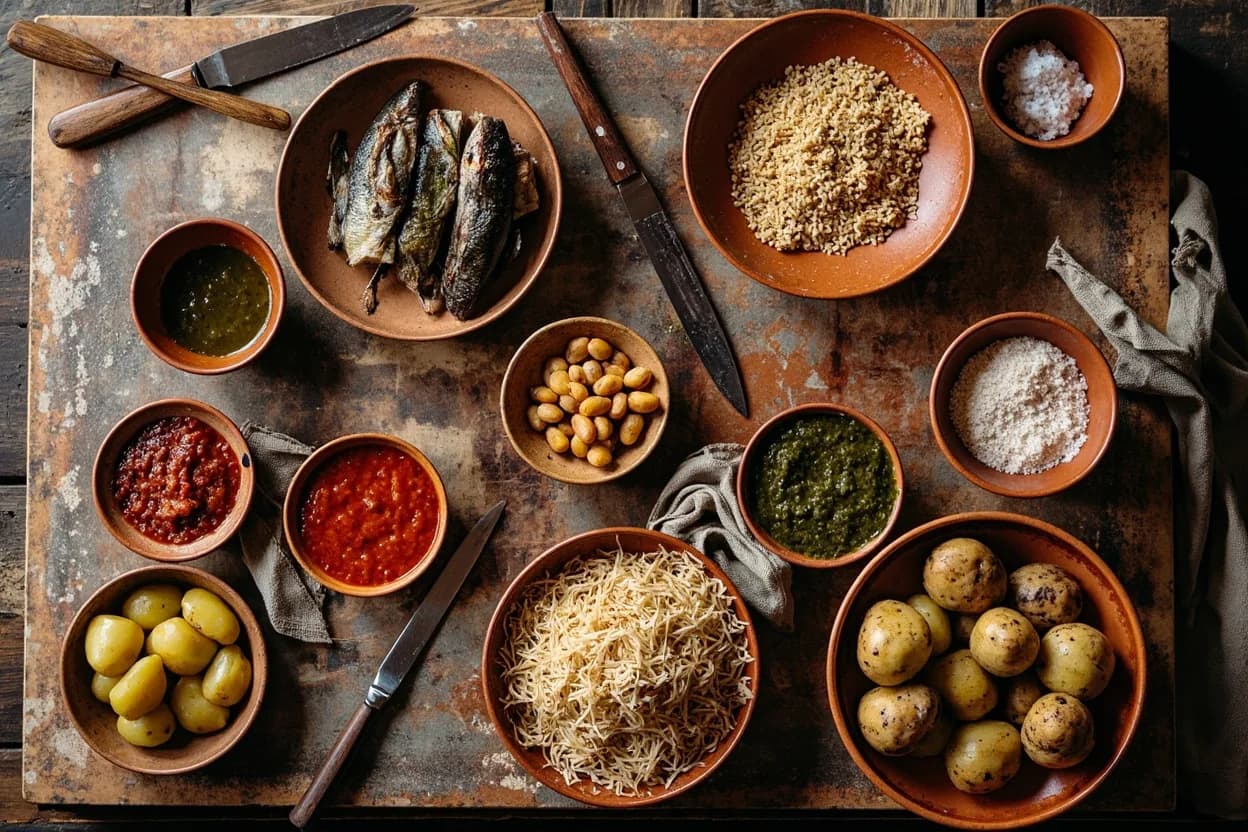
Mojo — ground garlic emulsified with local olive or sunflower oil, vinegar, and either red peppers with cumin (mojo rojo/picón) or fresh green herbs (mojo verde with coriander or parsley) — is the universal condiment base; gofio, stone-milled toasted grain, functions as a thickener, starch substitute, and breakfast porridge base.
Pantry staples
Key ingredients
Signature techniques
Signature dishes
Canarian (Canary Islands) on the table

At the table
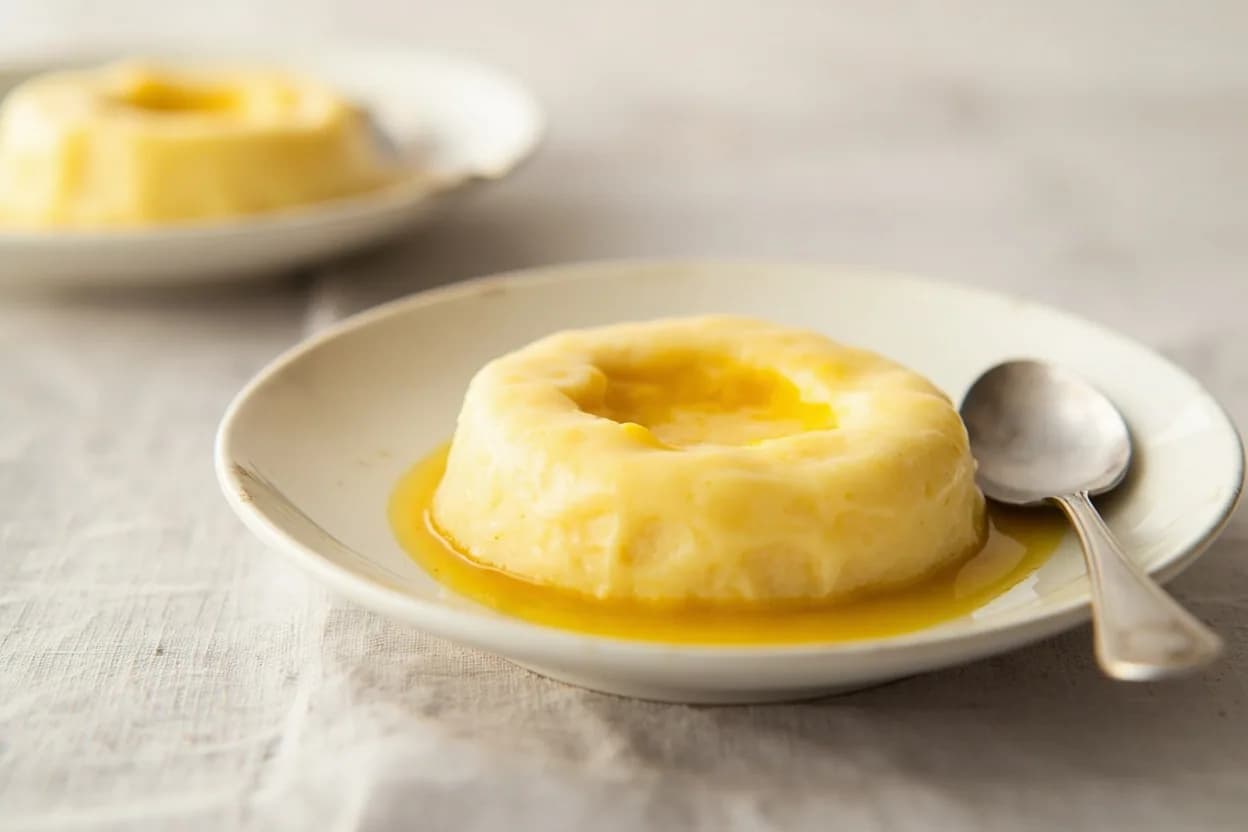
Meals follow a Spanish rhythm (light breakfast, substantial midday main, lighter supper) but with island adaptations. Gofio appears at every meal — in a pre-meal escaldón, mixed into stews, or as a breakfast porridge with milk and honey. Mojo is served alongside virtually every dish. Fish and seafood dominate coastal tables; pork and goat dominate the interior. Desserts lean heavily on almonds, honey, and bienmesabe; the Canarian quesillo (caramel flan) is the ubiquitous sweet closer.
History & context
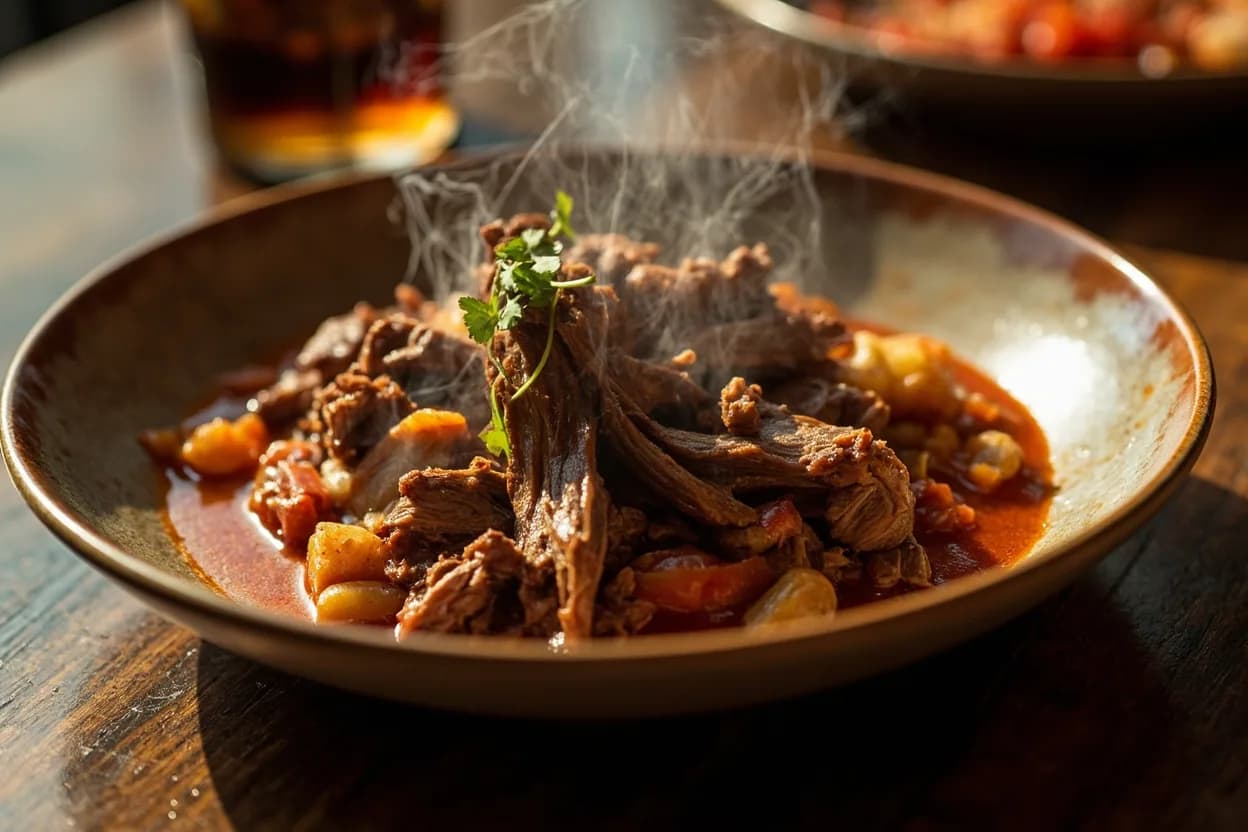
The Canary Islands' original inhabitants, the Guanche and related Berber-origin peoples, relied on gofio, goat milk, goat meat, and marine resources before Spanish conquest (completed 1496). The islands became Spain's first colonial laboratory and the essential resupply stop for Atlantic voyages — Columbus reprovisioned here three times. American crops arrived almost immediately after 1492 and were integrated into island cooking within decades, making the Canaries one of the earliest Old World adopters of the potato and maize. The 19th–20th century emigration wave to Cuba, Venezuela, and other Latin American nations (and subsequent return) left culinary traces — the Canarian ropa vieja is a sibling, not a copy, of Cuban ropa vieja, reflecting parallel evolution. The islands joined Spain's autonomous regions system in 1982; Canarian culinary identity has strengthened since then.
Regional variations
- Gran Canaria
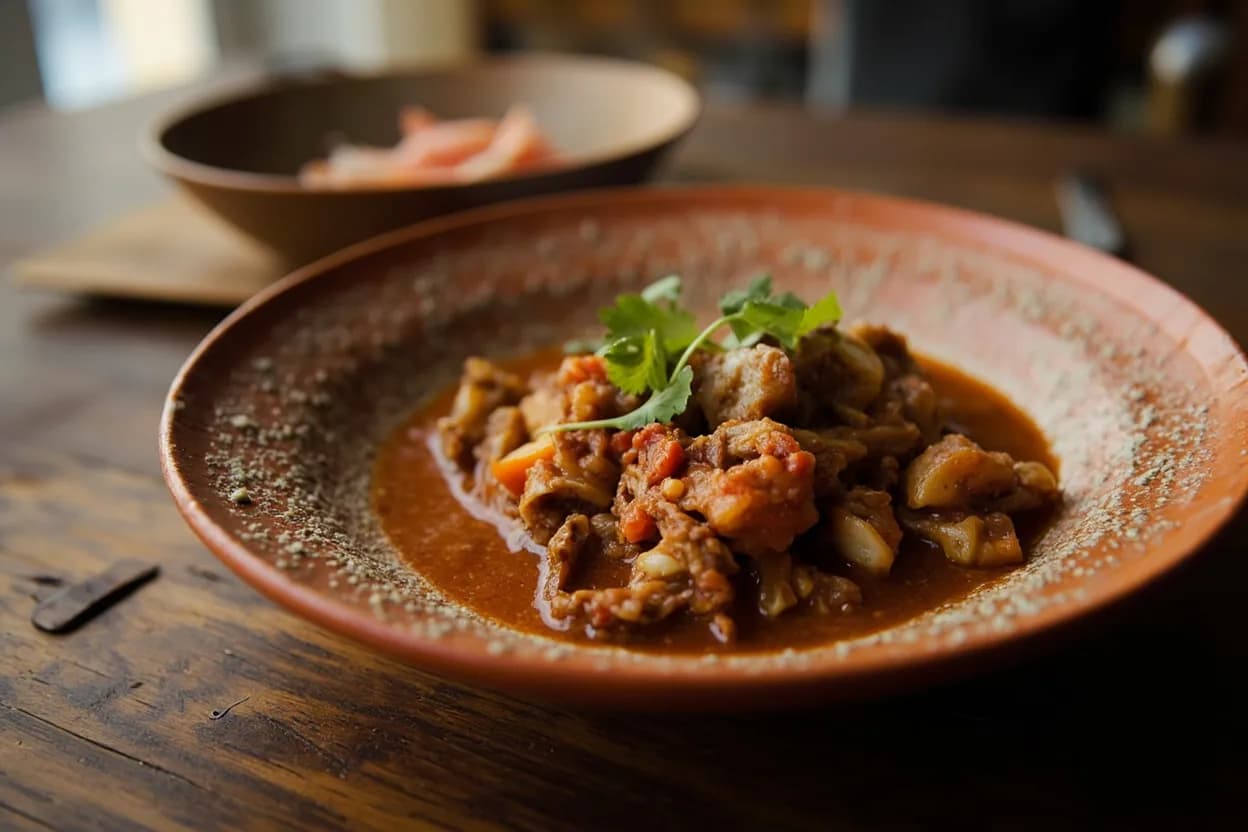
Famous for queso de flor (curdled with artichoke flower); rancho canario (noodle-meat stew) is the signature; the interior grows excellent tropical fruits.
- Tenerife
Most populated island; vieja (parrotfish) a la espalda dominant on the coast; mojo varieties more elaborate; papas negras (volcanic-soil small potatoes) grown in Tenerife highlands.
- La Palma
Significant banana and avocado cultivation; the local mojo tends greener and more herb-forward; honey production (miel de palma from the Canarian palm) is distinctive.
- Lanzarote
Volcanic landscape (malpaís) produces papas negras and Malvasía wine; cochinilla (cochineal) historically cultivated here; stark, mineral-inflected cooking style.
- La Gomera
Most conservative island foodways; palm syrup (miel de palma) used heavily; almogrote (aged hard cheese spread) is a Gomeran speciality.
Related cuisines
- Cuban
Shared ropa vieja and adobo vocabulary reflecting Canarian emigrant influence on Cuban cooking from the 18th century onward.
- Venezuelan
Large Canarian diaspora shaped Venezuelan pantry; the Canario identity remains strong in western Venezuela.
Geographic proximity creates shared spice sensibility (cumin, coriander) and similar fish preparations, though the connection is diffuse rather than direct.
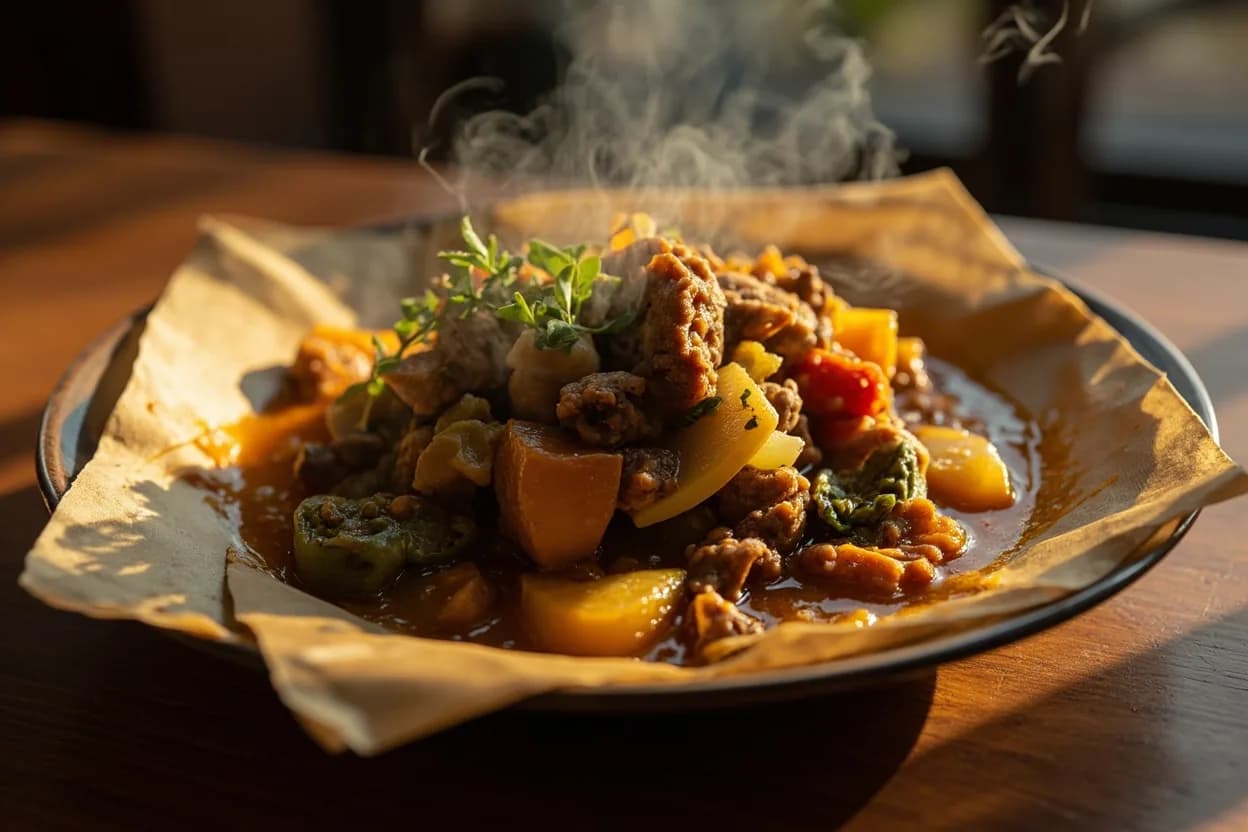
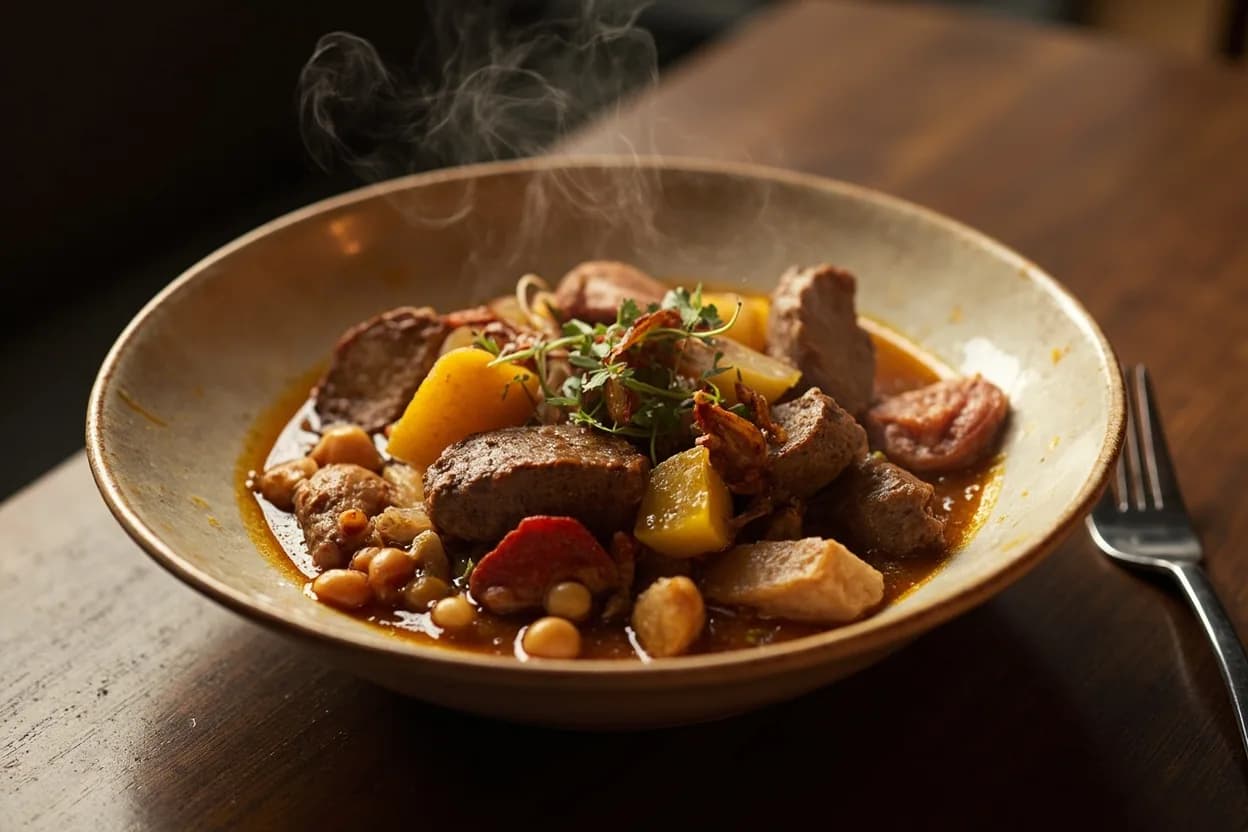
Colonial administrative kitchen brought chickpea-and-meat stew traditions that merged with island ingredients to produce puchero canario.
Canonical recipes
The dishes that define Canarian (Canary Islands), documented in the Canon.
References
- 1.Anya von Bremzen, The New Spanish Table (2005)
- 2.Lourdes March, El libro de la cocina española (1992)
- 3.Isabel González Turmo, Alimentación y cultura en España (1997)
- 4.José de León Hernández, La cocina canaria (2001)
Confidence: high
Notes
Gofio — the foundation
Gofio predates Spanish colonisation; it was the Guanche staple and remains the most distinctive element of Canarian food identity. It is not a single grain: wheat, barley, maize, or blends are toasted to varying degrees, then stone-ground to a flour. Its flavour ranges from nutty and sweet (lightly toasted wheat) to deep and roasty (dark maize). No other Spanish regional cuisine has a grain product with this structural role — gofio thickens soups (escaldón), forms energy balls (pella), replaces bread, and anchors desserts.
Volcanic salt and the arrugado technique
Papas arrugadas requires extraordinary salt concentration — traditionally made with raw seawater or approximated with 3–4 tablespoons of coarse salt per litre of water for small waxy potatoes. The potatoes are cooked until all liquid evaporates and the salt crust forms, shaking the pan constantly in the final minutes. The volcanic soils of Tenerife and Lanzarote produce distinctively small-tuber potato varieties (papas negras, papas bonitas) that hold their shape perfectly under this treatment.