Southern Europe
Campanian
Also: Cucina Campana, Campania cuisine, Neapolitan and Campanian
The volcanic garden of Italy: mozzarella di bufala, San Marzano tomatoes, Amalfi lemons, and the world's most imitated pizza, all grown from Europe's most fertile volcanic plain.
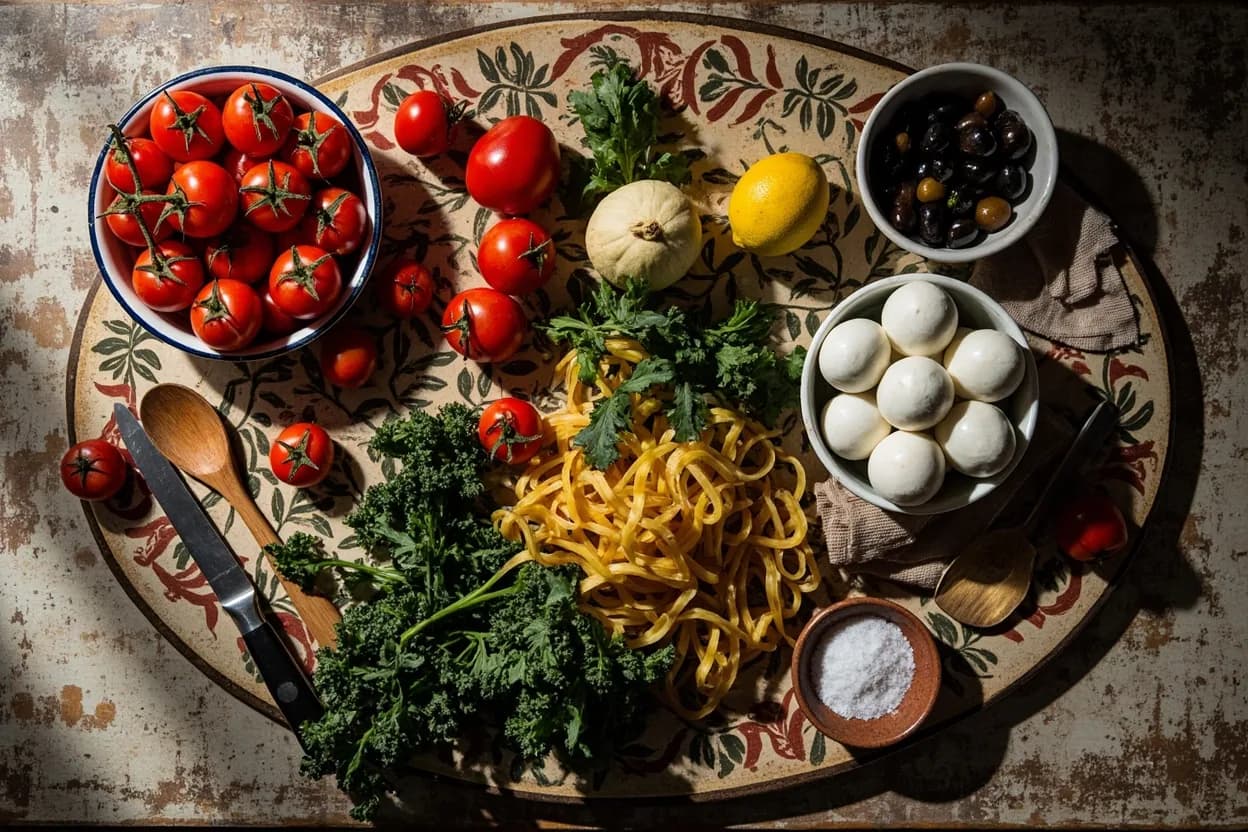
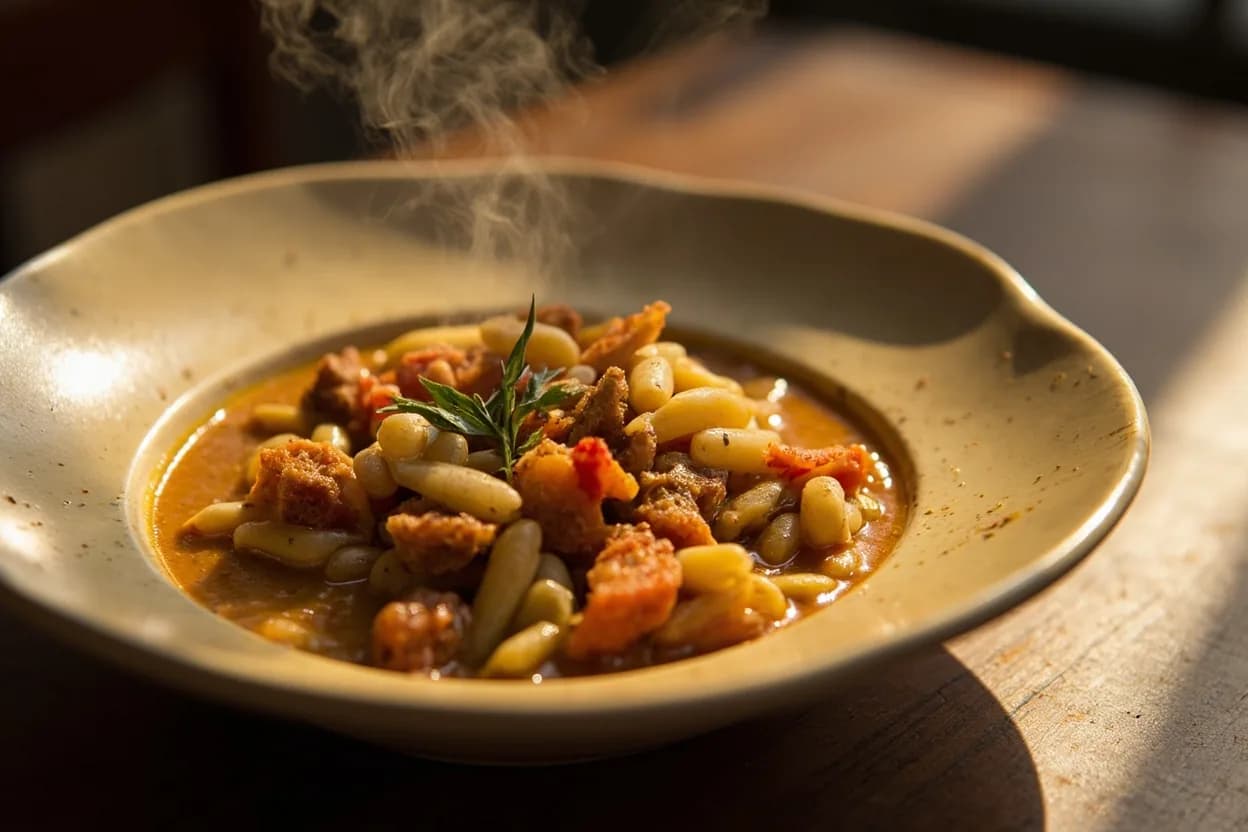
Campanian cuisine encompasses the full agricultural and coastal wealth of the region surrounding Naples, extending beyond the city to the Campania Felix — the 'happy land' of the ancient Romans. The Camorra buffalo herds of the Caserta plain produce the world's benchmark fresh mozzarella; the slopes of Vesuvius and the Sele River plain yield San Marzano tomatoes and San Marzano-type plum tomatoes with intense sweetness and low acidity. Amalfi Coast cooking is flavoured by a lemon culture dating to Arab-Norman times, while the Cilento's Mediterranean scrubland produces olive oil, chestnut, and dried legumes of extraordinary quality. The cucina povera of the Neapolitan hinterland — pasta e fagioli, pane e pomodoro, friarielli sautéed in oil — is the foundation of everything.
The flavour base
San Marzano tomatoes cooked briefly in olive oil (pummarola cruda), garlic, and basil; buffalo mozzarella contributes rich lactic freshness; Campanian aglio-olio builds the base for pasta and vegetables.
Pantry staples
Key ingredients
Signature techniques
Signature dishes
Campanian on the table
At the table
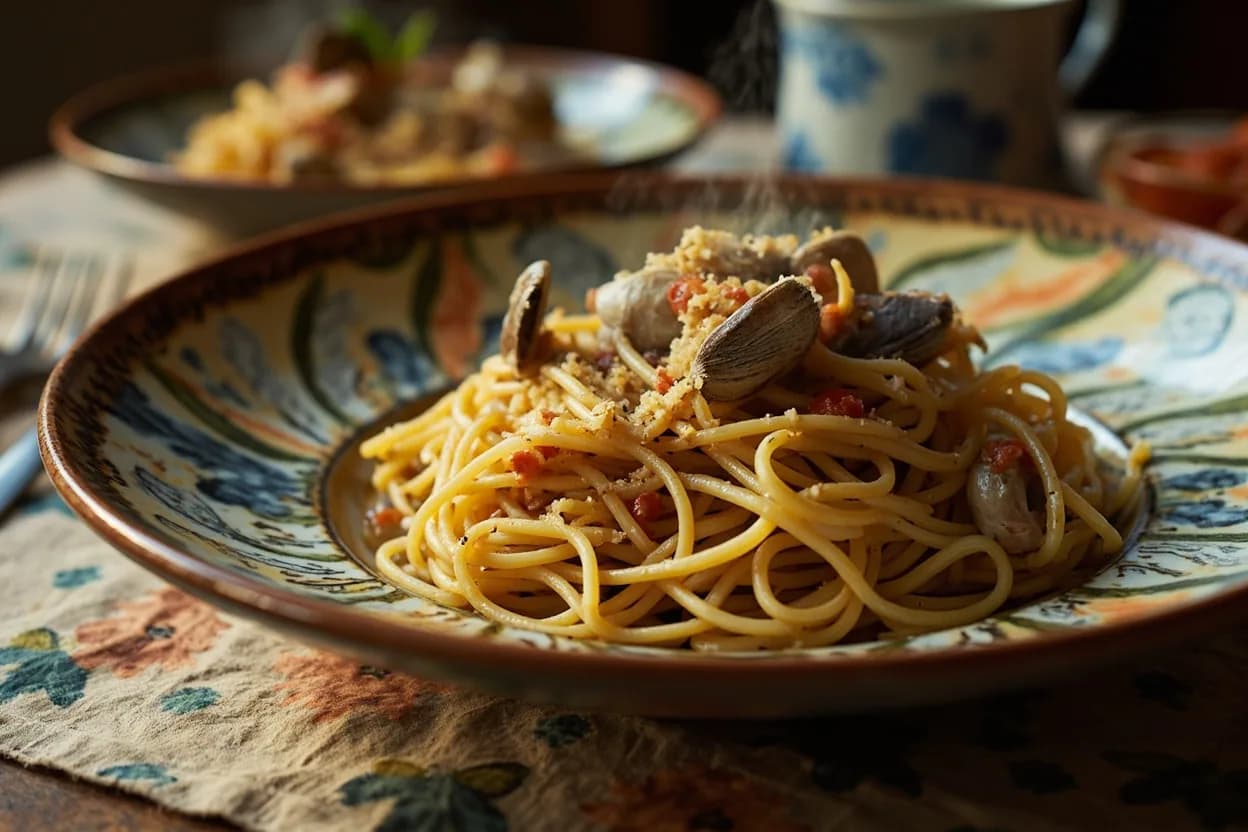
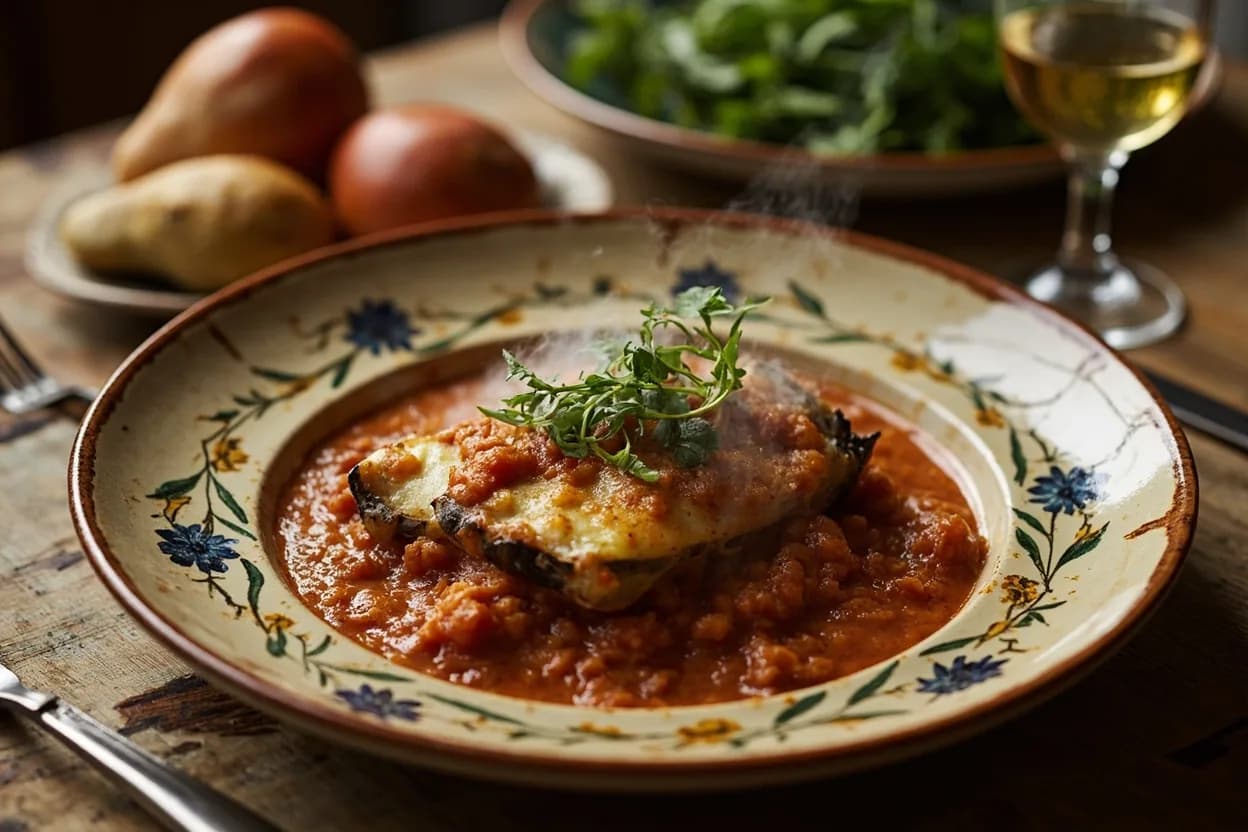
In Naples, street food and quick antipasti (cuoppo fritto, pizza a portafoglio, fried calzone) coexist with multi-course Sunday lunches built around a ragù that simmers from Saturday night. Coastal Amalfi meals lead with raw seafood, crudi, and lemon-dressed octopus before a fresh pasta secondo. The Cilento table is simpler: legumes, bread, olive oil, and preserved vegetables form the backbone of daily meals.
History & context
The Campania Felix of antiquity — stretching from the Tiber to the Sele River — was the breadbasket and wine cellar of the Roman Empire. The Arabs who ruled Sicily and influenced the Amalfi maritime republic from the ninth century introduced citrus, eggplant, rice, and the sugar cane that underpins Neapolitan pastry. The Aragonese and Spanish Bourbon courts of Naples (fifteenth through eighteenth centuries) formalized elaborate timbales, refined pastry, and the court cuisine that eventually trickled down to street food. Tomatoes, introduced from the Americas in the sixteenth century, became fully integrated by the eighteenth, when Naples was the first European city to embrace them as food (initially they were considered ornamental or poisonous elsewhere). The Neapolitan pizza was codified in the nineteenth century under the Bourbons; the Margherita variant was supposedly created in 1889 for Queen Margherita of Savoy, though debate about the legend continues. Campania's dairy tradition — buffalo mozzarella — traces to Lombard settlers who brought water buffalo in the sixth century CE.
Regional variations
- Naples and surroundings
Street food epicentre: pizza, frittura, ragù napoletano, pastiera; the city's cucina povera traditions are globally influential.
- Amalfi and Sorrento coasts
Lemon-dominant: limoncello, scialatielli al limone, delizia al limone dessert; anchovy-packed from Cetara (colatura di alici).
- Cilento and Vallo di Diano
UNESCO-recognized Mediterranean diet heartland; legumes, olive oil, preserved fish, and wild herbs define the table.
- Caserta and Benevento hinterland
Buffalo mozzarella production; Caserta's mozzarella di bufala zone; Benevento's Strega liqueur and torrone tradition.
- Capri and the Flegrea coast
Insalata caprese origin; rabbit all'ischitana (Ischia-style rabbit) with herbs and white wine.
Related cuisines
Shared Arab-Norman historical influence; both use eggplant, citrus, sweet-sour agrodolce, and elaborate pastry.
Southern neighbour sharing 'nduja-style preserved pork, peperoncino, and similar poverty-cuisine traditions.
- Lazio
Northern neighbour; Roman ragù and Campanian ragù are distinct but share the slow-braise tradition.
- Apulian
Eastern peninsular neighbour sharing fried pastry (cartellate), burrata's cousin stracciatella, and durum wheat pasta tradition.
Canonical recipes
The dishes that define Campanian, documented in the Canon.
References
- 1.Pomp and Sustenance: 25 Centuries of Sicilian Food, Mary Taylor Simeti (1989)
- 2.Italian Regional Cooking, Ada Boni (1969)
- 3.Naples at Table: Cooking in Campania, Arthur Schwartz (1998, HarperCollins)
- 4.Il Cucchiaio d'Argento (The Silver Spoon), Editoriale Domus, 8th ed.
- 5.Disciplinare di Produzione Mozzarella di Bufala Campana DOP, Italian Ministry of Agriculture
Confidence: high
Notes
The ragu question
Neapolitan ragù (ragù napoletano or 'o rraù) is a five-to-eight-hour braise of mixed meats — beef braciole, pork ribs, sausage — in tomatoes and wine. It is a Sunday ritual, not a weeknight sauce, and the debate about whether to use pork, beef only, or mixed cuts is conducted with the seriousness of religious doctrine.
Colatura di alici
Colatura from Cetara (Amalfi Coast) is the direct descendant of ancient Roman garum — fermented anchovy liquor drawn from terracotta terzigni. It is used sparingly as a condiment on spaghetti with garlic, oil, and parsley: a dish that requires no salt and no heat beyond warm pasta.