West Africa
Cameroonian
Also: Cameroon cuisine, Africa in miniature cooking
The cuisine of 'Africa in miniature' — a patchwork of over 250 ethnic food traditions unified by forest ingredients, fermented crayfish, and the slow, deep cooking of ndolé and eru.
Cameroonian cuisine reflects the country's extraordinary geographic and ethnic diversity — from the Atlantic coastline and southern rainforest to the Sahel grasslands of the north and the volcanic highlands of the west. It is not one cuisine but a layered mosaic in which Bamiléké, Beti, Duala, Bakweri, and dozens of other ethnic traditions coexist. Fermented ingredients are central: crayfish (dried and pungent), njansang seeds, ogiri (fermented oil seeds), and bush pepper. Leafy greens — bitter leaf, eru vine, waterleaf, ndolé — are the soul of Cameroonian cooking, typically cooked slow and long with palm oil until silky and deeply flavored.
The flavour base
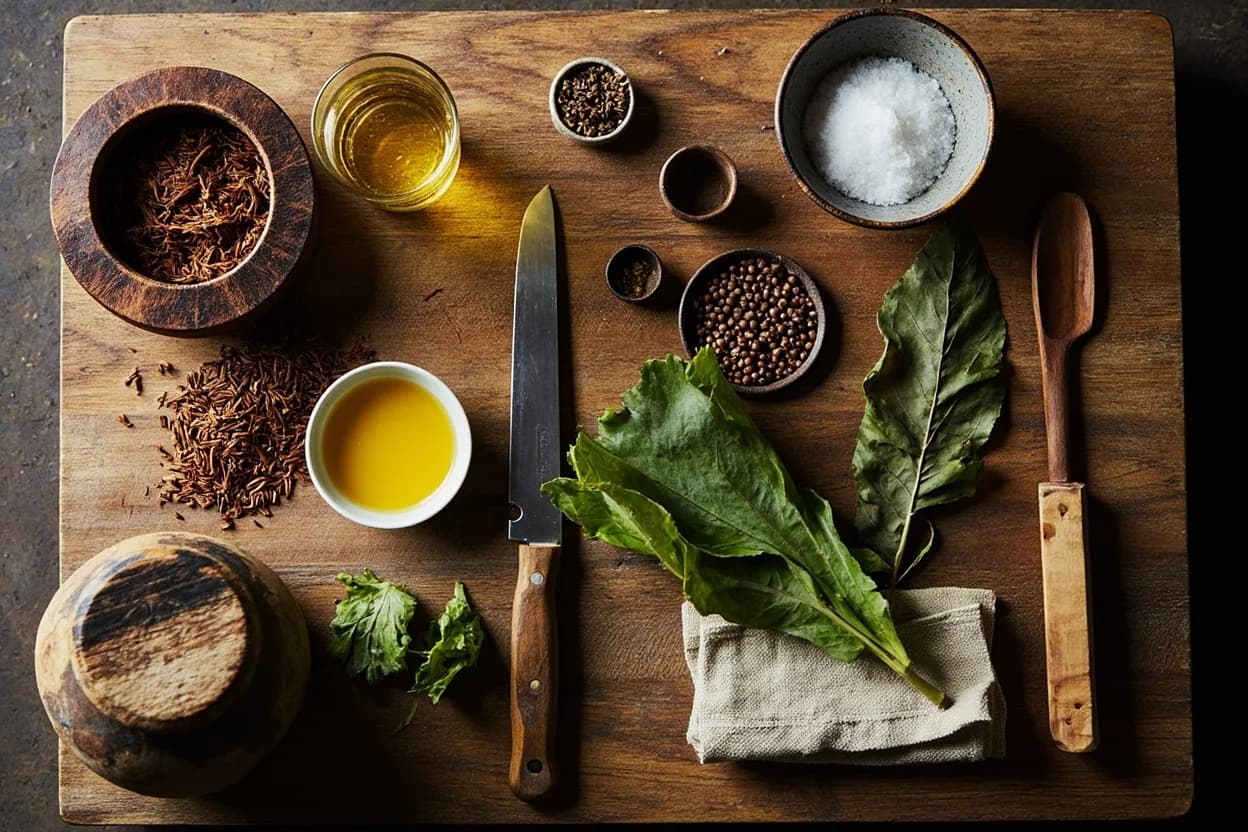
Ground crayfish, palm oil, and fermented njansang or ogiri seeds form the flavor foundation; bitter leaf and eru provide the leafy backbone; African bush pepper (uziza/ashanti pepper) adds warmth.
Pantry staples
Key ingredients
Signature techniques
Signature dishes
Cameroonian on the table
At the table
Meals center on a starchy base — fufu (made from cassava, cocoyam, or corn flour), boiled plantain, or rice — paired with a richly spiced stew or leafy preparation. In the south and west, lunch is the main meal and almost always includes a leafy green stew. In the north (Fulani and Hausa communities), millet and sorghum porridges replace fufu. Social meals are communal and large; ndolé is the prestige dish served at celebrations.
History & context
Cameroon's coastline was reached by Portuguese explorers in 1472, who named it Rio dos Camarões (River of Prawns) after the abundance of crayfish in the Wouri estuary — leaving a legacy in the very name of the nation and its love for crayfish. German colonization (1884–1916) followed by a French-British dual mandate shaped Cameroonian francophone and anglophone food cultures differently, with French techniques and baguettes integrating into southern urban cooking while British influence shaped the anglophone northwest and southwest. Indigenous food practices, however, remained the dominant force in most homes and markets.
Regional variations
- Littoral / Duala (coastal)
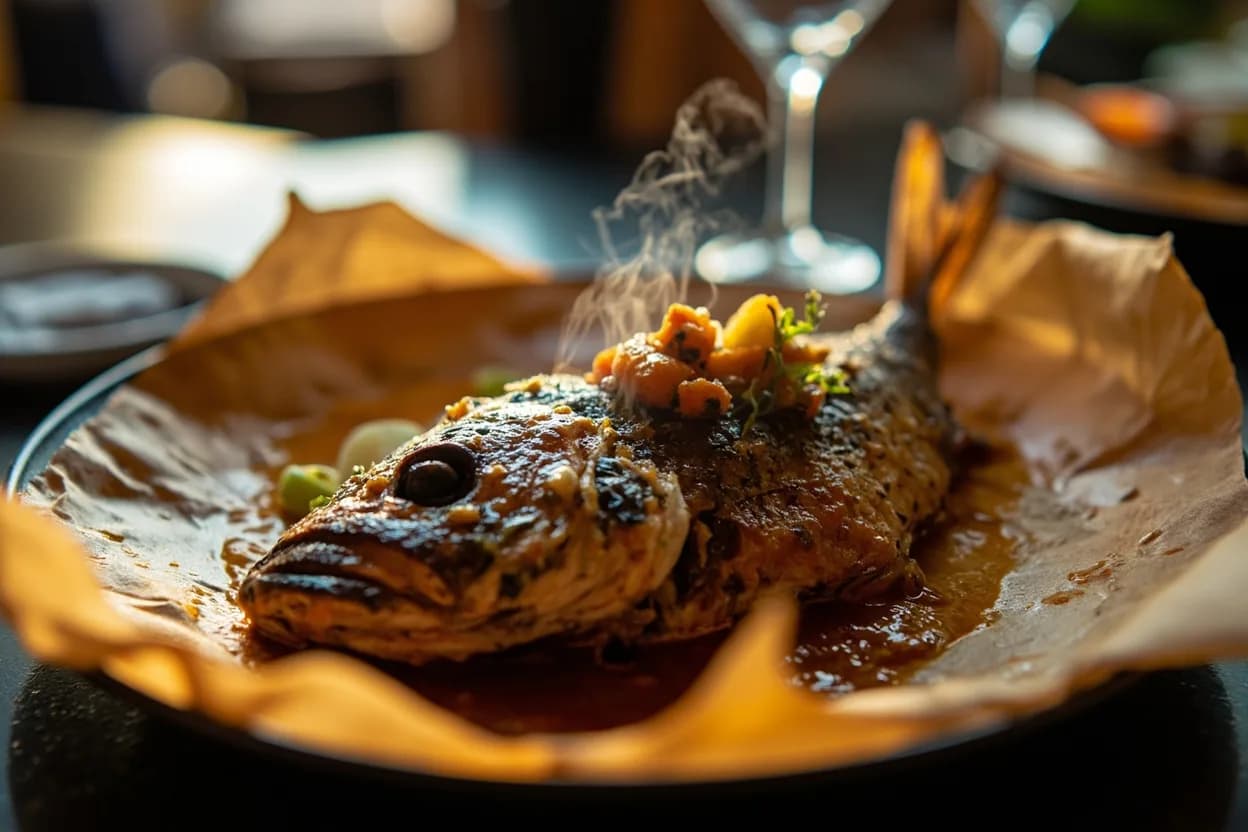
Strongest Atlantic seafood culture; poisson braisé (charcoal-grilled fish) with plantain and piment is iconic. Ndolé is said to originate here.
- West / Bamiléké highlands
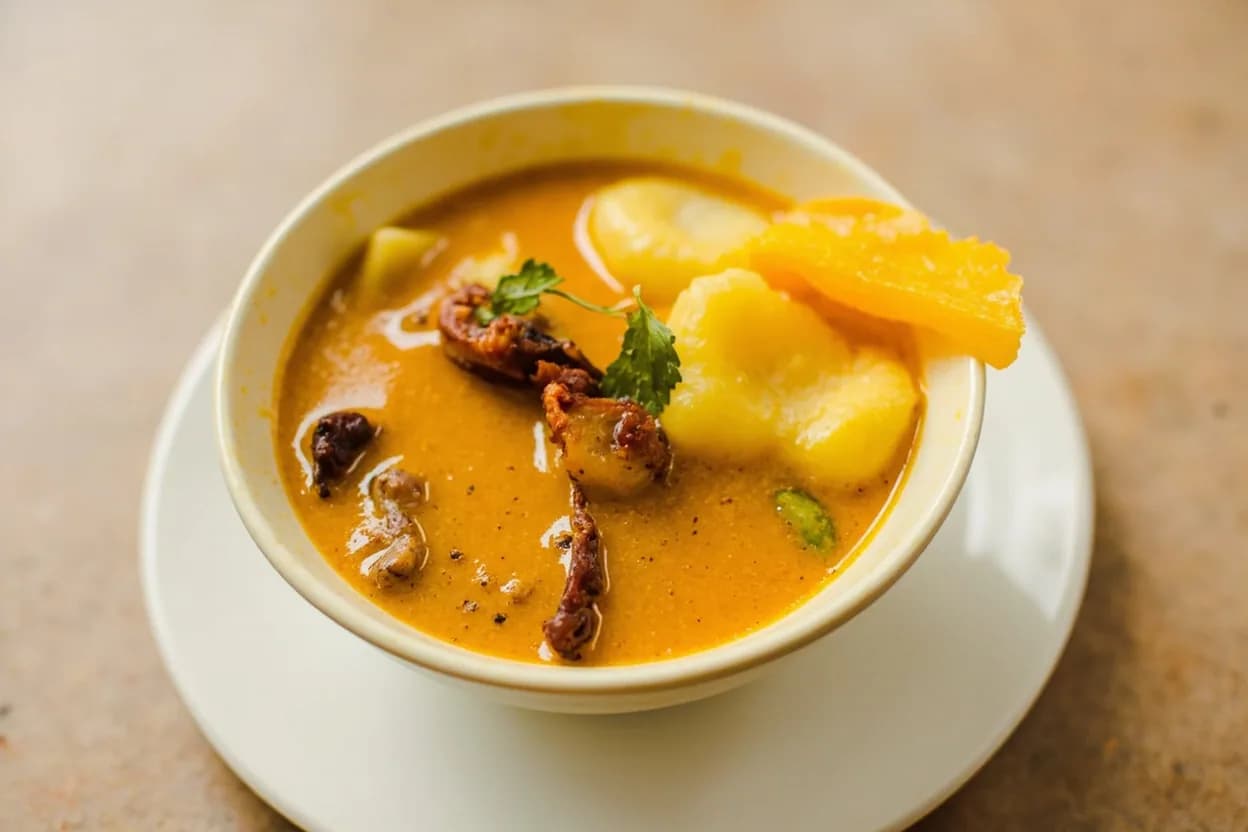
Known for achu (yellow palmnut soup with cocoyam fufu), kati-kati (grilled Ngaoundéré chicken), and a rich fermenting tradition. Bamiléké feasts are elaborate.
- Southwest / anglophone
Eru stew is the defining dish; fufu corn (a stiff corn porridge) is the base; smoked fish and smoked bush meat are prevalent.
- North / Adamawa and Sahel
Fulani and Hausa influence dominates; tuwo, miyan kuka, kilishi-style meats, and fura da nono reflect Sahelian affinities over forest cooking.
- Center / Beti
Mbongo tchobi (the dramatic black stew using charred ndjansang and calabash nutmeg) is a Beti signature dish.
Related cuisines
- Nigerian
Shared ingredients (egusi, crayfish, bitter leaf) and overlapping stew traditions; the two countries share the Bight of Biafra coastline.
Similar forest-ingredient repertoire (cassava, palm oil, leafy greens) and slow-cooking methods for leafy stews.
The Cameroonian north shares Fulani pastoral traditions, suya culture, and Sahelian grain cooking.
- Equatorial Guinean
The smallest neighbor shares forest ingredients, palm oil traditions, and some cocoyam-based preparations.
Canonical recipes
The dishes that define Cameroonian, documented in the Canon.
References
- 1.The Africa Cookbook — Jessica B. Harris (1998)
- 2.Cameroon Cookbook — Becky Nhung (2021)
- 3.The Oxford Companion to Food — Alan Davidson (3rd ed., 2014)
- 4.Culinaria Africa — Ulla Hein et al. (2006)
Confidence: high
Notes
Ndolé: the national dish
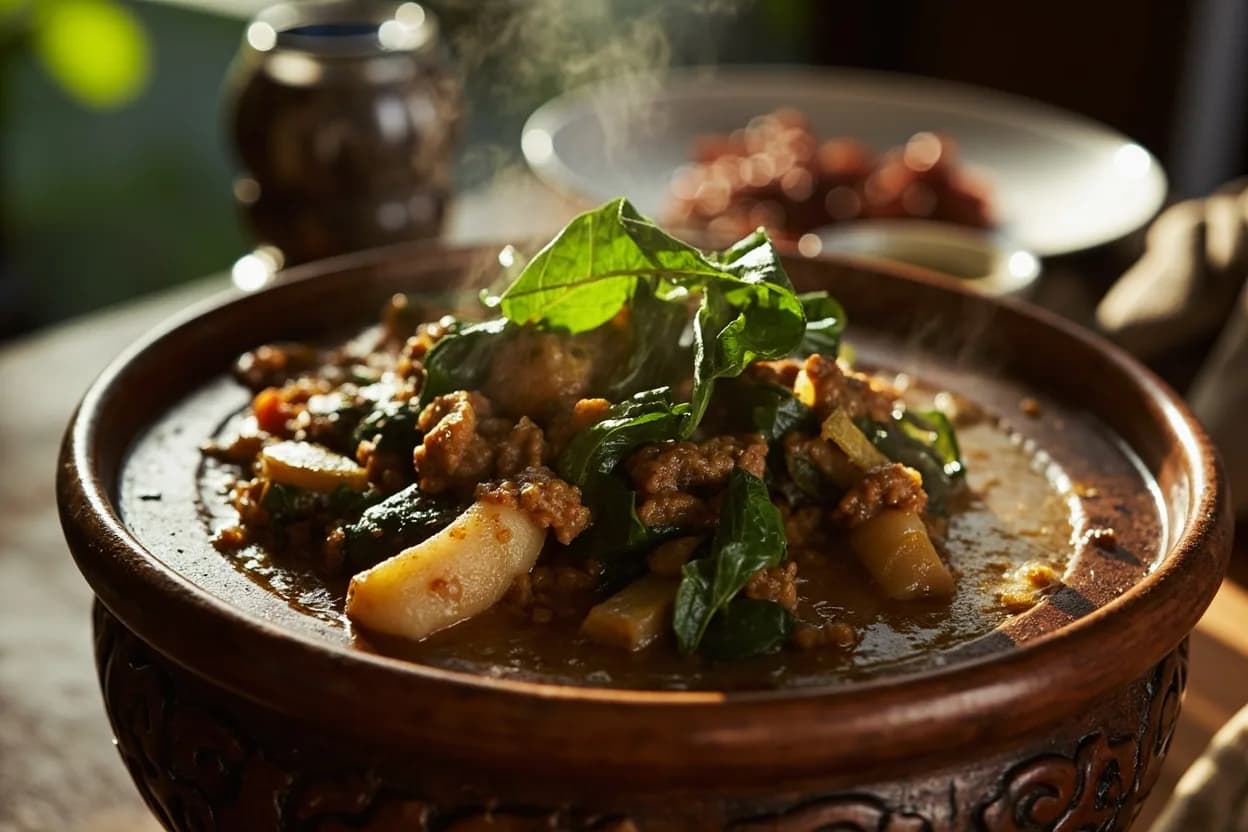
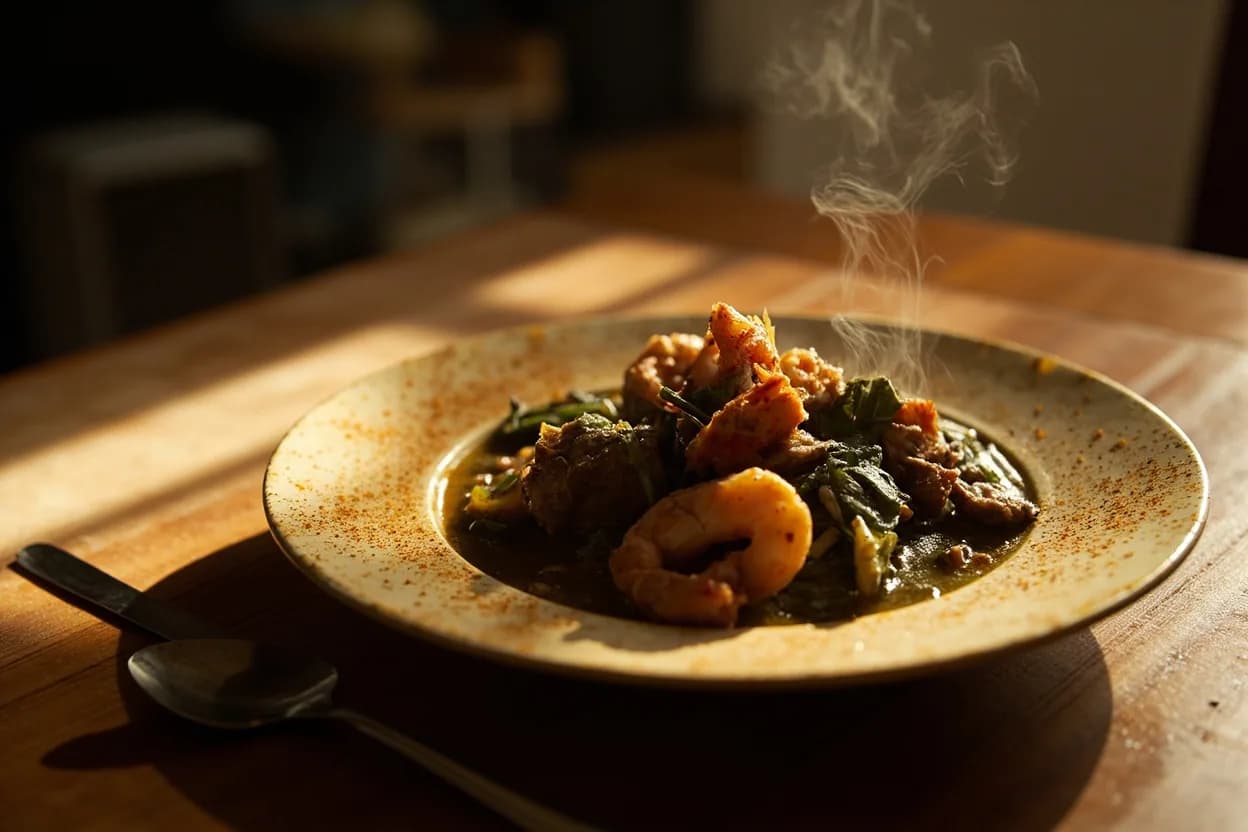
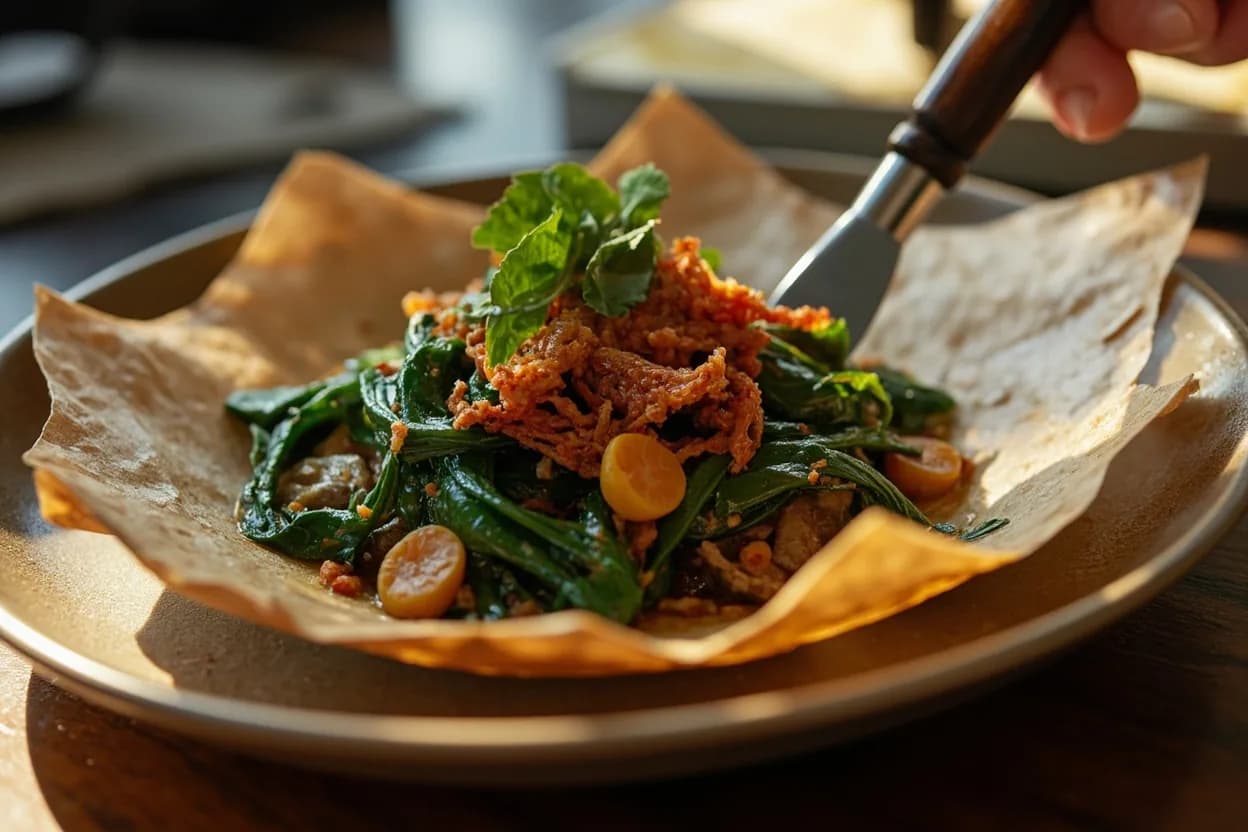
Ndolé is Cameroon's most celebrated dish — a rich, glossy stew of Vernonia amygdalina (bitter leaf), ground peanuts or njansang seeds, crayfish, and meat or shrimp. The bitterness of the leaf is modulated through repeated washing and squeezing before long, slow cooking in palm oil. It is the centerpiece of all major celebrations and the food most likely to produce homesickness in the Cameroonian diaspora.
Mbongo tchobi: cooking with char
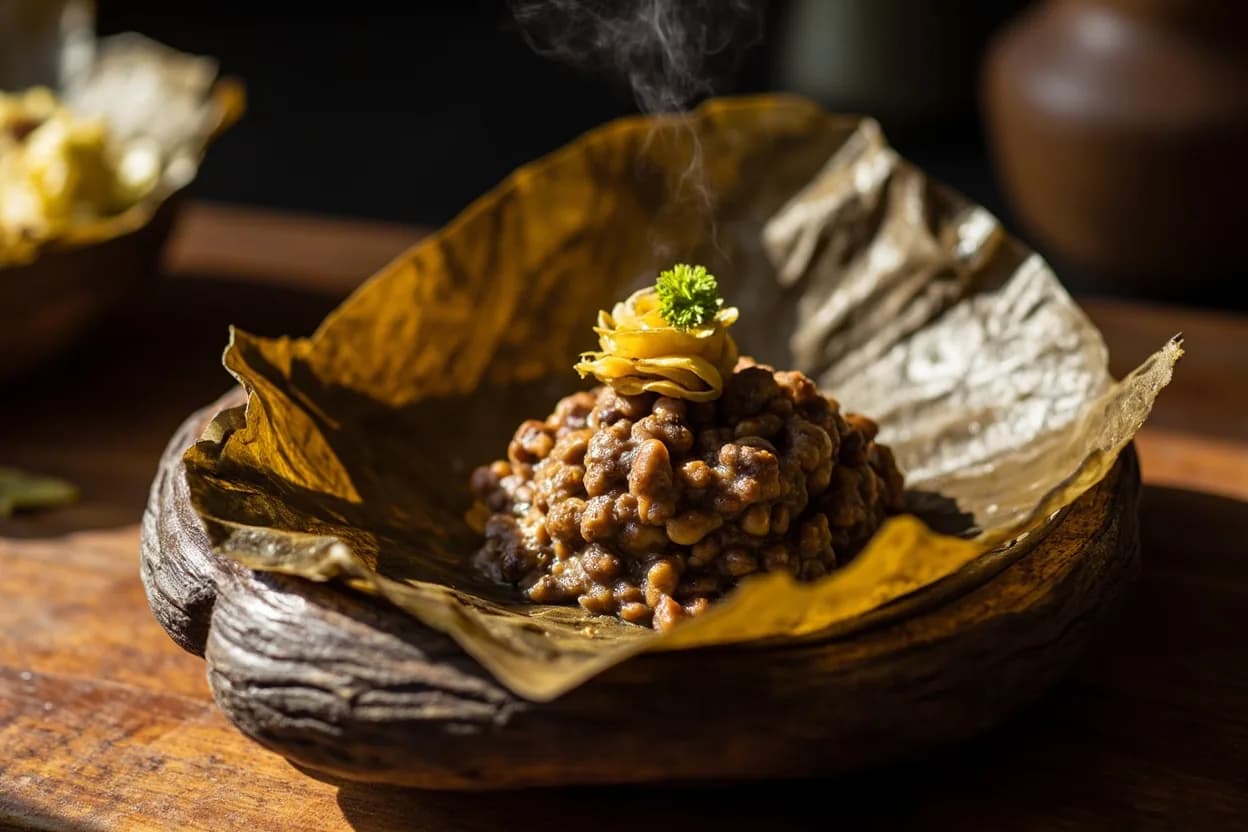
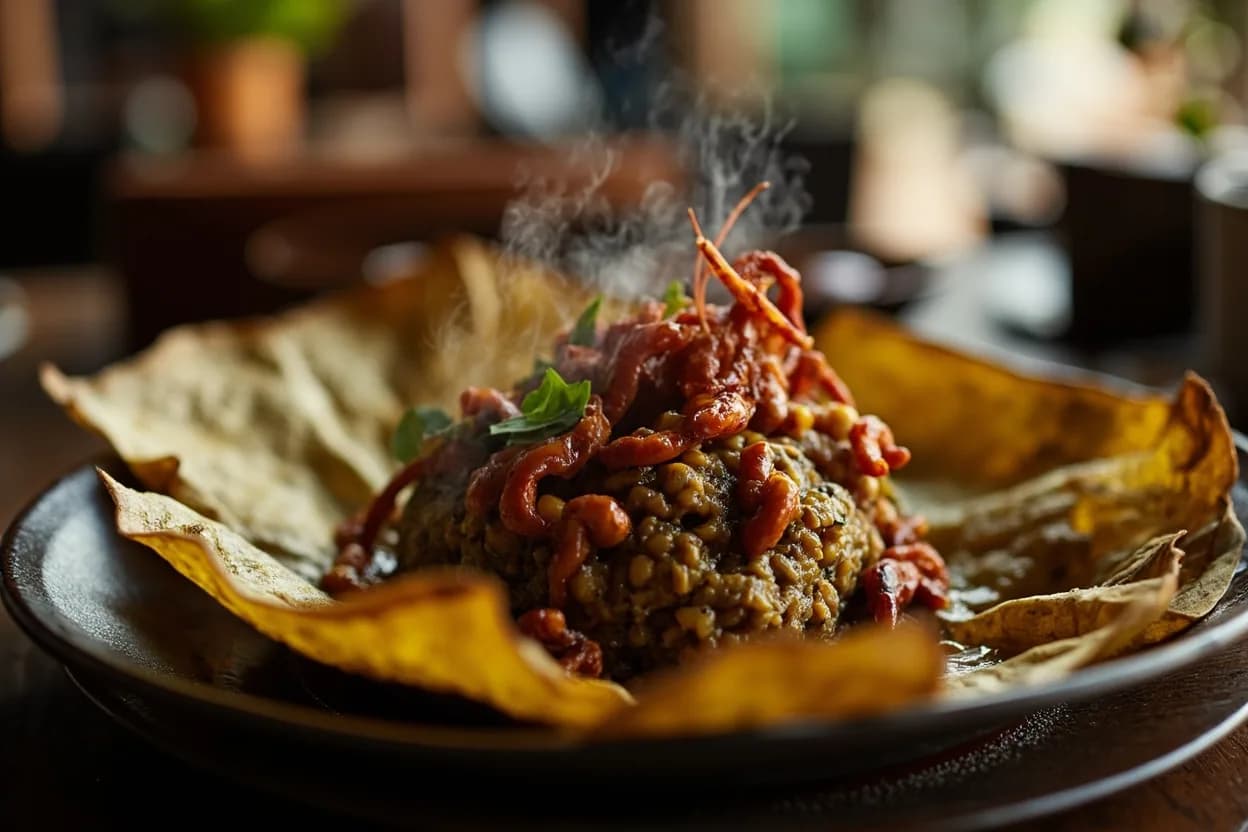
Mbongo tchobi (literally 'black stew' in Duala) is produced by charring the dry skin of ndjansang seeds and other spices before grinding them into a paste. The controlled carbonization produces a complexly bitter, smoky, resinous sauce that cooks dark and deep. It is one of the most technically demanding and culturally specific preparations in West African cooking.