Central Africa
Congolese (DRC)
Also: Congolese cuisine, DRC cooking, Zairian cuisine, cuisine congolaise
The equatorial-forest cooking of the world's second-largest tropical rainforest — cassava leaf, palm nut, and river fish sustaining the most populous Francophone nation on earth.
Congolese cuisine from the Democratic Republic of Congo is defined by its equatorial forest pantry: cassava in every form (pounded leaves, dried flour, steamed paste), palm nuts processed into cream and oil, river and lake fish (tilapia, capitaine, Nile perch), and an abundance of wild greens. The country's sheer size — nearly as large as Western Europe — encompasses extraordinary regional diversity across more than 400 ethnic groups, but certain ingredients and techniques appear pan-nationally: pondu (cassava leaf stew), moambe (palm nut chicken), fufu, and smoked fish. Belgian colonial influence introduced baguettes and brewed beer (Primus and Skol are national institutions) without displacing the indigenous starch-and-stew architecture.
The flavour base
Palm oil and palm nut cream form the fat base; smoked or fermented fish (dried tilapia, kapenta) and ground crayfish provide umami; lenga-lenga (wild amaranth) and bitekuteku (cassava leaves) are the green foundation.
Pantry staples
Key ingredients
Signature techniques
Signature dishes
Congolese (DRC) on the table
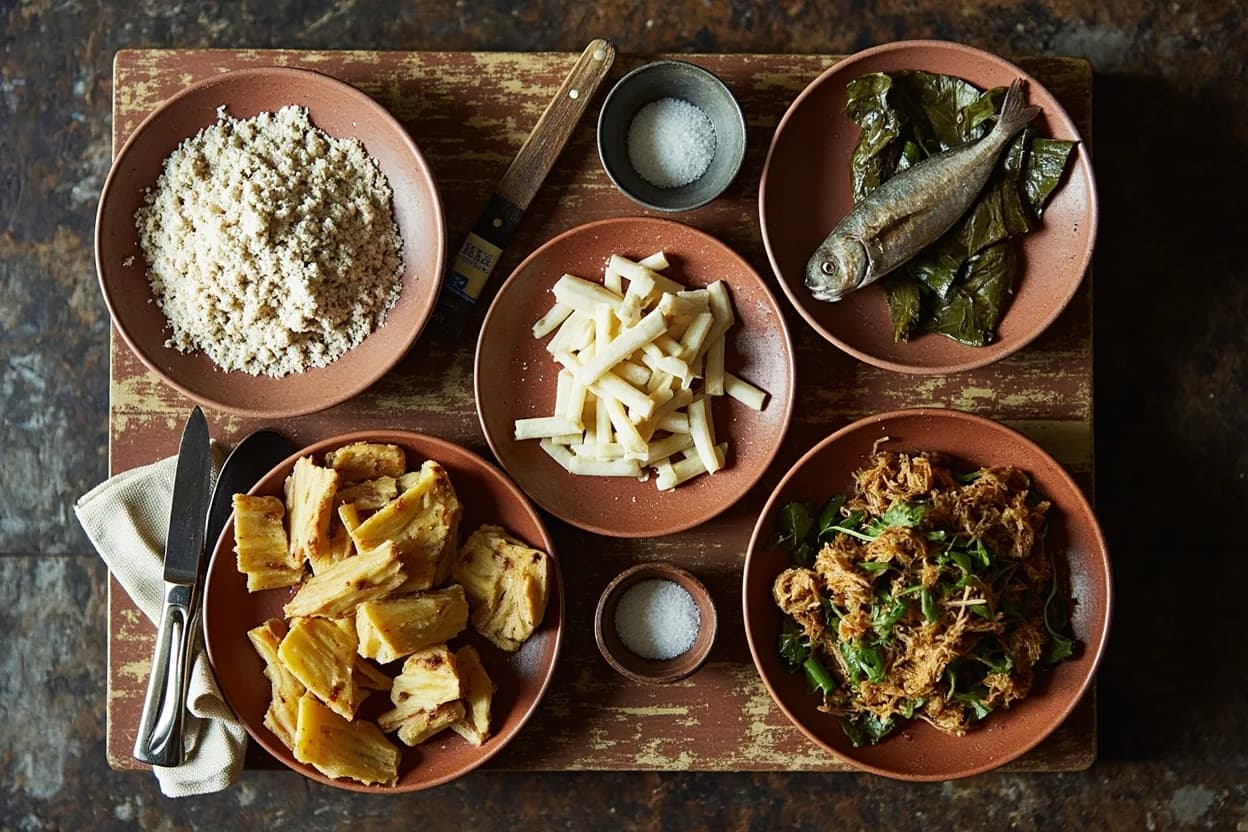

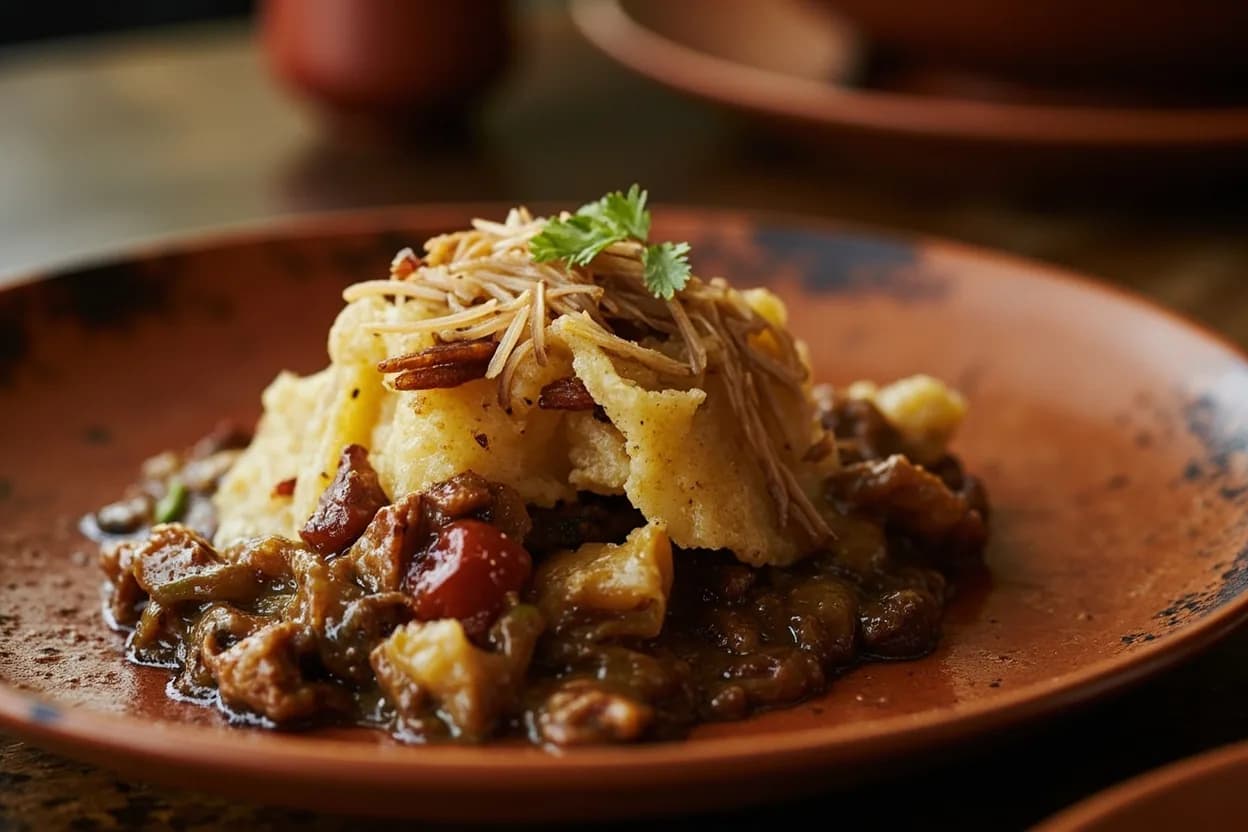
At the table
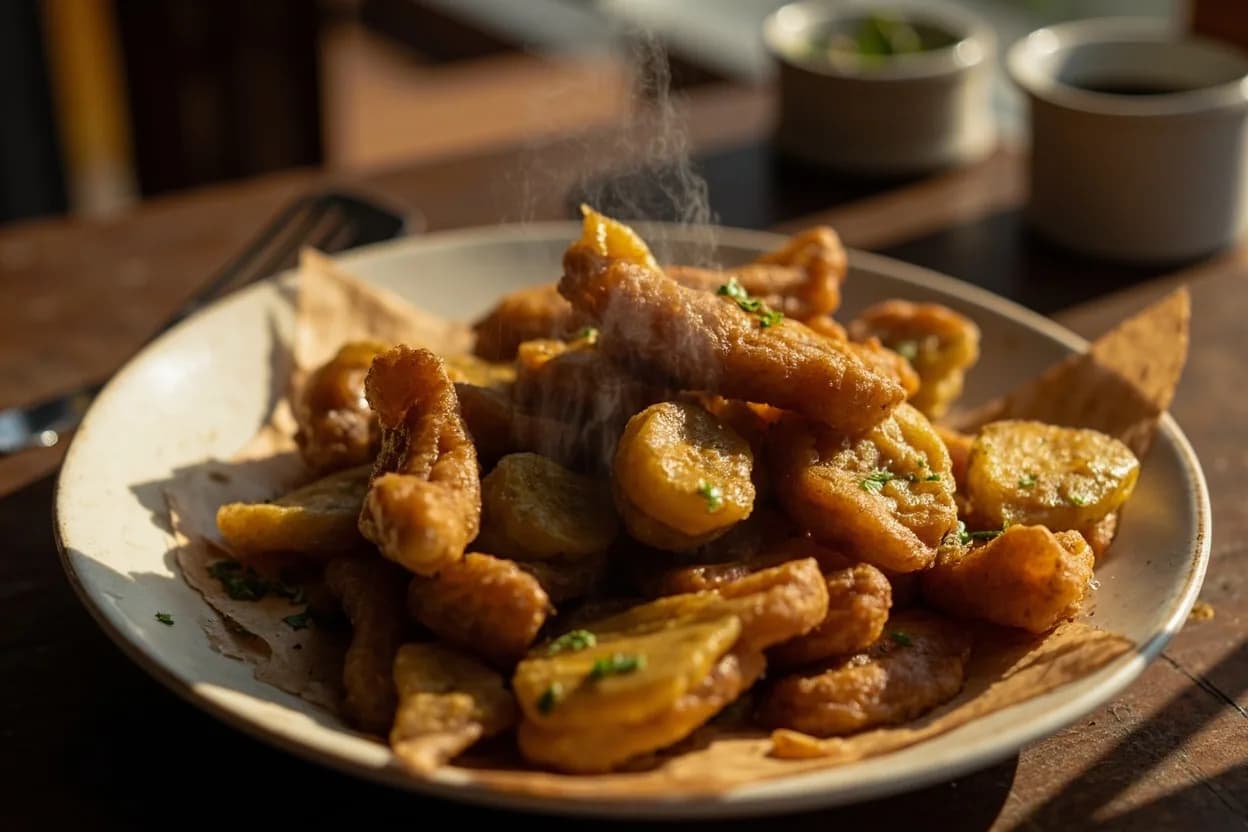
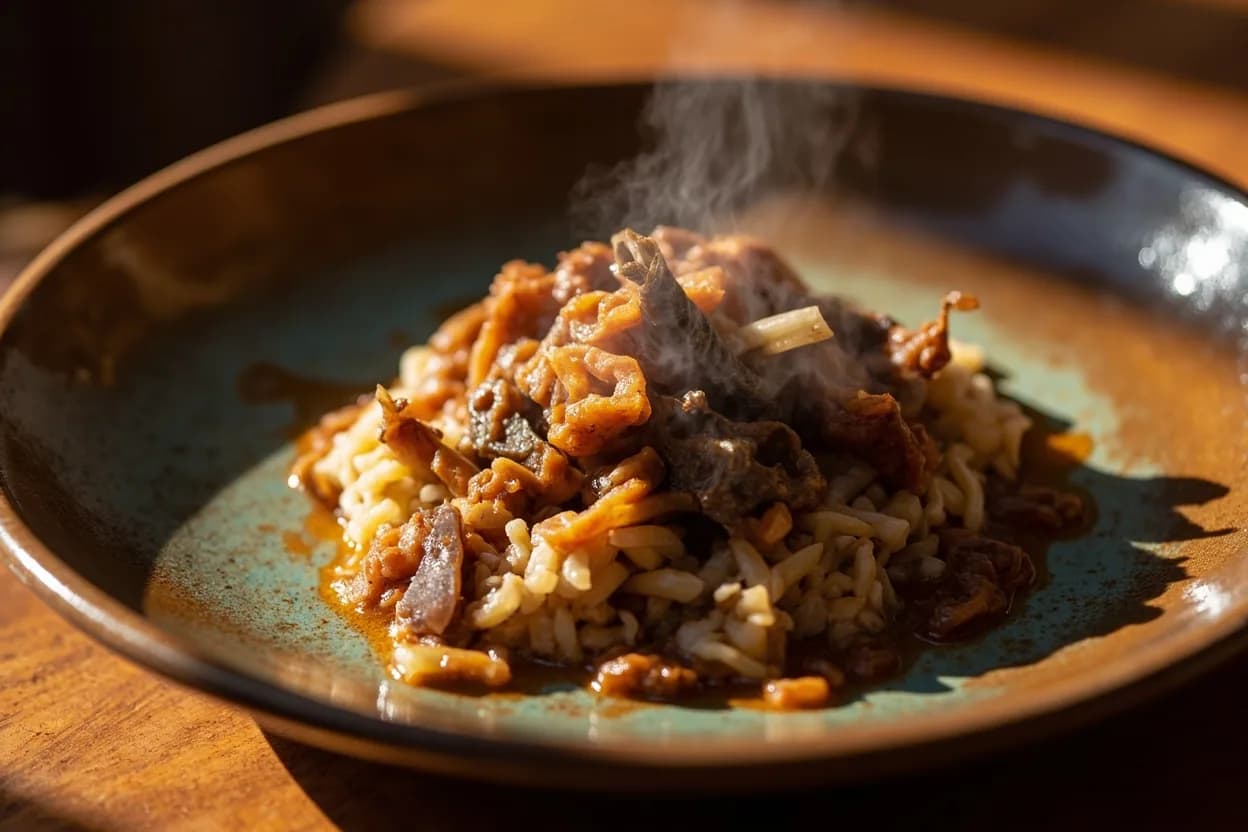
The foundational meal is fufu with pondu or moambe, eaten communally from a shared bowl. Fufu is torn by hand, formed into a ball, dipped, and swallowed rather than chewed — its texture and glutinosity are what Congolese cooks calibrate most carefully. In cities (Kinshasa, Lubumbashi), rice is increasingly common and mixes of rice-and-fufu occur. Street food in Kinshasa includes brochettes (grilled skewers), fried plantain, and braised fish. Beer (Primus) is the universal social drink.
History & context
The Congo River basin has been inhabited for at least 80,000 years, and Bantu-speaking agricultural communities domesticated many of the region's wild food plants before recorded history. The Kingdom of Kongo (14th–19th century) was a sophisticated state with organized trade and cuisine. Portuguese contact from 1482 introduced cassava and maize from the Americas — cassava in particular became so thoroughly adopted that it is now inseparable from Congolese identity. Belgian colonization (1885–1960), first as Leopold II's personal fiefdom, was brutal and extractive; it introduced some European ingredients and cooking vessels but did little to develop local food systems. Post-independence instability, including the Mobutu era's economic collapse, made subsistence agriculture the norm for most Congolese, reinforcing cassava's centrality.
Regional variations
- Kinshasa and Pool Malebo
Urban capital cuisine blends all regional traditions; Kinshasa is famous for brochettes, nganda (informal restaurants), and a cosmopolitan street food scene mixing Congolese, West African, and international influences.
- Kasai region
Strong cassava leaf tradition; tchikwangue (fermented cassava paste wrapped in leaves) is a staple. Kasai cooking is considered among the most conservative and ingredient-focused.
- Kivu (east, Great Lakes)
Highland climate supports beans, potatoes, and goat; matoke (cooking banana) from the Rwandan-Ugandan border crosses in. Lake Kivu kapenta (small dried fish) is an important protein source.
- Katanga / Luba (southeast)
Influenced by Zambian and Malawian food traditions; nshima (similar to fufu but from maize) appears alongside cassava fufu. Caterpillars (mopane and others) are an important seasonal protein.
- Équateur / forest interior
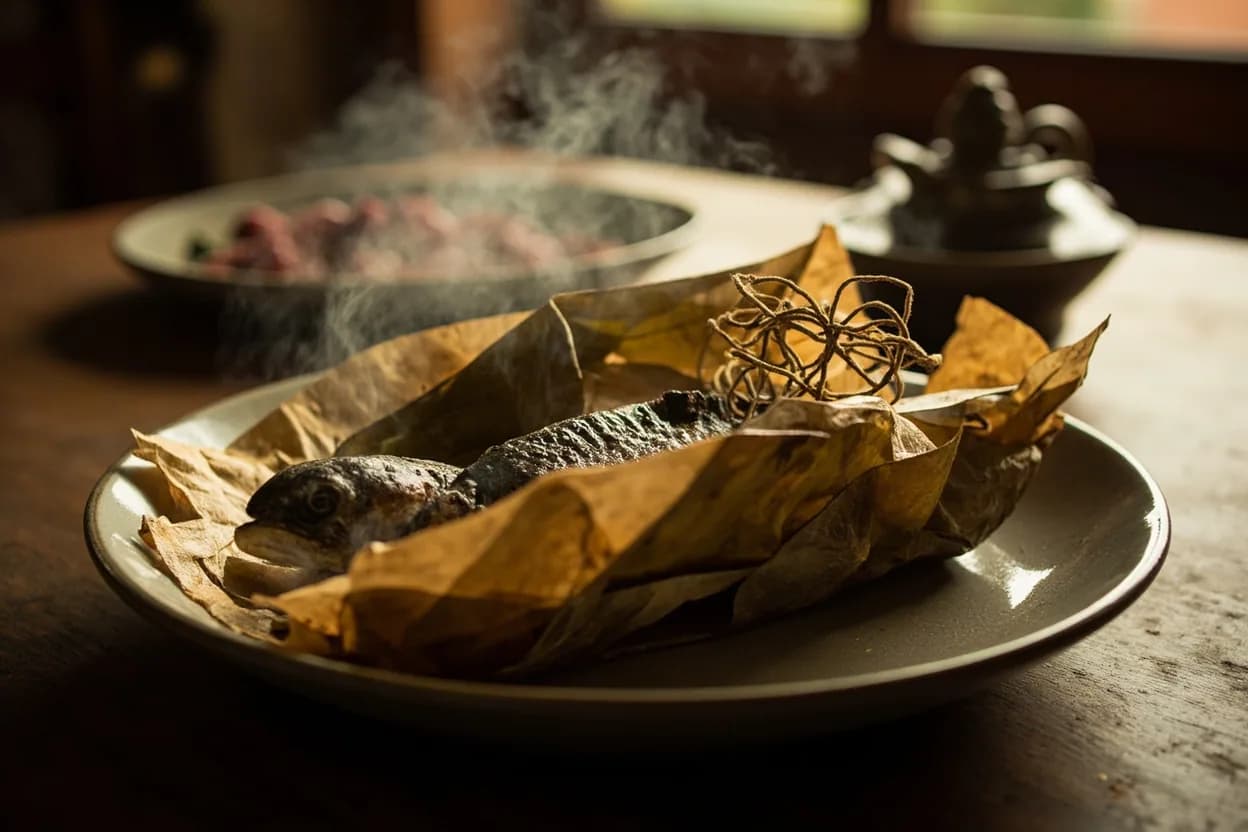
Strongest wild-food tradition: forest caterpillars, wild yams, river fish, and game. Liboke preparations (banana leaf parcels) are especially associated with this zone.
Related cuisines
Northern neighbor sharing cassava leaf stew (ndolé/pondu), palm oil cooking, and forest-ingredient reliance.
- Angolan
Southern neighbor sharing Portuguese colonial influence, palm oil tradition, and moamba de galinha (identical to moambe) as a shared signature dish.
- Republic of Congo (Congo-Brazzaville)
The country across the river shares language, many dishes (pondu, fufu, moambe), and the Congo River fish culture — the cuisines are closely related.
- Zambian
Southeastern neighbor sharing nshima (maize fufu), dried kapenta, and relish-based meal structure.
Canonical recipes
The dishes that define Congolese (DRC), documented in the Canon.
References
- 1.The Africa Cookbook — Jessica B. Harris (1998)
- 2.Congo: The Epic History of a People — David Van Reybrouck (2014)
- 3.The Oxford Companion to Food — Alan Davidson (3rd ed., 2014)
- 4.Culinaria Africa — Ulla Hein et al. (2006)
Confidence: high
Notes
Pondu: the soul of the Congolese kitchen
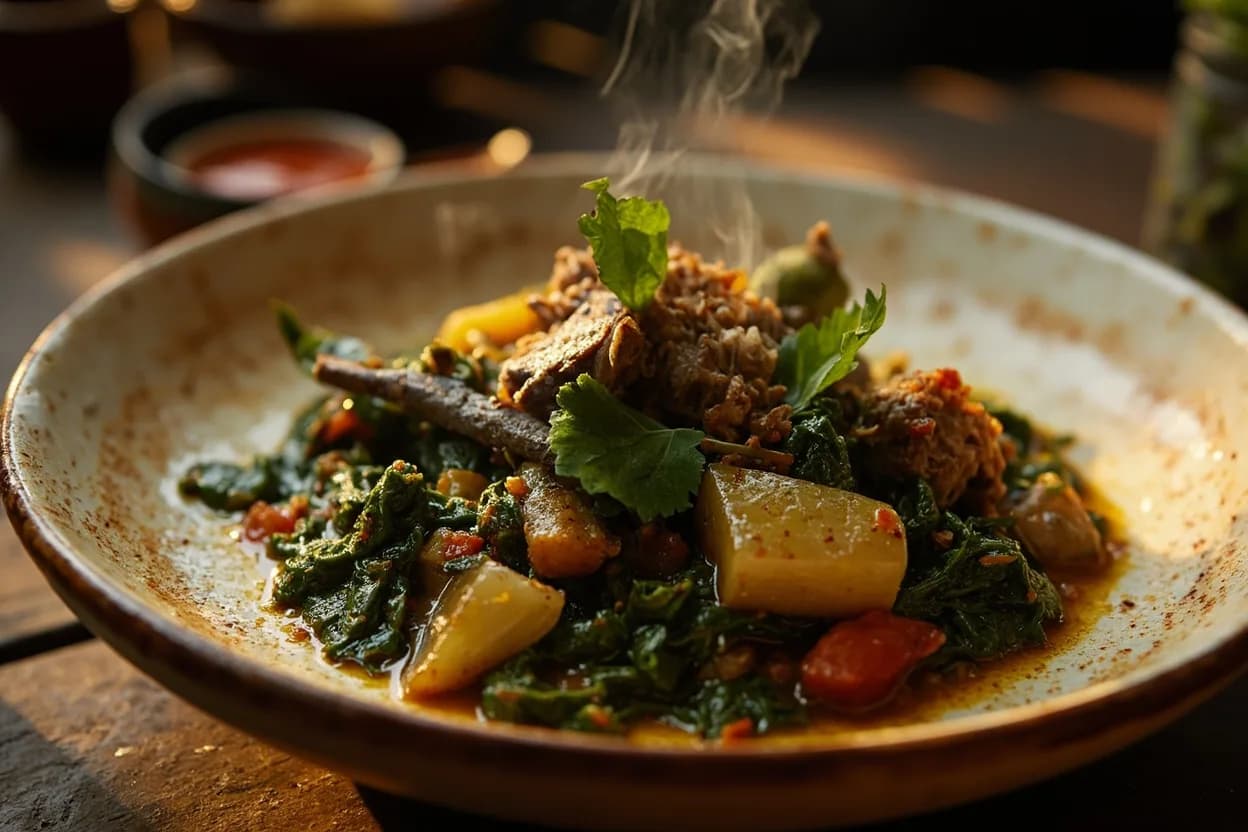
Pondu is made by washing and pounding fresh cassava leaves (or reconstituting dried leaves) until the cellular structure breaks down, then slow-cooking them with palm oil, onion, and dried fish until a dark, silky, deeply savory stew forms. It is the most pan-national Congolese dish — eaten across all ethnic groups, all income levels, in every province. In the diaspora, it is the dish most associated with home.
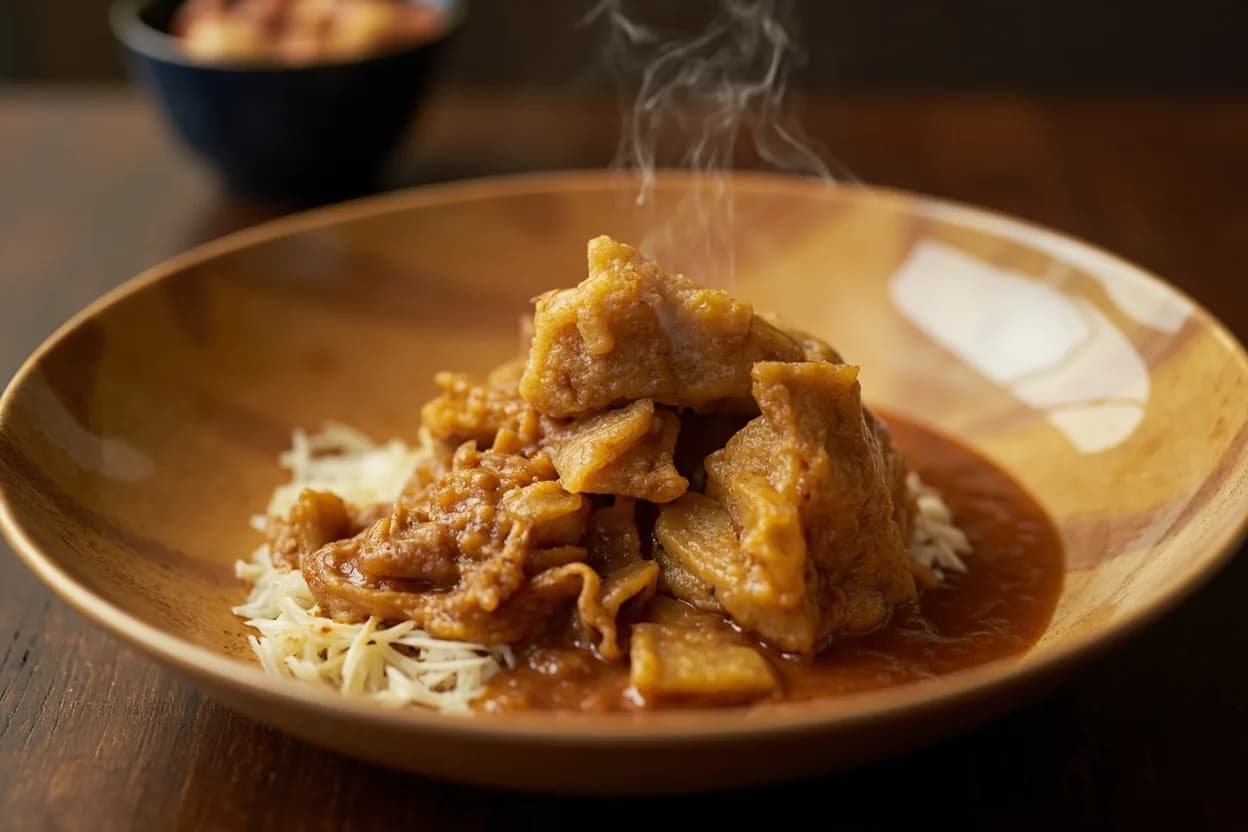
Moambe and the palm nut technique
Moambe (or moamba) is made by boiling palm fruits until soft, then pounding them in a mortar to extract a thick, orange cream. Chicken is simmered in this cream with onion and salt until the fat separates and glazes the meat. The dish appears in virtually identical form as moamba de galinha in Angola and muamba de galinha in São Tomé — evidence of shared Bantu food culture predating European colonization. The Belgian ambassador to any West African capital will recognize it.