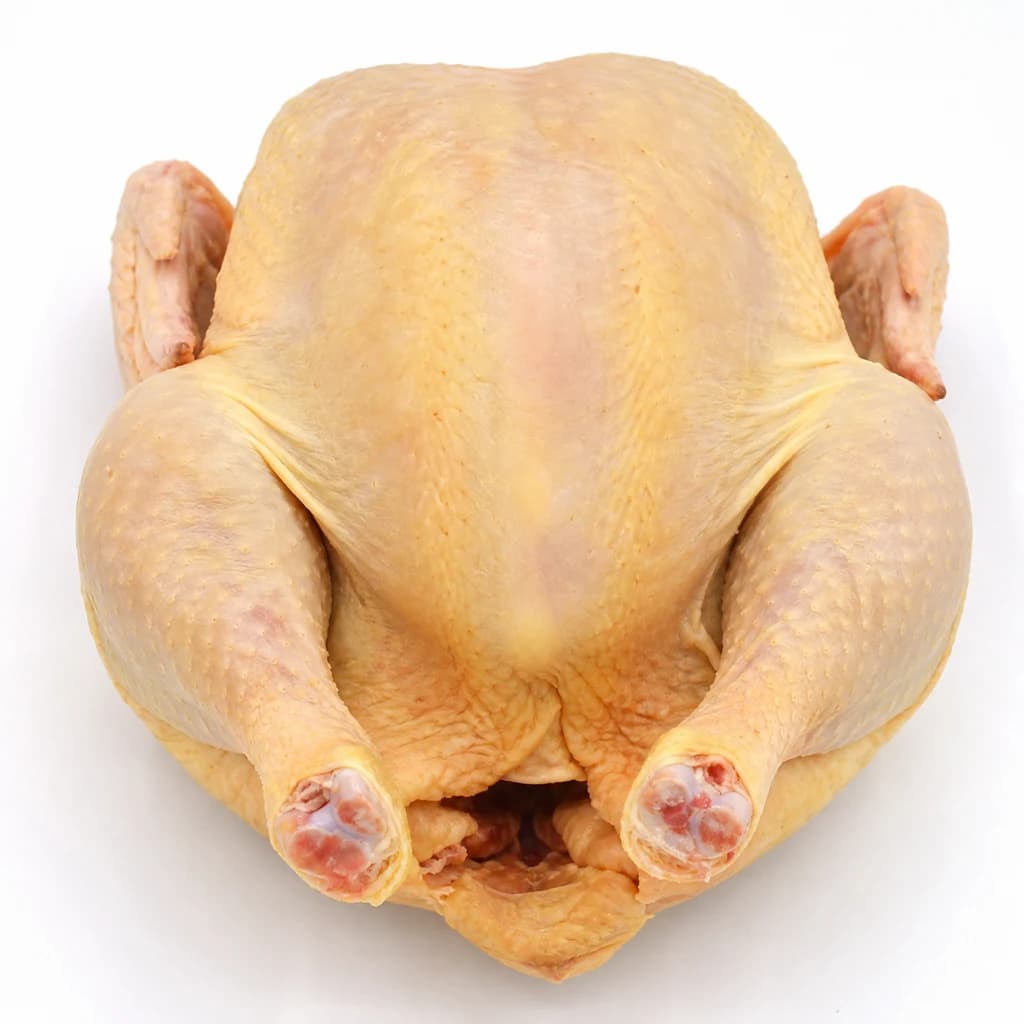
Natural form
A whole raw chicken, skin-on, showing the complete bird before butchering.
Shows the reader the recognizable whole-bird form — the foundational reference for what chicken looks like before any preparation.
Proteins
Chicken
The world's most widely cooked poultry — roasted, stewed, grilled, fried, or simmered into stock across nearly every cuisine.
Chicken is a versatile domestic fowl and the most universally eaten meat, prized for its mild flavor and adaptability. It is roasted whole, jointed for stews and curries, grilled, fried, or simmered down into the foundation of countless broths. Leg and thigh meat stays juicy in slow braises, while the breast cooks fast and lean.
Chicken is the benchmark protein against which all others are measured — mild, adaptable, and universally available. Its flavor is deliberately neutral, a deliberate blank canvas that takes on whatever seasoning, sauce, or cooking method it encounters. This neutrality is an asset, not a shortcoming: it means chicken works across every cuisine from French countryside to Thai street market without apology. The bird's true complexity lies in its cuts. Breast meat is lean white muscle, quick-cooking and prone to drying, while thighs and drumsticks carry more fat and connective tissue that melt into tenderness under sustained moist heat. Understanding this fundamental difference — and cooking each cut accordingly — is the single most important skill in poultry cookery.
Skin is the other crucial variable. It renders fat, crisps beautifully, and acts as a protective buffer between meat and heat. Remove it and you lose browning potential and moisture retention; keep it and you gain flavor and textural contrast. Professional cooks routinely work with bone-in, skin-on pieces specifically because these barriers give them control over the final result. The bird's trimmings — backs, necks, gizzards, and carcasses — are not waste but raw material for the most deeply flavored stocks, the backbone of sauce-making and soup foundations. In a professional kitchen, a whole chicken is systematically broken down into primal cuts during mise en place, with every part assigned a purpose.
The chicken's cultural reach is unmatched. From a backyard barbecue to a Vietnamese pho broth to a Nashville hot chicken sandwich, it accommodates technique and tradition from every corner of global cooking. That breadth is why mastering chicken — really understanding how heat, time, and cut interact — pays dividends far beyond any single recipe.
- Measured in
- g
- Storage
- Fridge
Types & varieties
Young bird, 6–10 weeks old, 3–5 lbs; the workhorse cooking chicken, tender enough for any method
Slightly older and larger, 5–10 lbs, 3–5 months old; ideal for high-heat roasting with extended time
Mature hen, 1–2+ years old with tough connective tissue; requires long, moist cooking; best for stock, soup, and braises
Castrated male bird, 8–10 months old, 4–7 lbs; exceptionally tender and fatty, prized for roasting
Very young chick, 3–4 weeks old, under 2 lbs; delicate flavor, requires brief cooking
Hybrid breed, typically 1–2 lbs; small size suits individual portions; breast-dominant carcass
Slow-growing traditional breeds (Delaware, Buckeye, Dorking); denser texture, more assertive flavor than commercial hybrids
Chickens with access to outdoor area; flavor varies with diet, generally slightly more assertive
Raised on certified organic feed without antibiotics or synthetic hormones
Not a variety but a butchery style: backbone removed, bird flattened for even, faster cooking — cuts roasting time ~40%
Dark, juicy lower leg on the bone; forgiving and rich-tasting, it holds up to roasting, frying and braising and stays moist where breast dries out.
Small strip of muscle under the breast, very lean and quick-cooking. Bread and fry, skewer, or stir-fry; overcooks fast. Sold as the natural cut behind breaded tenders.
Firm, lean muscular organ with a chewy bite that tenderizes only with slow braising or confit; deep-fried, simmered into stews, or skewered as yakitori.
The Case for Whole-Bird Cooking
Breaking down a whole chicken is fundamental mise en place for any cook who works with poultry regularly. The primal cuts — two breasts (each with tenderloin), two thighs, two drumsticks, two wings, back, and neck — each have distinct cooking requirements. The back and trimmings are not waste; they are your stock base. Refrigerate or freeze them until you have enough (typically 2–3 backs) for a proper batch. When you roast a whole bird, you are cooking pieces of different densities simultaneously: the breast dries out while the legs catch up. Spatchcocking solves this by flattening the bird so all parts cook at the same rate. Trussing a bird for roasting serves aesthetic and evenness purposes but is not strictly necessary.
- Reserve backs, necks, and trimmings for stock — accumulate 2–3 backs in a zip-top bag in the freezer
- Spatchcocking eliminates the breast-versus-drumstick timing conflict entirely
- Bone-in, skin-on pieces are more forgiving and flavorful than their boneless, skinless counterparts for most cooking methods
Dark Meat vs. White Meat
The distinction is physiological, not cosmetic. Leg and thigh muscles do sustained work — walking, standing, scratching — so they develop more myoglobin (the protein that makes meat look dark) and more collagen. That collagen is the key: it converts to gelatin when cooked long and moist, giving dark meat its silky, unctuous texture. Breast muscle is built for infrequent, burst activity — flapping — so it stays lean and tender with brief cooking but dries out quickly if overcooked. This is why a braised thigh at 175°F (79°C) is perfectly tender while a breast held at the same temperature becomes chalky. When cooking a whole bird or mixed cuts, account for this difference: start the dark meat first, or protect the breast with a fat baste or covering.
- Plan cooking times around your slowest piece — usually the thigh or whole bird
- Dark meat tolerates carryover cooking better than breast; remove breast earlier when roasting whole
- A butter baste under the breast skin protects the meat from direct heat and adds richness
Common uses
Tips & pitfalls
- Measure internal temperature at the thickest part of the meat, away from bone — visual cues are unreliable and can be misleading
- Account for carryover cooking: a breast removed at 160°F (71°C) will reach 165°F (74°C) while resting, so pull it early
- Dry-brining (salt on skin and meat 24–48 hours ahead, uncovered in the refrigerator) produces far better results than last-minute seasoning — the skin dries, crisps better, and the meat seasons deeply
- Never wash raw chicken — splatter spreads bacteria to surrounding surfaces; cooking to safe temperature destroys pathogens
- Bring refrigerated chicken to near room temperature (about 20 minutes out of the fridge) before cooking for more even heat penetration
- Rest roasted or grilled chicken 10–15 minutes before carving — cutting too soon releases the juices you worked to retain
- Do not use bone-in, skin-on chicken in recipes that specify otherwise — bone and skin significantly affect cooking time and the final texture
- For deeply flavored stock, roast bones and aromatic vegetables until caramelized before simmering; use a mix of raw and roasted bones for complexity
- Common mistake: pushing chicken straight from refrigerator to hot pan — the exterior overcooks before the interior warms, leading to dry breast meat and undercooked center
- When buying whole chickens, choose firm, moist skin with no grayish discoloration or off odor; avoid packages with excessive liquid (indicates previously thawed meat)
Nutrition
Energy
598 kJ · per 100 g
Where the calories come from
Protein
17.4g
35% DV
Carbs
0g
0% DV
Fat
8.1g
10% DV
Fiber
0g
0% DV
Sugars
0g
of which
Sodium
60mg
3% DV
Source · USDA FoodData Central · Chicken, ground, raw
View on FDC →In the shops
Matched grocery products
No matched grocery products for Chicken yet.
Good to know
- Scientific name
- Gallus gallus domesticus (domesticated from red jungle fowl in Southeast Asia ~8,000 years ago)
- Protein content
- 31g per 100g (chicken breast, raw)
- Meat types
- White (breast, wings) vs. dark (thighs, drumsticks) — fat content and collagen differ significantly
- Safe internal temperature
- 165°F (74°C) for breast and wings; 175°F (79°C) for thighs and drumsticks
- Refrigerator storage
- 1–2 days raw; 3–4 days cooked
- Freezer storage
- 9–12 months raw pieces; 4–6 months whole birds; use raw bones within 3–4 months for best stock flavor
- Roasted whole bird yield
- Approximately 50–55% of live weight becomes edible meat
- Fat content (raw, skinless)
- Breast: ~3.6%; thighs: ~10.9%
Substitutes
- Turkey breast — Similar texture and mild flavor; cooking time must be adjusted (turkey is leaner and dries faster); use 85% of chicken quantity
- Pork tenderloin — Comparable mild flavor and quick cooking; different flavor profile but acceptable in many applications
- Seitan (wheat gluten) — Similar meaty chew; not a protein substitute (gluten-based); must be seasoned aggressively to mimic poultry flavor
- Chickpeas (canned) — For vegetarian recipes; provides protein and bulk but completely different texture and flavor
- Duck — Much richer, gamier flavor; significantly higher fat content; dark meat is most comparable to chicken thigh
Pairs with
Also called
Chicken (Murgh) · Village Chicken (Nkhuku Yamuthengo) · Frozen Chicken Leg Quarters · Murgh · Poulet
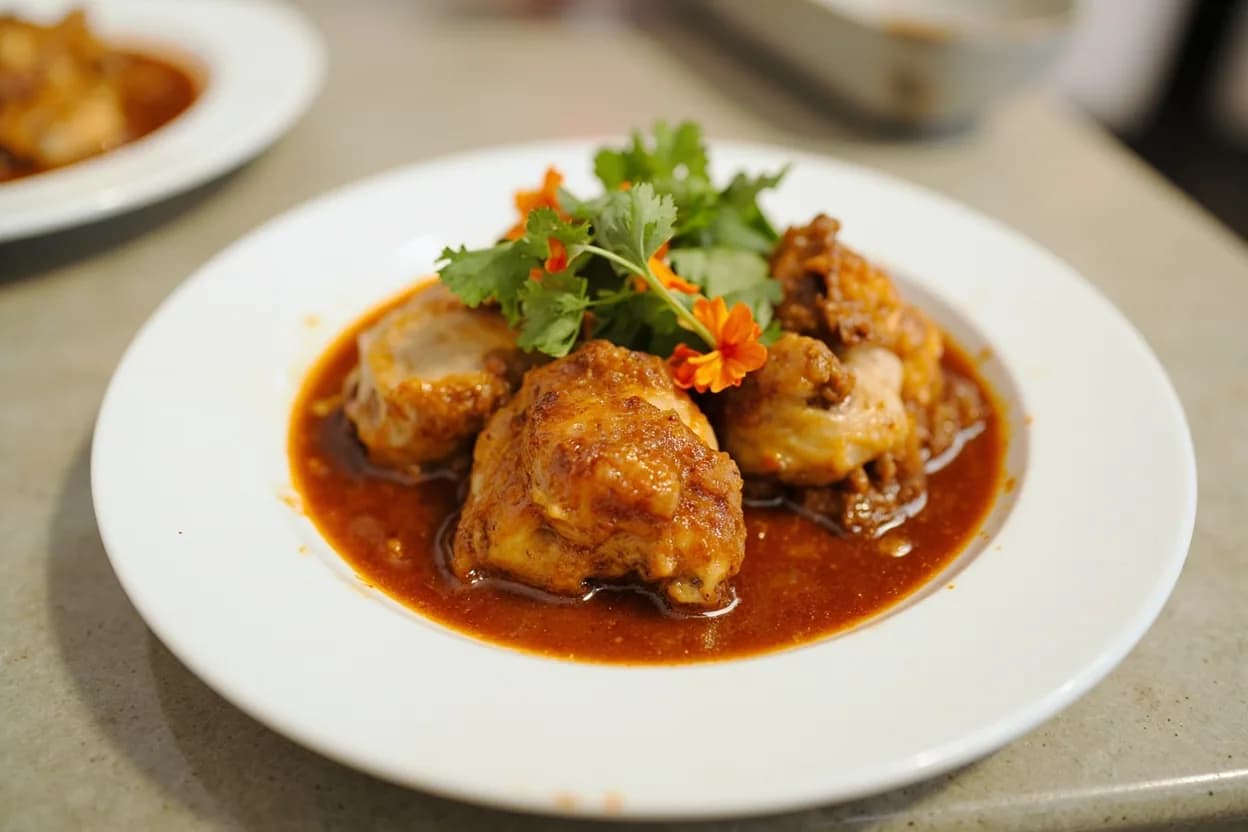
Appears in these dishes
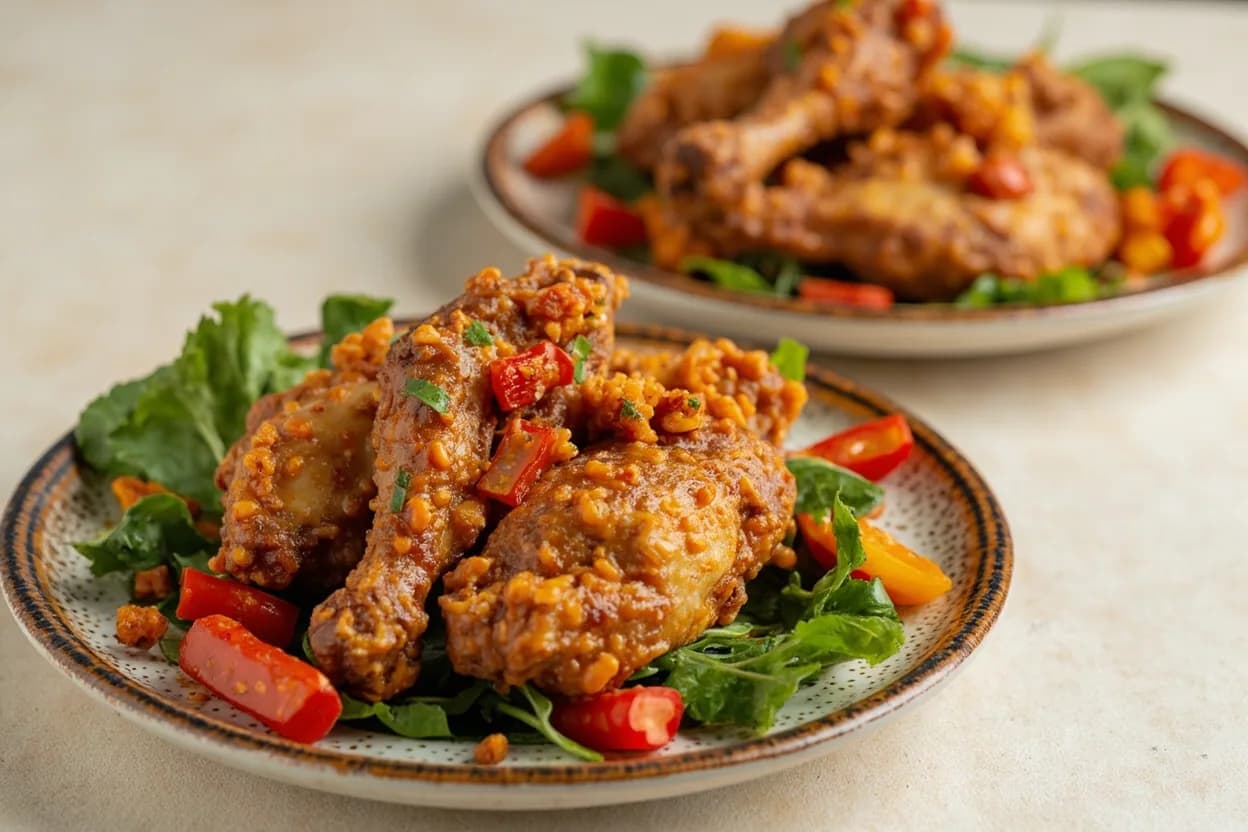
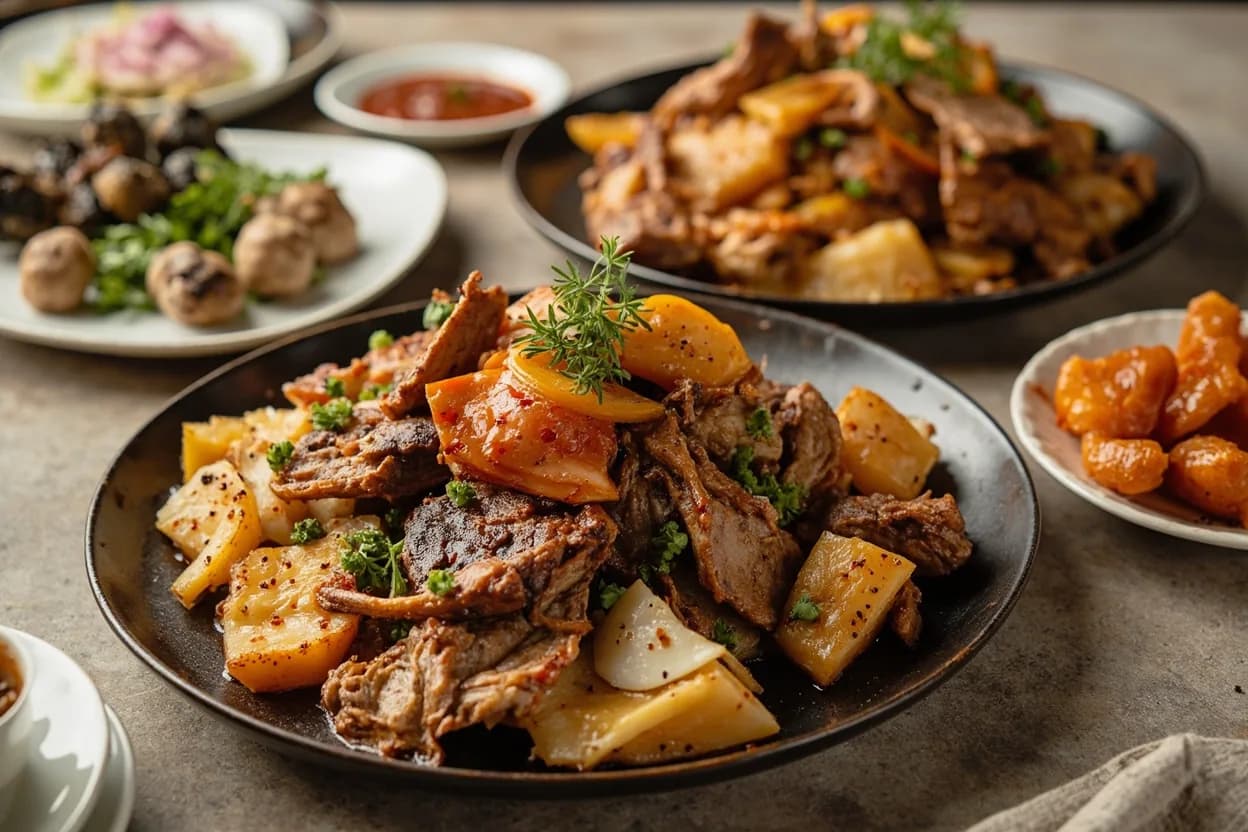
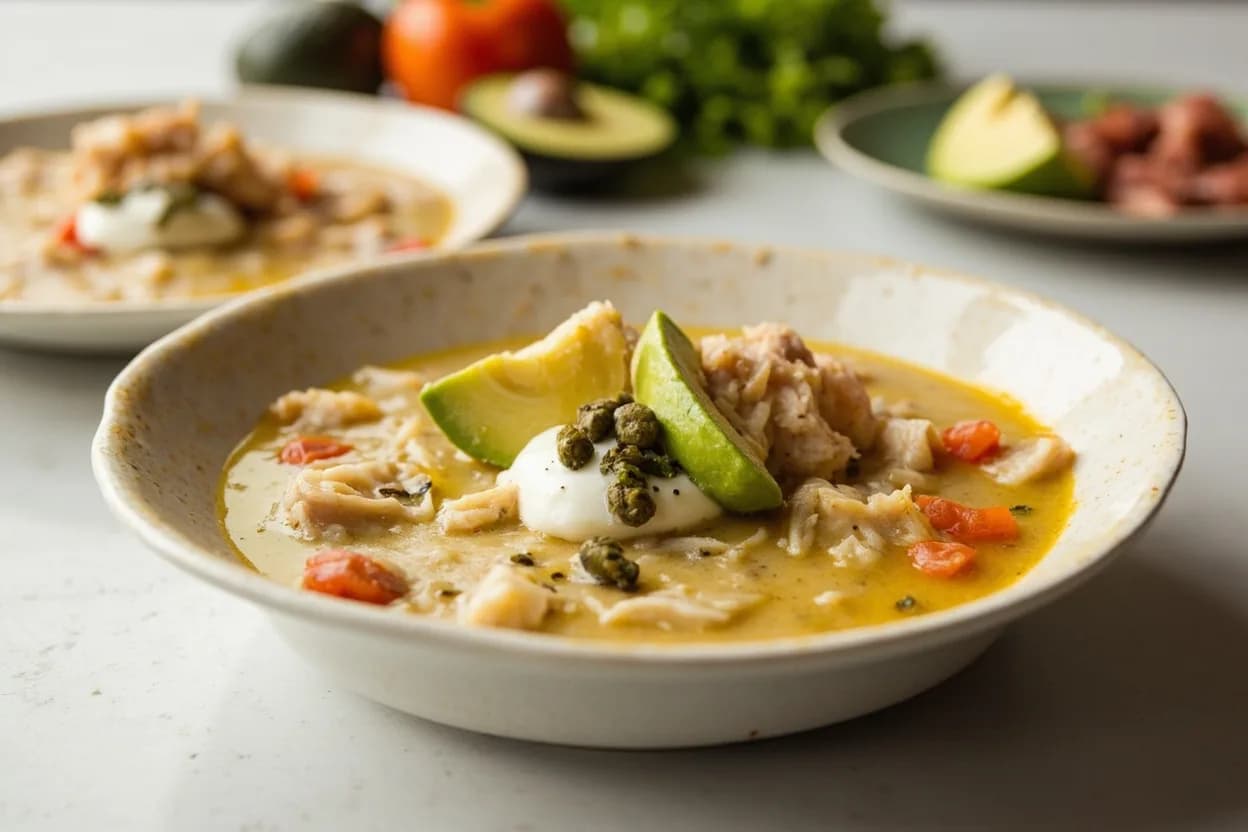
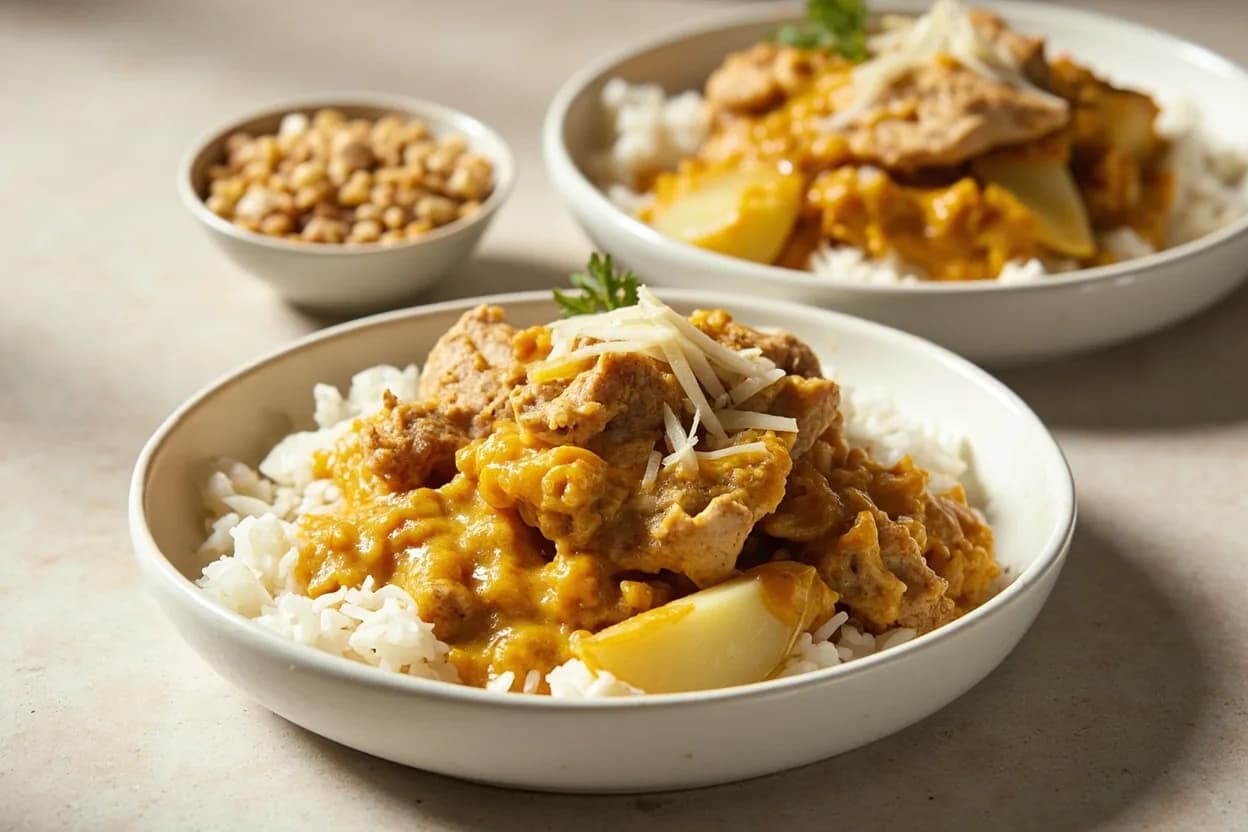
Related
Egg
The kitchen's everything ingredient — bind, leaven, enrich, or fry
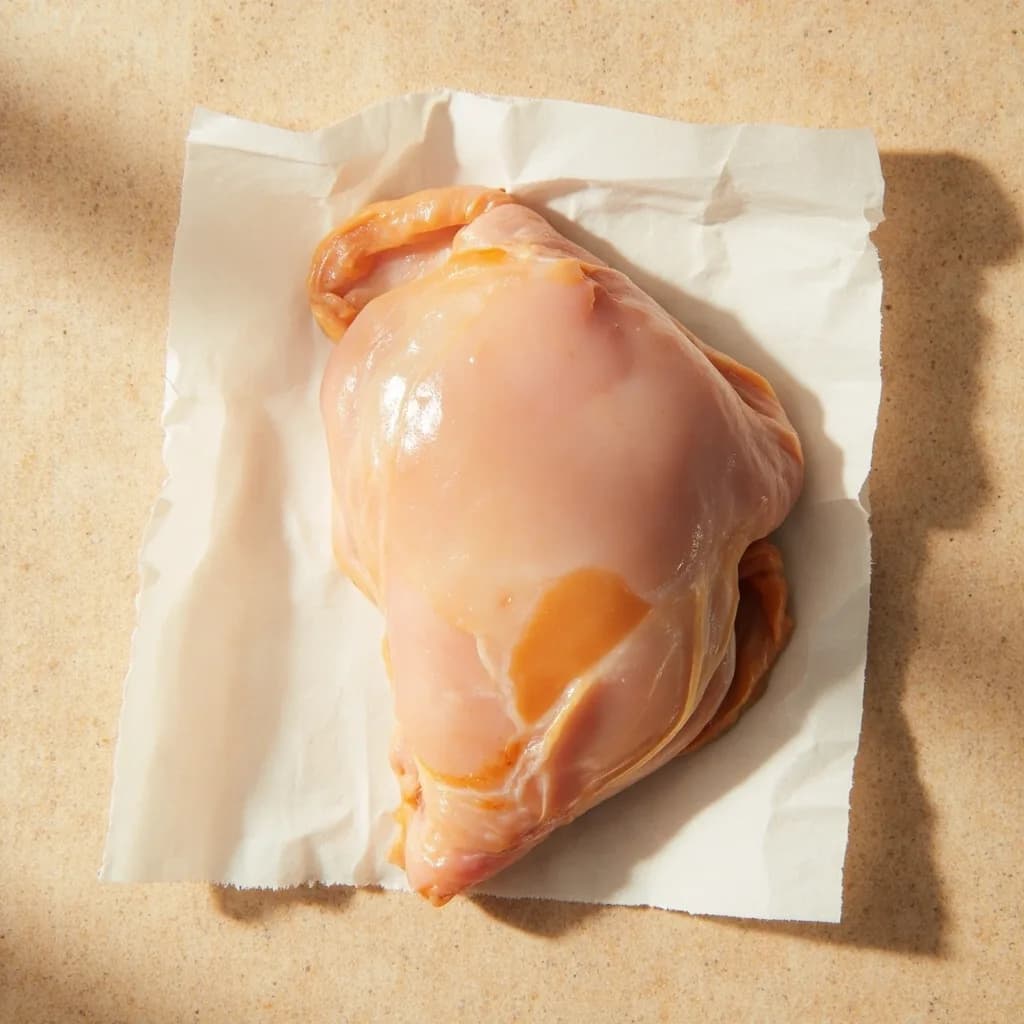
Chicken Breast
Lean, quick-cooking white meat for everyday dinners

Ground Beef
Versatile minced beef for burgers, ragù, tacos, and meatballs
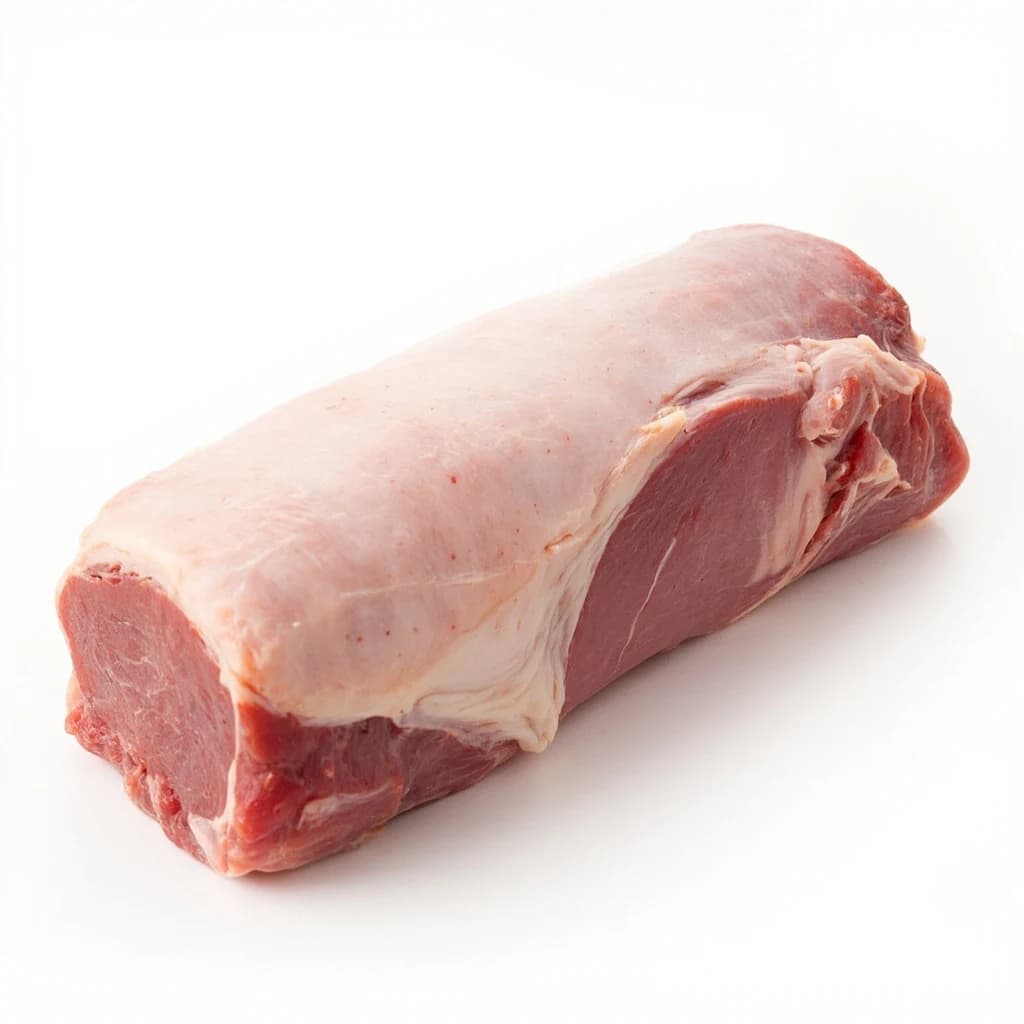
Pork Loin
Lean, tender roasting cut that stays juicy with care
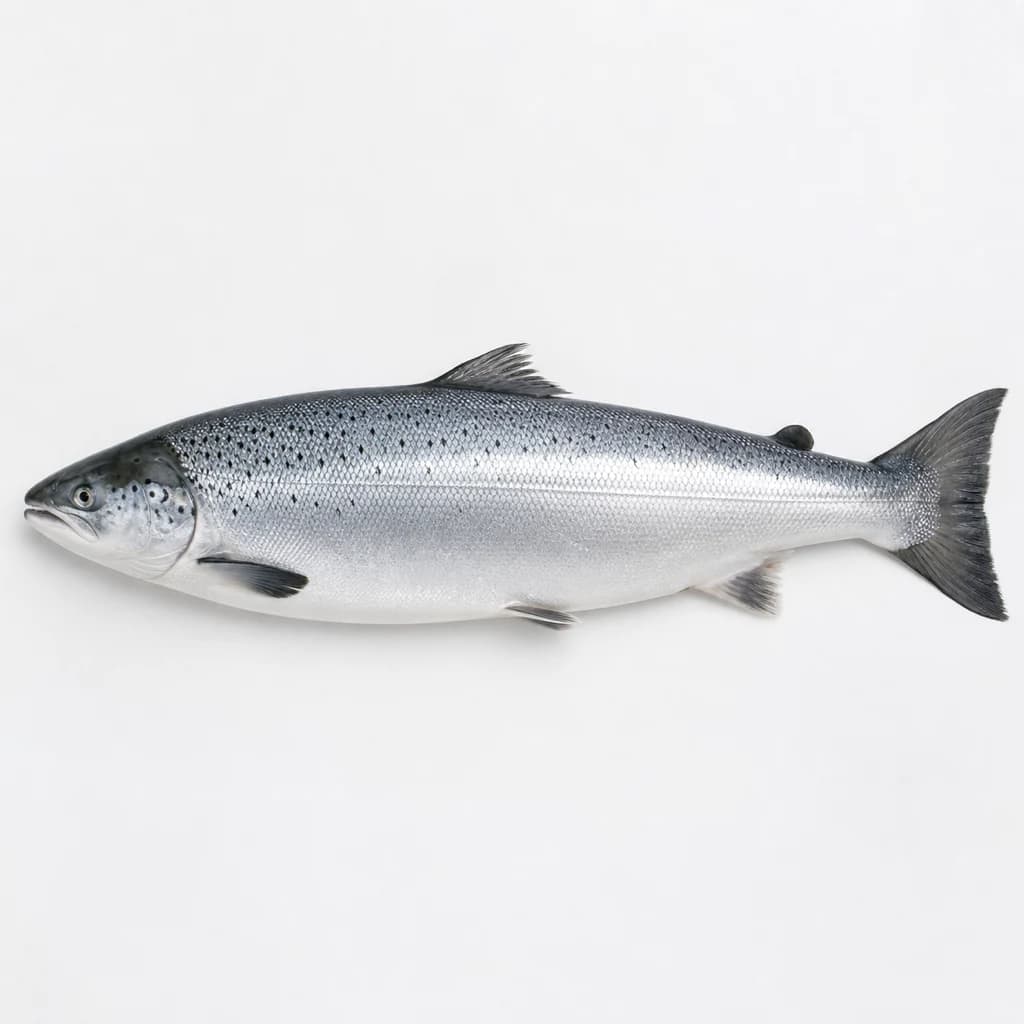
Salmon
Rich, rosy fish that roasts, grills, or cures beautifully

Egg White
Pure protein that whips to airy peaks for meringue and more
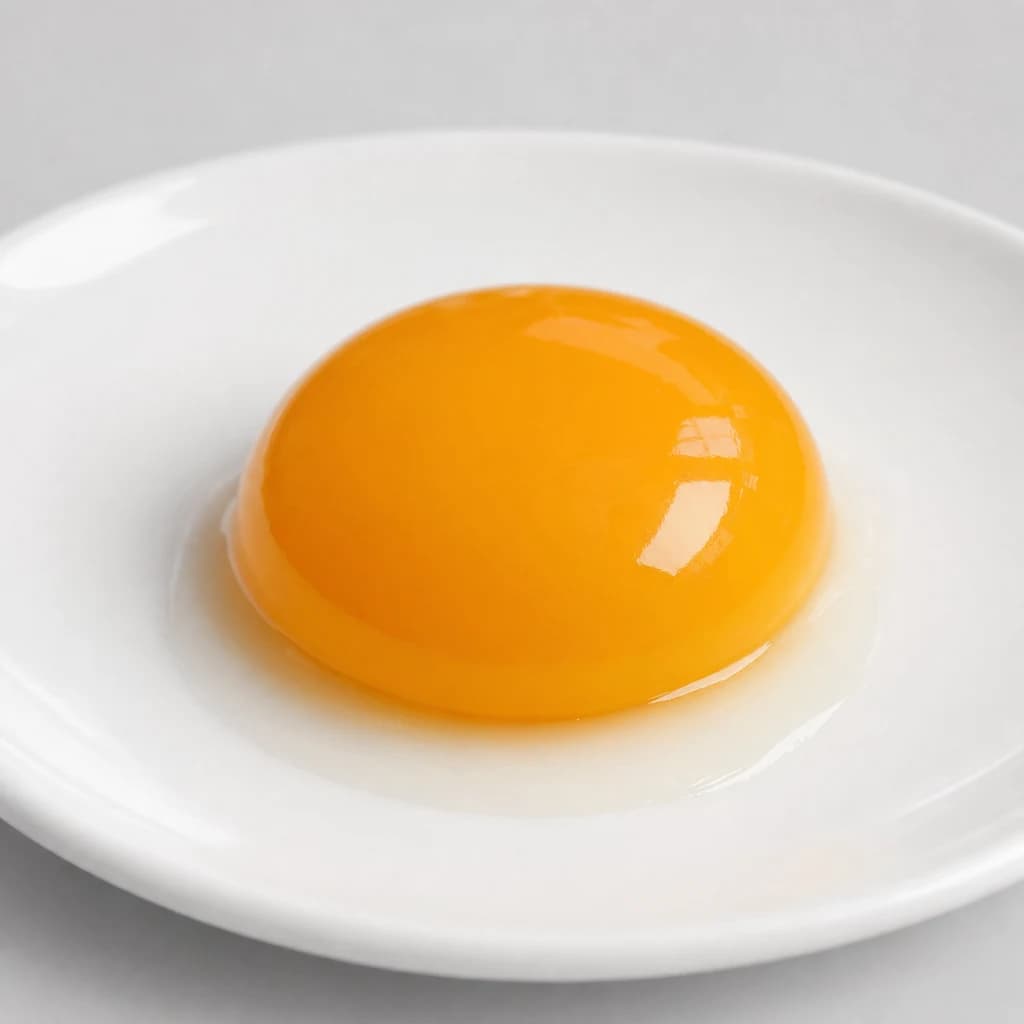
Egg Yolk
Rich, golden yolk for custards, mayonnaise, and pasta

Quail Egg
Tiny, speckled eggs for garnishing and elegant bites