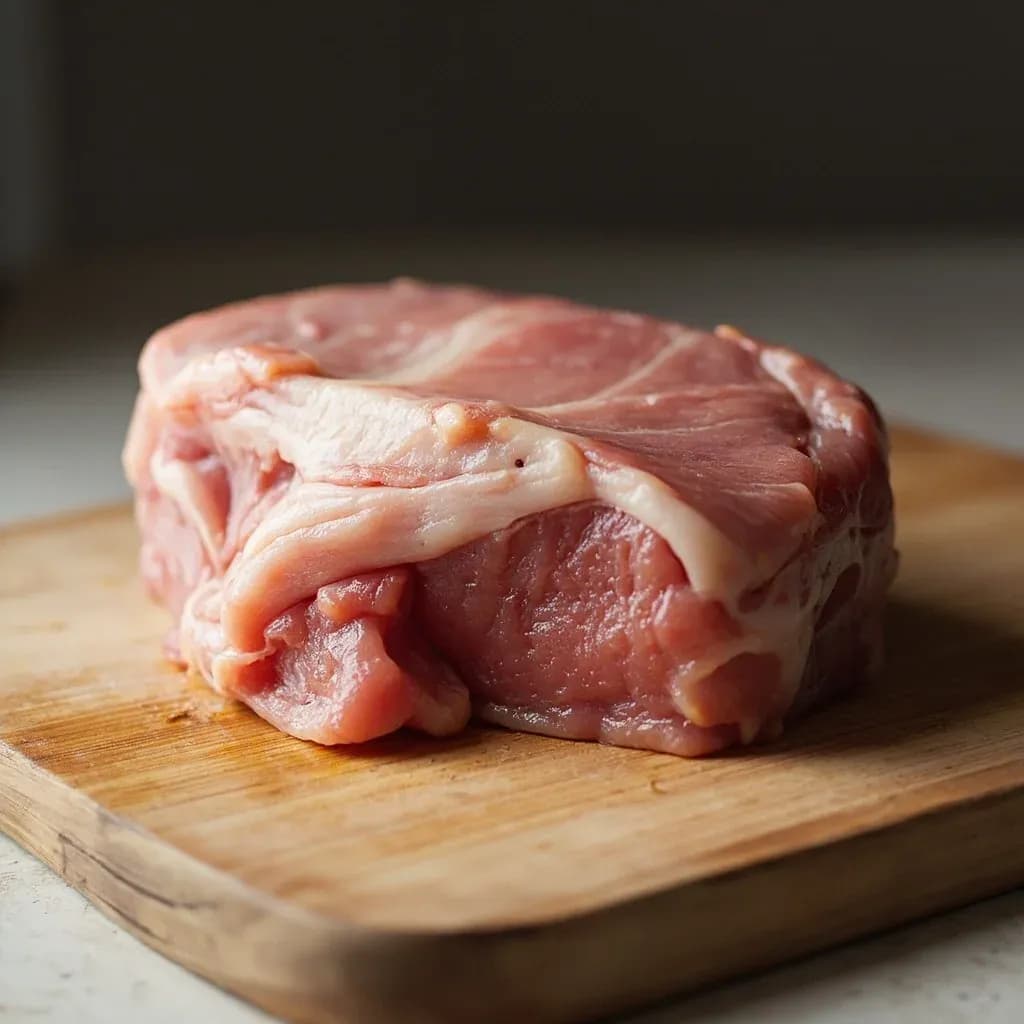
Proteins
Pork Tenderloin
Lean, tender boneless cut from the pig's loin; quick-roasting and mild, great for searing or stuffing.
Pork tenderloin is the long, lean, boneless muscle running along the pig's spine, the most tender cut of pork. Its mild flavor and quick cooking make it ideal for roasting, grilling, pan-searing, and slicing into medallions, and it pairs well with marinades, glazes, and stuffings. Because it is so lean it dries out easily, so it is best cooked just to medium and rested.
Pork tenderloin is a single, slender muscle running along the pig's spine beneath the loin—essentially the most sheltered and least worked muscle on the animal. This inactivity produces its signature fine grain and exceptional tenderness, making it the pork equivalent of beef tenderloin in both texture and cooking behavior. It is a modest cut by weight, typically 12–16 inches long and 3/4–1.5 lbs, far smaller and more delicate than the wide, flat pork loin roast with which it is frequently confused. The meat is pale pink, very lean at only 3–4% fat, with minimal marbling, and it has a mild, slightly sweet flavor that takes seasoning and complementary ingredients well. Because it is so lean and tender, pork tenderloin responds best to high-heat methods that develop color and flavor quickly, before the meat has a chance to dry out. A properly cooked tenderloin at 145°F (63°C) with rest will be juicy and slightly pink at the center—a temperature the USDA revised downward in 2011 specifically for this reason. Overcook past 150°F (65°C) and the moisture begins to leave rapidly, yielding a dry, tight texture that betrays the cut's potential.
- Measured in
- g
- Storage
- Fridge
Types & varieties
Standard form; may be sold with or without the slender chain muscle attached
Trimmed of fat but silver skin left intact; requires home butchering before cooking
The chain muscle left attached; must be removed as it cooks tough and unevenly
Marinated in a sweet, spiced sauce; check ingredient lists for sodium and sugar content
Injected with saline solution to increase moisture retention; may affect seasoning and browning
Partially cooked by the processor; finish with high heat to develop a crust
Pork Tenderloin vs. Pork Loin: Know the Difference
This is the most common point of confusion in the butcher's case. Pork tenderloin is a small, tapered muscle—about the width of a man's fist—running along the spine beneath the loin muscle. Pork loin is the entire primal, a large section that includes multiple muscles and can be sold as a full roast, bone-in or boneless chops, or butterflied steaks. A pork loin roast requires 30–40 minutes per pound at 350°F and can easily feed six to eight people. A tenderloin serves two to four and cooks in 20–30 minutes total. Substituting one for the other in a recipe will lead to disaster—watch your cooking times and temperatures accordingly.
- Pork tenderloin: single muscle, 3/4–1.5 lbs, 12–16 inches long, quick-cooking
- Pork loin: primal cut with multiple muscles, 3–10 lbs, large roasts or chops, longer cooking times
The Silver Skin Problem
Every pork tenderloin is encased in a thin, translucent membrane called silver skin (or fascia). Unlike fat, silver skin does not melt or render during cooking—it simply shrinks and tightens, turning rubbery and chewy. Always remove it before cooking. Slide a thin, sharp knife under the silver skin near one end and work it flat along the surface, keeping the blade nearly parallel to the meat. Pull the skin taut as you cut beneath it to separate cleanly. Alternatively, ask your butcher to remove it. The tenderloin may also have a small 'chain' muscle (gluteus accessorius) attached along one side—this too should be removed as it cooks tougher than the main muscle and will cause uneven doneness.
- Silver skin must always be removed before cooking
- Use a thin, sharp knife and work parallel to the grain
- The chain muscle should also be trimmed away
Common uses
Tips & pitfalls
- Remove the silver skin completely before cooking: slide a thin knife beneath it and peel it off in one piece, or have your butcher do it; silver skin will not melt and becomes rubbery when cooked
- Season generously—the cut is mild and lean, so it benefits from bold seasoning; salt at least 30 minutes ahead or use a dry brine overnight
- Do not confuse pork tenderloin with pork loin: they are different cuts; pork loin is wider, flatter, and requires different cooking times and temperatures
- Use a probe thermometer and remove from heat at 135°F (57°C)—carryover cooking will bring it to the safe 145°F
- Let the meat rest 5–10 minutes after cooking before slicing, loosely tented with foil; cutting too soon releases all the juices
- Pat the surface completely dry before searing; any moisture prevents browning and you will steam instead of crust
- Cook at high heat and do not move the meat unnecessarily—resist the urge to fiddle with it; one turn only when searing
- Cut across the grain when slicing to shorten the muscle fibers for a more tender bite
Nutrition
Energy
456 kJ · per 100 g
Where the calories come from
Protein
21g
42% DV
Carbs
0g
0% DV
Fat
2.2g
3% DV
Fiber
0g
0% DV
Sugars
0g
of which
Sodium
53mg
2% DV
Source · USDA FoodData Central · Pork, fresh, loin, tenderloin, separable lean only, raw
View on FDC →In the shops
Matched grocery products
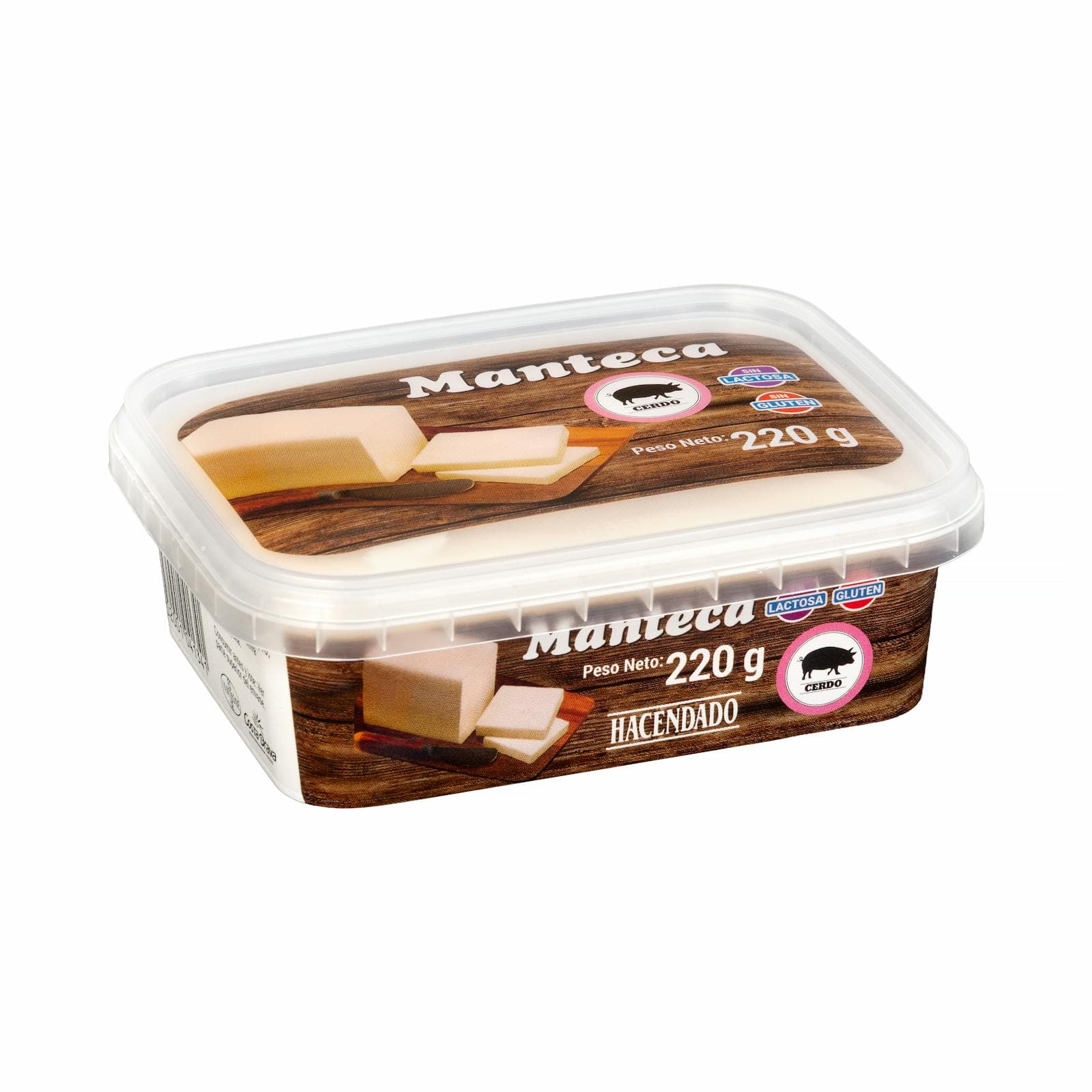 €2.20
€2.20Pork Lard
Hacendado · 220 g · Mercadona
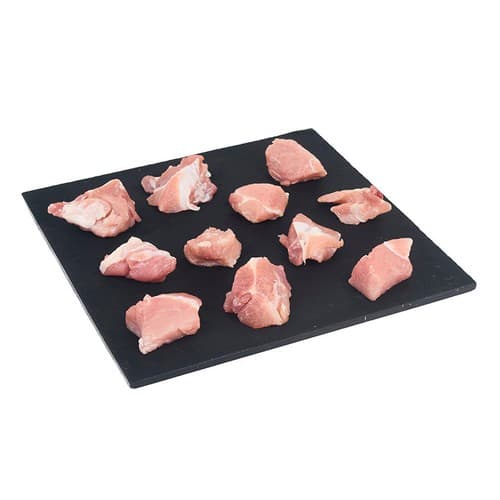 €3.40
€3.40Pork Stew
BONPREU · ud · Bonpreu
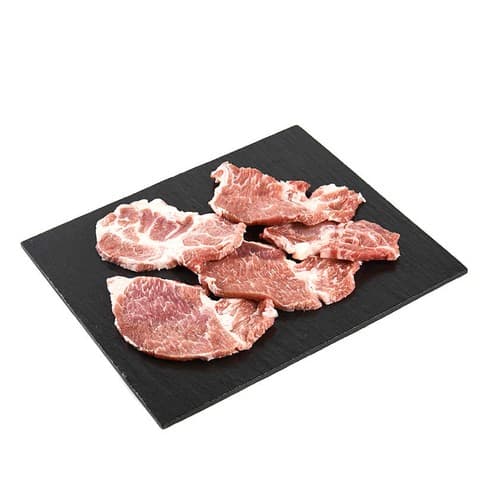 €3.45
€3.45Lean Pork
BONPREU DE L'ERA · ud · Bonpreu
 €2.10
€2.10Pork Spine
300 g · Mercadona
 €3.22
€3.22Diced Pork
560 g · Mercadona
 €3.75
€3.75Pork Pluma
300 g · Mercadona
Good to know
- Cut type
- Single-muscle cut from the pig's loin, running along the dorsal spine from shoulder to hind leg
- Typical weight
- 3/4–1.5 lbs (340–680 g) per tenderloin; 12–16 inches long
- Fat content
- Very lean, 3–4% fat by weight; minimal to no marbling
- Texture
- Fine-grained and extremely tender; the least worked muscle on the animal
- USDA safe minimum internal temperature
- 145°F (63°C), followed by a 3-minute rest
- Refrigerated shelf life
- 3–5 days in original packaging; 1–2 days after opening
- Cooking shrinkage
- Minimal, approximately 5–10% weight loss with proper technique
- Price point
- Mid-range pork cut; more expensive per pound than shoulder or loin chops
Substitutes
- Pork loin roast — Larger, flatter cut; requires 30–40 minutes per pound at 350°F; not a direct substitute in quick-cooking methods
- Pork sirloin — Slightly tougher, taken from near the hip; benefits from braising or marinating; not ideal for quick-sear methods
- Chicken breast — Similar leanness and mild flavor; cooks faster due to lower density; watch thermometer closely
- Turkey tenderloin — Very lean, similar texture; cooks in roughly the same time; slightly more mild
- Veal tenderloin — Similar tenderness and mild flavor; considered a luxury equivalent; cook to the same temperature
Pairs with
Also called
Pork Fillet · Pork Loin Fillet
Appears in these dishes

Related
Egg
The kitchen's everything ingredient — bind, leaven, enrich, or fry
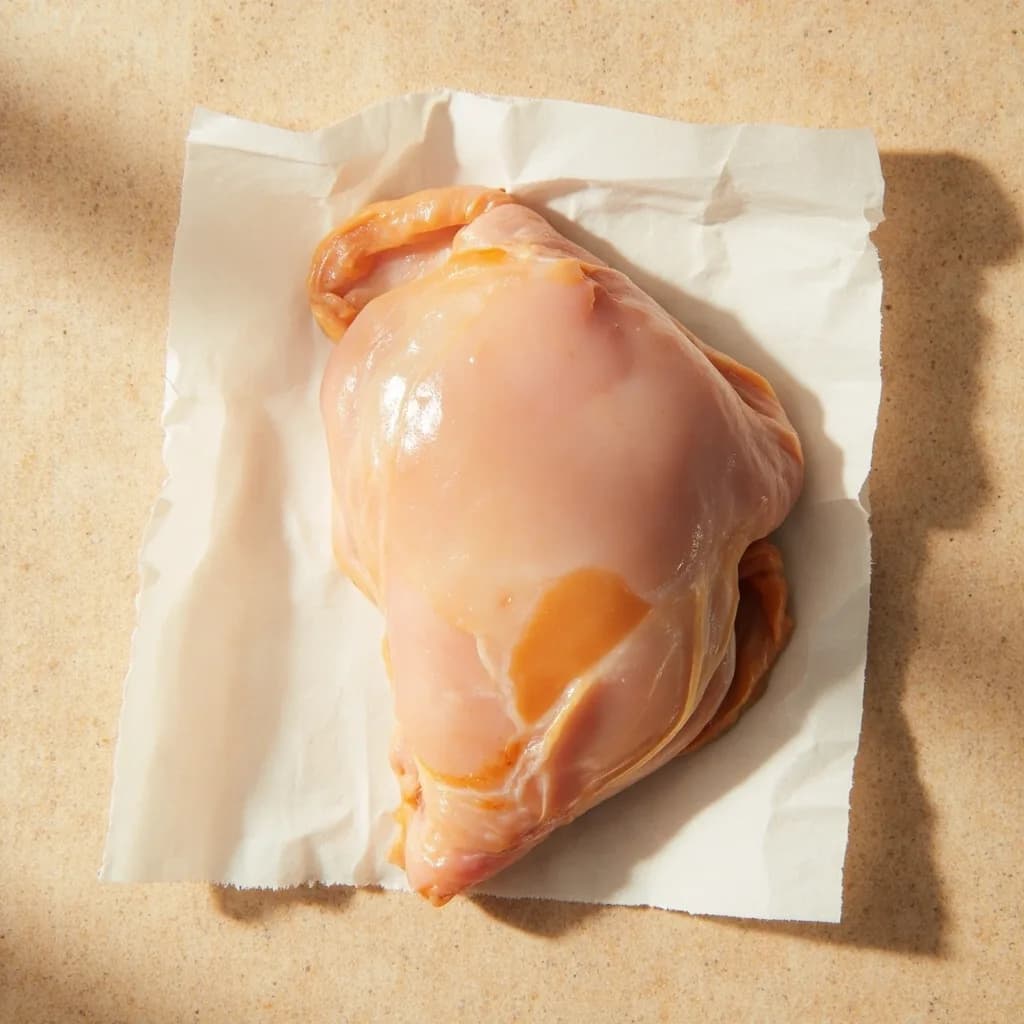
Chicken Breast
Lean, quick-cooking white meat for everyday dinners

Ground Beef
Versatile minced beef for burgers, ragù, tacos, and meatballs
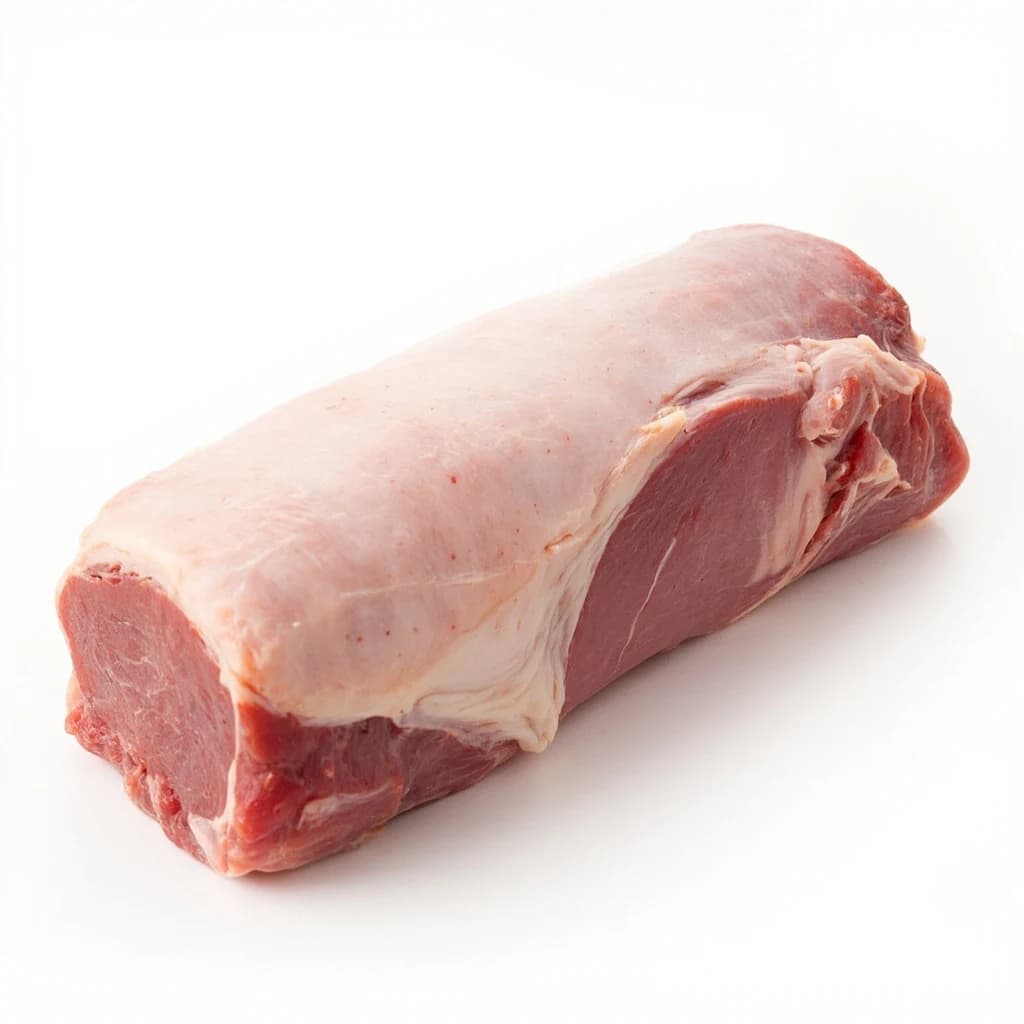
Pork Loin
Lean, tender roasting cut that stays juicy with care
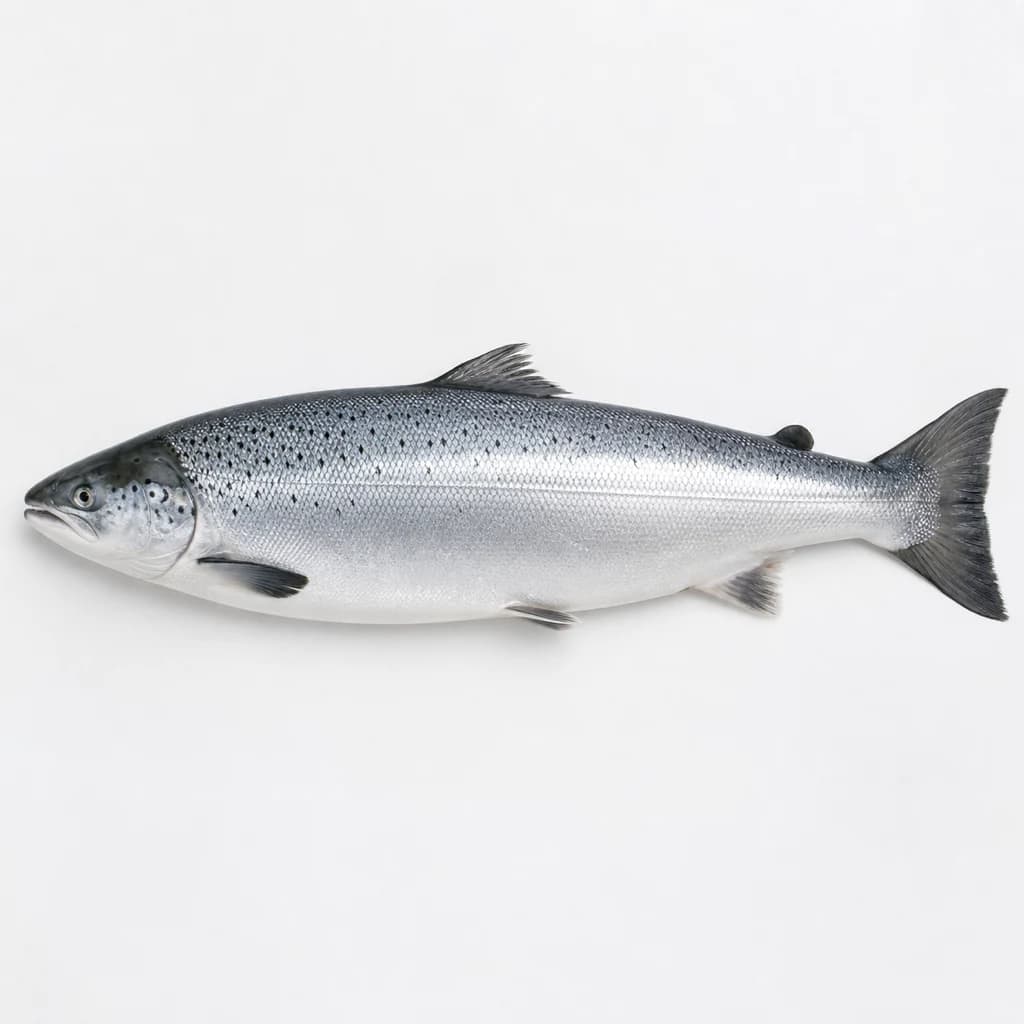
Salmon
Rich, rosy fish that roasts, grills, or cures beautifully

Egg White
Pure protein that whips to airy peaks for meringue and more
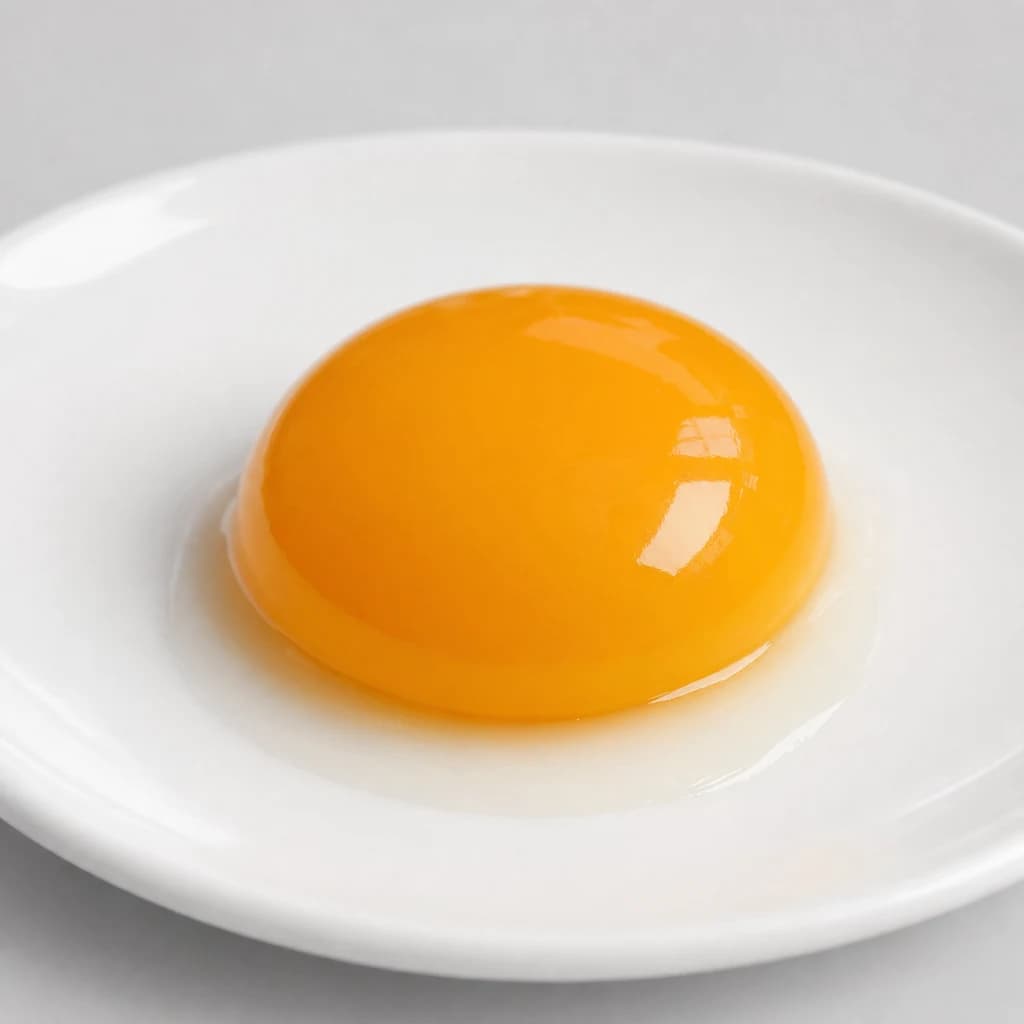
Egg Yolk
Rich, golden yolk for custards, mayonnaise, and pasta

Quail Egg
Tiny, speckled eggs for garnishing and elegant bites