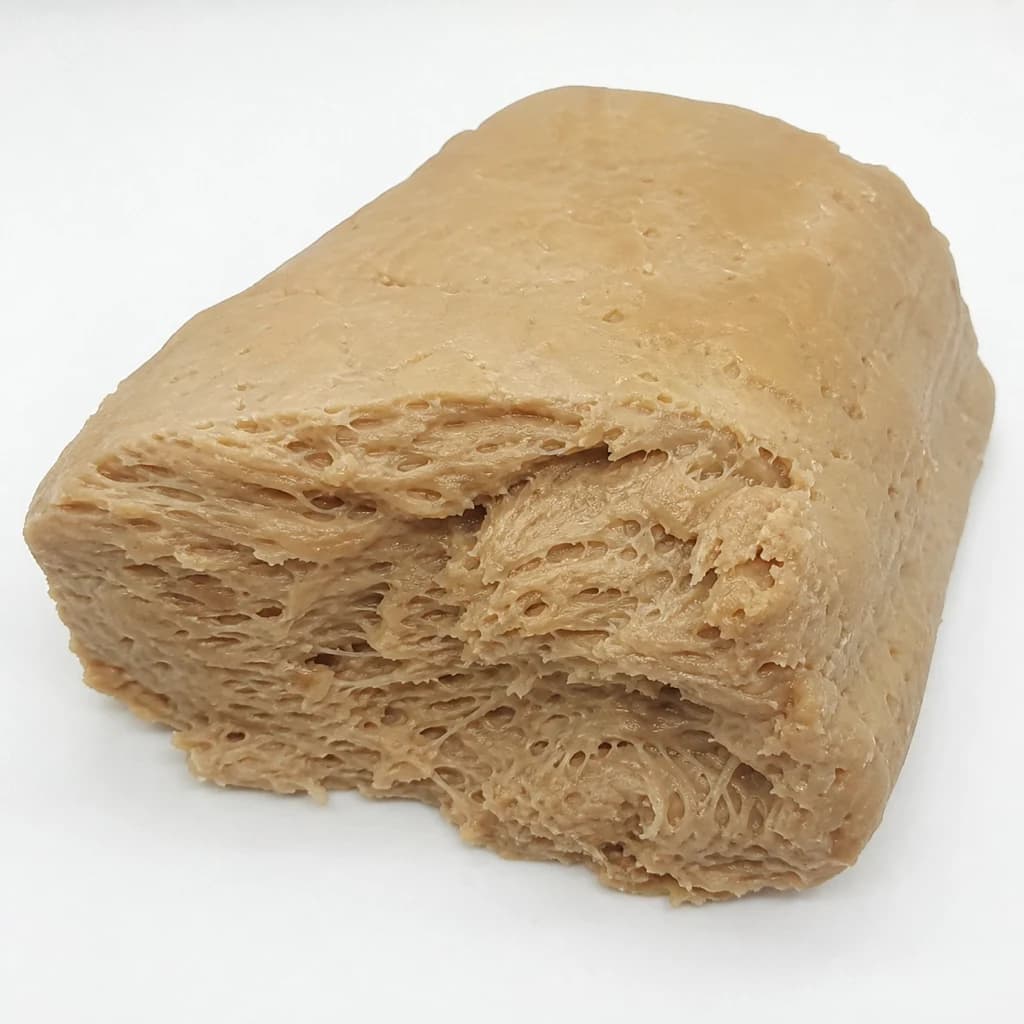
Natural form
A block of fresh seitan showing its dense, fibrous wheat-gluten structure.
Shows the unmistakable raw form — pale tan, fibrous, dense block — so readers recognize uncooked seitan before any preparation.
Proteins
Seitan
Chewy wheat-gluten meat substitute that absorbs marinades; high in protein.
Seitan is a high-protein meat substitute made from wheat gluten, with a dense, chewy texture often likened to meat. It is sautéed, braised, fried, or grilled and readily soaks up sauces and marinades, making it popular in vegan and vegetarian cooking. Originating in East Asian Buddhist cuisine, it is sometimes called wheat meat.
Seitan is a dense, chewy meat substitute made entirely from wheat gluten—the protein fraction of wheat flour isolated by rinsing dough until the starch washes away. Used in Chinese and Japanese cuisines for centuries, wheat gluten was adopted by Buddhist monks in both countries as a protein-rich meat alternative. It remains the highest-protein plant-based option available, delivering about 25 g of protein per 100 g serving, and is itself a complete protein. Its texture most closely mimics cut muscle meat of any vegan protein, with a fibrous, slightly elastic bite that holds up remarkably well in soups, stir-fries, grilled skewers, and braised preparations. Because seitan has almost no flavor of its own, it functions as a blank canvas that absorbs marinades, broths, and seasonings with unusual efficiency. This quality makes it extraordinarily versatile across cuisines—from Japanese shabu-shabu and Chinese mianjin braises to döner kebab loaves and American-style cutlets—but it also means seasoning is not optional; unseasoned seitan tastes like nothing at all. The name "seitan" derives from the Japanese pronunciation of the Chinese term mianjin (wheat gluten), popularized in the West through the macrobiotic diet in the 1960s, though in Japan the product is also called kampusu, from the French word gluten.
- Measured in
- g
- Storage
- Fridge
Allergens
Types & varieties
Dry powder; mix with water to form dough. Most common for home cooking. Bob's Red Mill is a widely available brand.
Pre-washed and formed; often seasoned. Brands include Upton's Naturals and Field Roast. Ready to cook or use cold.
Shelf-stable; often packed in brine. Requires rinsing before use.
Paper-thin slices designed for Japanese hot pot (shabu-shabu); cook in seconds.
Pre-marinated in soy, herbs, or smoke flavors; reduces prep time.
Neutral flavor; versatile for any cuisine or seasoning profile.
Breaded and pre-formed; pan-fry directly. Available in European-style products.
Small, irregular pieces; ideal for tacos, chili, sloppy joes, or pizza topping.
Making Seitan from Scratch
Home-made seitan requires only vital wheat gluten flour and water. The process is straightforward but rewards attention to technique. Combine flour and water into a shaggy dough, knead briefly, then submerge in cold water and knead under running water to wash away starch. What remains is the gluten—stretchy, pale, and slightly gray. At this stage it has almost no flavor. The gluten expands roughly 50% in volume as it hydrates and sets during cooking, so form pieces slightly smaller than your desired final size. Simmer or braise the shaped gluten in a well-seasoned broth for 20–30 minutes; this step both cooks the protein and infuses it with flavor. The result is a versatile protein that can be sliced, shredded, or grilled directly or finished with a crispy breading.
- Mix gluten flour and water at roughly 1:1.5 ratio by weight until just combined—do not over-knead
- Let dough rest 5–10 minutes before shaping to relax gluten strands for a more tender texture
- Wash dough under cold running water, kneading until water runs clear and gluten is elastic
- Simmer formed pieces in seasoned broth 20–30 minutes; do not boil for hours or texture will toughen
- Store finished seitan submerged in its cooking liquid for up to 10 days
Cooking with Seitan
Seitan's behavior in the kitchen depends on the cooking method. Simmering or braising is the most forgiving and flavorful approach—liquid penetrates the porous structure and seasons throughout. Slicing or crumbing raw seitan before cooking is common and efficient. Pan-frying and grilling require slightly different handling: seitan must be dry on the surface or it will steam rather than brown, and oiling the surface prevents sticking on a hot grate. Because seitan is already cooked after its initial simmer, any finishing step (grilling, pan-frying, baking) needs only enough time to develop color and crispness, typically 3–5 minutes per side.
- Pat seitan dry before high-heat cooking to promote browning rather than steaming
- Slice against the grain (perpendicular to visible fibers) for the most tender bite on thicker cuts
- Cold or slightly frozen seitan slices more cleanly for sandwiches and salads
- For crispy fried cutlets, dust with cornstarch or breadcrumb before pan-frying in hot oil
- Do not overcook finished seitan—20–30 minutes in broth is sufficient; the final sear takes only minutes
Common uses
Tips & pitfalls
- Simmer or braise seitan in seasoned broth rather than boiling or grilling plain—this is the most effective way to impart flavor since seitan has no inherent taste.
- When making seitan from vital wheat gluten, mix the dough gently until just combined; over-kneading develops excessive gluten strands and makes the result rubbery and dense.
- Let dough rest 5–10 minutes after mixing before shaping; this relaxes gluten and produces a more tender texture.
- Squeeze or press seitan gently before cooking if it seems wet; excess moisture prevents browning and causes steaming.
- Slice seitan against the grain (perpendicular to visible fibers) for the most tender bite, especially with thicker cuts.
- Cold seitan slices cleanly for sandwiches and salads; slightly freeze firm seitan for easier thin slicing.
- Marinate at least 30 minutes, or overnight for best results; seitan's porous structure absorbs liquid readily.
- Do not overcook; seitan becomes tough and dry if simmered for hours like jackfruit or mushroom. 20–30 minutes in broth is sufficient for most preparations.
- For a crispy exterior, dust with cornstarch or bread and pan-fry in hot oil after simmering.
- Store seitan submerged in its cooking liquid in the refrigerator; this keeps it moist and flavorful for up to 10 days.
Nutrition
Energy
1548 kJ · per 100 g
Where the calories come from
Protein
75.2g
150% DV
Carbs
13.8g
5% DV
Fat
1.9g
2% DV
Fiber
0.6g
2% DV
Sugars
0g
of which
Sodium
29mg
1% DV
Source · USDA FoodData Central · approx. Vital wheat gluten
View on FDC →In the shops
Matched grocery products
No matched grocery products for Seitan yet.
Good to know
- Origin
- East Asia; wheat gluten used in Chinese and Japanese cuisines for centuries, adopted by Buddhist monks as a meat alternative
- Made from
- Wheat gluten—the protein isolated by washing wheat flour dough until starch is removed
- Protein content
- About 25 g per 100 g serving; a complete protein
- Fat content
- Very low, typically under 2 g per serving
- Flavor
- Mild, slightly wheaty; absorbs marinades and broths readily
- Texture
- Chewy, dense, fibrous; resembles cut muscle meat when cooked properly
- Typical forms
- Chunks, strips, cutlets, roasts, crumbles, deli slices
- Shelf life (refrigerated)
- 7–10 days in airtight container, submerged in cooking liquid
- Shelf life (frozen)
- Up to 6 months; thaw overnight in refrigerator
- Gluten-free?
- No; contains wheat gluten and is unsafe for celiac disease or wheat allergy
Substitutes
- Extra-firm tofu — Pressed well and cubed; lower protein, different texture but neutral flavor. Texture differs significantly from seitan's chewy bite; results vary by recipe.
- Tempeh — Fermented soy with firm, nutty texture; slice thin and marinate. Best for Southeast Asian and Indonesian dishes.
- Chickpeas (whole or mashed) — Works for crumbles, burgers, or salads. Denser texture, earthier flavor; best with bold seasonings.
- Portobello mushrooms — Meaty, umami-rich; suitable for grilling or stuffing. Softer texture; good substitute for seitan in steak-style applications.
- Jackfruit (young green) — Pulled texture ideal for tacos and sandwiches; does not match seitan's density or protein content.
- Eggplant — Absorbs marinades well; soft texture suits Mediterranean dishes but not seitan's chew.
- Wheat gluten flour (for making seitan) — The direct equivalent for homemade seitan; mix with water 1:1.5 ratio by weight. No other substitute reproduces seitan's unique texture.
Pairs with
Also called
Wheat Gluten · Wheat Meat
Related

Egg
The kitchen's everything ingredient — bind, leaven, enrich, or fry

Chicken Breast
Lean, quick-cooking white meat for everyday dinners

Ground Beef
Versatile minced beef for burgers, ragù, tacos, and meatballs

Pork Loin
Lean, tender roasting cut that stays juicy with care

Salmon
Rich, rosy fish that roasts, grills, or cures beautifully

Egg White
Pure protein that whips to airy peaks for meringue and more

Egg Yolk
Rich, golden yolk for custards, mayonnaise, and pasta

Quail Egg
Tiny, speckled eggs for garnishing and elegant bites