Proteins
Chicken Gizzards
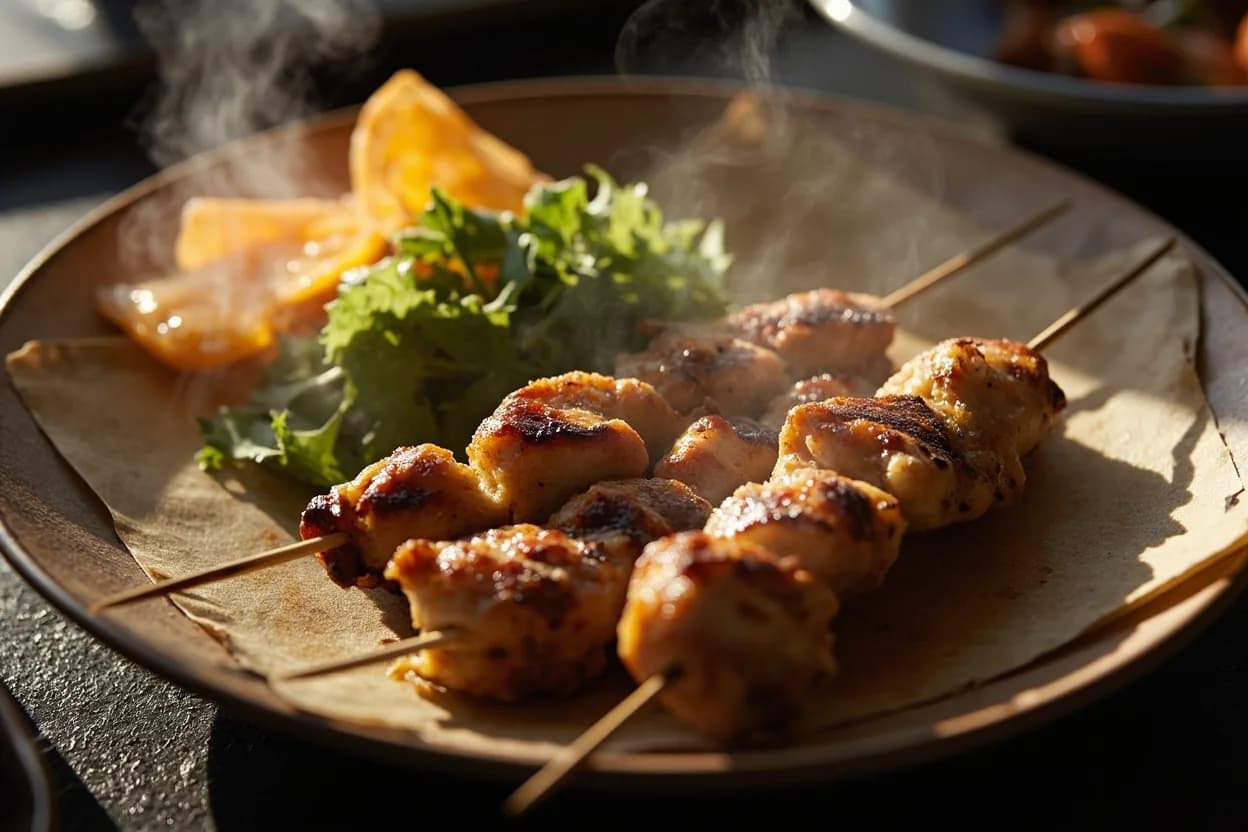
Firm, lean muscular organ with a chewy bite that tenderizes only with slow braising or confit; deep-fried, simmered into stews, or skewered as yakitori.
Chicken gizzards are the muscular second stomach of the bird—the ventriculus—a small, dense organ that grinds feed with the help of swallowed grit (gastroliths). Along with the heart, liver, and neck, they make up the giblet pack found inside every whole chicken, and they are the most forgiving of the bunch for the home cook. Their appeal is twofold: a mild, faintly metallic flavor that is far less assertive than chicken liver, and an affordability that has made them a staple of thrifty, nose-to-tail cooking across continents.
What gizzards demand in return is patience and a sharp knife. The meat is almost entirely slow-twitch muscle fiber, with very little connective collagen to break down into gelatin, so it does not go tender with a quick sauté the way a thigh does. Sixty to ninety minutes of gentle simmering is the usual ticket to a texture that still has a pleasant chew but yields to the tooth. Skip that step and you are eating rubber. A second non-negotiable is cleaning: the outer silverskin and the inner pale-yellow koilin lining must both be peeled away, or they stay leathery no matter how long you cook them.
Once cleaned and braised, gizzards are remarkably versatile. They crisp beautifully in a hot pan, take to skewers over charcoal, pickle cleanly in vinegar, and anchor long-simmered gravies and stews from Portugal to the American South. Lean, high in protein, and rich in iron and B12, they are also among the most nutrient-dense parts of the bird, which is why every cuisine with a peasant tradition has built at least one beloved dish around them.
- Measured in
- g
- Storage
- Refrigerate Sealed In The Coldest Part; Very Perishable, Use Within A Day Or Two.
Find it in
Types & varieties
Larger and slightly firmer, roughly 60–90 g each; needs 90–150 minutes to braise to tenderness
Smaller and richer-flavored; tender in about 45–60 minutes
Larger and more marbled than standard broiler, slightly more tender
Common retail pack; trim hearts separately because they cook in a fraction of the time
Whole gizzards need membrane and lining removed by hand; pre-cleaned save time but are often slightly older
Cleaning and prepping gizzards properly
Most of the disappointment cooks have with gizzards traces back to cleaning, not cooking. Each gizzard arrives as a small, dark red muscle wrapped in a thin silvery membrane on the outside and lined on the inside with a tough, pale yellow cuticle called the koilin layer. Both are indigestible in the literal sense: they do not soften with heat and will register as rubbery, papery bits in the finished dish. Use a paring knife to slice each gizzard in half lengthwise, which exposes any grit pockets and makes the membranes easier to grip. Peel the silverskin off in strips with the knife tip or your fingers, then scrape out the koilin lining with the back of the knife or a spoon. Trim any greenish or yellowish bile stains deeply—bile is intensely bitter and will migrate through a braise. Finally, rinse under cold water and pat dry.
- Slice each gizzard in half lengthwise to expose grit and the koilin lining
- Peel off the outer silverskin and scrape out the inner yellow cuticle
- Trim green or yellow bile stains at least 5 mm deep to avoid bitterness
- Rinse, then pat very dry before seasoning or searing
- Save the trimmings, hearts, and necks for stock—they add body and iron
The simmer-then-sear method
Gizzards reward a two-stage cook more than almost any other cut of poultry. Stage one is a low, gentle simmer in salted water or aromatic broth until the meat is just tender enough to pierce with a fork—usually 60 to 90 minutes depending on size. Stage two is a fast, high-heat finish: a hard sear in a cast-iron pan, a turn in hot oil for frying, or a few minutes over binchotan for yakitori. The braise does the work of breaking down density; the sear builds the crust and Maillard flavor that the lean meat cannot generate on its own. This is the logic behind Southern fried gizzards, Portuguese moelas finished with a pan reduction, and the Japanese practice of par-cooking sunagimo before grilling.
- Simmer gently—barely bubbling—in salted water or broth for 60–90 minutes
- Drain and cool briefly, then pat dry to remove surface moisture
- Sear in a smoking-hot pan with a thin film of oil, or dredge and fry at 175°C / 350°F
- For yakitori, par-cook whole, slice thin against the grain, then grill fast over high heat
- Finish braised gizzards in a reduced pan sauce to glaze and concentrate flavor
Common uses
Tips & pitfalls
- Peel both the outer silverskin and the inner creamy koilin lining—either left behind will read as rubbery no matter how long you cook the gizzard.
- Trim green or yellow bile stains at least 5 mm deep with a paring knife; bitterness from bile spreads quickly through a braise.
- Always simmer before you sear or fry: a 60–90 minute gentle simmer is what makes gizzards tender enough to crisp in a hot pan.
- Score thick pieces in a shallow crosshatch to cut braising time and let marinades or glazes penetrate.
- Briefly brine (1 tablespoon salt per 500 g gizzards, 30 minutes) to season deeply and tame any faintly gamey edge.
- Don't add gizzards to long stews at the start—let stocks and aromatics build flavor first, then add them for 60+ minutes of solo simmering.
- When deep-frying, par-boil first or the crust browns long before the interior softens, leaving you with a crisp shell around something still chewy.
- Slice each gizzard in half lengthwise before cooking to expose grit pockets, confirm cleanliness, and shorten the braising time.
Nutrition
Energy
393 kJ · per 100 g
Where the calories come from
Protein
17.7g
35% DV
Carbs
0g
0% DV
Fat
2.1g
3% DV
Fiber
0g
0% DV
Sugars
0g
of which
Sodium
69mg
3% DV
Source · USDA FoodData Central · Chicken, gizzard, all classes, raw
View on FDC →In the shops
Matched grocery products
No matched grocery products for Chicken Gizzards yet.
Good to know
- Type
- Muscular organ (ventriculus), the second stomach of the chicken
- Weight per piece
- Roughly 25–50 g from a standard 1.5–2.5 kg broiler
- Color
- Deep reddish-brown raw; tan-brown when cooked
- Flavor
- Mild, faintly metallic, far less assertive than chicken liver
- Texture
- Dense, springy, and chewy; only tender after sustained moist heat
- Nutrition
- About 18–20 g protein and 2–3 g fat per 100 g cooked; notable for iron, zinc, vitamin B12, niacin, and selenium
- Internal doneness
- 74°C / 165°F (standard poultry safe minimum)
- Tenderizing time
- 60–120 minutes of gentle simmering, or 25–35 minutes in a pressure cooker
- Cleaning
- Outer silverskin and inner koilin lining must be removed; trim any green bile stains
- Storage
- 1–2 days refrigerated at 0–4°C; 6–9 months frozen at –18°C
Substitutes
- Chicken hearts — Closest substitute; tender in 20–30 minutes, slightly richer and more minerally
- Turkey gizzards — Same role, larger pieces, longer braising time (90–150 minutes)
- Duck gizzards — Smaller and gamier; work in stir-fries and confit but yield less per piece
- Beef tripe — Use only in long-braised dishes where its honeycomb texture is welcome, not a 1:1 swap
- Firm mushrooms (king oyster, shiitake) — Vegetarian stand-in for stir-fries; lacks iron-rich depth but takes a hard sear
Pairs with
Also called
chicken gizzard · gizzards