Proteins
Beef Tripe
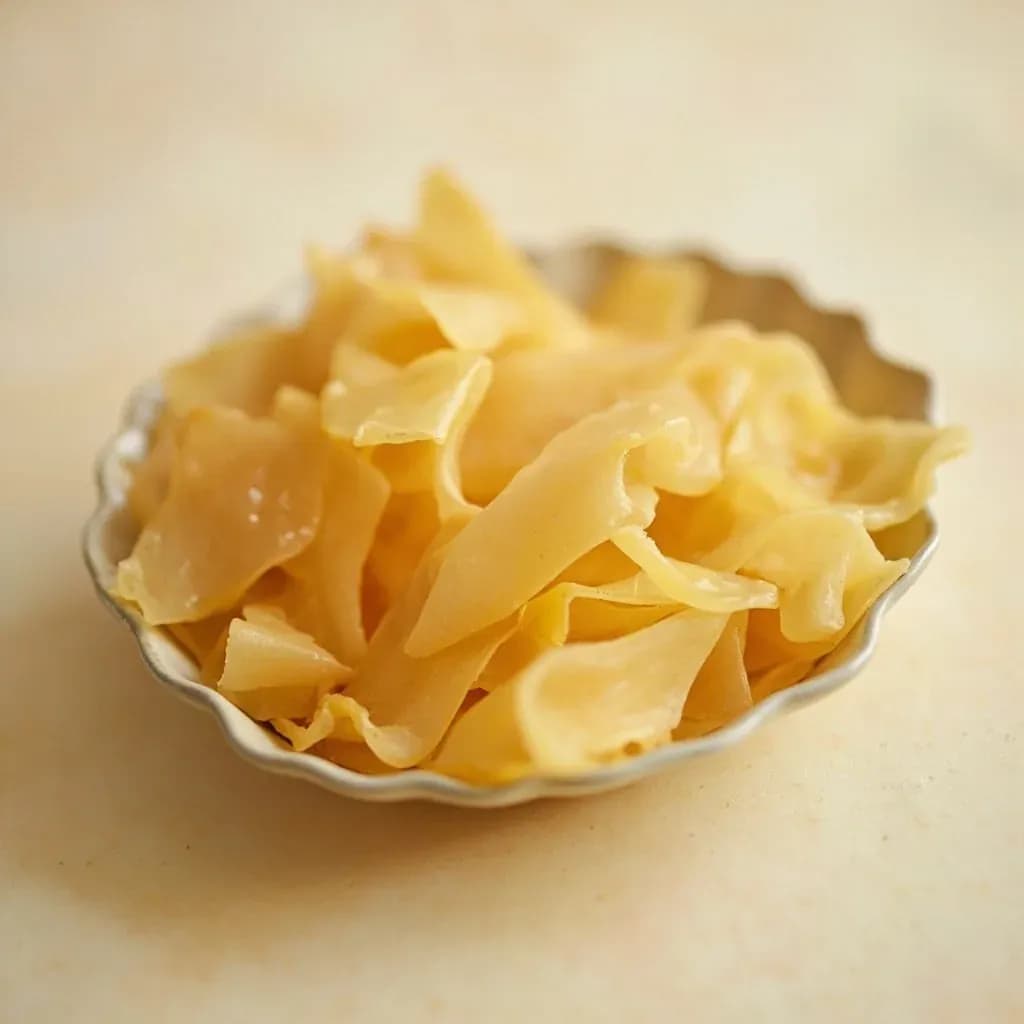
Honeycomb stomach lining of cattle, slow-cooked until tender in menudo, mondongo, and trippa.
Beef tripe is the edible lining of a cow's stomach, most commonly the honeycomb variety. It requires thorough cleaning and long, slow cooking to become tender, then takes on the flavors of its braise in dishes like Mexican menudo, Italian trippa alla romana, and Filipino callos. Its texture is springy and its flavor mild and absorbent.
Beef tripe is the edible lining of a cow's stomach, a muscular organ with four distinct chambers, each producing a different texture and quality of tripe. What makes tripe remarkable is its composition: it is nearly all collagen, with almost no fat. When subjected to long, moist heat, that collagen dissolves into gelatin, transforming what begins as rubbery and nearly inedible into silky, yielding strands that luxuriously absorb surrounding flavors. This transformation is the entire craft of cooking tripe—rushing it produces something unpleasant; patience rewards you with one of the most satisfying textures in the offal world.
Tripe appears prominently in virtually every cuisine that uses beef, from French Normandy to Filipino breakfast tables. Its appeal is entirely practical: it is inexpensive, nutritious (rich in protein, iron, zinc, and B12), and extraordinarily versatile, taking on the character of whatever broth or braise surrounds it. The most prized variety is honeycomb tripe from the omasum, recognizable by its distinctive honeycombed surface and preferred for its tender texture and mild flavor. Lesser grades exist—blanket tripe from the rumen is tougher and slightly more gamey, requiring longer cooking—but with proper technique, all varieties become delicious. The key is understanding that tripe is an ingredient of patience, not skill.
- Measured in
- g
- Storage
- Fridge
Types & varieties
From the omasum (second stomach); most prized variety with a distinctive honeycomb texture. Tender, mild-flavored, and the preferred choice for most preparations including menudo and Italian trippa. Sometimes labeled 'plain tripe' in UK markets.
From the rumen (first stomach); smooth surface, less expensive. Often sold as 'regular' tripe. Can be tougher and slightly more gamey; benefits from longer cooking than honeycomb. May be labeled 'thick tripe' in some markets.
From the abomasum (fourth stomach); thinner, softer texture. Less commonly available. Used in some traditional European preparations.
From the reticulum (third stomach); ridged or striped interior pattern. Good for slow-braising. Tends to be less tender than honeycomb and requires similar cooking time to blanket tripe.
The Essential Cleaning Process
Even when purchased from a butcher or supermarket, tripe requires thorough pre-cleaning. Rinse under cold running water for several minutes, then blanch in vigorously boiling water for 10 minutes. Use a knife or metal spoon to scrape away any residual dark tissue, membrane, or debris. This step is non-negotiable regardless of how 'pre-cleaned' the package claims to be—quality varies, and a second cleaning dramatically improves both flavor and texture. Add aromatics like halved onions, bay leaves, or peppercorns to the blanching water for a cleaner, milder baseline flavor.
- Rinse under cold water, then blanch 10 minutes in boiling water
- Scrape away all dark tissue and debris with a spoon or dull knife
- Season the blanching water with onion, bay, peppercorns
- Even pre-cleaned packaged tripe benefits from this process
The Doneness Test
Time is irrelevant with tripe. A pressure cooker yields tender results in 50–60 minutes; stovetop may require 3–4 hours. Always test with a fork. Insert it into the thickest piece: if it slides in without resistance and the tripe yields to gentle pressure, it's done. If you feel springy pushback, cook longer. Undercooked tripe is not just unpleasant—it can cause digestive discomfort. Once tender, remove from heat immediately to avoid overcooking, which causes the collagen to tighten and the texture to degrade.
- Test with a fork, never by time alone
- Fork should slide in effortlessly when done
- Remove from heat as soon as tender to prevent toughening
Common uses
Tips & pitfalls
- Rinse tripe under cold running water for several minutes, then blanch in boiling water for 10 minutes, scraping off any residual debris or dark tissue before cooking.
- If using packaged pre-cleaned tripe, still rinse and blanch—quality varies and a second cleaning improves flavor and texture.
- Never judge doneness by time alone; test with a fork. If it offers resistance, keep cooking. Undercooked tripe is dangerously chewy.
- A pressure cooker is the most reliable shortcut: 50–60 minutes at high pressure yields fork-tender results that take 3–4 hours on the stovetop.
- Add aromatics (onion, bay leaf, peppercorns) to the blanching water for a cleaner, milder flavor.
- After cooking, slice against the grain (the visible muscle fibers) for the most tender mouthfeel.
- Acid (tomato, wine, vinegar) helps break down collagen—include it in the final braise, not the initial cooking.
- Avoid over-reducing the cooking liquid: tripe absorbs broth and can become dry and tough if simmered too long after it's cooked.
- If tripe smells intensely sour or has a grayish-brown discoloration beyond normal, it may be off—trust your senses.
- When buying fresh, look for a creamy white to light pink color; avoid any with a strong odor or slimy texture that doesn't rinse clean.
Nutrition
Energy
356 kJ · per 100 g
Where the calories come from
Protein
12.1g
24% DV
Carbs
0g
0% DV
Fat
3.7g
5% DV
Fiber
0g
0% DV
Sugars
0g
of which
Sodium
97mg
4% DV
Source · USDA FoodData Central · Beef, variety meats and by-products, tripe, raw
View on FDC →In the shops
Matched grocery products
No matched grocery products for Beef Tripe yet.
Good to know
- Source
- Lining of a cow's stomach (bovine)
- Stomach chambers
- Four; yields four distinct types of tripe
- Primary protein type
- Collagen (becomes tender gelatin when slow-cooked)
- Available forms
- Fresh (refrigerated), frozen, or pickled/pre-served in jars
- Typical cooking time
- 2–4 hours (stovetop); 45–60 minutes (pressure cooker)
- Doneness test
- Fork-tender; no rubbery resistance
- Storage (fresh)
- Refrigerate 1–2 days; freeze up to 3 months
- Nutrition highlights
- High in protein, iron, zinc, and B12; very low fat; contains niacin
Substitutes
- Beef tendon — Similar collagen content and slow-cooked texture; milder flavor. Good substitute in soups and braises.
- Pork stomach — Comparable chewy-tender texture; slightly fattier. Works in most preparations calling for beef tripe.
- Lamb tripe — Smaller quantity per animal; slightly stronger flavor. Acceptable in European-style braises.
- Chicken gizzards — Not a true substitute—much smaller, denser, and faster-cooking. Can work in small-quantity recipes for texture similarity.
Pairs with
Also called
Tripa · Honeycomb Tripe
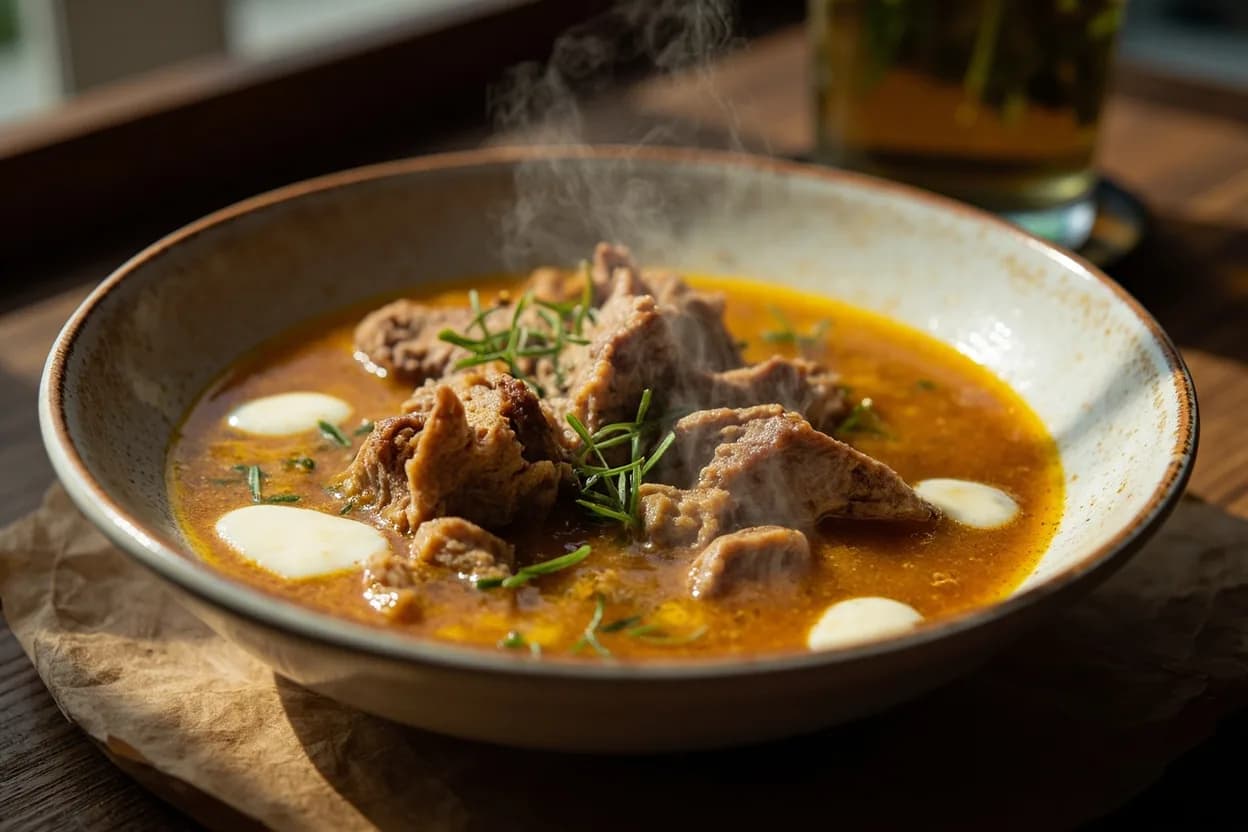
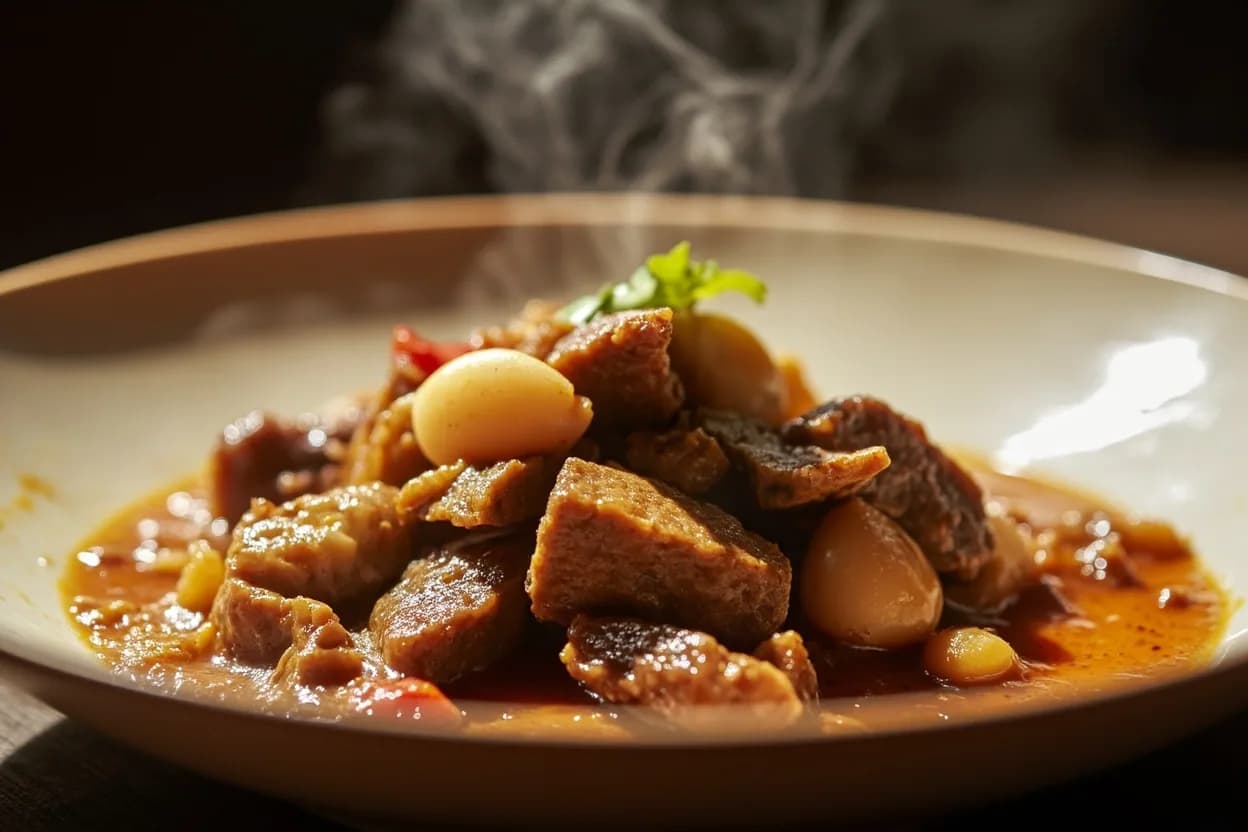
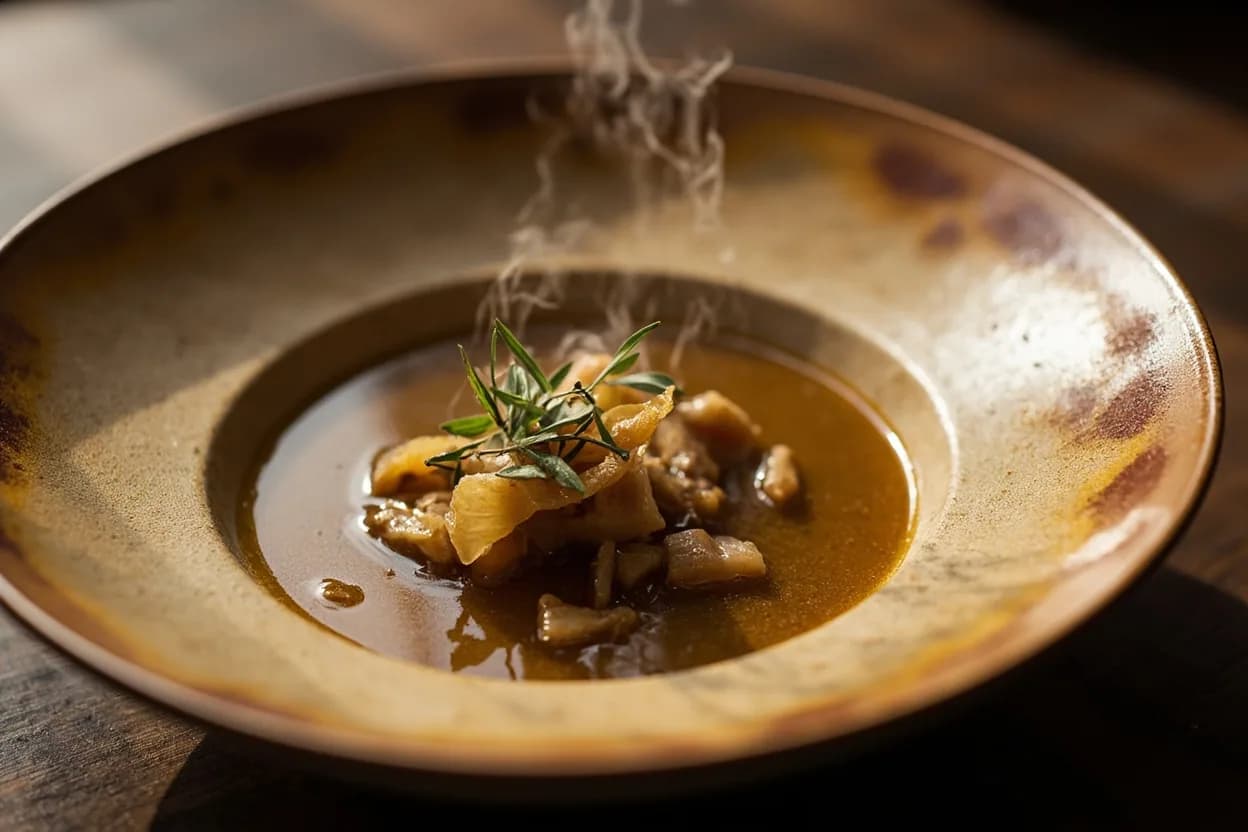
Appears in these dishes
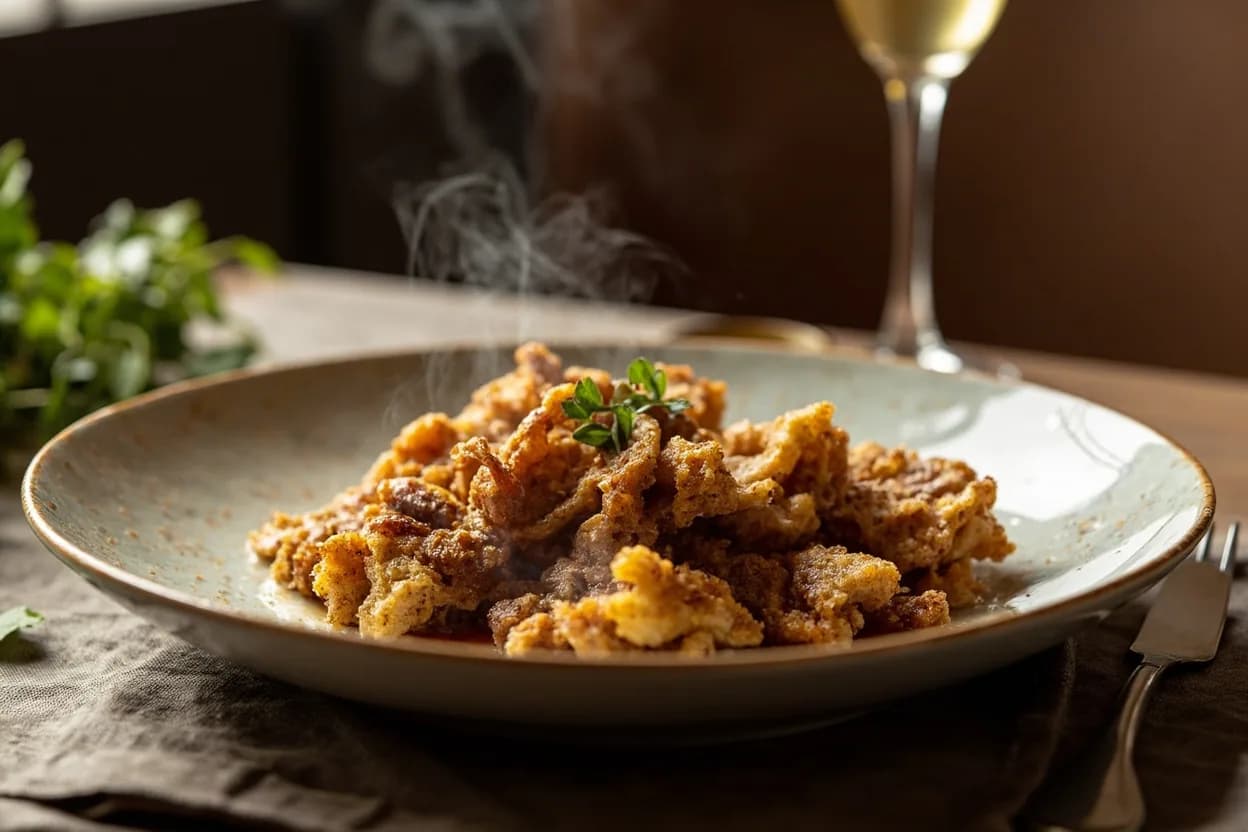
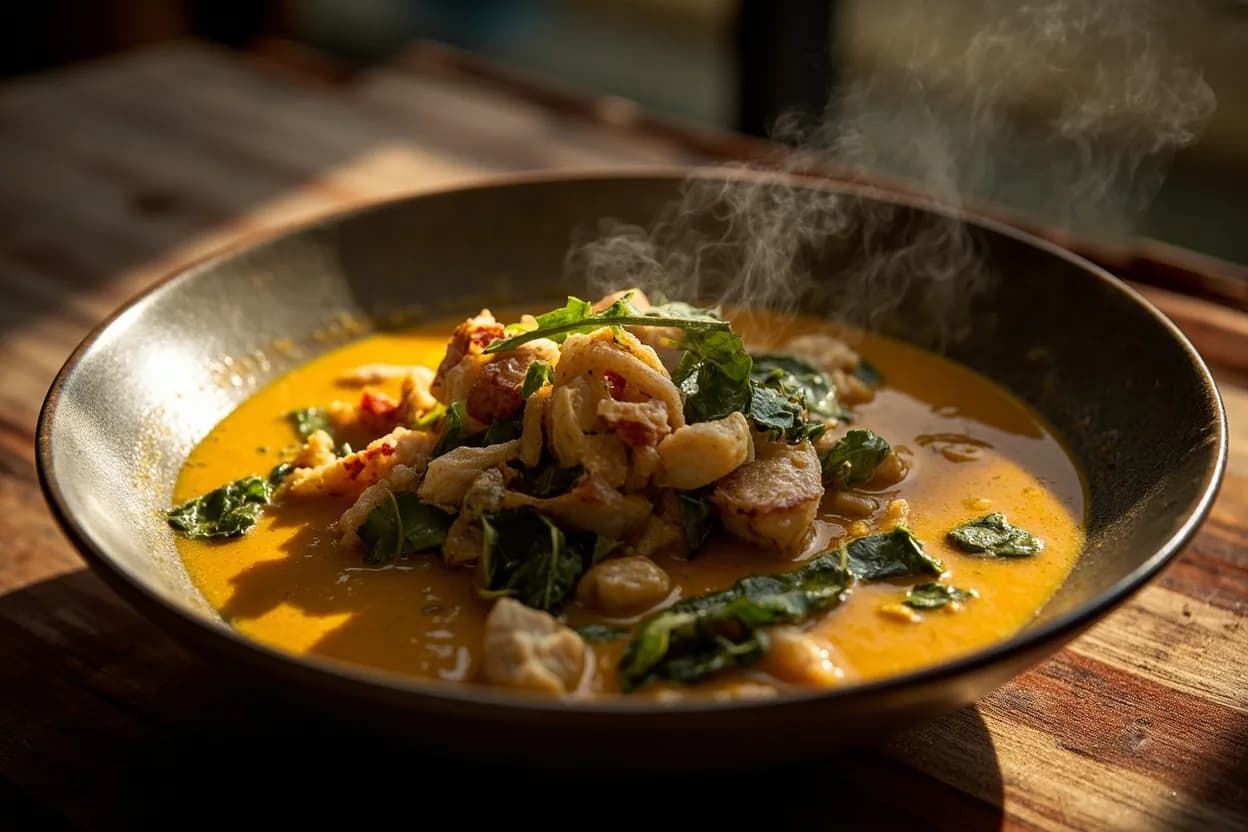
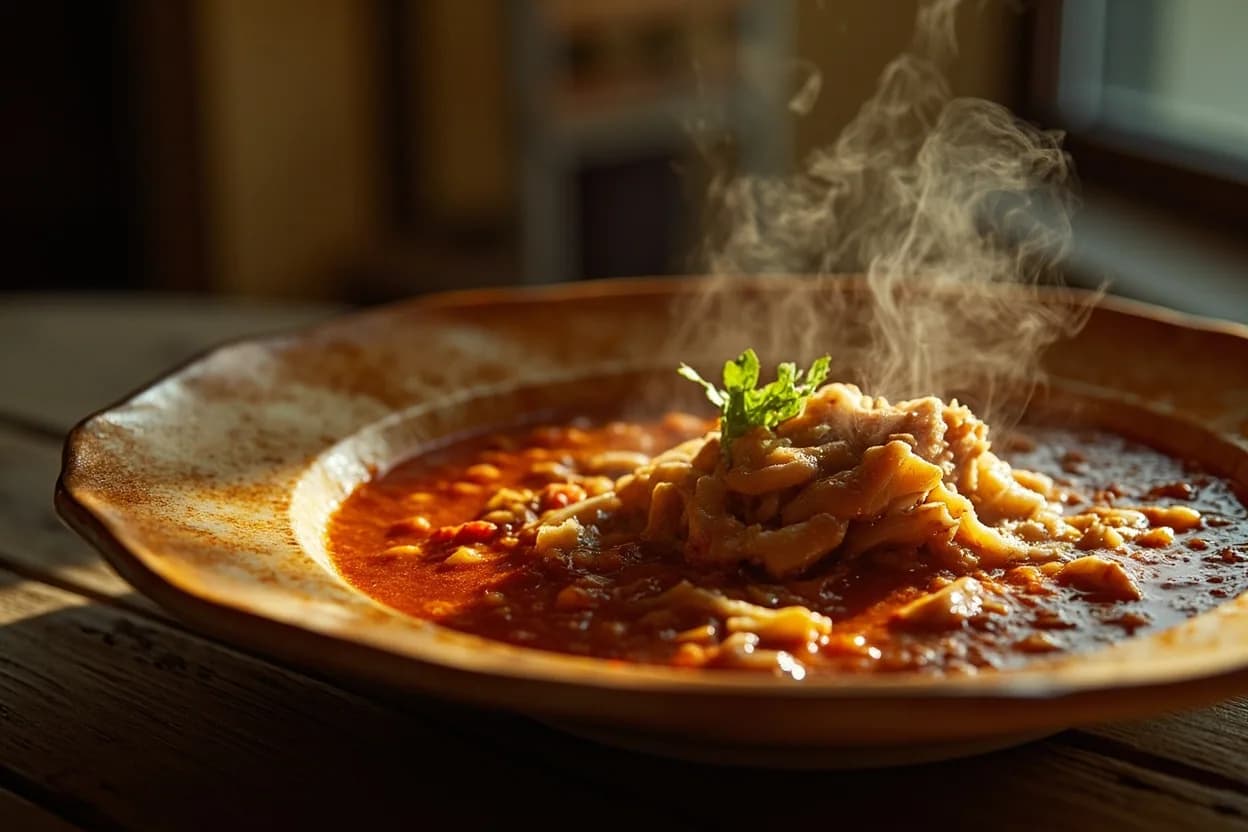
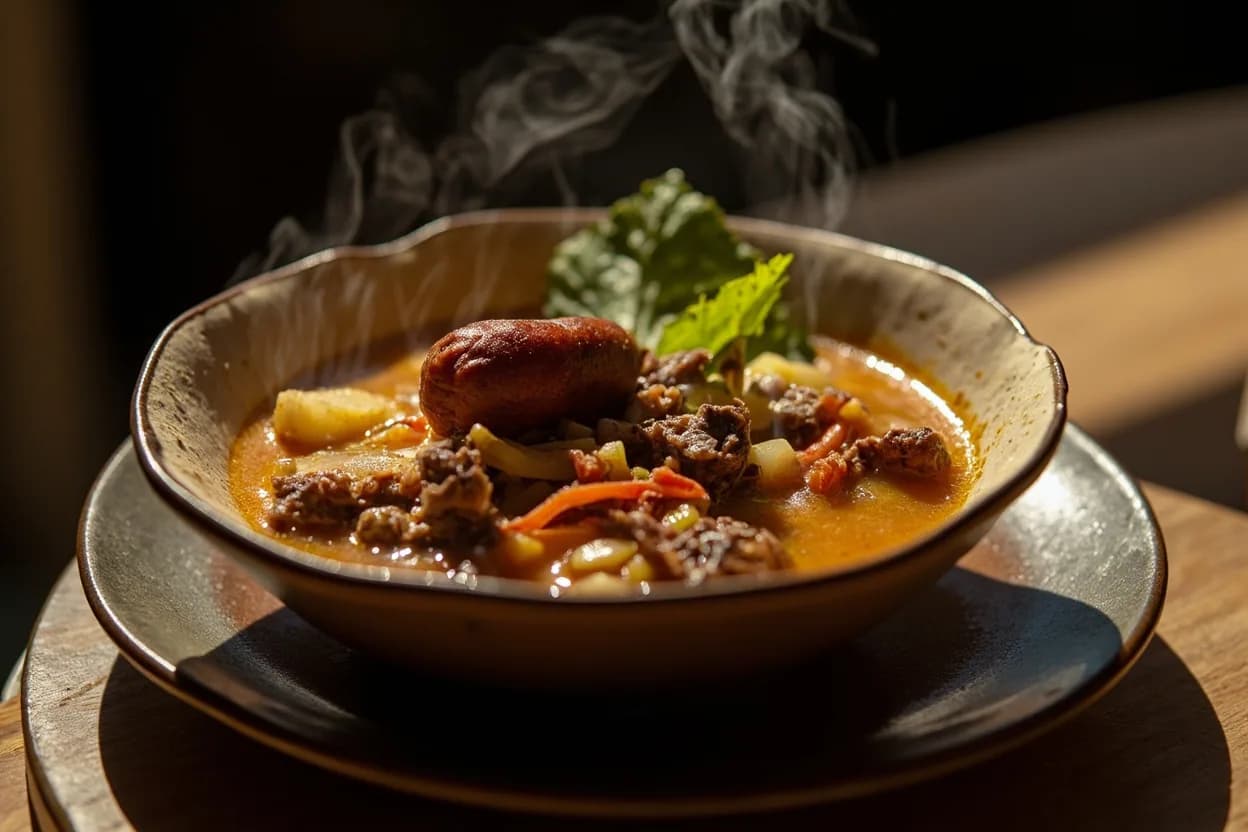
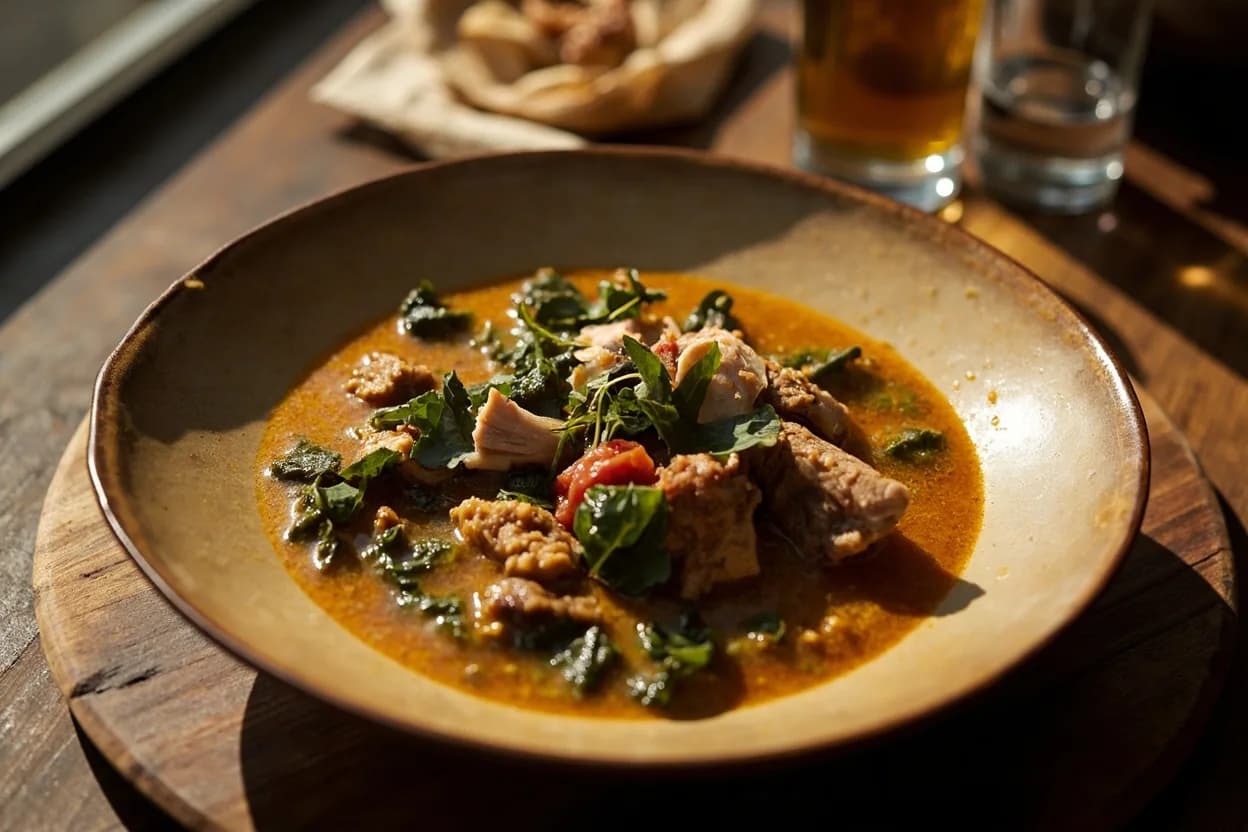
Related
Egg
The kitchen's everything ingredient — bind, leaven, enrich, or fry
Chicken Breast
Lean, quick-cooking white meat for everyday dinners

Ground Beef
Versatile minced beef for burgers, ragù, tacos, and meatballs
Pork Loin
Lean, tender roasting cut that stays juicy with care
Salmon
Rich, rosy fish that roasts, grills, or cures beautifully

Egg White
Pure protein that whips to airy peaks for meringue and more
Egg Yolk
Rich, golden yolk for custards, mayonnaise, and pasta

Quail Egg
Tiny, speckled eggs for garnishing and elegant bites