Proteins
Turkey Breast
Large, very lean white-meat roast that overcooks easily; brine or roast gently to a precise temperature and rest well, or slice thin for sandwiches and cutlets.
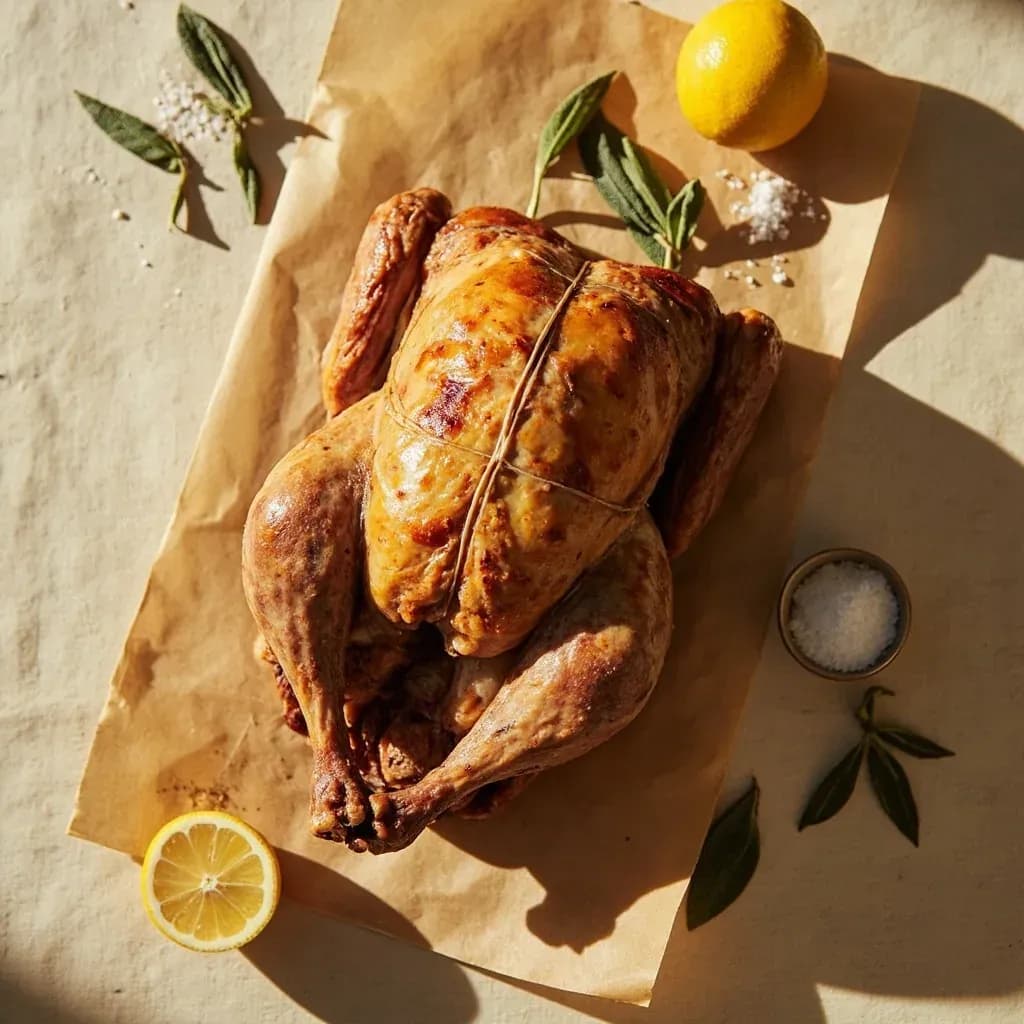
Turkey breast is the pectoral muscle of the domestic turkey — the largest single cut on the bird and the cut that drives most year-round turkey cooking, from holiday roasts to deli slicers. It is sold bone-in as a halved breast, deboned and netted as a roast, butterflied for fast cooking, or sliced into cutlets, and it scales from a single Sunday dinner to a catering-sized sandwich run with no change in technique. Because the breast muscles do almost no work on a flightless domestic bird, the meat is exceptionally lean, pale, and mild, with long, visible fibers running parallel to the keel bone.
That leanness is both the cut's virtue and its curse. The breast absorbs brines, marinades, and smoke readily, takes on herb and spice flavors without competing, and slices cleanly for plating — but it punishes overcooking brutally, turning from tender to chalky in a narrow window of a few degrees. Two levers determine success more than any other: pre-cook moisture and seasoning (wet brine, dry brine, marinade, or barding) and cooking to a specific internal temperature with carryover in mind rather than to a clock. Cut against the grain, rested, and sauced, the breast is the elegant, mild canvas of the bird; cut with the grain and overbaked, it is a dry disappointment.
Breed is the other fork in the road. Broad-breasted white commercial birds dominate the market and produce very large, very pale, very mild breasts that almost always benefit from aggressive brining and a substantial sauce. Heritage breeds (Bourbon Red, Narragansett, Standard Bronze, Black Spanish, Slate, Royal Palm, and others) and pasture-raised birds give noticeably firmer, more flavorful, more textured meat at the cost of smaller portions and slightly longer cook times. Whichever you buy, treat the breast as the lean, high-stakes cut it is — and reach for a thermometer before you reach for the oven mitts.
- Measured in
- g
- Storage
- Refrigerate
Find it in
Types & varieties
Halved turkey breast with ribs, skin, and sometimes the wishbone intact; 4–7 lb. The classic centerpiece cut and the most forgiving form, since the bone insulates and the skin shields the meat.
Deboned, rolled, and netted, 2–4 lb. Easy to slice evenly and to stuff; benefits from softened butter pushed under the skin to compensate for the missing insulation.
The leanest retail option. Almost always needs brining, barding with bacon or pancetta, or a generous butter rub to stay juicy.
Splayed flat for fast, even roasting or grilling; takes direct heat and high-heat finishes without drying the center.
Sliced or pounded to ¼–½ in (6–12 mm) thick; sold fresh or frozen. The cut for pan-frying, breading, and quick sautés.
Hot- or cold-smoked over hardwood, often sold whole or pre-sliced. Mahogany color, pronounced smoke ring, and dense, sliceable texture; treat it as charcuterie, not as a leftover.
Brined, cooked, and pressed into a uniform loaf. Used as a sandwich-meat substitute for pork ham, with a milder, sweeter cure.
Bourbon Red, Narragansett, Standard Bronze, Black Spanish, Slate, Royal Palm, and Midget White. Smaller, denser, and noticeably more flavorful than commercial white, with firmer texture.
The commercial standard. Large, pale, very lean, and mild-flavored; the bulk of supermarket and deli supply and the bird that most needs aggressive brining.
Slower-growing birds from pastured flocks; meat is firmer and more savory than commodity white, with smaller portions and a higher price per pound.
Brining, dry-brining, and barding
Because the breast has almost no intramuscular fat, adding moisture and seasoning before cooking is the single biggest determinant of a juicy result. Three approaches work, and they are not mutually exclusive.
- Wet brine: dissolve ½ cup kosher salt (about 60 g for Diamond Crystal) and ¼ cup (50 g) sugar per gallon (3.8 L) of cold water, plus aromatics — bay leaves, black peppercorns, smashed garlic, thyme, and a strip of lemon zest. Submerge the breast 8–12 hours for cutlets, 12–24 hours for a whole halved breast. Rinse, pat very dry, and air-dry uncovered in the fridge for 12–24 hours before roasting so the skin crisps.
- Dry brine: salt the surface at roughly ½ teaspoon (3 g) kosher salt per pound, plus optional sugar and spices. Refrigerate uncovered 12–48 hours. The salt draws out moisture, dissolves into it, and is reabsorbed seasoned; the dry environment dehydrates the skin for the crispiest possible roast. This is the lowest-effort, highest-reward method for most home cooks.
- Barding: wrap a skinless or boneless roast in thin bacon or pancetta, or push 4–6 tablespoons of softened compound butter (herbs, garlic, lemon zest, black pepper) between the skin and the meat. The fat renders during cooking and bastes the lean muscle underneath.
- For the salt to do its work, allow at least 8 hours and ideally a full 24. Rushed brining is the most common reason a turkey breast disappoints.
Common uses
Tips & pitfalls
- Brine or salt for at least 8 hours and up to 24 — turkey breast is so lean that pre-seasoning is the single biggest factor in juiciness; skipping it is the most common mistake.
- Pat the skin completely dry and rub with softened butter or oil; for crisp skin, start at 425–450°F (220–230°C) for 10–15 minutes, then drop to 325°F (163°C) until done.
- Use an instant-read thermometer in the thickest part without touching bone — pull at 155–160°F (68–71°C) and let carryover finish the cook. Cooking to time instead of temperature is the second most common mistake.
- Rest loosely tented with foil for 15–30 minutes. Tenting tightly traps steam and ruins the skin; tenting too long lets the meat cool below serving temperature.
- Always slice across the grain — the long muscle fibers run parallel to the keel bone, so cut perpendicular to the length of the breast for tender, short slices.
- Bard a skinless roast with bacon or thin pancetta, or push seasoned butter under the skin, to add the fat the cut is missing.
- Save the bones, skin trimmings, and wing stubs for stock; roast them at 400°F (200°C) until deeply browned before simmering for the darkest, richest broth.
- Reheat leftovers gently — sliced breast covered with foil at 250°F (120°C) with a splash of stock, or briefly in a covered pan with butter and broth — to avoid the dry-leftover effect.
Nutrition
Energy
657 kJ · per 100 g
Where the calories come from
Protein
21.9g
44% DV
Carbs
0g
0% DV
Fat
7g
9% DV
Fiber
0g
0% DV
Sodium
59mg
3% DV
Source · USDA FoodData Central · Turkey, all classes, breast, meat and skin, raw
View on FDC →In the shops
Matched grocery products
 €2.85
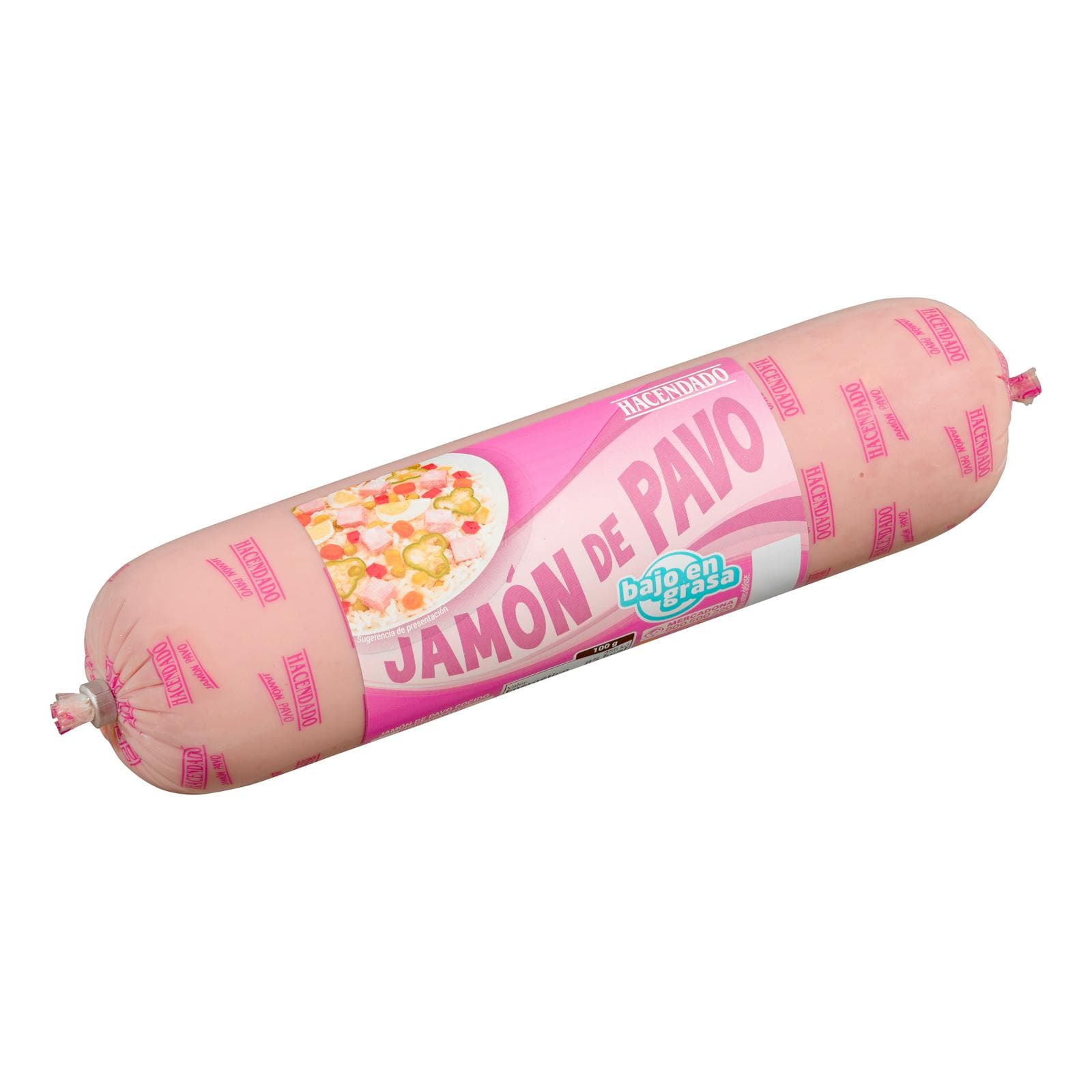
€2.85Turkey Ham
Hacendado · 500 g · Mercadona
 €1.00
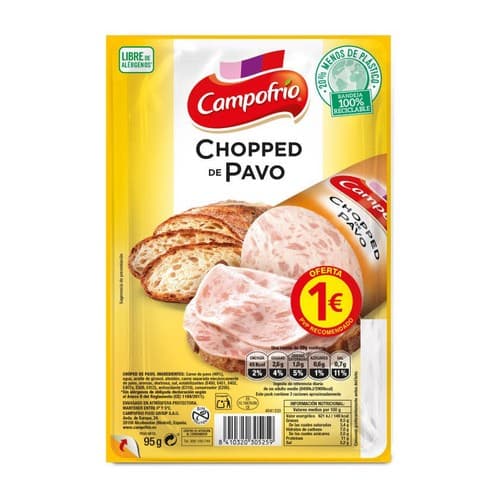
€1.00Turkey Xoped
CAMPOFRIO · kg · Bonpreu
 €3.99
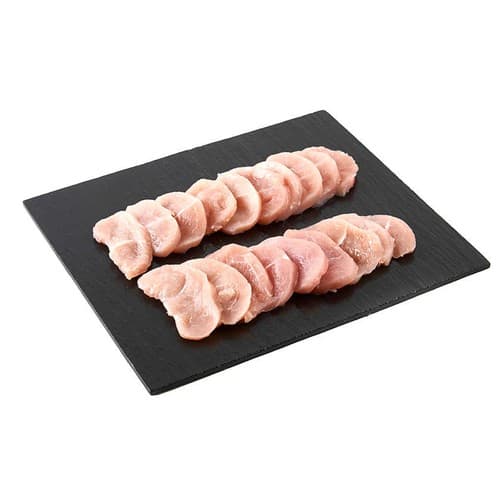
€3.99Turkey Filet
BONPREU · kg · Bonpreu
 €4.16
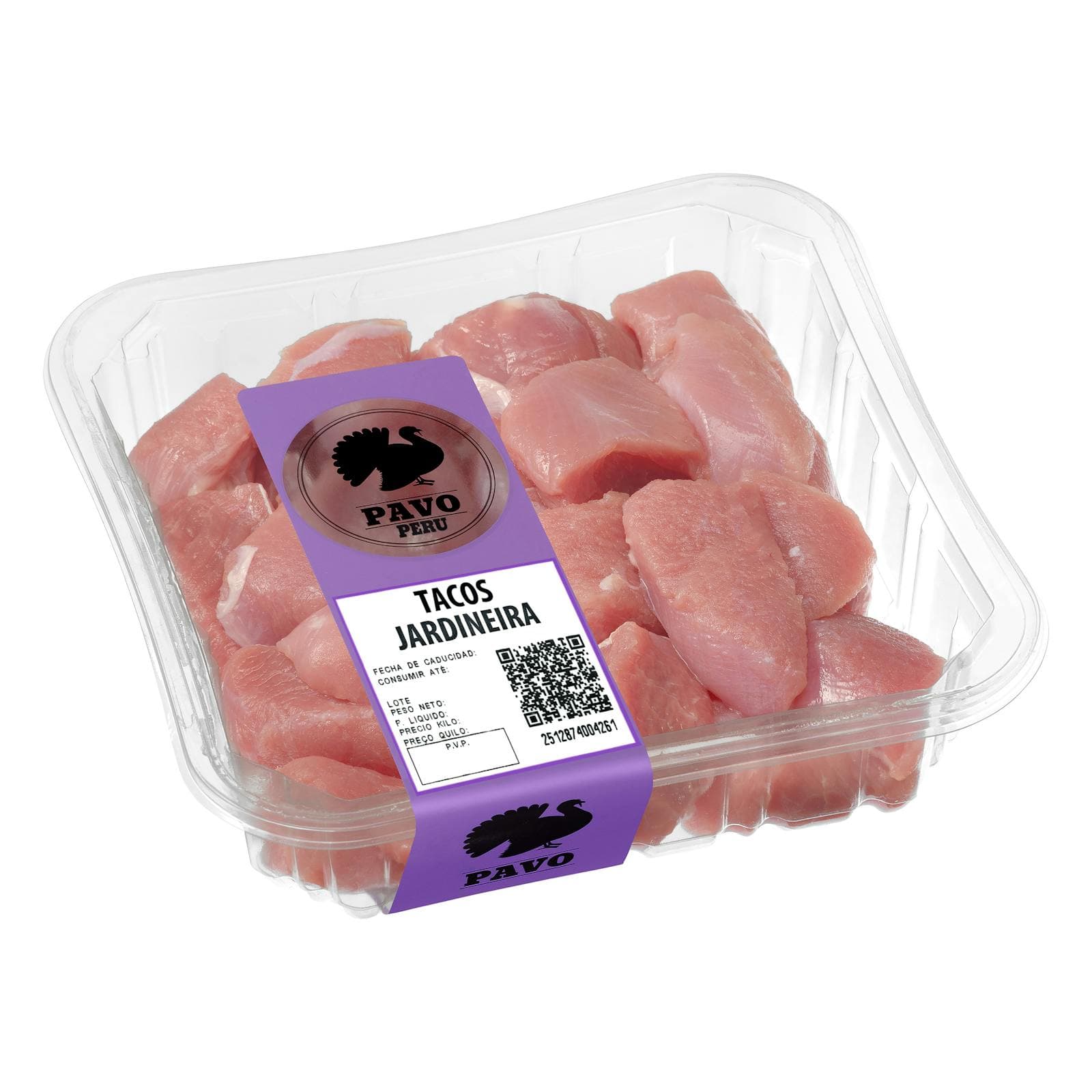
€4.16Turkey Tacos
570 g · Mercadona
 €3.50
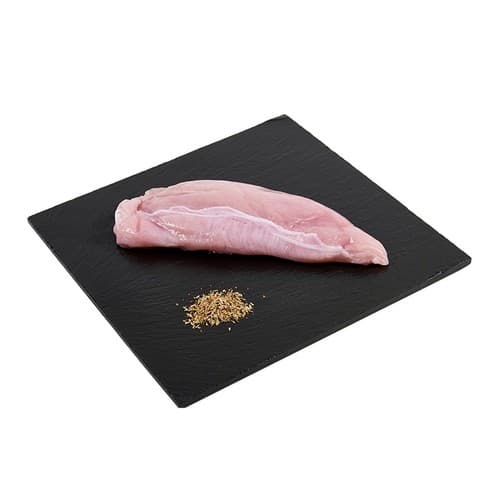
€3.50Turkey Fillet
BONPREU · ud · Bonpreu
 €1.49
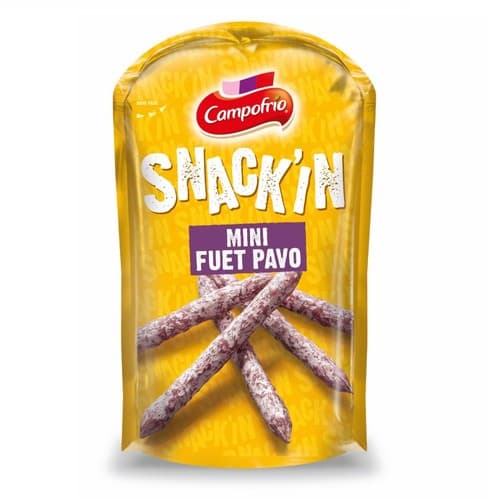
€1.49Mini Turkey Fuet
CAMPOFRÍO · kg · Bonpreu
Good to know
- Source
- Boneless or bone-in white-meat cut from the pectoral muscles of the domestic turkey (Meleagris gallopavo).
- Fat content
- Very lean — roughly 1–2 g fat per 100 g raw, far less than turkey thigh or duck breast, which is why the breast is the cut most prone to drying out.
- Safe internal temperature
- USDA recommends 165°F (74°C); many chefs pull at 155–160°F (68–71°C) and let carryover carry the meat to 163–165°F for more tender slices.
- Resting
- Loosely tented with foil for 15–30 minutes; the internal temperature climbs 5–10°F and juices reabsorb into the long muscle fibers.
- Roasting
- About 15–20 minutes per pound at 325°F (163°C) for a bone-in halved breast; 12–15 minutes per pound for a boneless roast — use a thermometer, not the clock.
- Brine ratio
- Classic wet brine is roughly ½ cup kosher salt (about 60 g for Diamond Crystal) and ¼ cup (50 g) sugar per gallon (3.8 L) of cold water, with aromatics; submerge 8–24 hours.
- Storage
- Raw 1–2 days refrigerated at 33–40°F (1–4°C) or 6–9 months frozen at 0°F (–18°C) or below; cooked 3–4 days refrigerated or 2–3 months frozen.
Substitutes
- Chicken breast — The closest everyday substitute; cook by the same principles, though turkey is slightly larger, more fibrous, and a touch richer.
- Chicken cutlets — Direct swap for pounded turkey cutlets in breaded, sautéed, or stir-fried preparations.
- Cornish hen breast — Smaller and slightly more flavorful; works well for individual-portion roasts.
- Duck breast — Fattier and richer, with a similar lean-meat, fat-cap presentation; render the fat cap first to crisp the skin.
- Guinea fowl breast — Gameier and slightly darker; a strong stand-in for heritage turkey breast.
- Pheasant breast — Lean and delicate; best brined or barded and handled exactly like small turkey cutlets.
- Pork tenderloin — A workable substitute in stuffed or roulade applications where a lean, sliceable roast is wanted, though flavor and fat differ considerably.
- Firm white fish (cod, halibut) — A substitute only for thin-sliced cold preparations such as salads and composed plates.
Pairs with
Also called
turkey breast roast · boneless turkey breast · turkey crown
