South Asia
Coorg (Kodava)
Also: Kodava cuisine, Coorg cuisine, Kodagu cuisine
The warrior-clan hill cuisine of Karnataka's coffee and cardamom country — a rare meat-eating, rice-centered anomaly within a region of brahmin vegetarian dominance.
Kodava cuisine is the cooking of the Kodava people of Coorg (Kodagu), a highland district in the Western Ghats of Karnataka. Historically a martial landowning clan whose identity centered on the hunt, the Kodavas developed a cuisine that stands apart from surrounding Karnataka: it is openly meat-centered, features pork as a prestige protein, uses no dairy-based gravies, and builds around thick red-rice preparations, akki (rice-based flatbreads), and distinctive pickles made from forest fruits. The cuisine is intimately tied to Kodava seasonal ritual and is generally not found in restaurants — it survives as a domestic and festive tradition.
The flavour base
Black pepper (locally grown) provides the primary heat in place of red chili (used more sparingly than in neighboring Andhra or Tamil Nadu). Coconut appears but is less dominant than on the nearby coast. Pork fat renders into a cooking medium for many meat dishes. Kachampuli (a Coorg variety of Garcinia gummi-gutta, called gambooge or kodampuli) is the signature souring agent — darker and more resinous than tamarind.
Pantry staples
Key ingredients
Signature techniques
Signature dishes
Coorg (Kodava) on the table
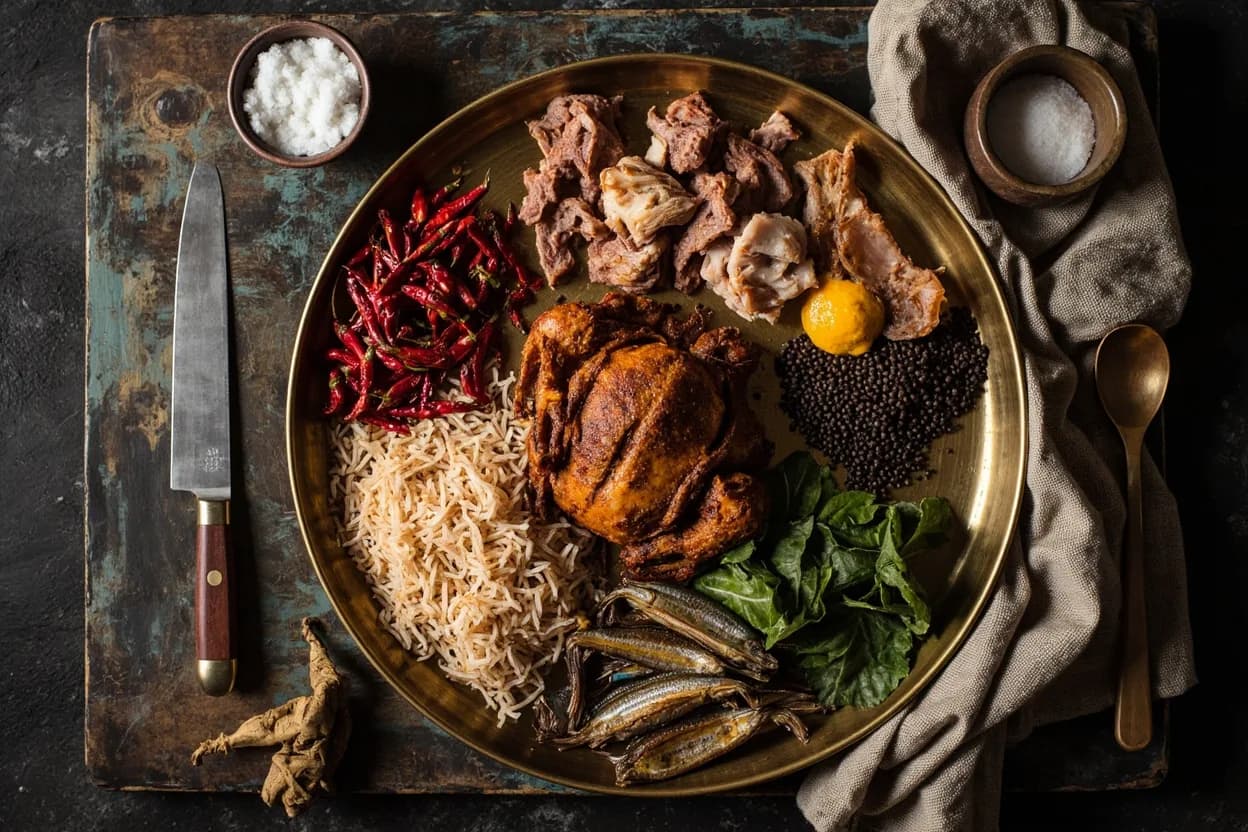
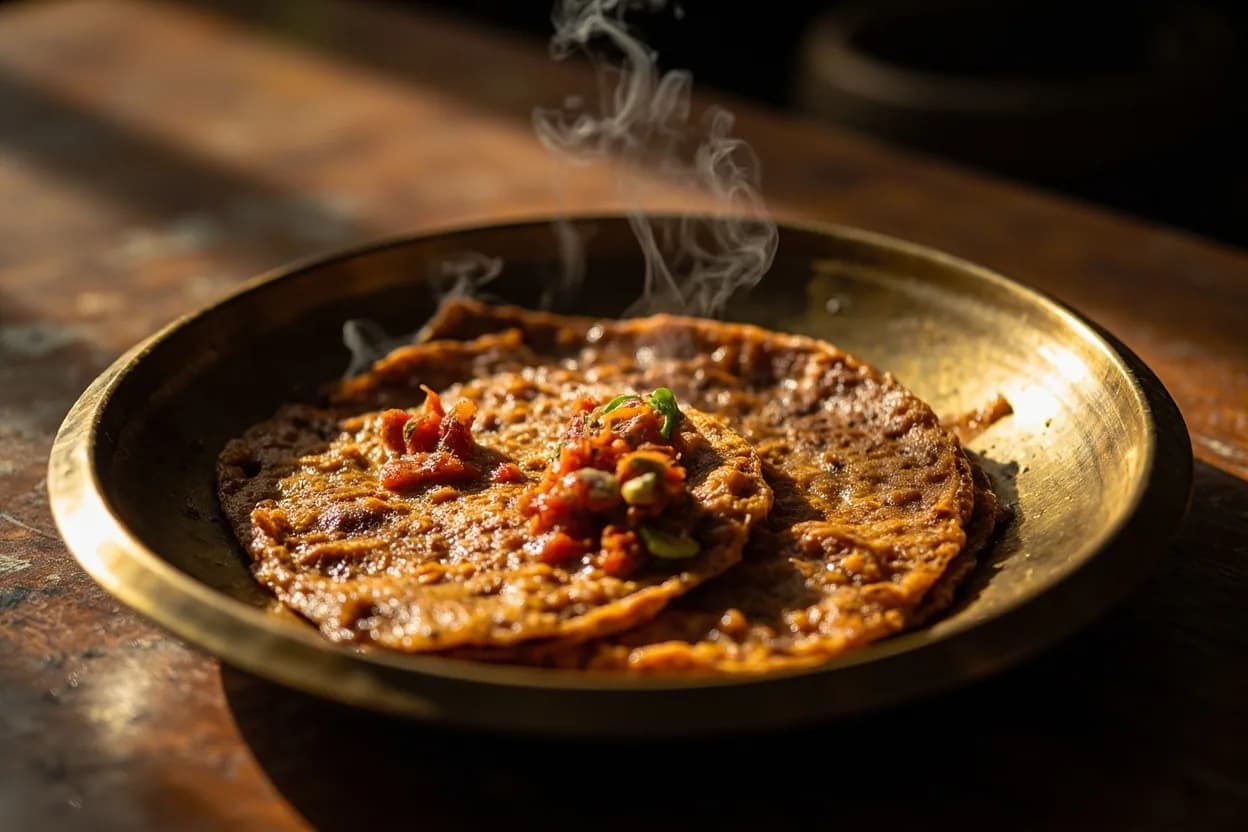
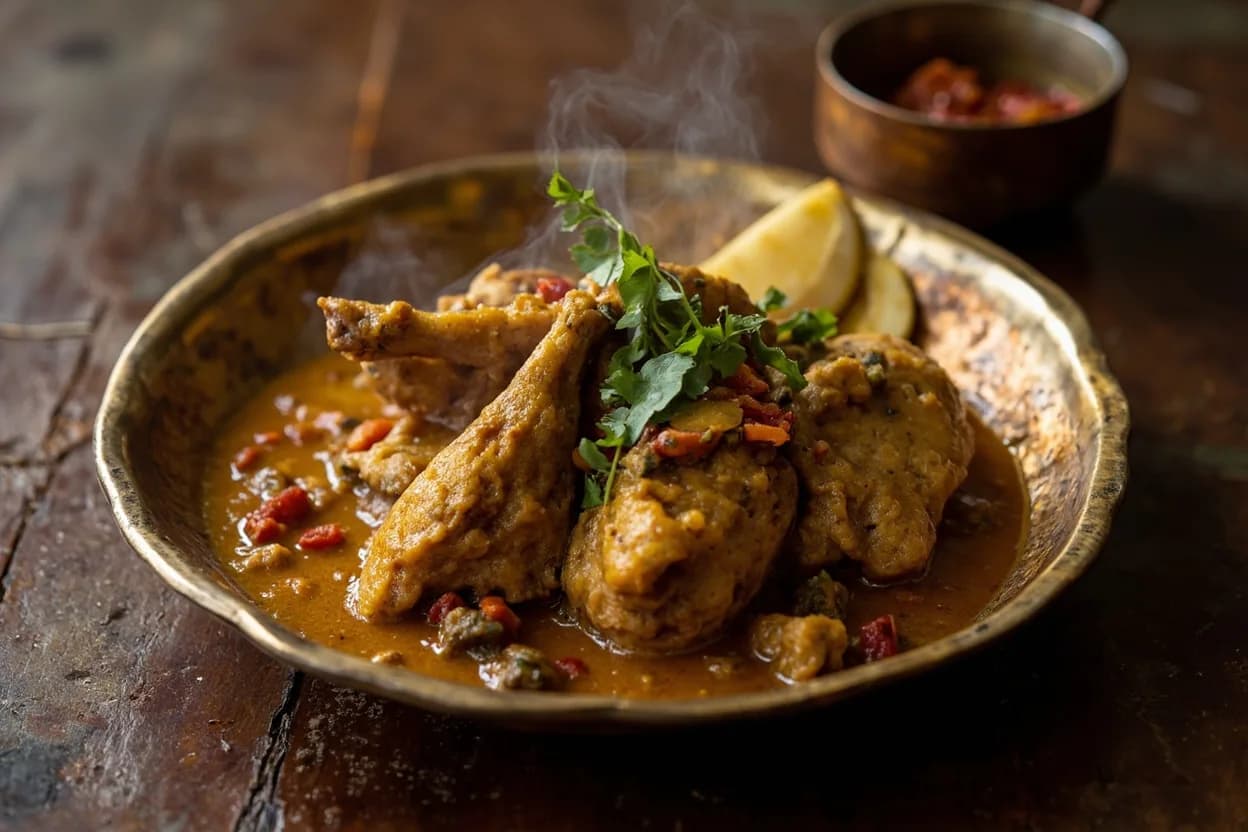
At the table
The Kodava meal centers on rice — specifically the local short-grain red variety — eaten with pandi curry, koli curry, or fish alongside vegetable preparations and the ever-present kaad manga pickle. Breakfast features akki rotti, kadambuttu (rice dumplings), or nooputtu (string hoppers) with coconut chutney. Festive meals during Kailpodh (the harvest and weapons festival) are communal and elaborate, always featuring pandi curry as the ritual centerpiece. Rice liquor (paaputtu, rice extract) is the traditional drink.
History & context
The Kodavas are believed to be descendants of early Dravidian or possibly Scythian-Kushana migrants who settled Coorg's hill forests centuries before documented history. Their martial identity — they retained the right to bear arms under British rule by treaty — shaped a cuisine adapted to hunting, forest living, and self-sufficiency in an isolated mountain ecology. Unlike most Hindu communities in South India, Kodavas eat pork, beef, and game without religious restriction, a fact linked to their non-Brahmanical clan structure. Coorg's colonial-era conversion to coffee and cardamom cultivation (from the 1830s) brought modest economic integration but did not fundamentally alter the domestic food culture, which remained clan-private and not commercialized. Kodava food has only recently attracted outside interest through food writing; it remains largely inaccessible without personal invitation.
Regional variations
- Northern Coorg (Virajpet/Virajanpet range)
More influence from adjacent Hassan and Mangalore; coconut and tamarind appear more readily; slightly milder.
- Southern Coorg (Madikeri/Mercara)
Higher elevation, more coffee estate culture; bamboo shoot preparations more prominent; wild boar and venison historically more common.
- Amma Kodava (female ritual cooking)
Festival cooking led by elder women; kadambuttu and payasam made to strict ritual specifications for Kailpodh and marriage feasts.
Related cuisines
- Mangalorean Catholic
Both use Garcinia-family sourings (kachampuli vs. kokum), pork, and coastal fish, but Mangalorean cooking is more elaborate and restaurant-facing.
- Kerala (Wayanad tribal)
Neighboring highland district sharing bamboo shoot and wild game traditions with a similar forest-ecology food logic.
- Coorgi-Brahmin (Amma Kodava)
A distinct vegetarian sub-tradition within Coorg itself practiced by brahmin settlers, sharing akki rotti but avoiding meat.
References
- 1.The Coorg Cookbook — Nandita Godbole
- 2.A Coorgi Kitchen — Annamma Devaiah
- 3.India: The Cookbook — Pushpesh Pant
- 4.Flavours of Kodagu — Kaveri Ponnapa
Confidence: medium
Notes
Kachampuli — the irreplaceable souring agent
Kachampuli (Coorg gambooge, Garcinia gummi-gutta) is not identical to other Garcinia varieties like Malabar tamarind. The Coorg variety is reduced into a thick, tar-dark syrup with a resinous, fruity sourness that is the non-negotiable signature of authentic pandi curry. Tamarind is a poor substitute; kokum is slightly closer but still distinctly different.
A cuisine without a restaurant format
Kodava food is one of the few major Indian regional traditions that has almost no commercial restaurant presence even within India. There are perhaps fewer than ten dedicated Kodava restaurants nationwide. The cuisine survives entirely through domestic practice and community events — a food culture that has explicitly resisted commodification.